 By • Published on March 27, 2026 • 17 min read • 2,211 views
This article is for informational and educational purposes only and does not constitute medical advice. Always consult with a registered dietitian, gastroenterologist, or other qualified medical professional before making significant dietary changes.
A symptom-sorting sequence for bloating, constipation, urgency, IBS lookalikes, testing questions, and warning signs.
You're reading: Why You Still Feel Bloated After Eating "Healthy" Foods
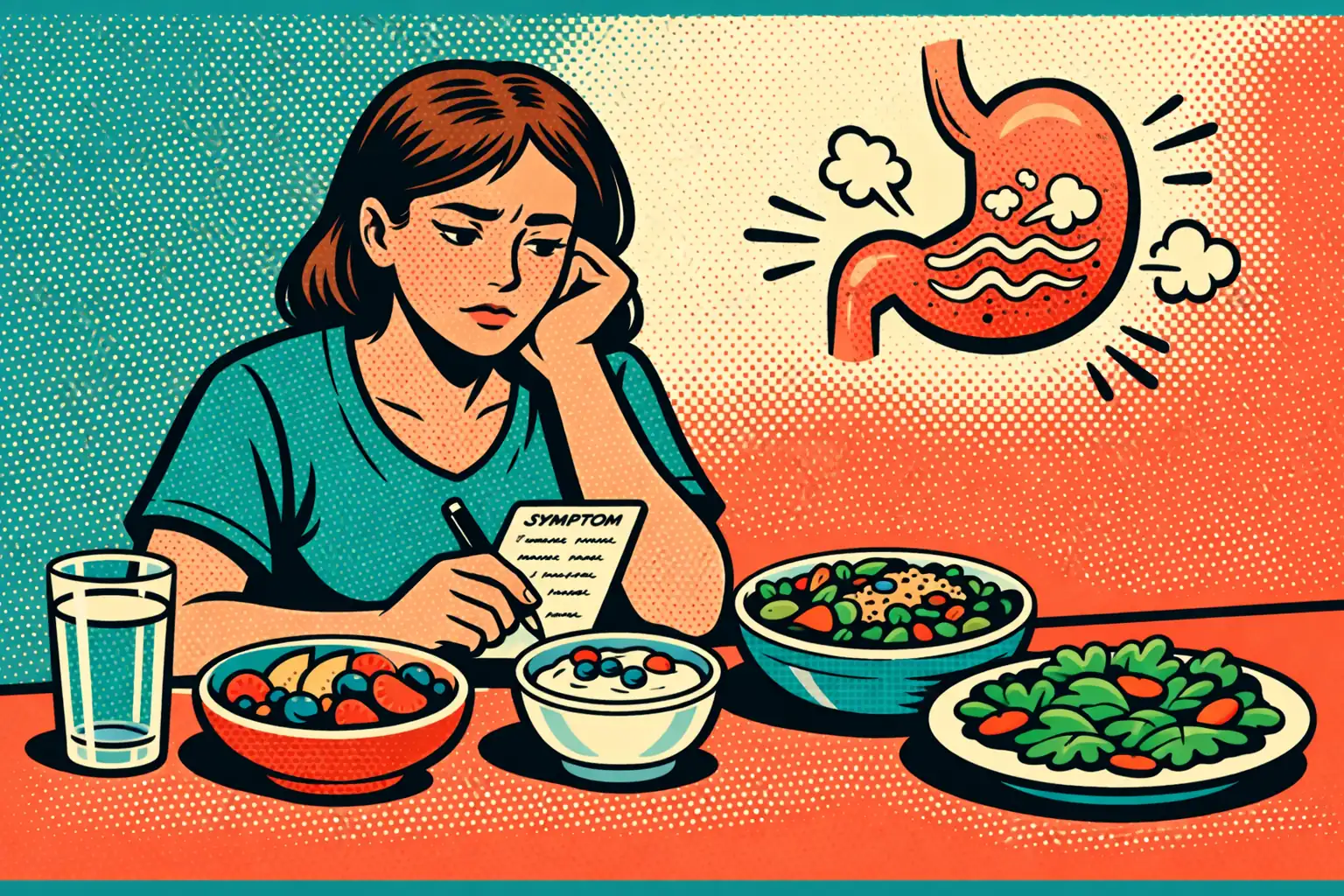
You can clean up your meals, buy the yogurt, add the fruit, build the salad, and still end the day feeling tight, swollen, and confused. That does not mean you are failing. It usually means the label "healthy" is answering a different question than the one your gut is asking.
Short answer: healthy foods can still cause bloating when the real issue is fermentable carbs, fiber load, lactose, raw-produce volume, constipation, or a gut that does not tolerate the amount or combination well.
This page is for you if your confusion starts with foods that sound healthy on paper but still leave you bloated in real life.
Use a different page first if the bigger issue is clearly a low-FODMAP troubleshooting problem, repeated challenge failure, or upper-stomach symptoms like early fullness after a few bites. Those patterns fit when low FODMAP does not work, when reintroduction fails, or functional dyspepsia better.
You swap takeout for a yogurt bowl, a bean lunch, or a big grain-and-greens plate. On paper it looks like a better day.
In your abdomen, it can feel like the same old story.
That mismatch is common, and it is one reason bloating becomes such a mental trap. You start assuming one of two things:
Usually neither is true.
The more useful frame is this: some foods that are objectively nutritious can still be symptom-heavy for a sensitive gut because of fermentable carbohydrates, fiber load, lactose, meal size, fizzy drinks, constipation, or broader IBS-style sensitivity. If you need the bigger map first, start with the broader bloating guide.
This page is explaining a healthy-food mismatch pattern:
This page is not mainly explaining:
If the pattern is more specific than "healthy foods make me bloated," route to FODMAP stacking, Hidden FODMAPs, or Low FODMAP Not Working?. If the recurring trigger is avocado, nuts, seeds, oils, or richer plant-fat meals, use avocado, nuts, and plant fats before blaming every healthy food.
This is the core distinction the article needs to make.
A food can support nutrition and still be hard to tolerate in the short term. NIDDK lists fruits such as apples and pears, cruciferous vegetables, legumes, dairy products, whole grains, and drinks sweetened with high-fructose corn syrup among foods that may increase gas symptoms in some people 1.
That list surprises people because it includes foods with a strong health halo. But your gut is not judging whether a food is "clean." It is responding to what the food contains, how much you ate, and what else was happening around the meal.
That is why a salad can feel harder than soup, a yogurt bowl can feel worse than eggs, or a grain-heavy "good" lunch can leave you more distended than the meal you thought you were improving on.
The first goal is not to label foods as good or bad. The first goal is to work out which pattern your symptoms keep following.
Some healthy foods are rich in fermentable carbohydrates. Monash notes that FODMAPs are found across fruits, vegetables, grains, legumes, lentils, dairy foods, and manufactured foods, and it lists examples such as onions, garlic, apples, pears, mango, many legumes, and some dairy products among higher-FODMAP choices 2.
That does not mean those foods are unhealthy. It means they can be harder to tolerate if you have IBS-style sensitivity or a lower threshold for gas and distension. If you want a calmer breakdown of which fermentable foods belong in the prebiotic conversation versus which ones are simply broader fiber supports, use our guide to food-first prebiotic fiber sources. If the bigger question is how to widen plant variety without turning that goal into a bloating spiral, use fiber diversity and microbiome resilience. If you want the narrower mechanism bridge for why fermentation can still make healthy fiber foods feel rough, use that next. If the specific "healthy" food that keeps backfiring is kimchi, sauerkraut, kefir, yogurt, miso, tempeh, or kombucha, use fermented foods and gut health to check probiotic hype, FODMAP load, histamine, carbonation, acidity, and portion size before you force more fermented foods.
If fermentable carbs look like the most likely driver, use the deeper high-FODMAP foods guide rather than guessing from one meal.
This part gets missed constantly.
Monash's traffic-light guidance is based on serving size. A food may rate green at one amount, then move to amber or red as the serve gets larger 3.
That matters because a meal can look "healthy" and still become symptom-heavy when:
If the issue feels more like meal combinations than one food alone, review FODMAP stacking before you shrink your food list again.
NIDDK says some people have more gas symptoms when they consume too much fiber 4. NICE also recommends caution with bran-heavy cereals and other sources of insoluble fiber when IBS symptoms worsen, while favoring gentler soluble-fiber approaches such as oats or linseeds where appropriate 5.
This is why a sudden health kick can go sideways:
The problem is not that fiber is bad. The problem is that a large, sudden, or bran-heavy shift can make a sensitive gut much louder before it feels better.
Yogurt and milk often get packaged as digestive-friendly foods, but that is not true for everyone. NIDDK says lactose intolerance can cause bloating, diarrhea, gas, nausea, and abdominal pain after lactose-containing foods or drinks 6.
So if your "healthy breakfast" pattern is consistently:
and the same symptoms keep showing up, a lactose pattern deserves a cleaner test than "maybe my gut hates healthy food."
NIDDK says gas symptoms can also increase when people swallow more air, which can happen with carbonated drinks or when they eat and drink too fast 7. NHS uses similarly simple language around fizzy drinks, swallowed air, and food patterns that worsen bloating 8.
That means the same "healthy" meal can feel very different if:
If the "healthy" trigger is coffee, green tea, cinnamon drinks, or another wellness beverage, use coffee, tea, and gut symptoms to test the beverage pattern separately.
If that last point sounds familiar, read how stress can lower your symptom threshold.
This is where the confusion usually becomes easier to see.
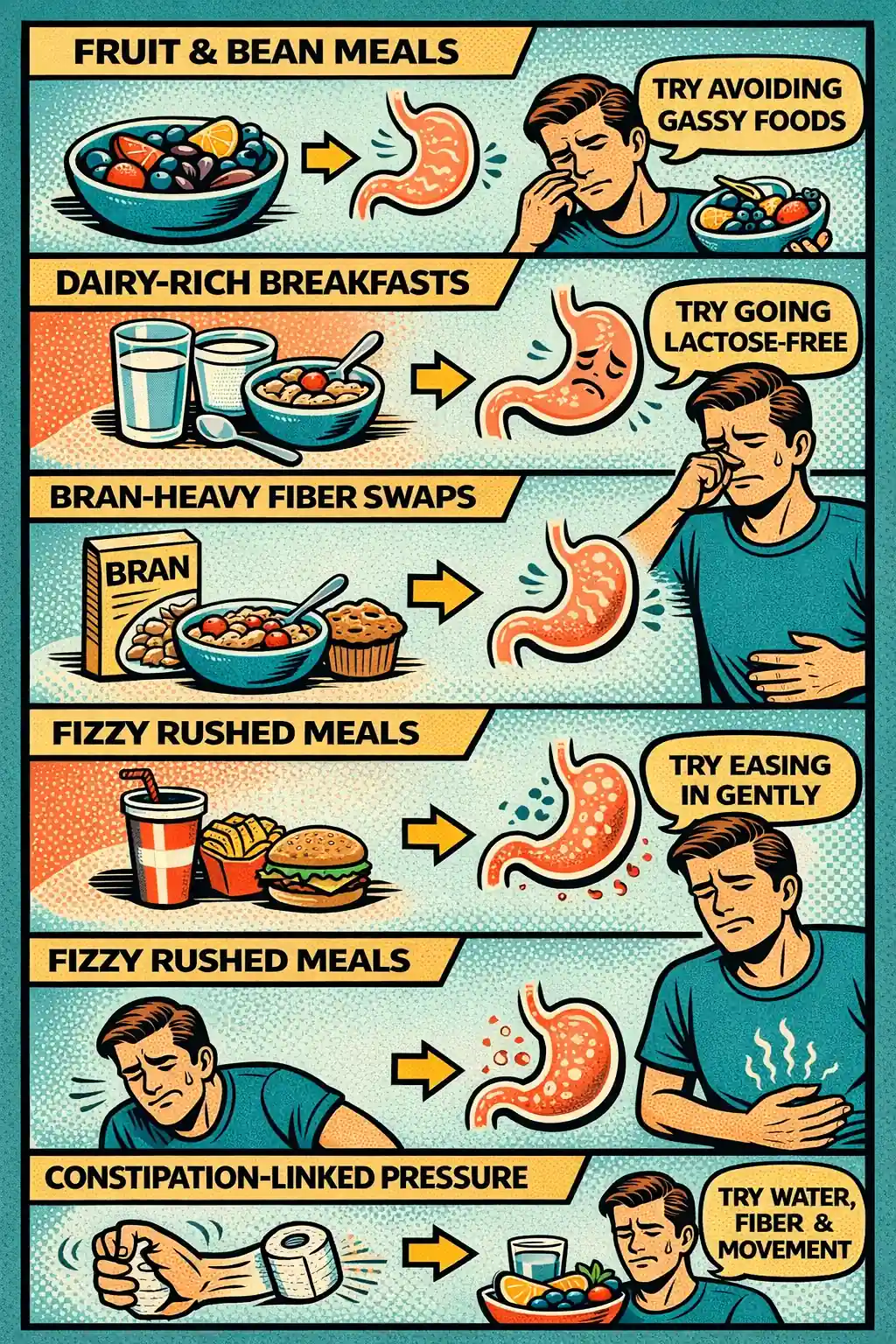
This pattern can stack fruit load, lactose, and portion size in a single meal. For some people the problem is mainly dairy. For others it is the specific fruit. For others it is just too much total load first thing in the morning.
If you want a calmer way to think about fruit and other colorful plant foods without turning them into villains, use our guide to polyphenol foods for gut health.
This can combine a large volume of rough plant matter, legumes, onions, garlic, and dressing ingredients in one sitting. It sounds clean. It can still be a perfect storm for gas and distension.
If you went from low-fiber meals to high-fiber cereal, bran crackers, dense grain bowls, or several "fiber-enriched" products in a hurry, the gut may be reacting more to the shift than to the morality of the food choice.
If this is your main pattern, use the bridge on whole grains, plant foods, and gut tolerance to separate long-term plant-food goals from short-term flare tolerance.
If you keep seeing inulin, chicory root, or "prebiotic" on those labels, our guide to prebiotic fiber and when it can backfire helps sort the difference between microbiome theory and symptom reality.
If you want the science layer behind why fermentable foods are discussed so often, use this SCFA explainer, then come back to your symptom pattern.
If a label made you wonder whether postbiotics are meaningfully different from all the other microbiome terms, use this postbiotics explainer before assuming the category fits your situation.
If the label combines live strains with prebiotic fibers, use this synbiotic category map to check whether the combo product actually fits before you trial it.
Some bars, yogurts, and sugar-free products add fibers, sugar alcohols, or other ingredients that sound digestive-friendly on the label but can still be symptom-heavy in practice.
The common thread is not "healthy food is bad." The common thread is that one meal can quietly combine multiple drivers at the same time.
Use the pattern, not the label.
| If this is what keeps happening | The more likely driver to test first | Best next step |
|---|---|---|
| Apples, pears, beans, onions, or wheat-heavy meals repeatedly trigger you | fermentable carbs or FODMAP load | review food type, serving size, and combinations |
| Bran cereal, giant salads, or a sudden fiber push made things worse | fiber load or insoluble-fiber irritation | move to a gentler fiber strategy |
| Yogurt, milk, or soft dairy keeps mapping to symptoms | lactose pattern | test dairy exposure more cleanly |
| Pressure improves after a better bowel movement | constipation overlap | review stool pattern and constipation support |
| The same meal feels worse on rushed or stressful days | swallowed air or lower symptom threshold | slow the meal down and reduce other confounders |
If you want a cleaner way to track this over several days, use the Food and Symptom Pattern Tracker.
If the bigger clue is stool backup, not just food, move next to the constipation and bloating connection. If you already tightened food significantly and still feel stuck, use Low FODMAP not working.
The first move is usually not "cut everything."
It is usually one of these:
Keep meals calmer and easier to read. That means fewer giant mixed bowls, less random grazing, and less of the "everything healthy at once" approach.
If Monash-style serving-size logic is the issue, a smaller amount may tell you more than a dramatic elimination 9.
If symptoms worsened after a high-fiber push, back away from bran-heavy or very bulky meals and rebuild with a gentler strategy. NICE guidance around regular meals, fluids, lower fizz, and soluble-fiber options is a better first step than forcing more rough fiber into an already irritated gut 10. If you need the cleaner comparison between gel-forming, rapidly fermented, coarse bulking, and food-first fiber patterns, use types of fiber by symptom fit.
NIDDK includes constipation among broader causes that can overlap with gas and bloating 11. So if you feel backed up, strained, or incompletely emptied, food may only be part of the story.
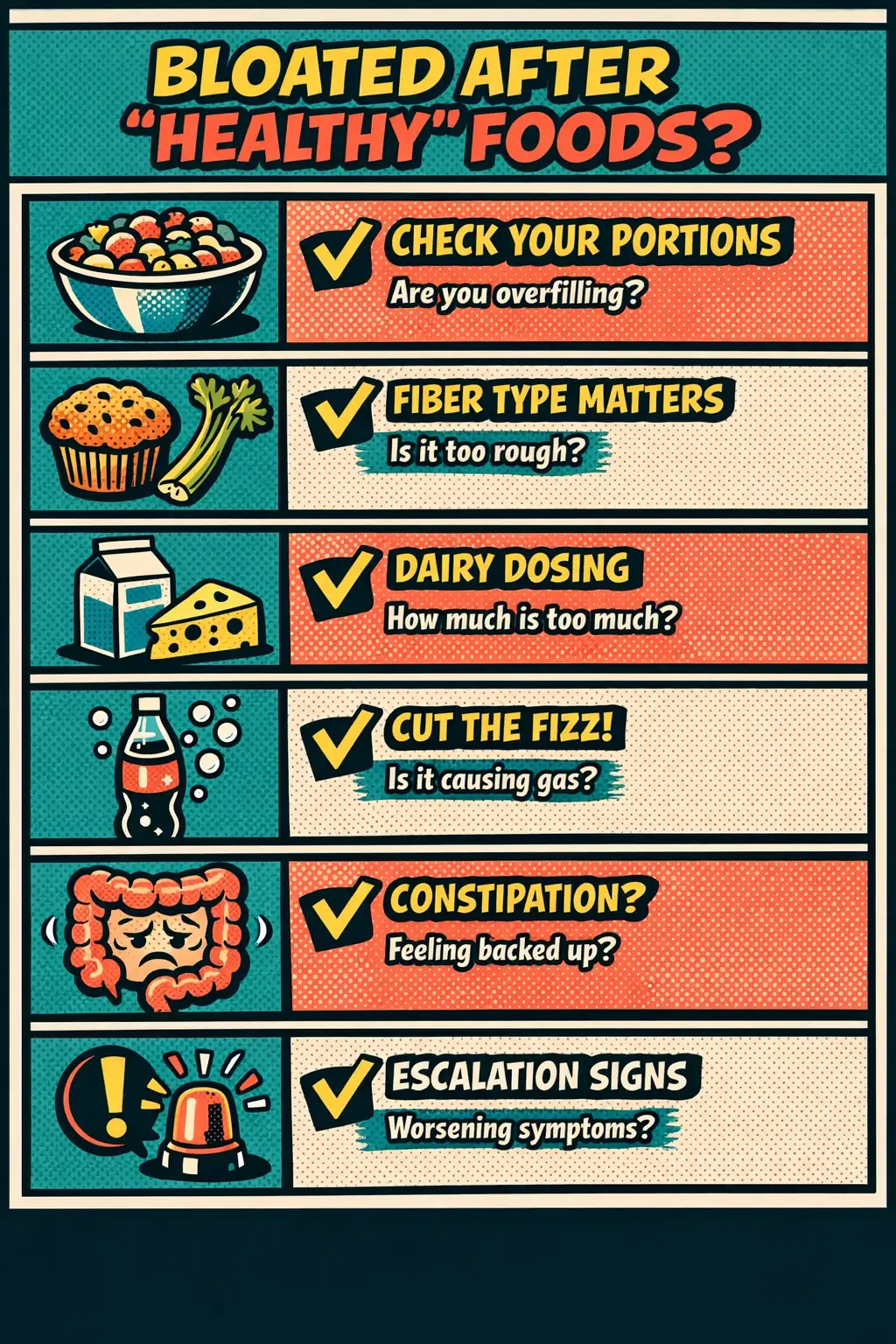
Before you cut out more foods, run through this reset:
Use the full Healthy-Food Bloating Reset Checklist if you want that review in one place.
If the pattern keeps pointing toward fermentable-carbohydrate sensitivity, IBS, or repeat food reactions, it may be time to widen the lens.
NICE places low FODMAP after general lifestyle and dietary advice for IBS, not as the reflex first move for every bloated reader 12. That is why this article should lead with pattern clarity first.
Low FODMAP becomes more reasonable when:
If that sounds like you, the next reads are Low FODMAP for beginners and the 3 phases of low FODMAP, not permanent restriction from a random blog post.
If the repeated clue is dairy, a lactose-focused review may be more useful than a broad elimination. And if symptoms stay messy across many foods and contexts, broader troubleshooting is a better next step than trying to self-diagnose from one breakfast.
Sometimes the problem is bigger than meal mechanics.
NHS says persistent bloating deserves review, and it uses concrete warnings such as weight loss, blood in stool, severe pain, vomiting, or inability to pee, poo, or fart 13. NIDDK also lists broader causes of gas and bloating that can include IBS, constipation, food intolerance, celiac disease, and obstruction 14.
That means:
This does not mean fruit, beans, grains, yogurt, vegetables, cultural foods, or plant-rich meals are "bad" for your gut. It means the current dose, format, timing, combination, or constipation context may be louder than your gut can handle right now.
Avoid turning one bloating pattern into a growing banned-food list. If the plan is becoming harder to shop, cook, afford, tolerate, or share with other people, use accessibility and disability IBS planning or cultural foods on low FODMAP before shrinking the diet again. If you need cleaner evidence, use the IBS symptom tracker template for one week before making another major food rule.
If healthy foods keep making you feel bloated, the answer usually is not to panic and call every fruit, salad, or yogurt a trigger forever.
If the response has been to cut more and more foods, use nutrient gaps on a restrictive gut diet before the symptom-control plan becomes too narrow to support you well.
If the whole pattern was framed as anti-inflammatory or Mediterranean-style, use when anti-inflammatory eating worsens IBS symptoms to keep nutrition quality while lowering symptom noise.
The answer is to get more precise:
That is how you stop treating every bloating flare like a moral failure and start treating it like a solvable pattern.
If the healthy food is fermented or aged and symptoms include reflux, diarrhea, flushing, hives, or headache, use histamine, fermented foods, and gut symptoms before treating the reaction as generic fiber or FODMAP intolerance.
Healthy foods can still cause symptoms when the dose, fiber type, FODMAP load, meal timing, constipation pattern, or stress context is wrong for the moment. The next move is not broader restriction; it is a cleaner pattern test, a smaller first change, and medical or dietitian review when symptoms persist or do not fit a simple food-trigger pattern.
Xam Riche is a gut health solopreneur and founder of YourFitNature, dedicated to helping people navigate digestive wellness through evidence-based information and personal experience. After years of struggling with IBS and bloating, Xam discovered the transformative power of the low FODMAP diet and now shares practical, science-backed guidance to help others find relief. While not a medical professional, Xam combines extensive research with lived experience to create accessible, empowering resources for the gut health community. Learn more about our mission
As an affiliate, we may earn from qualifying purchases.