 By • Published on May 4, 2026 • 10 min read • 4,005 views
This article is for informational and educational purposes only and does not constitute medical advice. Always consult with a registered dietitian, gastroenterologist, allergist, or other qualified healthcare professional before making major diet changes, especially if IBS, severe bloating, histamine-type reactions, immune compromise, pregnancy, or a medical condition is part of the picture.

You buy the kombucha, kefir, water kefir, drinking vinegar, or fruit-fermented beverage because it sounds like the gut-health choice. Maybe it has kiwi, dragon fruit, ginger, berries, live cultures, or a label covered in microbiome language. Then your abdomen feels tight, your reflux wakes up, your stool changes, or you feel flushed and wired. That does not mean you imagined it. It means the word "fermented" is not enough information.
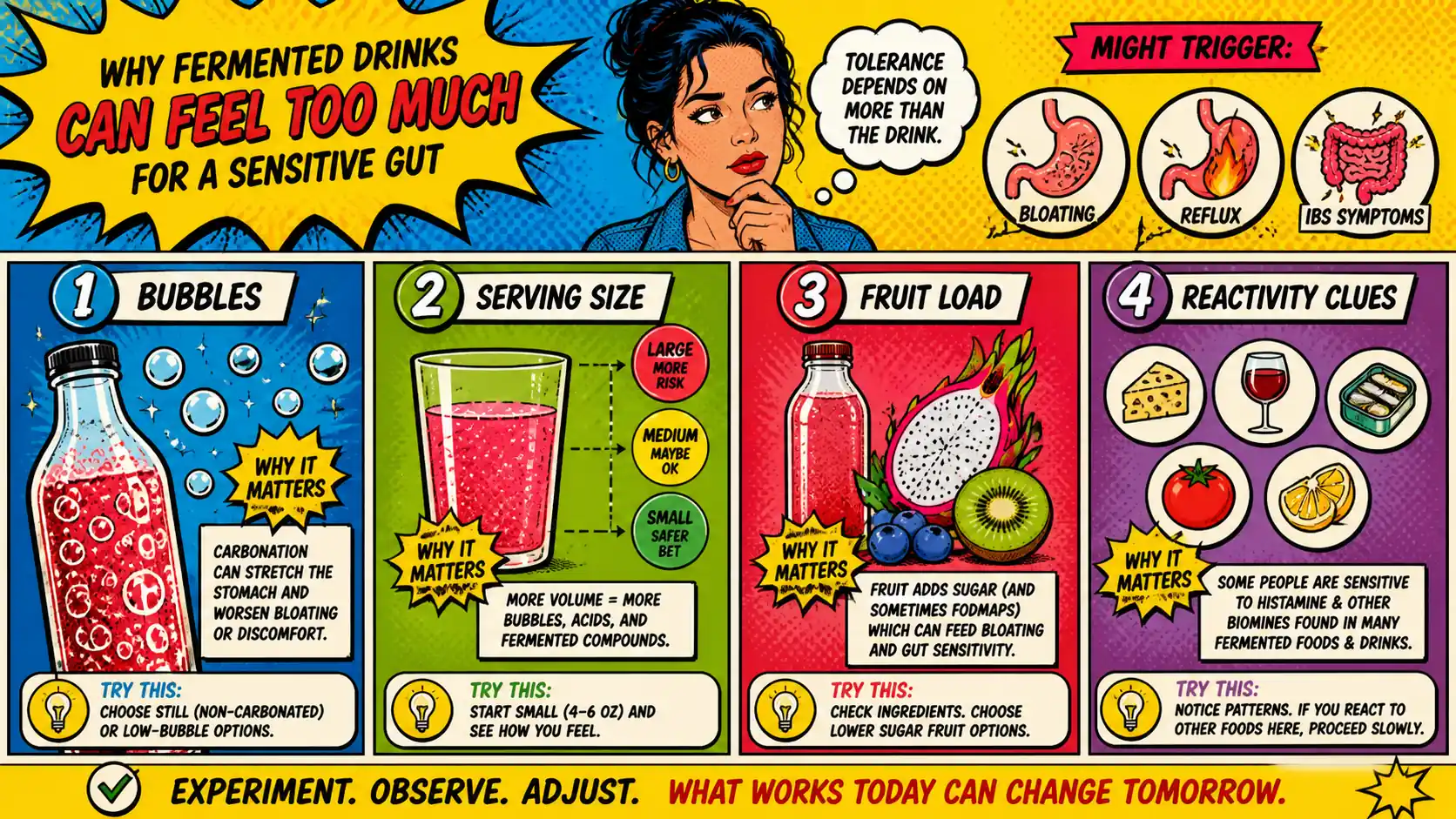
Short answer: fermented drinks can be microbiome-relevant, but they are not automatically probiotics or symptom-friendly. The beverage format adds variables that solid fermented foods may not have in the same way: carbonation, acidity, residual sugar, fruit concentrates, caffeine, alcohol traces, serving size, and sometimes histamine-style reactivity.
This page is for you if fermented drinks sound healthy on paper but leave you bloated, refluxy, loose, crampy, flushed, headachey, or unsure what to test next.
Use a different page first if your main question is the whole fermented-food category, strain-specific probiotic products, or broad healthy-food bloating. Those fit fermented foods and gut health, probiotics for IBS, or why healthy foods still cause bloating better.
Fermentation is a food process. It is not a tolerance guarantee.
ISAPP defines fermented foods as foods made through desired microbial growth and enzymatic conversion of food components 1. That definition can include fermented beverages, but it does not tell you whether a particular bottle is gentle for IBS, low FODMAP at your serving size, low histamine for your body, or proven as a probiotic.
That is where fermented drinks get tricky.
A drink can be fermented and still contain:
None of those make the drink bad. They make it a food-tolerance decision.
This is the first place marketing gets slippery.
A fermented drink may contain live microbes. That does not automatically make it a probiotic. A probiotic claim requires defined live microorganisms, an adequate amount, and a demonstrated health benefit in the host 2.
That distinction matters if you have IBS or recurring bloating. "Contains live cultures" is not the same as "this strain was studied for your symptom pattern."
Some fermented-food patterns are biologically interesting. In a 10-week trial in healthy adults, a higher-fermented-food diet was associated with increased microbiome diversity and lower selected inflammatory markers 3. That is a reason to take the category seriously.
It is not proof that a full bottle of kombucha treats IBS.
If your real question is a probiotic decision, use a strain-specific page like probiotics for IBS. If your question is "why did this bubbly drink make me feel worse?", stay here.
The most common problem is not the fermentation label. It is the stack.
You might drink a large bottle with lunch. The drink may be carbonated. It may include fruit juice, puree, honey, cane sugar, concentrated flavors, or sweeteners. The meal may already include beans, onion, garlic, wheat, raw vegetables, dairy, or a large fiber load. If you have IBS, your gut may also be more sensitive to stretch and gas.
Monash explains that FODMAPs can be fermented by gut bacteria and contribute to gas, bloating, pain, and IBS symptoms in susceptible people 4. Monash also notes that fermented foods are not automatically low FODMAP and that serving size still matters 5.
So the practical question is not:
Is this drink healthy?
It is:
What else did this drink bring into the gut at this serving size?
For many readers, the first fix is boring but useful: reduce the serving, avoid stacking it with a high-FODMAP or high-fiber meal, and test it on a quiet day.
Kombucha is often the drink people mean when they ask about fermented beverages and gut symptoms.
It is also a good example of why one label can hide many variables. Commercial kombucha products can contain tea compounds, caffeine, yeasts, bacteria, organic acids, and ethanol-related fermentation products, and their microbial and chemical profiles vary by product 6 7.
That variability matters because the symptom trigger may not be "kombucha" in one broad sense. It could be:
This is why pushing through symptoms is a poor test. It makes the signal messier. A smaller serving tells you more.
This article came from a weaker legacy idea: a dragon-fruit-kiwi fermented beverage benefits angle.
The better use of that idea is cautionary.
Kiwi can be a useful food in some constipation and GI comfort conversations. Systematic review and clinical trial literature suggest kiwifruit may improve bowel function in some constipation contexts 8 9.
But a kiwi-flavored fermented beverage is not the same intervention as eating kiwifruit in a study.
The drink may contain less whole fruit, more sugar, more acid, more bubbles, a larger serving, or other ingredients that change tolerance. Dragon fruit, kiwi, berries, ginger, or botanicals can make a label sound gentler than the actual format feels in your gut.
Healthy ingredients do not cancel out beverage mechanics.
Some reactions are bigger than bloating.
If a fermented drink repeatedly comes with flushing, itching, headache, runny nose, diarrhea, cramping, insomnia, or a wired feeling, the next question may not be FODMAPs alone. Reviews describe histamine intolerance as complex, with possible gastrointestinal and extra-intestinal symptoms, and fermented or aged foods can be relevant for some people 10 11.
Do not self-diagnose histamine intolerance from one kombucha reaction.
Do take repeated broad reactions seriously. A registered dietitian, gastroenterologist, allergist, or other qualified clinician can help separate histamine-style patterns, allergy, mast-cell questions, medication effects, IBS, reflux, and ordinary serving-size intolerance.
Use this only if your symptoms were mild and did not include warning signs.
If fermented drinks keep backfiring, you still have options.
For the whole category decision, use fermented foods and gut health. You may find that a small serving of a non-carbonated fermented food is easier than a bubbly beverage.
If the problem is not fermentation but caffeine, acidity, or a morning beverage habit, use coffee, tea, and gut symptoms to separate reflux, urgency, bloating, and microbiome claims.
If the pattern is mostly bloating after healthy foods, use why healthy foods still cause bloating. That page helps sort fiber load, dairy, FODMAPs, meal size, and constipation.
If the clues point toward FODMAP load, start with high-FODMAP foods to avoid for bloating or the basics of the low-FODMAP diet for bloating.
If you wanted a proven microbe-based intervention, separate the drink from the claim. Go to probiotics for IBS for strain-specific decisions or postbiotics if the label is blurring live microbes, inactivated microbes, and metabolites.
If reactions are broad, repeated, or confusing across many foods, widen the lens with SIBO vs IBS vs food intolerance instead of blaming one bottle forever.
If fermented drinks also bring flushing, hives, headache, or allergy-like symptoms, use histamine, fermented foods, and gut symptoms before assuming carbonation or FODMAP load is the whole answer.
| Situation | Best next read | Why |
|---|---|---|
| Fermented drinks cause flushing, hives, headache, diarrhea, or broad allergy-like symptoms | Histamine, fermented foods, and gut symptoms | It keeps histamine-style clues conservative without turning one reaction into a blanket diet rule. |
| Bubbles, acidity, or morning beverage habits seem to be the trigger | Coffee, tea, and gut symptoms | It separates caffeine, reflux, urgency, acidity, and beverage timing. |
| Healthy foods and drinks keep causing bloating | Why healthy foods still cause bloating | It checks fiber load, FODMAP load, serving size, dairy, and constipation before blaming one ingredient. |
| You are using fermented drinks as a probiotic substitute | Probiotics for IBS strains guide | It separates a beverage halo from strain-specific probiotic evidence. |
| You are adding probiotics, enzymes, or supplements because fermented drinks backfired | Supplement stack audit for IBS | It helps avoid changing too many variables at once. |
| Symptoms are severe, recurrent, systemic, or unusual for you | Doctor visit prep for IBS next steps | It helps organize reactions, foods, supplements, medicines, and timing for clinician review. |
Fermented drinks are not bad. They are just not automatically gentle.
The problem is the halo. A beverage can sound clean, probiotic, natural, fruit-forward, and microbiome-friendly while still being carbonated, acidic, sweet, caffeinated, variable, or too large a serving for your current gut.
Start smaller. Test one variable at a time. If the same symptoms repeat, believe the pattern and choose the next route. Your gut is not arguing with the idea of health. It is responding to the actual drink in the actual context.
Medical note: This article is educational and is not a diagnosis or treatment plan. Seek medical care promptly for severe or worsening abdominal pain, persistent vomiting, blood in stool, unexplained weight loss, fever, difficulty passing stool or gas, fainting, allergic-type symptoms, or symptoms that feel unusual for you.
Xam Riche is a gut health solopreneur and founder of YourFitNature, dedicated to helping people navigate digestive wellness through evidence-based information and personal experience. After years of struggling with IBS and bloating, Xam discovered the transformative power of the low FODMAP diet and now shares practical, science-backed guidance to help others find relief. While not a medical professional, Xam combines extensive research with lived experience to create accessible, empowering resources for the gut health community. Learn more about our mission
As an affiliate, we may earn from qualifying purchases.