 By • Published on April 29, 2026 • 14 min read • 4,173 views
This article is for informational and educational purposes only and does not constitute medical advice. Always consult with a qualified healthcare professional before using symptom, appetite, or gut-health information to make diagnosis or treatment decisions.
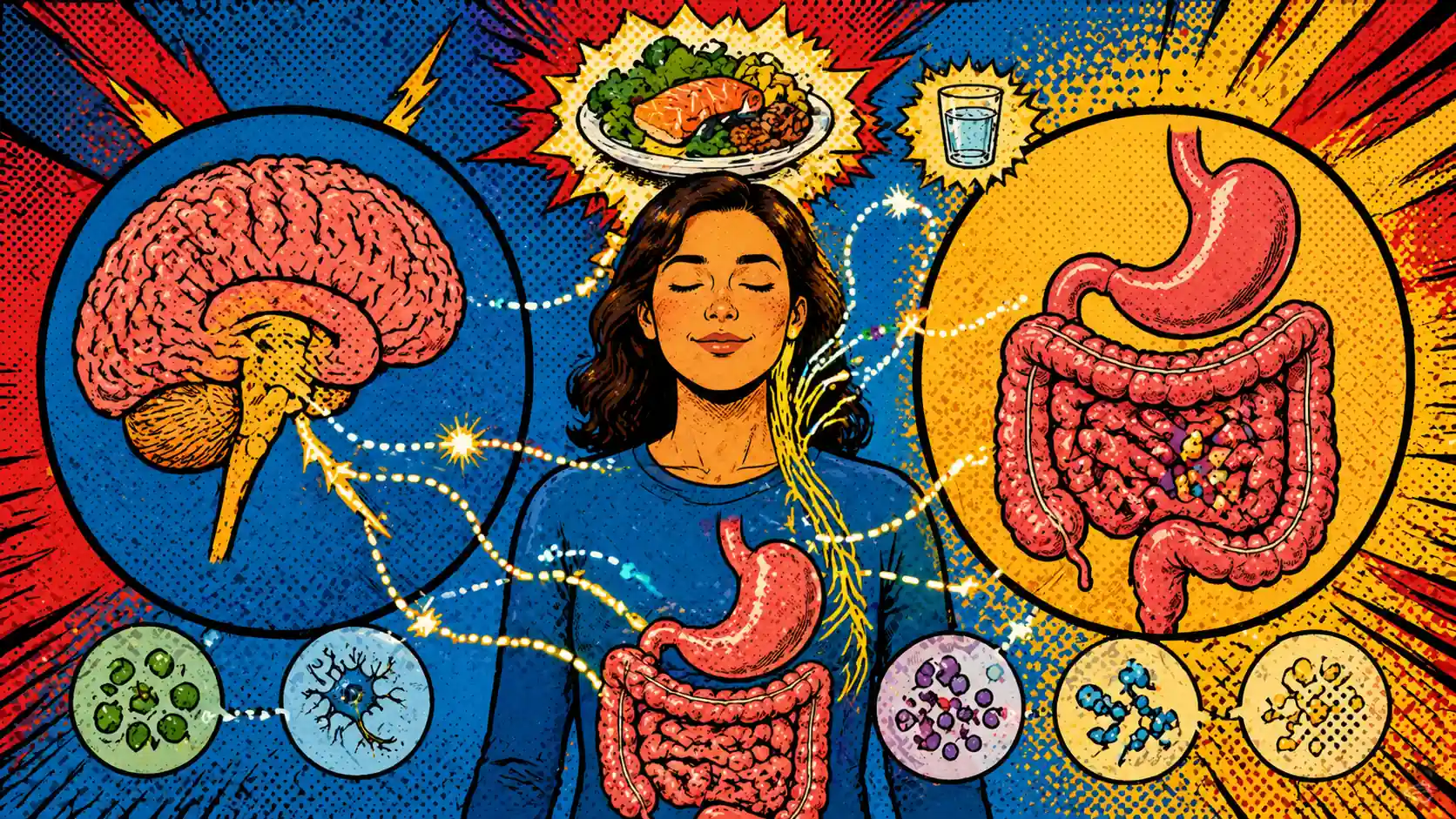
Appetite can feel simple until it does not. Some days you are hungry again an hour after eating. Other days a small meal feels strangely heavy. On stressful days cravings can get louder while digestion gets less cooperative. That does not mean your body is random or that the answer is always more discipline. It usually means you are feeling several layers of gut-brain signaling at once.
Short answer: appetite is not controlled by one switch. It reflects a conversation between gut stretch, nutrient sensing, hormones such as ghrelin, GLP-1, CCK, and PYY, fast sensory signaling through the vagus pathway, reward processing, and some microbiome-related input 1 2. That is why hunger, fullness, cravings, and digestive discomfort can feel related without being the same problem.
This page is for you if you want the bigger map behind appetite-related gut signals before deciding whether your next route is stress support, functional-dyspepsia sorting, serotonin-focused IBS-D reading, or a deeper microbiome mechanism page.
Use a different page first if your symptoms are already clearly stress-sensitive, strongly upper-GI, or mainly urgency-heavy. Start with the practical gut-brain axis, the functional dyspepsia guide, or serotonin and IBS-D.
Most people are taught to think about appetite as a willpower problem. That frame is too small.
NIDDK's Gut Feelings workshop describes interoception as the body's way of
sensing internal states such as hunger and satiety that drive food intake and
meal termination
3.
The body does not wait for a moral judgment about food. It constantly reads
internal signals and updates behavior from there.
That is what makes this article useful as a bridge. It is not an obesity page, not a medication page, and not an argument that appetite is only in your head. It is a systems page about how the gut and brain coordinate food intake.
At the simplest level, the system has several overlapping jobs:
This is why a person can feel more than one thing at once. You might be physically hungry, starting to feel stomach stretch, and still highly motivated by a rewarding food cue. Or you might not be especially hungry, but a stressful day can make cravings louder while digestion feels less comfortable. The system is layered. That is the whole point.
If your main question is already practical symptom relief, the parent article is still stress-bloating through the gut-brain axis. This page exists one level above it to explain why the appetite and digestion story can feel mixed in the first place.
One reason appetite gets confusing is that readers often use the word "hungry" for several different states.
Homeostatic appetite is the body's internal regulation layer. It is the part most closely tied to energy need, meal timing, and body-state feedback. The gut and brain track whether a meal has started, whether the stomach is stretching, and whether nutrients are arriving in the intestinal tract 4.
This is where the classic hunger-versus-fullness language fits best.
That does not mean the system is always calm or accurate. Stress, poor sleep, digestive symptoms, and anticipation can change how these signals are felt. If that sounds familiar, the next shelf is the practical gut-brain axis page.
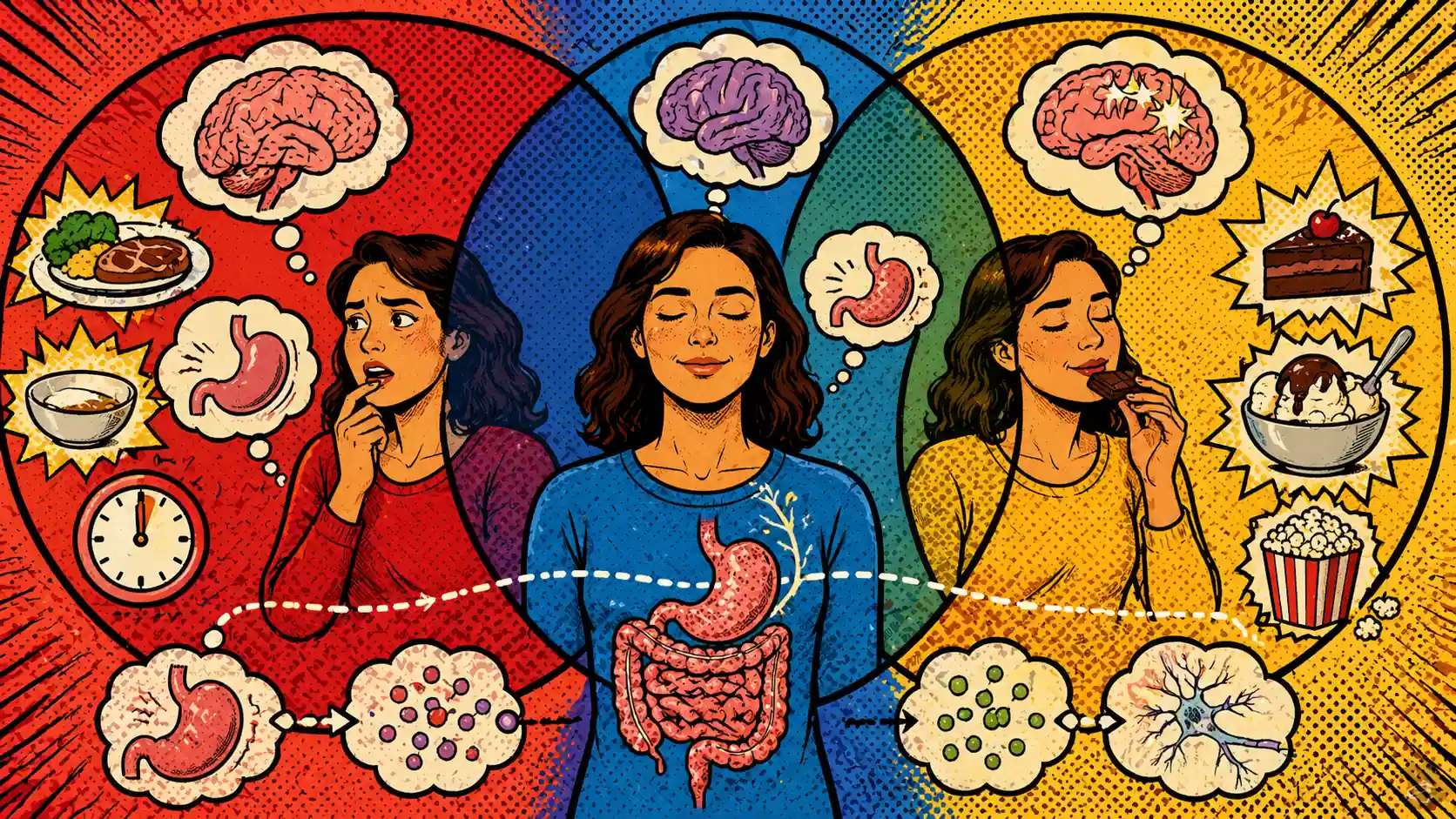
The body also has a reward layer. The 2024 appetite review describes food intake as shaped by both homeostatic and hedonic processes 5. In plain language, that means the body can seek food because it needs energy, because it expects pleasure, or because both systems are active at once.
That is where cravings, cue-driven eating, and the modern phrase "food noise" start to make more sense. The appetite system is not only asking whether you need food. It is also responding to cues, memory, routine, stress state, and expected reward.
This is the part that matters most for readers. A person can feel:
That overlap is one reason symptom loops can become exhausting. If your main problem is that gut symptoms and emotional burden are reinforcing each other, go next to IBS, anxiety, and depression.
The gut does not send one single appetite message. It uses overlapping routes.
The first layer is mechanical and chemical. A meal stretches the stomach and introduces nutrients into the intestinal tract. Those changes are part of how the body starts judging meal size, meal progression, and when braking signals should begin 6.
This matters because fullness is not only psychological. It is partly a sensing problem. The body asks: how much material has arrived, how quickly is it moving, and how does that compare with what the system expected?
If a few bites already feel like too much, especially with upper-abdominal heaviness or nausea, that is often a clue that the next route may be functional dyspepsia rather than another generic appetite article.
The hormone layer is more familiar, but it still gets oversimplified.
It helps to treat these as a conversation rather than as isolated molecules. Readers often hear one hormone name and turn it into the whole story. Real appetite signaling is more coordinated than that.
One of the most useful corrections in this field is that gut signaling is not only a slow hormone story.
NIDDK's 2018 update described a direct gut-brain communication route involving specialized enteroendocrine cells, sometimes discussed as neuropod cells, that can signal to vagal neurons on a millisecond timescale 11. A later review explains that some of these cells form synapse-like communication paths and help transmit nutrient information rapidly 12.
This is a valuable concept because it explains why the gut can influence meal experience quickly. The body is not only waiting for delayed circulating hormones. Some food-related information may be relayed through fast sensory routes as well.
If you want the narrower spoke on one serotonin-centered sensory cell type inside that larger signaling story, go next to enterochromaffin cells, serotonin, and gut pain signaling.
The vagus nerve shows up in gut-health conversations constantly. It deserves a more precise role than buzzword status.
In this article, the useful framing is simple: the vagus system is one major sensory route through which gut information can reach the brain. It helps carry signals about meal state, internal comfort, and some satiety-relevant cues 13 14.
That does not mean every appetite pattern is a vagus problem, but it does mean the nerve belongs in the map.
If the appetite map starts narrowing into bowel urgency, secretion, or fast transit, the next read is serotonin and IBS-D, which takes one signaling lane and applies it to a more specific clinical pattern.
The microbiome belongs in the appetite conversation, but it should stay in the right lane.
A 2023 review on the microbiota-gut-brain axis connects gut microorganisms with vagal communication, enteroendocrine signaling, GLP-1-related pathways, and broader appetite regulation 15. That makes the microbiome relevant here.
It also makes the field easy to overstate.
The cleanest explanation is that the microbiome may shape appetite through:
That is one reason a primary study such as Nature's sugar-preference paper matters. It showed that a post-ingestive gut-brain pathway can influence sugar preference, reinforcing the idea that the gut is part of food reward learning and not only meal volume tracking 16.
This is where restraint matters.
If you want the broader mechanism shelf that explains how microbes can shape gut-brain communication through neural, immune, serotonin, and metabolite lanes before you come back to appetite, use microbiota-gut-brain axis explained.
The microbiome can be part of the appetite story without being a clean consumer-level fix. The evidence is more indirect and more context-dependent than the basic hormone and stretch story. That means it is reasonable to say the microbiome may influence appetite, but not reasonable to say that one product, one stool test, or one trend can reliably "reset" it.
If you want the metabolite bridge behind this layer, use short-chain fatty acids. If you want the broader plant-compound science shelf, use polyphenols and the gut microbiome. If you want the upstream substrate-variety explainer, use fiber diversity and microbiome resilience.
The practical takeaway is not "ignore the microbiome." It is "rank the evidence."
That ranking protects readers from overspending, overrestricting, or expecting one explanation to do too much.
This is the section where the bridge should narrow.
Stress can change digestive timing and visceral sensitivity, so appetite can feel different even when the meal itself has not changed 17 18. If the story sounds more like "my appetite and digestion change when my nervous system changes," go to the practical gut-brain axis page.
Early fullness is not always a generic appetite issue. If small meals feel uncomfortably heavy, nausea or upper-abdominal discomfort are part of the pattern, or post-meal distress dominates, the better-fit route may be functional dyspepsia, which explains when a meal-tolerance problem fits an upper-GI gut-brain disorder more than a broad appetite question.
For a food-first option sometimes considered around nausea or meal heaviness, use ginger for nausea and digestive discomfort as a narrow fit check, not as a diagnosis.
Some readers arrive here because they know food and gut signaling matter, but their loudest problem is urgency, fast transit, or stool looseness. That is where serotonin and IBS-D becomes the better route. It takes one gut-signaling lane and applies it to a narrower urgency-heavy pattern.
Sometimes the appetite story becomes inseparable from fear, monitoring, and food-related vigilance. If every body signal starts feeling threatening and the gut symptom loop is now reshaping daily life, the next step is IBS, anxiety, and depression, which explains why symptoms and emotional burden can reinforce each other without making the illness imaginary.
Download: Gut-Brain Appetite Signals Quick Guide
Use this one-page reference if you want to separate hunger, fullness, reward pull, and symptom-overlap patterns before you chase another explanation.
This is the main emotional guardrail the article should give readers.
If appetite is a signaling system, then mixed appetite experiences are not proof that you are weak, lazy, or incapable of reading your own body. They are often proof that several layers of the system are active at once.
That does not make self-observation useless. It makes it more important to ask better questions:
Pattern recognition works better than self-judgment. That is the real value of this bridge.
Download: Gut-Brain Appetite Next-Step Router
Use this printable route sheet if you want to decide whether the next read should be stress support, early-fullness sorting, serotonin IBS-D, or deeper microbiome mechanism content.
Some patterns should push the reader out of self-sorting and into medical evaluation.
If appetite change comes with persistent vomiting, significant unintentional weight loss, bleeding, trouble swallowing, severe new abdominal pain, or a rapidly changing symptom pattern, the right next step is evaluation rather than another signaling theory. If the main problem is severe food fear, recurrent binge-restrict cycling, or major emotional distress, direct professional support matters more than another explainer article.
This page is a bridge, not a diagnosis.
Appetite is a gut-brain signaling process, not just a discipline problem.
The gut and brain coordinate hunger, fullness, reward pull, and meal experience through stretch sensing, hormones, fast vagal signaling, and some microbiome-related pathways 19 20. That helps explain why the same person can feel hungry, full, stressed, cue-driven, or symptom-sensitive in overlapping ways.
The useful move is not to chase every mechanism at once. It is to separate the pattern first.
If the next best step looks therapeutic rather than purely educational, use gut-directed hypnotherapy for IBS as the next intervention-focused read after the broader map becomes clearer.
Xam Riche is a gut health solopreneur and founder of YourFitNature, dedicated to helping people navigate digestive wellness through evidence-based information and personal experience. After years of struggling with IBS and bloating, Xam discovered the transformative power of the low FODMAP diet and now shares practical, science-backed guidance to help others find relief. While not a medical professional, Xam combines extensive research with lived experience to create accessible, empowering resources for the gut health community. Learn more about our mission
As an affiliate, we may earn from qualifying purchases.