 By • Published on May 18, 2026 • 6 min read • 1,322 views
This article is for informational and educational purposes only and does not constitute medical advice. Always consult with a qualified healthcare professional for diagnosis, testing, and treatment decisions.
A diarrhea-heavy flare is not only a bathroom problem. It is a fluid-loss problem too.
If you have IBS-D or mixed IBS, you may already have a plan for urgent bathroom runs. But the day changes when loose stool is frequent, heat or sweating is involved, vomiting joins in, or you start feeling dizzy, dry, weak, or unable to keep up with fluids.
That is where oral rehydration solution, or ORS, belongs in the conversation. It is not an IBS cure. It is not a trendy electrolyte upgrade. It is a practical fluid-and-salt replacement tool for diarrhea days when dehydration risk starts to matter.
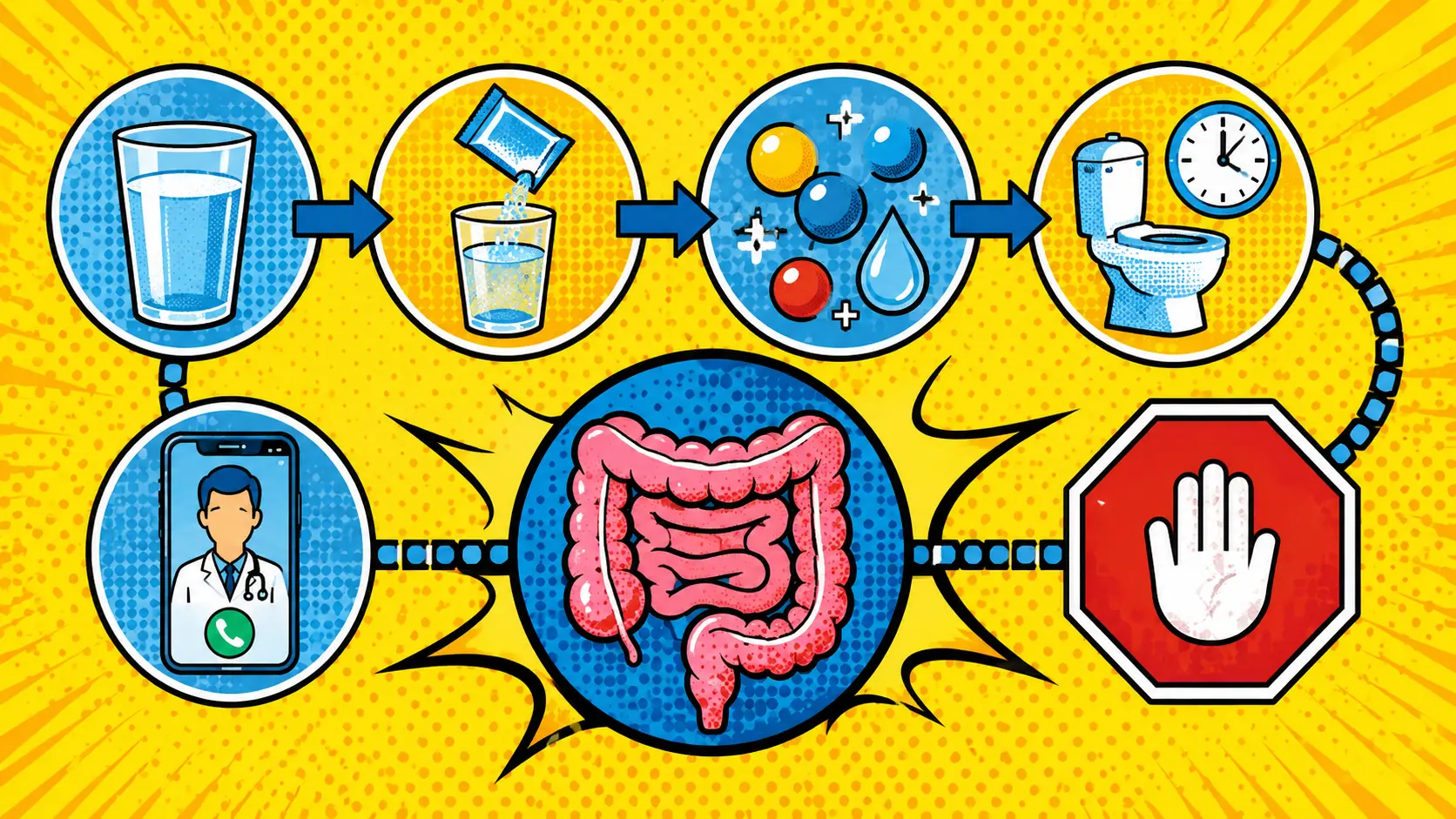
Use this page alongside the same-day IBS flare plan and the broader hydration and gut symptoms guide.
ORS can be useful, but it should not be used to delay care when the pattern is unsafe.
Get medical guidance promptly if diarrhea includes:
NIDDK lists diarrhea warning signs that include blood or pus in stool, black stool, fever, severe pain, and dehydration symptoms 1. NIDDK also notes that doctors may need to treat severe dehydration in a hospital 2.
If stop signs are present, the next step is care, not a better drink.
Oral rehydration solution is designed to replace water and salts lost during diarrhea. Packaged oral rehydration salts are mixed with clean water according to directions. The balance matters.
CDC Yellow Book guidance for travelers' diarrhea says severe fluid loss is best replaced with ORS prepared from packaged oral rehydration salts 3. That same CDC page cautions that overly sweet drinks, including sodas, can cause osmotic diarrhea if consumed in quantity.
That is why ORS is different from:
For mild diarrhea, ordinary fluids may be enough. For heavier fluid loss, ORS can be more targeted.
ORS is most relevant when the flare has a fluid-loss pattern:
| Situation | Why ORS may fit |
|---|---|
| Frequent watery stool | More fluid and salts are leaving the body |
| Diarrhea plus heat or sweating | Fluid loss stacks from two directions |
| Diarrhea plus vomiting | Drinking enough plain fluid may be harder |
| Dark urine or reduced urination | Hydration may not be keeping up |
| Dizziness or dry mouth | Dehydration risk needs attention |
| Travel or possible infection | The pattern may not be routine IBS |
If the urgency is mostly after meals but fluid loss is mild, use urgency after meals to sort caffeine, fat, sugar alcohols, meal timing, and wider-lens clues. If watery diarrhea is chronic or narrower than your usual IBS-D, compare bile-acid diarrhea vs IBS-D. If diarrhea risk is part of a larger trip plan with constipation, bathroom access, food logistics, and stop signs, use the travel constipation and diarrhea prep kit before the trip.
ORS does not diagnose the cause of diarrhea.
It does not tell you whether the pattern is IBS-D, infection, bile-acid diarrhea, inflammatory bowel disease, celiac disease, medication-related diarrhea, or another issue. It also does not replace a clinician-guided medication discussion if diarrhea is frequent, persistent, or life-limiting.
Use IBS-D medications and diarrhea options when the question is treatment. Use the IBS testing map when diarrhea is persistent, severe, new, or paired with warning signs.
Keep the plan boring:
CDC food-safety guidance also advises oral rehydration solution when severe diarrhea is present to prevent dehydration 4.
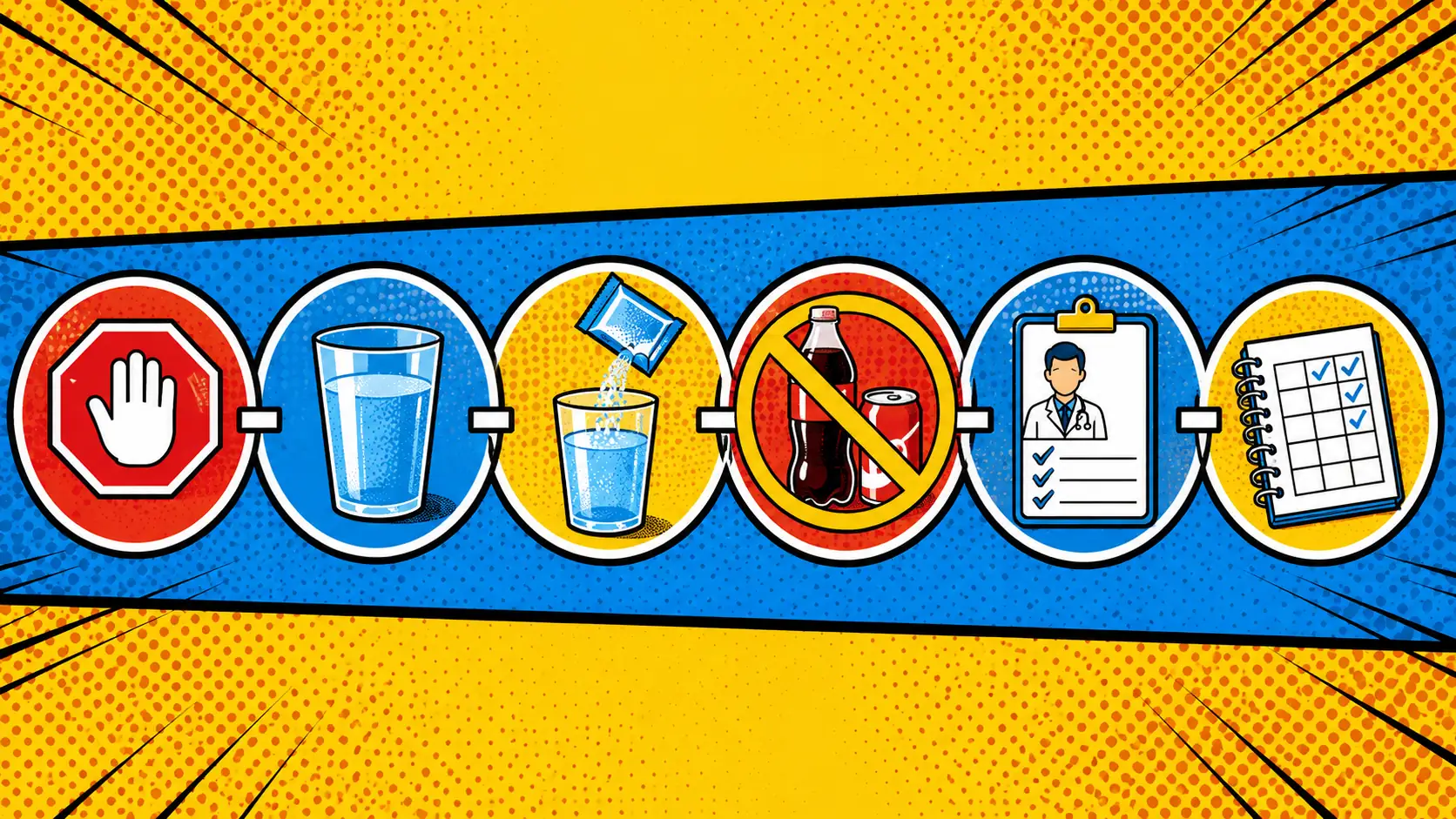
Download: Diarrhea Hydration Route Card for stop signs, ORS fit, fluid choices, and follow-up questions.
For older adults, hydration questions should be paired with a broader safety check; use caregiver guide for IBS in older adults if diarrhea, medicines, low intake, or frailty are part of the story.
| Situation | Go here next |
|---|---|
| Today is a broader noisy IBS flare | IBS flare plan |
| Fluid-loss risk is handled and you need the first foods back | What to eat after a diarrhea flare with IBS |
| Fluids, caffeine, constipation, sweat, or electrolytes are confusing | Hydration, electrolytes, and gut symptoms |
| Urgency mainly follows meals | Urgency after meals |
| Diarrhea needs a medication conversation | IBS-D medications and diarrhea options |
| Chronic watery diarrhea may be narrower than IBS-D | Bile-acid diarrhea vs IBS-D |
| Testing questions are rising | IBS tests, celiac, SIBO, calprotectin, and colonoscopy |
ORS is a hydration tool, not an IBS cure.
Use it when diarrhea creates real fluid-loss risk, especially with frequent watery stool, vomiting, heat, sweating, dizziness, dark urine, or difficulty keeping up with fluids. Do not use it to ignore blood, fever, severe pain, dehydration, persistent diarrhea, or symptoms that feel different from your baseline.
The best diarrhea-day plan is simple: stop signs first, hydration second, cause and treatment questions third.
Xam Riche is a gut health solopreneur and founder of YourFitNature, dedicated to helping people navigate digestive wellness through evidence-based information and personal experience. After years of struggling with IBS and bloating, Xam discovered the transformative power of the low FODMAP diet and now shares practical, science-backed guidance to help others find relief. While not a medical professional, Xam combines extensive research with lived experience to create accessible, empowering resources for the gut health community. Learn more about our mission
As an affiliate, we may earn from qualifying purchases.