 By • Published on May 28, 2026 • 7 min read • 3,400 views
This article is for informational and educational purposes only and does not constitute medical advice, diagnosis, nutrition counseling, therapy, or legal advice. Work with a qualified clinician, GI dietitian, therapist, school team, workplace contact, or other relevant professional for individualized support.
IBS planning can look simple on paper: eat the foods that usually work, avoid the obvious triggers, keep a symptom log, and find a bathroom when you need one.
For many neurodivergent readers, that version leaves out the hardest parts. Texture, smell, temperature, executive-function load, body cues, transitions, appointments, shared kitchens, school or work schedules, privacy, and bathroom access can shape the plan as much as the food list does.
This page is not an autism or ADHD diagnosis guide. IBS symptoms do not diagnose neurodivergence, and neurodivergence does not explain every gut symptom. The goal is more practical: make the routine visible before you add more rules.
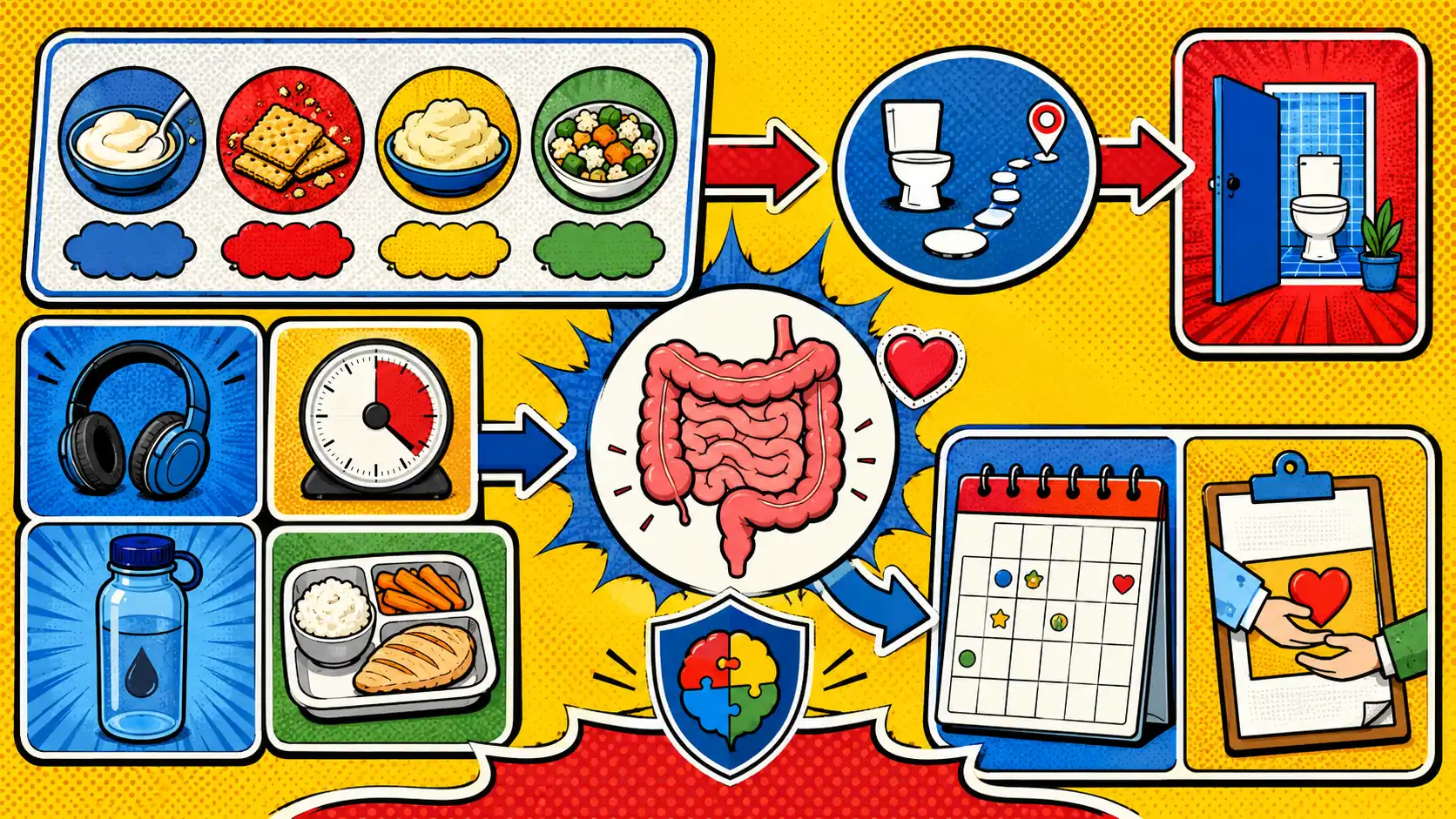
IBS commonly involves repeated abdominal pain with bowel changes such as diarrhea, constipation, or both 1. That does not make every symptom a routine-planning problem.
Move out of self-management and get medical guidance for blood or black stool, fever, dehydration, repeated vomiting, severe or worsening pain, unexplained weight loss, symptoms that are clearly outside baseline, or constipation with vomiting, swelling, or inability to pass gas or stool 2 3.
If the symptom pattern is stable enough to plan around, use doctor visit prep for IBS to bring a clearer handoff to a clinician, GI dietitian, therapist, or support team.
The mistake is treating every difficult day as a new food intolerance.
Try sorting the problem into five lanes:
| Lane | What to ask | Better route |
|---|---|---|
| Symptoms | Is this pain, bloating, urgency, constipation, diarrhea, nausea, or fullness? | Non-food IBS triggers |
| Sensory food fit | Is the barrier texture, smell, temperature, predictability, or prep noise? | IBS safe foods when appetite is low |
| Routine disruption | Did transitions, missed meals, late meals, or executive-function load change? | Meal timing and gut symptoms |
| Body cues | Are hunger, fullness, pain, urgency, or fatigue hard to notice until they are loud? | Visceral hypersensitivity |
| Bathroom access | Is the main stress privacy, route, timing, school, work, or transport? | Bathroom anxiety route map |
Research on disorders of gut-brain interaction describes complex bidirectional gut-brain patterns, not a one-cause story 4 5. For this article, that means the routine, body-state, and access lanes matter, but they do not replace medical review when the pattern changes.
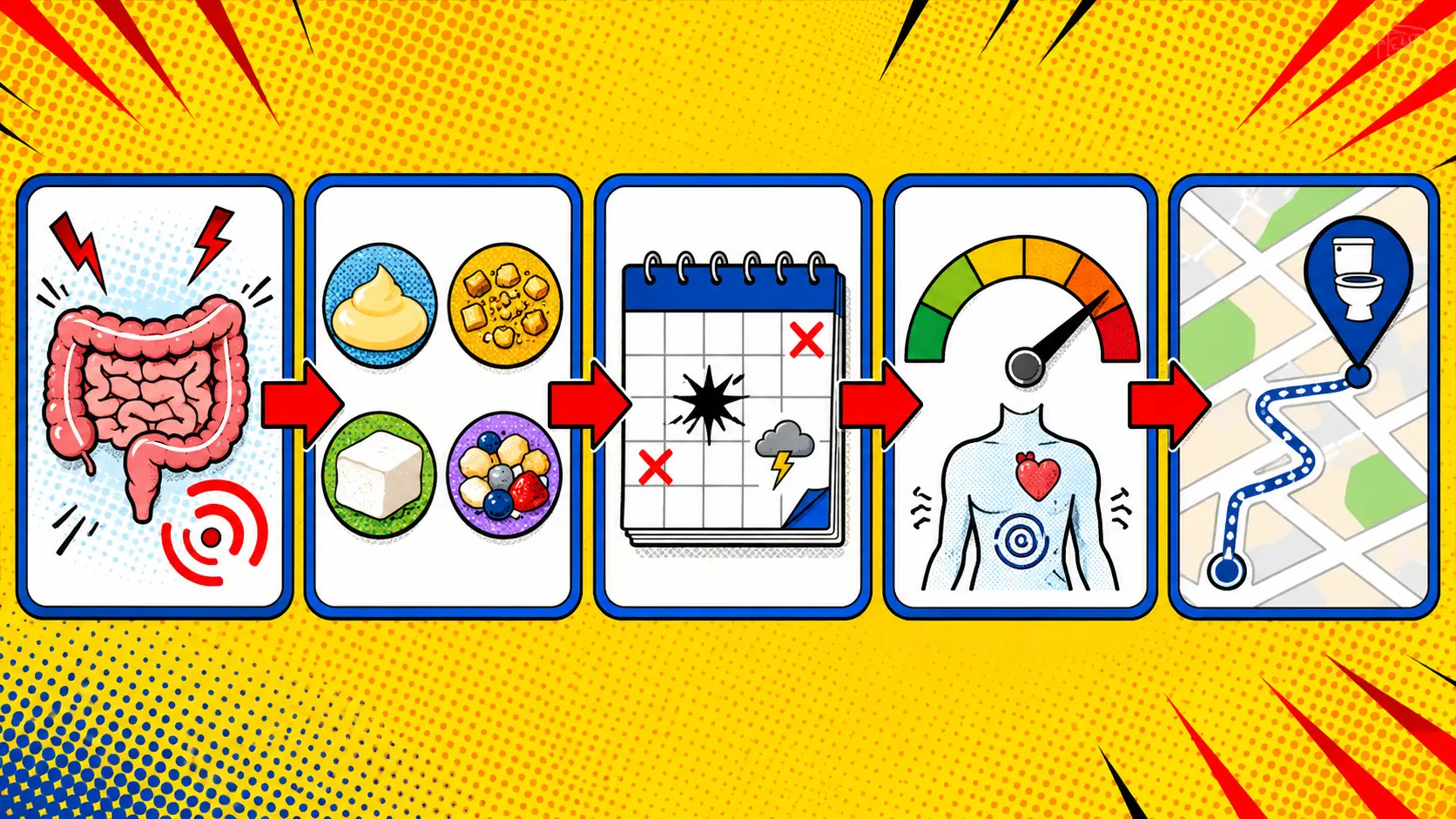
Sensory-safe food is not the same as medically safe food, and it is not the same as low FODMAP. It means the food is possible to eat with your current sensory load, appetite, access, and routine.
Autism research has documented sensory processing differences and links between sensory sensitivity and food selectivity, especially in pediatric studies 6 7 8. Use that as validation that texture and predictability are real planning variables, not as a reason to make the diet smaller forever.
Start with a food floor:
If appetite is low, use the IBS safe foods when appetite is low route instead of chasing a universal safe-food list. If you are in low FODMAP, remember that Monash frames the diet as restriction, reintroduction, and personalization, not permanent restriction 9. Use low-FODMAP personalization mistakes if the plan is getting narrower because every noisy week feels like proof.
For some readers, the issue is not knowing what to eat. It is getting from one state to the next: wake up, notice hunger, start food, tolerate the smell, switch tasks, leave for work, find a bathroom, remember water, and eat before the day collapses into one large late meal.
Use visible supports:
NIDDK frames IBS diet changes as individualized rather than a universal food rule 10. That is useful here. Keep the food list steady while testing one routine variable at a time.
If the main pattern is skipped meals, grazing, late meals, or compressed eating windows, use meal timing and gut symptoms. If the day is already a flare, use the IBS flare plan instead of trying to redesign the whole routine.
Bathroom planning is not overreacting. It is access design.
Write down:
Then ask whether the problem is symptoms, access, or fear. Urgency and diarrhea need a symptom route. A locked, noisy, far-away, or public bathroom needs an access route. Fear after a bad experience may need a support route. The bathroom anxiety route map can help you separate those lanes without pretending the symptoms are imaginary.
If stress load is making symptoms louder, use stress and bloating through the gut-brain axis. If ordinary digestion feels painfully amplified, use visceral hypersensitivity in IBS.
Download: Neurodivergent IBS Routine and Bathroom Planning Card to separate symptoms, sensory food fit, routine disruption, body cues, bathroom access, and stop signs.
Bring support in sooner if the plan depends on more self-control than you have available.
Useful support might include:
CDC descriptions of autism and ADHD can help name support needs, but diagnosis and accommodations require qualified local guidance 11 12. For a food-first low-FODMAP start, use how to start low FODMAP. For a broader appointment handoff, use doctor visit prep.
| Your situation | Read next |
|---|---|
| Food is not the whole trigger pattern | Non-food IBS triggers decision guide |
| Appetite is low or only a few foods feel possible | IBS safe foods when appetite is low |
| Low FODMAP is getting smaller instead of more personalized | Low-FODMAP personalization mistakes |
| Missed meals, transitions, or late meals blur the signal | Meal timing and gut symptoms |
| Bathroom fear or access is shaping daily choices | Bathroom anxiety route map |
| Symptoms need a clinician handoff | Doctor visit prep for IBS |
Neurodivergent IBS planning works better when the routine is visible.
Before cutting another food, separate symptoms, sensory food fit, routine disruption, body cues, and bathroom access. Build a small food floor, test one routine variable at a time, and keep bathroom logistics separate from shame.
If symptoms are new, severe, persistent, bloody, feverish, dehydrating, paired with weight loss, or outside your baseline, stop routine troubleshooting and get medical support. If the safe-food list keeps shrinking, bring in a GI dietitian or clinician before the plan becomes harder to live with than the symptoms.
Xam Riche is a gut health solopreneur and founder of YourFitNature, dedicated to helping people navigate digestive wellness through evidence-based information and personal experience. After years of struggling with IBS and bloating, Xam discovered the transformative power of the low FODMAP diet and now shares practical, science-backed guidance to help others find relief. While not a medical professional, Xam combines extensive research with lived experience to create accessible, empowering resources for the gut health community. Learn more about our mission
As an affiliate, we may earn from qualifying purchases.