 By • Published on May 8, 2026 • 8 min read • 3,452 views
This article is for informational and educational purposes only and does not constitute medical advice. Always consult with a qualified healthcare professional before using symptom information to make diagnosis or treatment decisions.
Meal timing and gut symptoms can be easy to underestimate because the food gets all the attention. You eat the same rice bowl, smoothie, salad, coffee, snack, or low-FODMAP dinner, but one day it is quiet and another day it feels like a mistake. The difference may not be a hidden ingredient. It may be the setup around the meal.
Maybe breakfast disappeared, coffee carried the morning, lunch became a few snacks, and dinner became the largest meal of the day. Maybe grazing helped you avoid hunger but made bloating build from noon to bedtime. Maybe reflux only shows up when dinner is late and you lie down soon after. Maybe the meal was not the main problem at all because constipation had already made the abdomen feel pressurized.
This is not a fasting plan, a breakfast rule, or an IBS cure promise. It is a way to make the pattern easier to read. The same food can behave differently in a different meal rhythm, and a clean test changes one variable at a time.
If your "safe" meals still backfire, keep the broader guide to fat, sugar alcohols, and post-meal symptoms nearby. This page handles the timing lane: skipped meals, grazing, compressed eating windows, late dinners, and irregular routines.
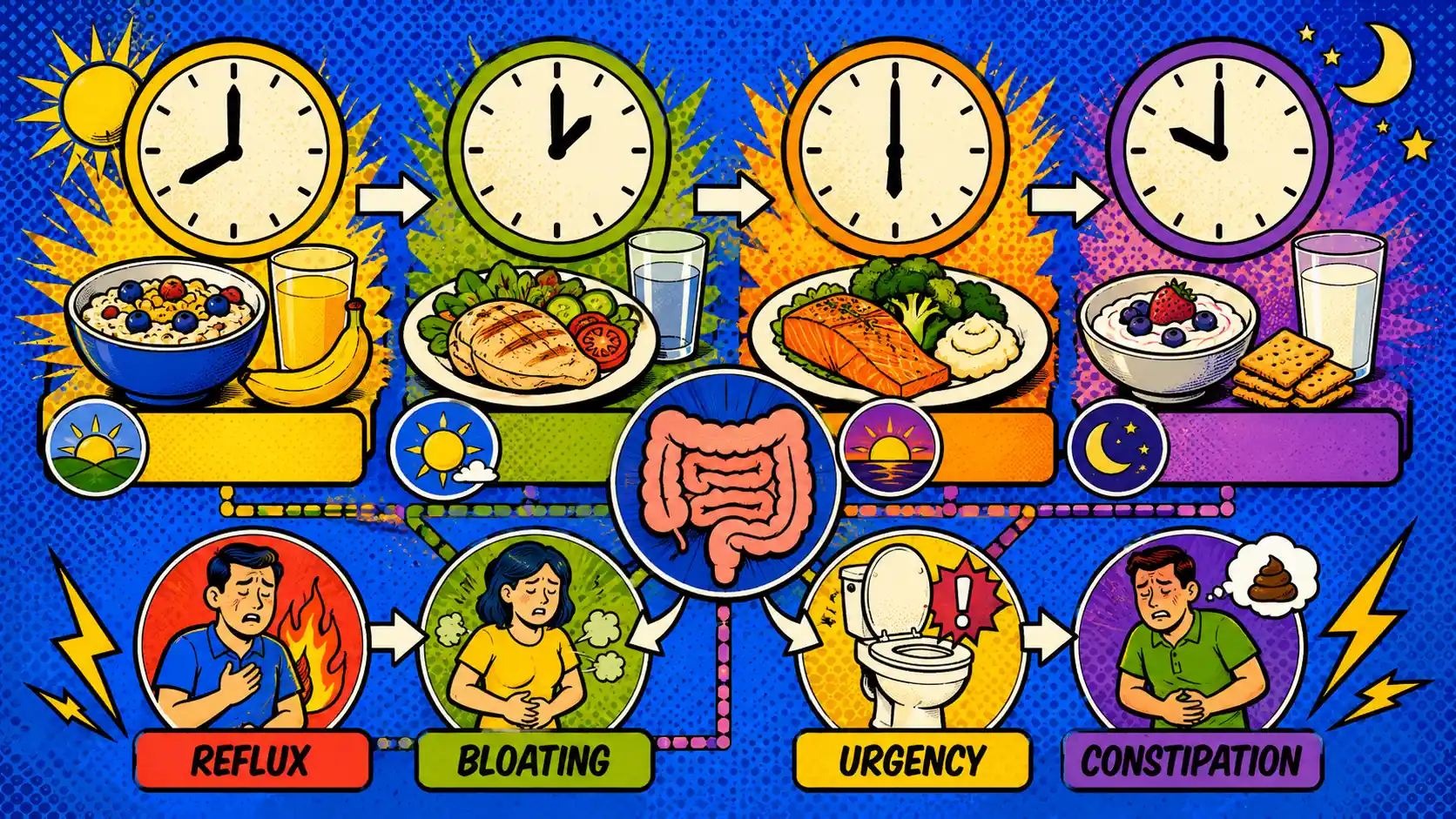
Post-meal symptoms are rarely a single-variable story. A loud meal can involve the food itself, serving size, fat load, caffeine, carbonation, sugar alcohols, added fibers, stress, reflux position, gut sensitivity, and the bowel pattern you brought into the meal. NIDDK's IBS nutrition guidance emphasizes working with diet changes in an individualized way rather than treating one food rule as the answer for every person 1.
Meal timing changes the context around those variables. A normal portion may feel fine at lunch but heavy at 10 p.m. Coffee may be tolerated with breakfast but feel harsher when it becomes breakfast. A low-FODMAP dinner can still feel loud if it is the first substantial meal after a long gap 2.
The practical question is not "What is the perfect meal schedule?" The better question is: "Which timing pattern makes my symptoms easier or harder to read?"
Skipping meals can turn a symptom diary into a misleading food diary. You may blame the dinner ingredient, but the louder variable may be the long gap before it, the speed of eating, the larger portion, the extra caffeine, or the total amount of food arriving at once.
This matters for urgency-prone readers because a large catch-up meal can blur the line between a true trigger and a large gut stimulus. If urgency is the main symptom, use this page with IBS-D and low FODMAP rather than assuming every urgent episode means a new food has to go.
A clean test does not require a perfect schedule. For seven days, keep familiar foods stable and compare long-gap days with steadier-spacing days. If urgency, bloating, or reflux is calmer when the same foods are spaced more evenly, timing is part of the pattern.
Grazing can be useful when large meals are uncomfortable. It can also make symptoms harder to interpret because the gut is always receiving another input. If bloating builds all afternoon, the culprit may not be the last snack. It may be the total stack of portions, fiber bars, sweeteners, caffeine, carbonation, or incomplete bowel emptying.
The test is not "never snack." It is to compare a grazing day with a more defined rhythm: three meals, or three meals plus one planned snack. Keep the food choices similar. Watch whether the symptom curve becomes clearer.
If the pattern is "everything bloats me," check the meal rhythm before cutting more foods. Then route to why healthy foods still cause bloating if plant foods, fiber, or "healthy" products are the bigger clue.
Late meals matter most when reflux, regurgitation, throat burning, cough after lying down, sour taste, or nighttime symptoms are part of the picture. NIDDK notes that for people with GERD symptoms at night or when lying down, eating at least 3 hours before lying down or bedtime may improve symptoms 3.
That does not mean every person needs an early-dinner rule. It means late meals are worth testing when the symptom pattern points upward. If dinner at 9 p.m. followed by the couch or bed is reliably louder than the same dinner earlier, that is useful information.
For symptom identification, use what acid reflux symptoms can look like. For early fullness, nausea, upper-abdominal pressure, or meal-related discomfort that does not fit reflux, route to functional dyspepsia.
Meal timing also interacts with stool rhythm. If stool is backing up, a meal can feel like the trigger when the deeper issue is pressure, gas trapping, and slow movement. NIDDK's constipation nutrition guidance includes fluid, fiber, and care-seeking context rather than treating constipation as a single food problem 4.
This is why bloating that worsens across the day should be checked against the constipation and bloating connection. Ask: did the symptoms follow this meal, or did the meal arrive on top of several days of incomplete emptying?
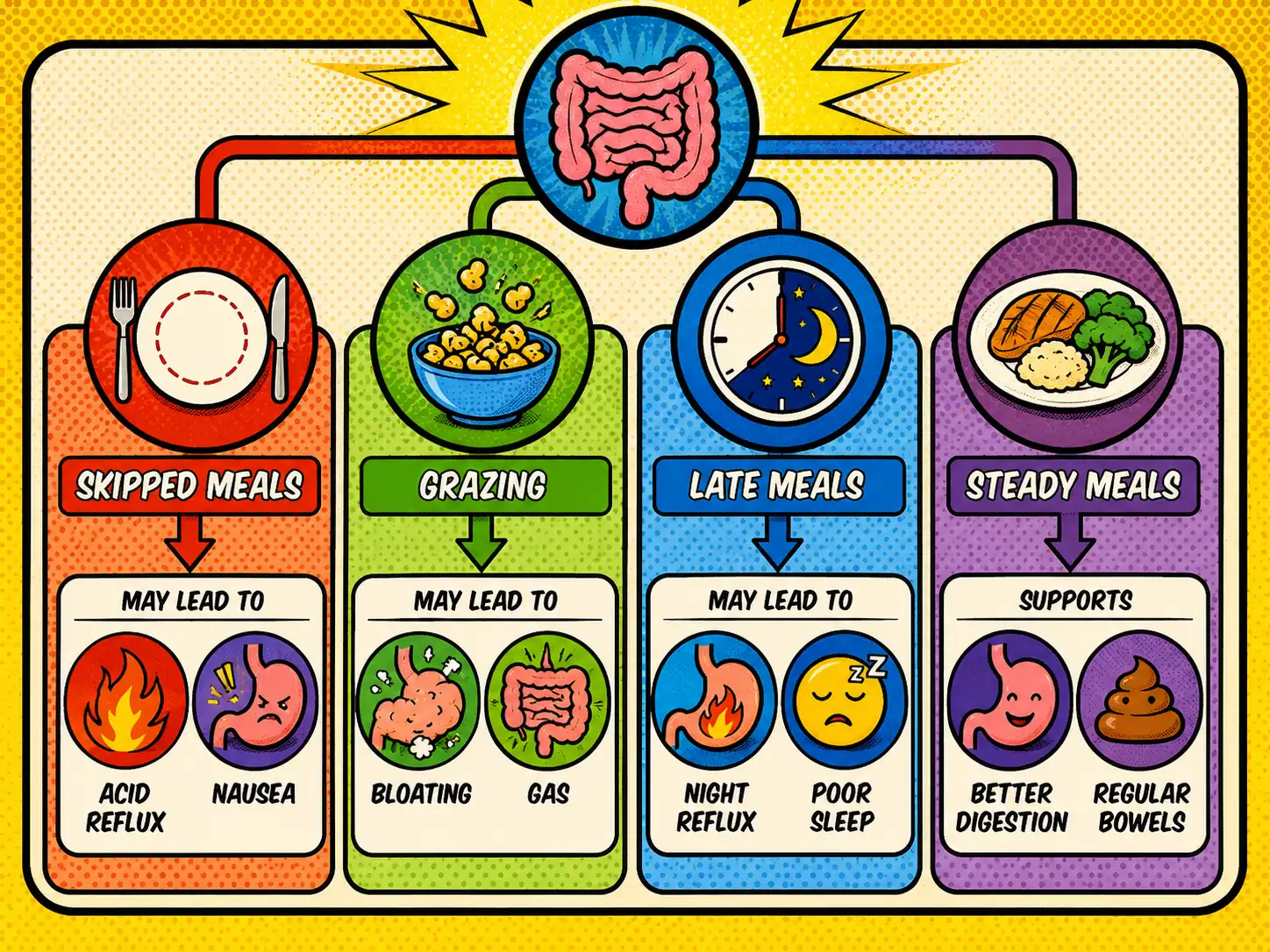
Use this as a short test, not a new rulebook.
Download: Meal Timing Symptom Audit
The audit is successful even if it does not "fix" symptoms. It may show that timing matters, that food composition matters more, that constipation is the driver, or that the pattern needs medical review.
Stop the timing audit and seek medical guidance if symptoms are severe, progressive, bloody, feverish, dehydrating, associated with unexplained weight loss, or dominated by persistent watery diarrhea. Meal timing can make a pattern clearer, but it should not delay care when the pattern is unsafe.
Download: Steady Meal Rhythm Reset
| If this is the main pattern | Best next read |
|---|---|
| The meal is rich, sweetened, caffeinated, or product-heavy | Fat, sugar alcohols, and post-meal symptoms |
| Urgency dominates after meals | IBS-D and low FODMAP |
| Bloating builds with incomplete stool emptying | Constipation and bloating |
| Poor sleep or irregular sleep makes the same rhythm harder to read | Sleep and gut symptoms in IBS |
| Blood sugar, carbohydrate timing, appetite, diabetes medicines, or glucose notes also matter | Low-FODMAP with diabetes, blood sugar, and gut symptoms |
| Burning, regurgitation, or lying-down symptoms dominate | Reflux-like symptoms |
| Early fullness, nausea, or upper-abdominal pressure dominates | Functional dyspepsia |
| Today is an active flare and timing is only one clue | IBS flare plan |
| Classes, shifts, or commuting keep disrupting the rhythm | IBS at work, school, and commuting |
| Night shifts, rotating shifts, or early starts keep moving both sleep and meals | Shift work, sleep, meal timing, and gut symptoms |
| Transitions, reminders, sensory food limits, or bathroom access make meal rhythm hard to keep | Neurodivergent IBS routines |
| Ramadan fasting compresses meals, fluids, caffeine, and bowel routine into a narrower window | Ramadan fasting, meal timing, and IBS symptoms |
If the timing problem shows up around workouts or races, use IBS for Athletes to separate meal timing from hydration, fueling, intensity, and recovery variables. If the question is narrower than sports fueling, use workout timing and post-exercise gut symptoms to sort the before, during, and after-exercise windows.
For most symptom-prone readers, the next move is modest: change the rhythm before shrinking the food list again. If the same foods feel calmer in a steadier pattern, you have learned something useful. If they do not, the next layer may be food composition, constipation, reflux, upper-GI overlap, or a clinician-led review.
Xam Riche is a gut health solopreneur and founder of YourFitNature, dedicated to helping people navigate digestive wellness through evidence-based information and personal experience. After years of struggling with IBS and bloating, Xam discovered the transformative power of the low FODMAP diet and now shares practical, science-backed guidance to help others find relief. While not a medical professional, Xam combines extensive research with lived experience to create accessible, empowering resources for the gut health community. Learn more about our mission
As an affiliate, we may earn from qualifying purchases.