 By • Published on May 14, 2026 • 7 min read • 3,594 views
This article is for informational and educational purposes only and does not constitute medical advice. Always consult with a qualified healthcare professional before using symptom information to make diagnosis or treatment decisions.
My symptoms are worse after poor sleep or irregular sleep.
That question is easy to turn into a food-only project, but this page is built as a route map. It helps you compare the pattern, identify the variable that deserves the first test, and notice when the safer next step is medical review instead of another restriction.
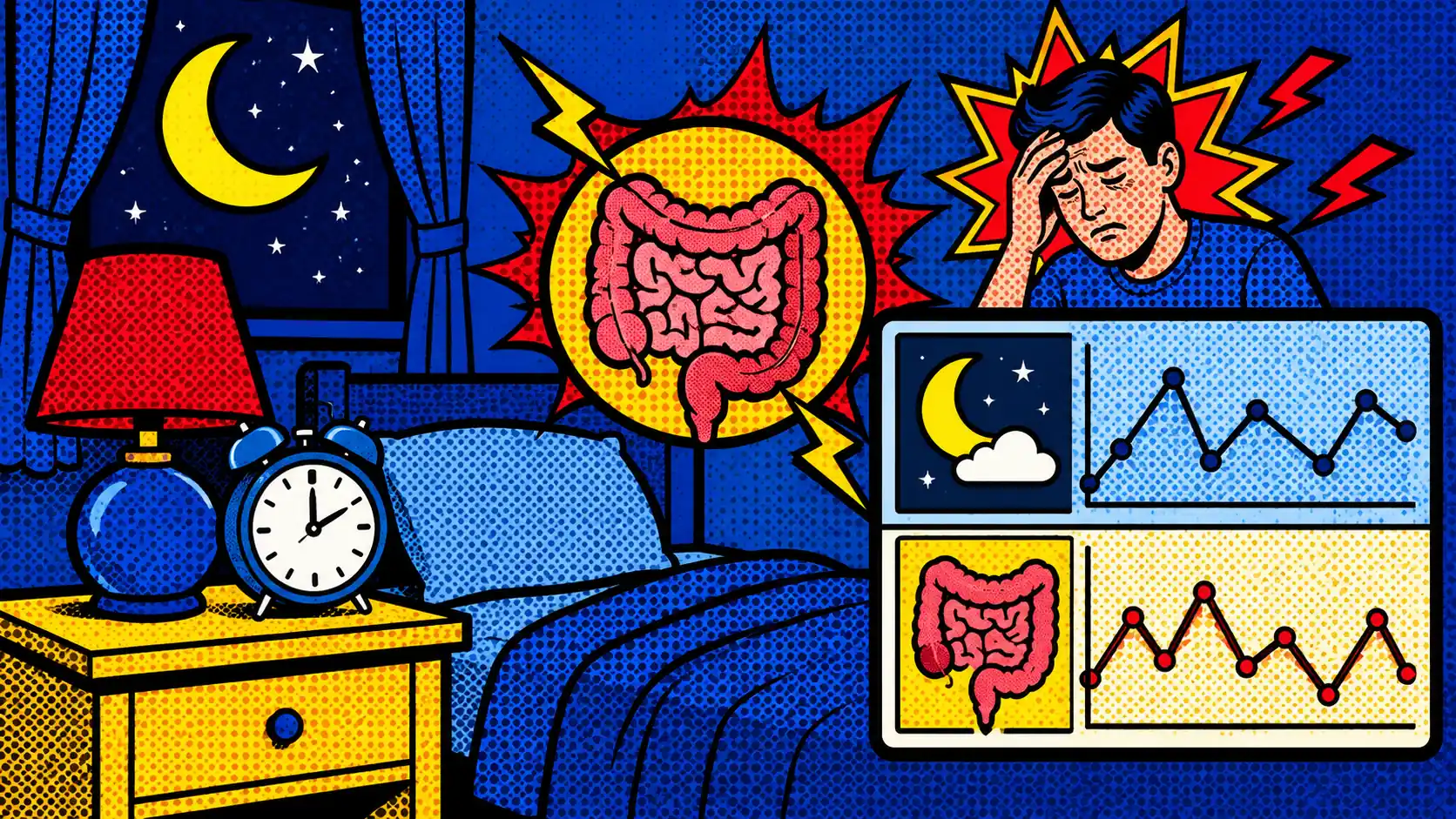
Poor sleep does not prove that sleep caused the flare. It changes the background conditions that make a sensitive gut easier to irritate.
NIDDK describes IBS as a disorder of brain-gut interaction, where pain and bowel changes can happen because the brain and gut are not coordinating normally 1. That framing matters because sleep sits upstream of several variables readers often blame on food alone: stress reactivity, pain sensitivity, caffeine use, meal rhythm, and the consistency of the next day's routine.
Recent work makes the bridge more concrete. A 2024 study found that poor subjective sleep quality predicted higher next-day abdominal pain and lower GI symptom levels in people with IBS 2. That does not mean one bad night explains everything, but it does justify treating sleep as a meaningful context signal rather than background noise.
| If the lead pattern is... | Ask first | Usually test first |
|---|---|---|
| Symptoms flare after short or fragmented nights | Is poor sleep quality the clearest repeated signal? | Bedtime, wake time, subjective sleep quality, next-day symptoms |
| Symptoms worsen after late meals plus short sleep | Is rhythm, not one food, the stronger clue? | Meal timing, bedtime gap, stool timing |
| Bad nights lead to more caffeine and worse urgency | Is caffeine amplifying the next-day pattern? | Sleep quality, caffeine dose, urgency |
| Pain feels louder after poor sleep even when meals are similar | Is the issue more gut-brain amplification than a new food trigger? | Pain, stress load, sleep quality, stool pattern |
That table keeps the article in its proper lane. Sleep is not a diagnosis and it is not a universal trigger. It is a pattern amplifier that can help explain why the same foods sometimes land differently on different days.
One reason sleep-related flares are easy to misread is that the next day often changes in clusters:
If every one of those changes after poor sleep, then cutting another food may look decisive while the real signal is simply buried. The practical move is to separate sleep quality from the second-order changes that follow it.
For one week, record:
If symptoms are worse only after short or poor-quality nights, start with rhythm and recovery. If symptoms worsen mainly after late meals plus short sleep, test meal timing before adding more diet rules. If bad nights mainly lead to more caffeine and urgency, the next best read may be Meal timing and gut symptoms or a caffeine-specific route rather than another elimination experiment.
Sleep is often most useful when you read it beside the wider gut-brain picture. If stress load and body arousal are rising with the same flare pattern, use Stress, bloating, and the gut-brain axis. If normal gas or stool movement feels disproportionately painful, route to Visceral hypersensitivity in IBS.
This keeps the article from promising too much. A sleep pattern can explain why symptoms become louder without claiming that sleep is the only cause of the symptoms themselves.
Sleep work is not a substitute for evaluation when symptoms are new, severe, bloody, feverish, progressively worsening, or clearly outside the usual pattern. NIDDK notes that IBS symptoms include abdominal pain and bowel changes, but also that diagnosis depends on the symptom pattern over time rather than one isolated bad stretch 3.
If there is rectal bleeding, unexplained weight loss, persistent vomiting, anemia, or pain that no longer behaves like your familiar IBS pattern, do not let "I slept badly" become the explanation that delays review.
| If this is the pattern | Start here | Why |
|---|---|---|
| Stress, bloating, and the gut-brain axis fits best | Stress, bloating, and the gut-brain axis | Use this when stress load and body arousal are part of the pattern. |
| Visceral hypersensitivity in IBS fits best | Visceral hypersensitivity in IBS | Use this when normal gas or stool movement feels unusually painful. |
| IBS treatment options fits best | IBS treatment options | Use this when sleep is one part of a broader treatment plan. |
| Meal timing and gut symptoms fits best | Meal timing and gut symptoms | Use this when late meals, skipped meals, or irregular rhythm are part of the sleep story. |
| Symptoms track with short sleep plus more caffeine | Compare sleep quality and stimulant timing | The second-day pattern may matter as much as the night itself. |
| Symptoms are severe, new, bloody, feverish, dehydrating, or rapidly worsening | Medical review | Safety comes before trigger experiments. |
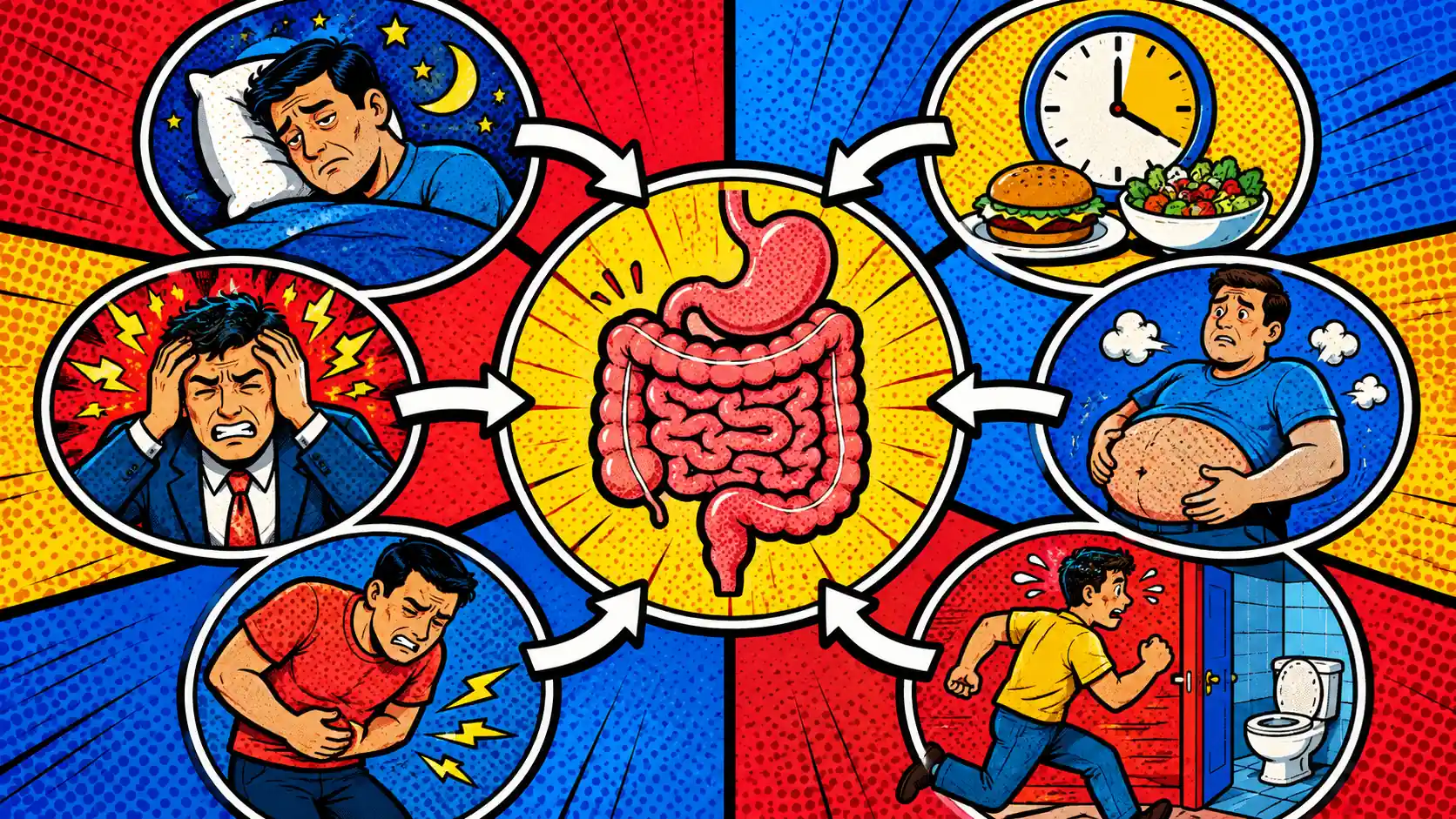
Download: Sleep and Gut Symptom Pattern Tracker
Use the sheet for a short experiment window. Write down the symptom, timing, context, and what changed. The pattern should help you choose the next route without adding more noise.
The goal is not to grade your sleep. It is to see whether poor sleep, late meals, caffeine, and next-day symptoms are moving together or whether one of those variables is doing most of the work.
If you are not sure whether food, sleep, stress, movement, hydration, cycle timing, or medications are carrying the pattern, use the non-food IBS triggers decision guide as the broader route map.
| Situation | Best next read |
|---|---|
| Use this when stress load and body arousal are part of the pattern | Stress, bloating, and the gut-brain axis |
| Use this when normal gas or stool movement feels unusually painful | Visceral hypersensitivity in IBS |
| Use this when sleep is one part of a broader treatment plan | IBS treatment options |
| Use this when late meals, skipped meals, or irregular rhythm are part of the sleep story | Meal timing and gut symptoms |
| Use this when shift work, night shifts, or rotating schedules keep moving sleep and meals | Shift work, sleep, meal timing, and gut symptoms |
Sleep is best treated as a gut-brain context signal. It can make symptoms louder, shift the next day's routine, and change how much stress, caffeine, or meal irregularity the gut has to absorb.
The useful move is to sort the pattern before adding more rules. Track what actually changed, keep sleep beside meal timing and stress rather than above everything else, and escalate symptoms that are severe, new, progressive, bloody, dehydrating, or outside your familiar baseline.
Xam Riche is a gut health solopreneur and founder of YourFitNature, dedicated to helping people navigate digestive wellness through evidence-based information and personal experience. After years of struggling with IBS and bloating, Xam discovered the transformative power of the low FODMAP diet and now shares practical, science-backed guidance to help others find relief. While not a medical professional, Xam combines extensive research with lived experience to create accessible, empowering resources for the gut health community. Learn more about our mission
As an affiliate, we may earn from qualifying purchases.
Choose a focused guide for what you are noticing or deciding next.