 By • Published on May 25, 2026 • 6 min read • 4,547 views
This article is for informational and educational purposes only and does not constitute medical advice. Use individualized guidance from a qualified healthcare professional for persistent, severe, new, or concerning symptoms.
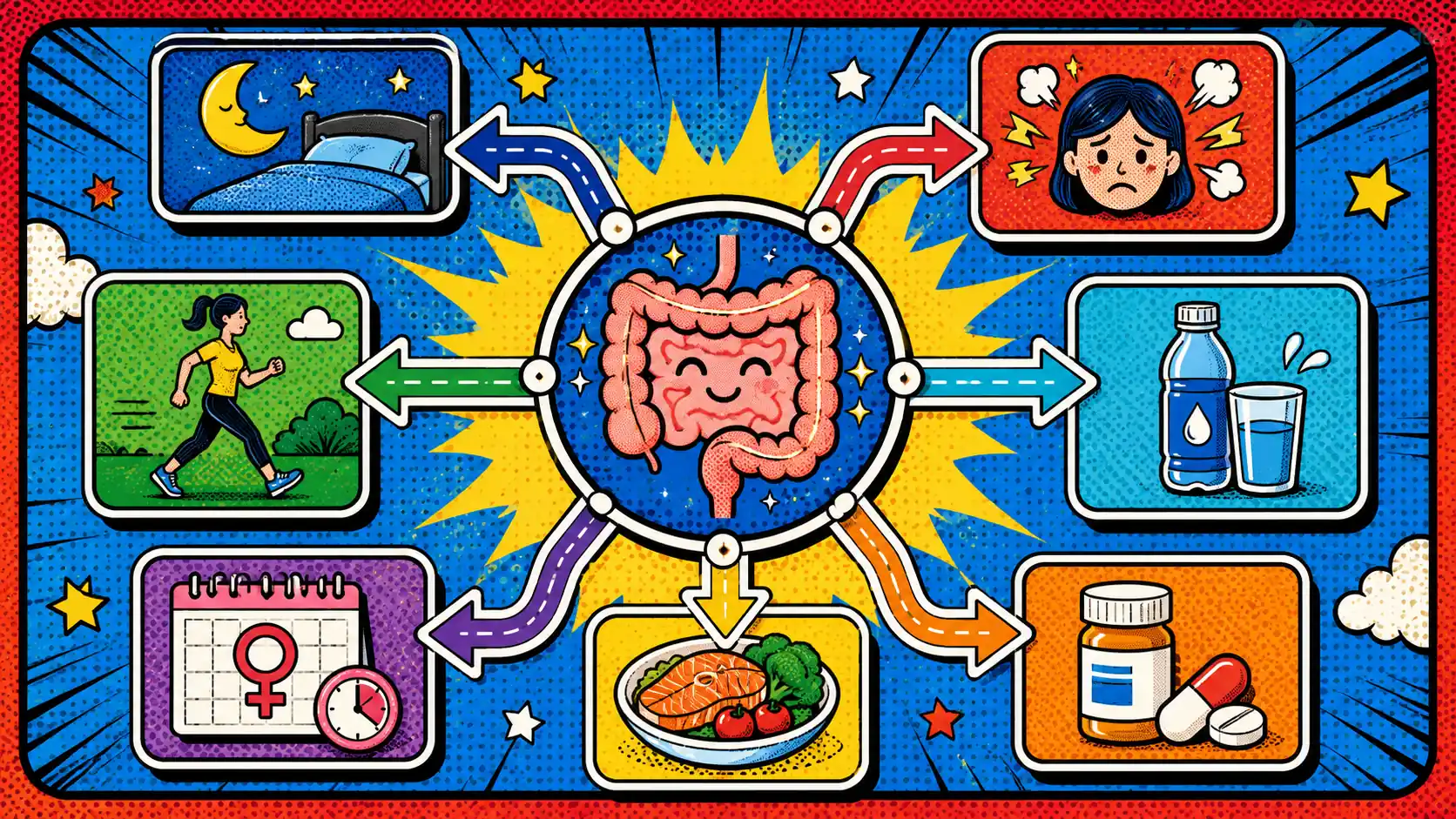
Food is often the loudest suspect in IBS.
That makes sense. Meals happen right before many symptoms. Food changes feel actionable. Low-FODMAP lists, fiber choices, coffee timing, alcohol, fat, and portion size can all matter.
But food is not the whole map. If you blame every flare on the last thing you ate, you can miss sleep debt, stress load, menstrual cycle timing, hydration, movement changes, medication effects, urgency fear, illness, or a symptom pattern that needs medical review.
NIDDK describes IBS treatment as potentially including diet changes, lifestyle changes, mental health therapies, probiotics, and medicines depending on the person and symptom pattern 1. That broad care frame is the point of this page: food is one lane, not the whole road system.
Use this table before cutting another food.
| Pattern | Non-food lane to check | Better next route |
|---|---|---|
| Symptoms are worse after short or fragmented sleep | Sleep timing, caffeine, late meals, recovery | Sleep and gut symptoms |
| Symptoms flare during high-pressure weeks | Stress load, body arousal, pain sensitivity | Stress and IBS |
| Symptoms cluster around workouts or inactivity | Movement, intensity, heat, recovery, timing | Movement and gut symptoms |
| Symptoms change around periods or cycle phases | Cycle timing, pain overlap, stool changes | Menstrual cycle and IBS symptoms |
| Constipation, dizziness, or diarrhea follows fluid shifts | Hydration, sweat, ORS fit, electrolytes | Hydration and gut symptoms |
| Symptoms started after a new product or medicine | Medication or supplement timing | Medication side effects vs IBS |
| Symptoms are new, severe, or different | Stop trigger-hunting | Doctor visit prep |
This does not mean food is innocent. It means food should compete with the other variables instead of automatically winning.
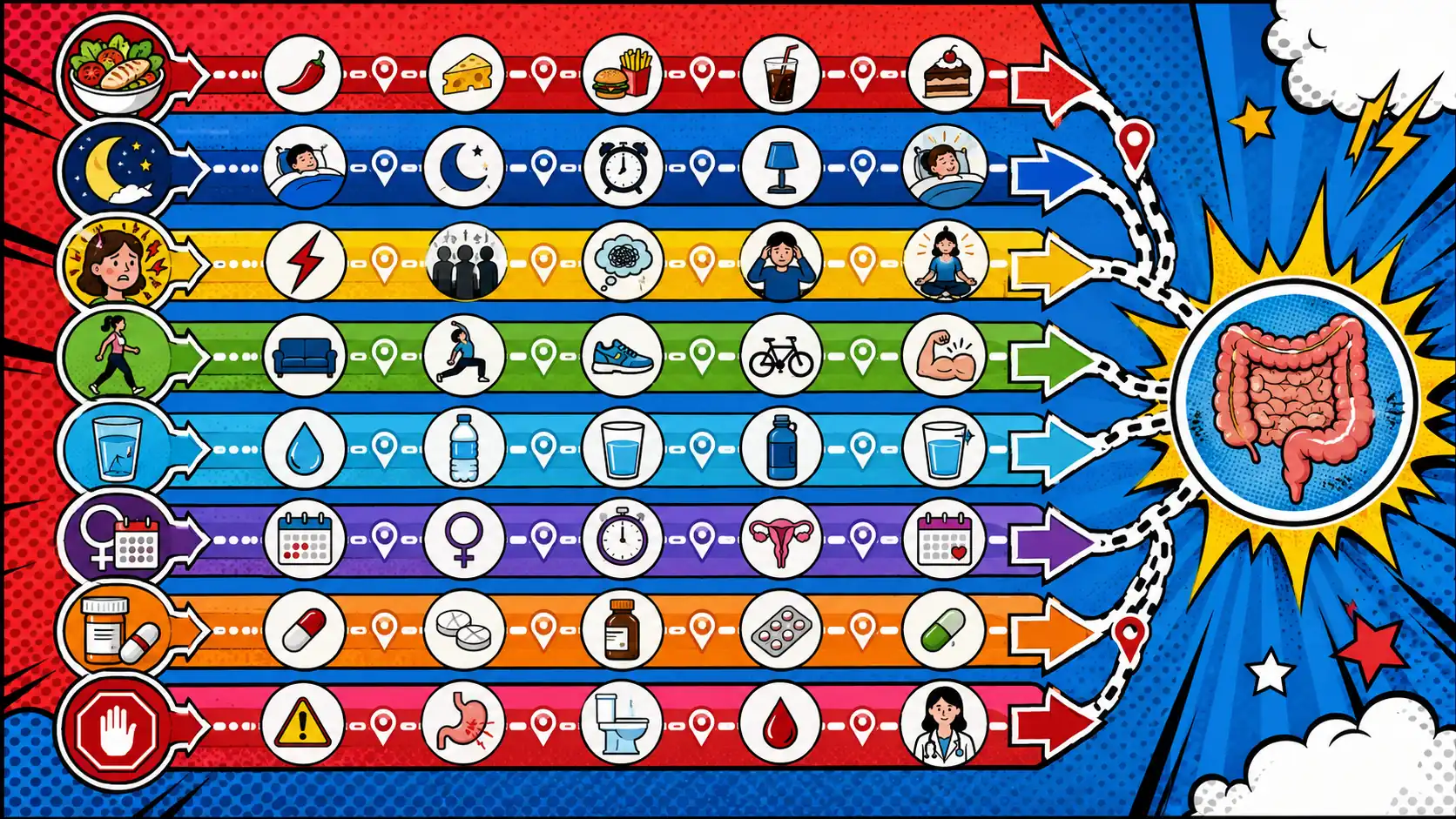
Sleep and stress are easy to underestimate because they do not look like ingredients.
A poor night can change next-day caffeine use, meal timing, pain sensitivity, stress tolerance, movement, and bathroom rhythm. A high-stress week can make normal gut sensations feel louder without meaning the symptoms are fake.
Use sleep and gut symptoms when symptoms are noticeably worse after short, fragmented, late, or irregular sleep. Use stress and IBS when body arousal, anticipation, urgency fear, or pain sensitivity rises with the flare pattern.
The key is to avoid two bad conclusions:
Neither is precise. Track the pattern for several days and look for clusters: sleep, caffeine, stress, meal timing, stool pattern, and symptom timing.
Movement can help some patterns and aggravate others depending on timing, intensity, heat, hydration, and recovery.
If symptoms show up before, during, or after workouts, use movement and gut symptoms or the more specific workout timing guide. If constipation, diarrhea, dizziness, heat, sweat, or electrolyte products are part of the story, use hydration and gut symptoms.
Meal timing belongs in this lane too. A flare after dinner may be a food reaction, but it may also be a skipped-breakfast, late-large-meal, poor-sleep, high-stress, or post-workout recovery pattern.
Some IBS patterns shift because the whole body-state changed.
Cycle timing can change pain sensitivity, stool pattern, bloating, pelvic pain, and urgency for some readers. Use menstrual cycle and IBS symptoms when symptoms cluster around predictable cycle phases or pelvic pain overlaps.
Medication and supplement timing can also change the picture. If symptoms began after a new medicine, dose change, antibiotic, iron, magnesium, calcium, laxative, antidiarrheal, probiotic, or supplement stack, use medication side effects vs IBS symptoms before blaming another food.
This is especially important when the next instinct is to add more products. More supplements can make the signal harder to read.
Trigger tracking is useful only when the pattern is stable enough to track.
Stop self-sorting and get medical review for:
NIDDK's diarrhea guidance lists warning signs such as dehydration, blood or pus in stool, black stool, fever, severe pain, and persistent symptoms 2. Even when the symptom is not diarrhea, that safety principle matters: new, severe, persistent, or changed symptoms deserve evaluation before another trigger experiment.
| Your situation | Read next |
|---|---|
| Bad nights make symptoms louder | Sleep and gut symptoms in IBS |
| Stress load or body arousal rises with symptoms | Stress and IBS |
| Symptoms cluster around exercise or inactivity | Movement and gut symptoms |
| Symptoms shift around cycle timing | Menstrual cycle and IBS symptoms |
| Hydration, sweat, constipation, or diarrhea overlap | Hydration and gut symptoms |
| A medication or supplement changed recently | Medication side effects vs IBS symptoms |
| Urgency fear is shaping choices | Urgency after meals |
| Sensory food limits, routine disruption, or bathroom access are the real bottleneck | Neurodivergent IBS routines |
| You need to track food, stool, stress, sleep, medicines, and context before deciding | IBS symptom tracker template |
| Symptoms are new, severe, persistent, or different | Doctor visit prep |
Food can matter. It just should not carry the whole explanation.
Before cutting another food, check the other lanes: sleep, stress, movement, hydration, cycle timing, medications, supplements, urgency fear, and whether the pattern is different from your baseline.
If symptoms are stable and familiar, track one or two variables at a time. If symptoms are new, severe, persistent, bloody, feverish, dehydrating, nocturnal, or paired with unexplained weight loss, stop trigger-hunting and get medical support.
Xam Riche is a gut health solopreneur and founder of YourFitNature, dedicated to helping people navigate digestive wellness through evidence-based information and personal experience. After years of struggling with IBS and bloating, Xam discovered the transformative power of the low FODMAP diet and now shares practical, science-backed guidance to help others find relief. While not a medical professional, Xam combines extensive research with lived experience to create accessible, empowering resources for the gut health community. Learn more about our mission
As an affiliate, we may earn from qualifying purchases.