 By • Published on May 14, 2026 • 9 min read • 4,472 views
This article is for informational and educational purposes only and does not constitute medical advice. Always consult with a qualified healthcare professional before using symptom information to make diagnosis or treatment decisions.
Exercise helps sometimes but triggers urgency, reflux, or cramps other times.
That question is easy to turn into a food-only project, but this page is built as a route map. It helps you compare the pattern, identify the variable that deserves the first test, and notice when the safer next step is medical review instead of another restriction.
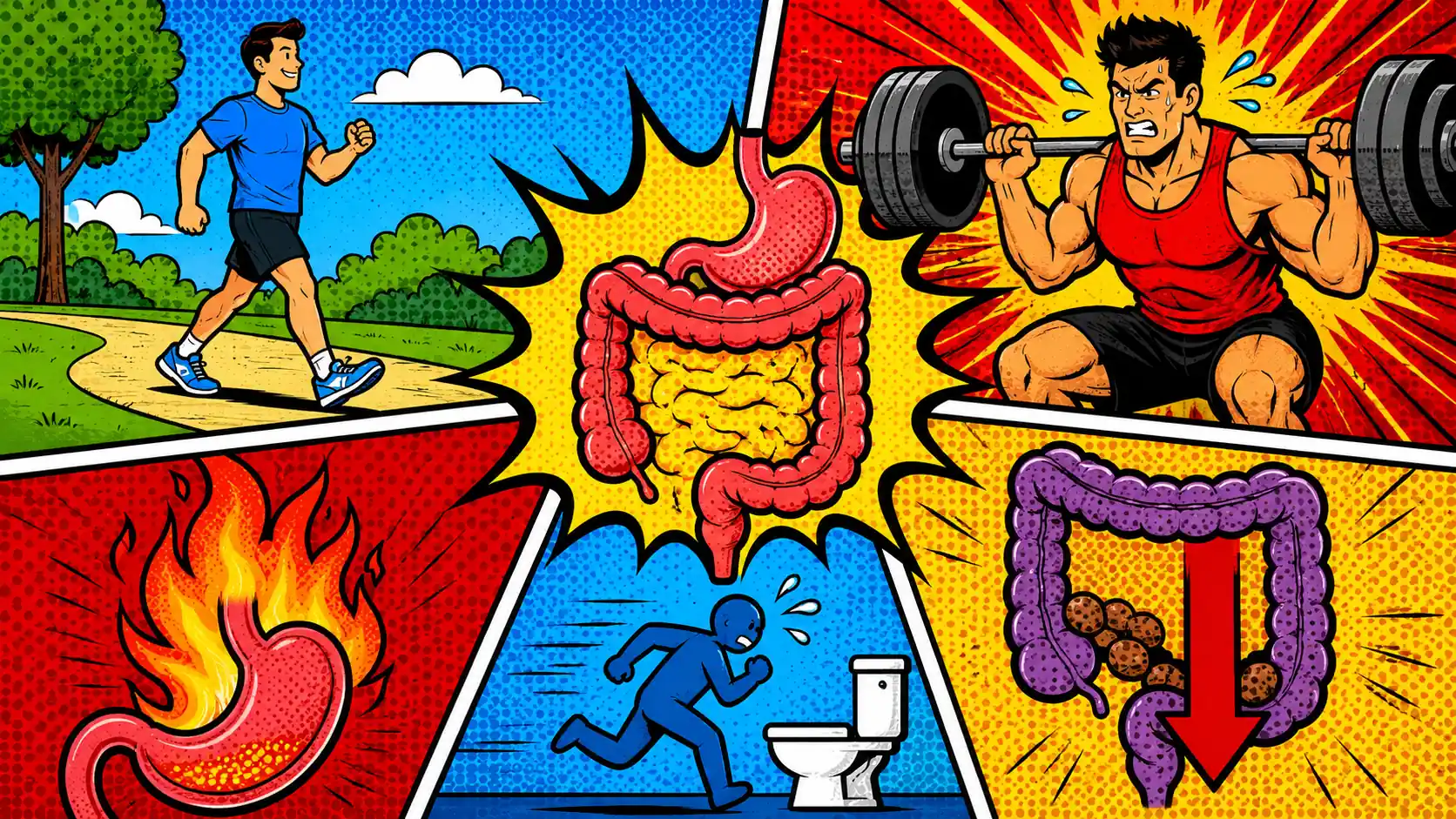
Movement is not one gut stimulus. The useful dose depends on what else is in the system.
For constipation, regular physical activity is part of standard self-care. NIDDK includes it among home measures that may help relieve constipation symptoms 1. NICE likewise advises people with IBS who are not very active to increase daily activity 2.
But the other side of the story is real. A review of exercise effects on the GI tract describes a dose relationship: mild-to-moderate activity can be helpful, while acute strenuous exercise may provoke heartburn, nausea, abdominal pain, diarrhea, or even bleeding in some settings 3.
So the page should not ask, "Is exercise good or bad for my gut?" It should ask, "Which movement pattern matches this symptom pattern?"
| If the lead pattern is... | Ask first | Usually test first |
|---|---|---|
| Constipation improves after gentle movement | Is routine movement helping bowel regularity? | Easy walking, morning timing, fluids, stool form |
| Sudden urgency during or after harder sessions | Is intensity, meal spacing, caffeine, or hydration the stronger clue? | Session intensity, pre-workout timing, stool urgency |
| Burning, sour taste, or upper-chest discomfort | Is this behaving like reflux rather than a bowel trigger? | Meal spacing, body position, reflux-specific symptoms |
| Cramps only with longer or hotter workouts | Is the issue more about dose, heat, or fluid losses than the exercise label itself? | Duration, heat, sweat, hydration, symptom timing |
That small change in framing prevents a false binary. A ten-minute walk after breakfast and a hard interval workout after coffee are not the same experiment.
A constipation-first route fits better when:
This is where "more movement" can be useful, but the simplest version is usually the best first test: an easy walk paired with the routine you already want to make more readable. If the morning pattern itself is still noisy, route to Constipation-first breakfast strategy before treating exercise as the whole answer.
Urgency after movement does not automatically mean exercise is the enemy. It may mean the dose is wrong for that moment.
The variables most worth separating are:
If urgency clusters around hard sessions, short meal gaps, or caffeinated pre-workout habits, the first move is not usually another food ban. It is to run a cleaner comparison: easier intensity, longer meal spacing, or a different pre-workout window. If meal-linked urgency is already the central story, move to Urgency after meals.
Exercise-related burning, sour taste, regurgitation, or chest discomfort should not be filed under "gut cramps" by default. NIDDK lists heartburn, regurgitation, chest pain, trouble swallowing, and nausea among GERD symptoms 4.
NIDDK also notes that some people with GERD improve when they avoid lying down soon after meals and identify foods or drinks that worsen symptoms 5. That makes workout timing, recent meals, and reflux-specific symptoms worth tracking separately from bowel urgency.
If reflux is the clearer lane, route to Reflux-like symptoms rather than trying to solve it as a generic IBS problem.
For one week, test only one variable:
Track:
If a gentle walk helps constipation but harder sessions trigger urgency, the useful clue is not "exercise works" or "exercise fails." It is that dose and timing are doing different things to your gut.
Exercise-related symptoms should not be brushed off when there is chest pressure, fainting, severe abdominal pain, blood, fever, dehydration, persistent vomiting, or symptoms that are new and progressive.
Reflux-like symptoms also need careful sorting when there is trouble swallowing, vomiting blood, unexplained weight loss, or black stools. NIDDK flags several of those as symptoms that should prompt medical review 6.
| If this is the pattern | Start here | Why |
|---|---|---|
| Constipation-first breakfast strategy fits best | Constipation-first breakfast strategy | Use this when movement helps only after the morning pattern is steady. |
| Urgency after meals fits best | Urgency after meals | Use this when workouts trigger sudden bowel urgency. |
| Reflux-like symptoms fits best | Reflux-like symptoms | Use this when exercise brings burning, sour taste, or chest discomfort. |
| Hydration, electrolytes, and gut symptoms fits best | Hydration, electrolytes, and gut symptoms | Use this when sweat, caffeine, diarrhea, or constipation changes the experiment. |
| Constipation is the bigger baseline problem | Constipation and bloating connection | Use this when movement is only one lever inside a slower stool pattern. |
| Meal spacing keeps changing the result | Meal timing and gut symptoms | Use this when workout timing, skipped meals, grazing, or late meals may be the hidden variable. |
| Stress changes the workout gut response | Stress and bloating through the gut-brain axis | Use this when anticipation, pressure, or nervous-system load lowers the symptom threshold. |
| Symptoms are loud today and you need guardrails | IBS flare plan | Use this when pain, urgency, pressure, or reflux is active enough that same-day stop signs matter. |
| The problem changes mainly with intensity or session timing | Workout timing and post-exercise gut symptoms | Dose and timing may matter more than the exercise label. |
| Symptoms are severe, new, bloody, feverish, dehydrating, or rapidly worsening | Medical review | Safety comes before trigger experiments. |
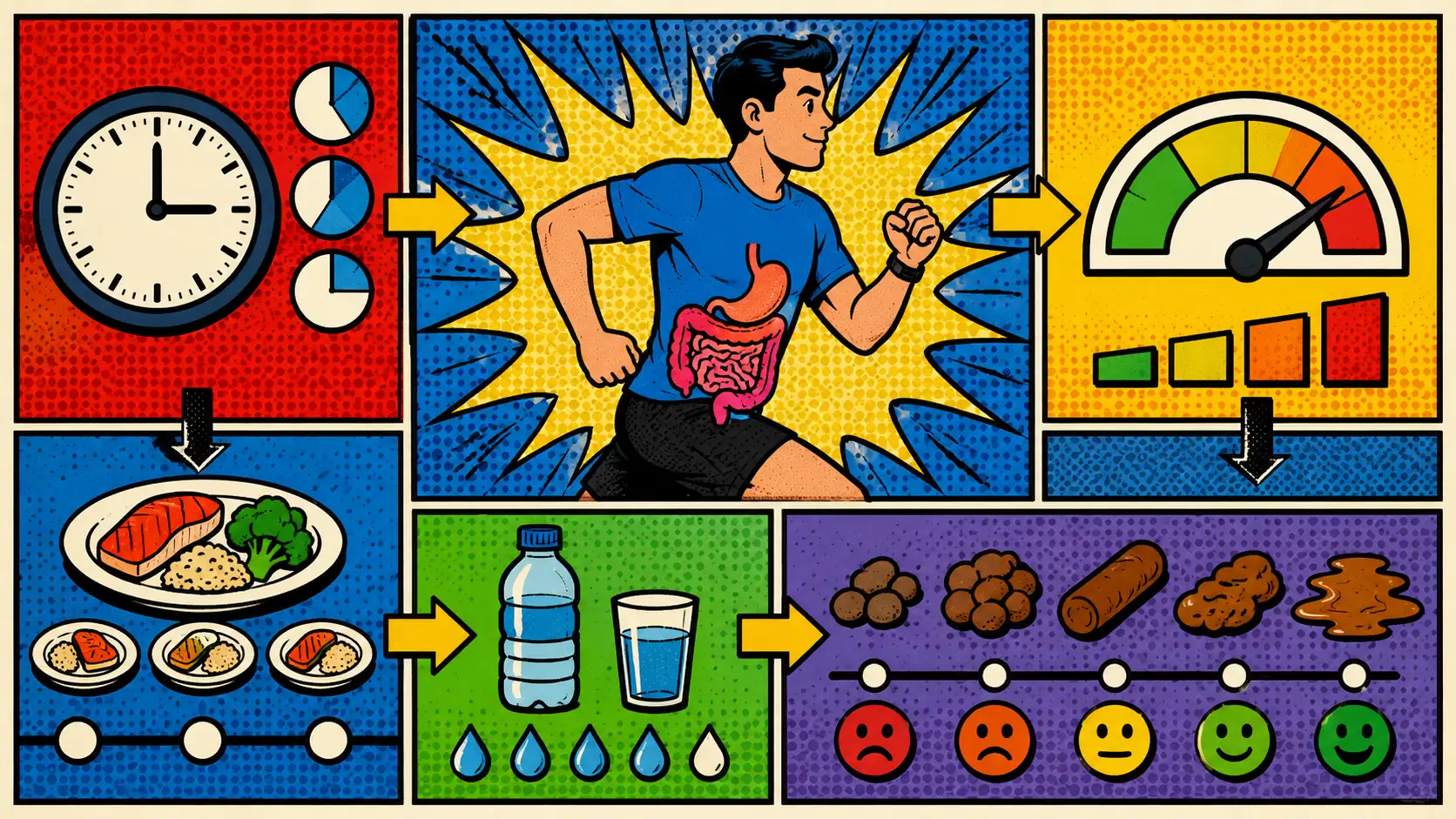
Use the sheet for a short experiment window. Write down the symptom, timing, context, and what changed. The pattern should help you choose the next route without adding more noise.
The best version keeps the comparison simple: one movement variable changed, everything else steady enough that the result is readable.
If exercise is only one possible piece beside sleep, stress, hydration, cycle timing, medications, or food timing, use the non-food IBS triggers decision guide to choose the next route.
| Situation | Best next read |
|---|---|
| Use this when movement helps only after the morning pattern is steady | Constipation-first breakfast strategy |
| Use this when workouts trigger sudden bowel urgency | Urgency after meals |
| Use this when exercise brings burning, sour taste, or chest discomfort | Reflux-like symptoms |
| Use this when sweat, caffeine, diarrhea, or constipation changes the experiment | Hydration, electrolytes, and gut symptoms |
| Use this when movement is only one part of a broader stool-backup pattern | Constipation and bloating connection |
| Use this when workout timing, skipped meals, grazing, or late meals may be changing the result | Meal timing and gut symptoms |
| Use this when stress, pressure, or anticipation lowers the workout tolerance threshold | Stress and bloating through the gut-brain axis |
| Use this when symptoms are loud today and you need same-day stop signs before experimenting | IBS flare plan |
If training load, hydration, fueling, urgency, reflux, and constipation are all part of the pattern, use IBS for Athletes as the athlete-specific route map.
If the narrower question is what happens before, during, or after a single workout, use workout timing and post-exercise gut symptoms before changing your whole exercise routine.
Movement can support the gut or irritate it depending on the pattern you are testing. Gentle repeatable activity is often useful when constipation is the lead problem. Harder sessions, poor meal spacing, caffeine, reflux tendency, or fluid-loss context can tell a different story.
Sort the lead symptom before adding more rules. Track dose, timing, and context separately, use the printable sheet if the pattern is noisy, and escalate symptoms that are severe, new, progressive, bloody, dehydrating, or outside your familiar baseline.
Xam Riche is a gut health solopreneur and founder of YourFitNature, dedicated to helping people navigate digestive wellness through evidence-based information and personal experience. After years of struggling with IBS and bloating, Xam discovered the transformative power of the low FODMAP diet and now shares practical, science-backed guidance to help others find relief. While not a medical professional, Xam combines extensive research with lived experience to create accessible, empowering resources for the gut health community. Learn more about our mission
As an affiliate, we may earn from qualifying purchases.