
BloatingRoadmap
YourFitNatureplusdescription Logo
CommunityWorkshopBuild Your Stack
Mobile Menu Background
Top Picks
Blog
BloatingRoadmapCommunityWorkshop
Build Your Stack
YourFitNatureplusdescription Logo
Find Your Custom Stack

Heal Your Gut. Reclaim Your Energy.

Science-backed tools to rebalance your microbiome
and fuel your clarity from the inside out.

ShopBlogGut Bloating ResourcesBloating ToolkitCommunity Challenge
Hiipa Compliance
About YourFitNature
BloatingRoadmap
YourFitNatureplusdescription Logo
CommunityWorkshopBuild Your Stack
Mobile Menu Background
Top Picks
Blog
BloatingRoadmapCommunityWorkshop
Build Your Stack
Cultural Foods and Low FODMAP Without Losing Tradition
Discover the secrets to a healthier gut!Learn more

Cultural Foods and Low FODMAP Without Losing Tradition

By Xam Riche on May 29, 2026 • 5 min read

This article is for informational and educational purposes only and does not constitute medical advice, diagnosis, or individualized nutrition counseling. Work with a qualified clinician or GI dietitian for symptoms, medical conditions, food restriction, allergies, eating-disorder history, or cultural and religious food needs.

Affiliate Disclosure: This post contains affiliate links. If you click and make a purchase, we may earn a commission at no extra cost to you.Medical Disclaimer: This article is for informational and educational purposes only and does not constitute medical advice, diagnosis, or individualized nutrition counseling. Work with a qualified clinician or GI dietitian for symptoms, medical conditions, food restriction, allergies, eating-disorder history, or cultural and religious food needs.
Last updated on May 29, 2026
  1. Home
  2. Blog
  3. Cultural Foods Low Fodmap Without Losing Tradition
Low FODMAP Diet
2,068 views

The problem is not cultural food. The problem is an IBS plan that acts as if everyone eats alone, shops alone, cooks from the same ingredient list, and can swap out family meals without losing anything important.

For many readers, food is language, memory, religion, hospitality, grief, celebration, and belonging. A low-FODMAP or symptom-aware plan that ignores that reality may look clean on paper and fail in real life.

Low FODMAP can be useful for some people with IBS, and systematic reviews support it as an evidence-based dietary option for symptom improvement in IBS 1. But the point is not to erase tradition. The point is to find a quieter, more readable pattern, then reintroduce and personalize so the diet can widen again.
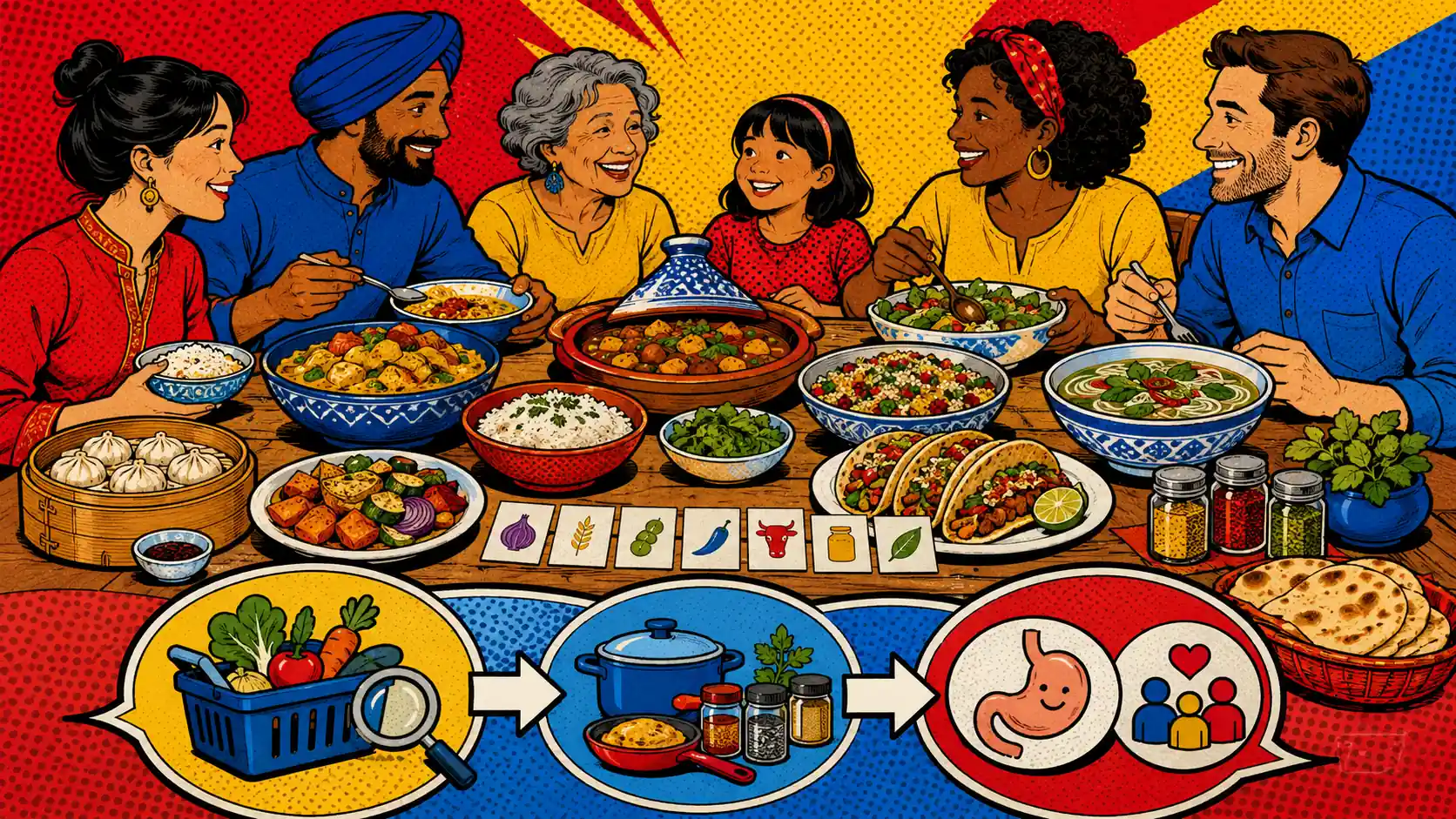
Pop art style hero image showing a shared family table with colorful staple dishes, spice jars, serving bowls, low-FODMAP swap cards, and a three-step path for restriction, reintroduction, and personalization.
Keep food identity in the plan from the beginning.

Start With What Must Stay

Before you change a recipe, name what the meal is doing.

Meal element Question to ask
Staple Is the anchor rice, bread, noodles, beans, corn, potatoes, or another base?
Flavor base Which flavor matters most: herbs, spice, sourness, heat, smoke, broth, fermented note, or richness?
Shared role Is this a family meal, holiday dish, comfort food, packed lunch, or hospitality food?
Timing Is the meal tied to fasting, shift work, prayer, school, work, or family rhythm?
Flex point What can change without making it feel like a different meal?

This matters because the easiest swap on a chart may be the worst swap for the person. If a dish no longer feels like itself, the plan may increase stress and isolation even if it reduces one ingredient exposure.

If family meals are the main constraint, pair this with low-FODMAP family meals without separate cooking.

Change the Smallest Useful Variable

Food reactions are easier to read when you change one thing at a time. NIDDK frames IBS diet changes as individualized rather than universal 2. That is especially important when a meal has many ingredients.

Possible first adjustments:

  • portion: keep the food, change the dose
  • side dish: add a lower-noise starch or vegetable
  • flavor delivery: use infused oil instead of pieces of onion or garlic
  • timing: eat the richer dish earlier or not on an already-flared day
  • texture: choose a preparation that is easier on appetite or nausea
  • sequence: test the staple separately before blaming the whole meal

This is not about making every traditional food "safe." It is about finding the smallest change that gives you information without cutting away more identity than necessary.

Keep Low FODMAP in Its Three-Step Lane

The low-FODMAP process has three phases: restriction, reintroduction, and personalization 3. The restriction phase is not the final identity of your diet.

If a cultural staple is removed during the quiet phase, it should have a plan for retesting unless there is another medical reason to avoid it. If the diet keeps narrowing, move to diet diversity after low FODMAP or get dietitian support before another round of restriction.
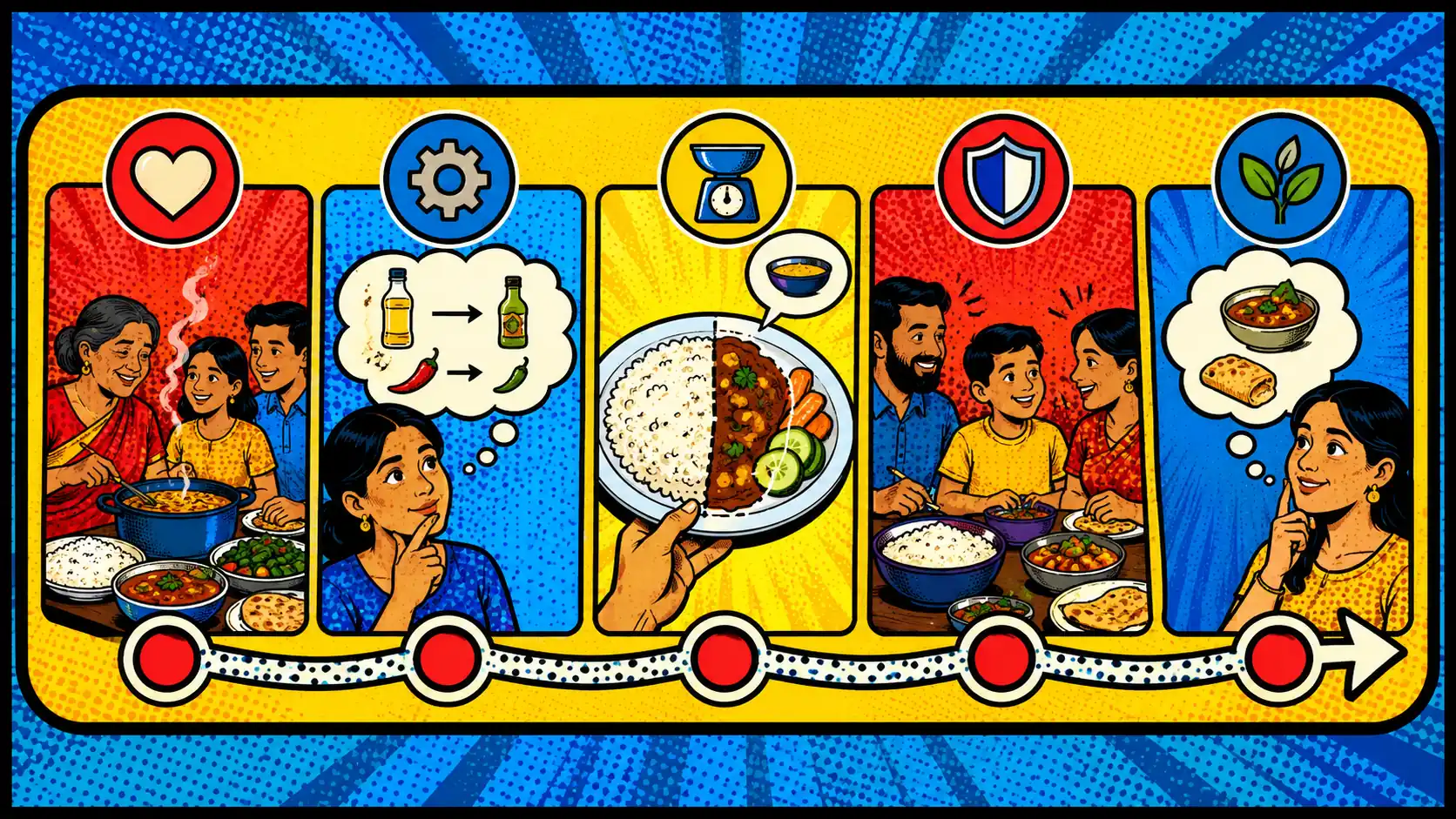
Pop art style route card showing five labeled panels: keep tradition, choose one variable, test portion, protect shared meals, and reintroduce tolerated foods.
Adapt the meal without making tradition the problem.

Use a Shared-Meal Script

You do not owe everyone your medical history. A short script can reduce pressure:

  • "I am testing a few ingredients right now, but I still want to eat with everyone."
  • "Can I keep the base plain and add sauce separately?"
  • "I am trying a smaller portion first so I can see what happens."
  • "I can bring one side dish that works for me and share it."

If you are eating out with family or community, use low-FODMAP eating out for ordering patterns. If the plan is becoming rigid, compare it with low-FODMAP personalization mistakes.

Watch for Restriction Risk

A culturally respectful IBS plan should make life bigger over time, not smaller. Get help if:

  • your accepted foods keep shrinking
  • you are avoiding gatherings because of food fear
  • you are losing weight without trying
  • you have an eating-disorder history
  • you cannot meet nutrition needs
  • family meals now feel like a threat instead of support

Use low FODMAP with an eating-disorder history if restriction risk is part of the picture.

Download: Cultural Meal Adaptation Route Card

Best Next Read by Situation

Situation Go next
You need shared meals without separate cooking Family meals low FODMAP without separate cooking
Your Step 3 plan is getting too rigid Low-FODMAP personalization mistakes
You need to rebuild variety Diet diversity after low FODMAP
Whole grains or plant staples are confusing Whole grains and plant foods for gut tolerance

Bottom Line

Cultural foods are not the enemy of IBS care. A better plan starts by naming what must stay, changing the smallest useful variable, and using low FODMAP as a temporary method for pattern clarity. The end goal is not a smaller life. It is a more readable, more flexible way to keep eating in the world you belong to.

X

Xam Riche

Gut Health Solopreneur & IBS Advocate

Xam Riche is a gut health solopreneur and founder of YourFitNature, dedicated to helping people navigate digestive wellness through evidence-based information and personal experience. After years of struggling with IBS and bloating, Xam discovered the transformative power of the low FODMAP diet and now shares practical, science-backed guidance to help others find relief. While not a medical professional, Xam combines extensive research with lived experience to create accessible, empowering resources for the gut health community. Learn more about our mission

Xam Riche - Gut Health Solopreneur & IBS Advocate. Xam Riche is a gut health solopreneur and founder of YourFitNature, dedicated to helping people navigate digestive wellness through evidence-based information and personal experience. After years of struggling with IBS and bloating, Xam discovered the transformative power of the low FODMAP diet and now shares practical, science-backed guidance to help others find relief. While not a medical professional, Xam combines extensive research with lived experience to create accessible, empowering resources for the gut health community.
Recommended Products

As an affiliate, we may earn from qualifying purchases.

Related Questions

College Dorm Low-FODMAP and IBS Flare Plan

LOW FODMAP DIET

A practical college IBS and low-FODMAP plan for dorm meals, dining halls, shared bathrooms, class timing, flare days, and campus health handoffs.

Cultural Foods and Low FODMAP Without Losing Tradition

LOW FODMAP DIET

A respectful guide to adapting low-FODMAP and IBS planning around cultural foods, family meals, staple dishes, tradition, and diet diversity.

IBS Symptom Tracker Template for Food, Stool, Stress, and Sleep

IBS, BLOATING & GUT SYMPTOMS

A practical IBS symptom tracker template for food, stool pattern, pain, bloating, stress, sleep, medications, supplements, and clinician visits.

IBS Dietitian Visit Prep and Care-Team Roles

IBS, BLOATING & GUT SYMPTOMS

A practical IBS dietitian visit prep guide for symptom summaries, food history, medication lists, care-team roles, and safer next-step questions.

Ramadan Fasting, Meal Timing, and IBS Symptoms

IBS, BLOATING & GUT SYMPTOMS

A respectful Ramadan fasting and IBS planning guide for meal timing, hydration, constipation, diarrhea, reflux, caffeine, and care-team questions.

Low-FODMAP With Diabetes, Blood Sugar, and Gut Symptoms

LOW FODMAP DIET

A careful low-FODMAP and diabetes planning guide for blood sugar, fiber, meal timing, appetite, medications, and gut-symptom tracking.

Caregiver Guide: IBS in Older Adults at Home

IBS, BLOATING & GUT SYMPTOMS

A caregiver guide for IBS-like bowel changes in older adults at home, including hydration, medicines, constipation, diarrhea, appetite, red flags, and appointment prep.

CBT for IBS Anxiety, Urgency, and Gut-Brain Skills

GUT-BRAIN & WHOLE-BODY HEALTH

A practical guide to CBT for IBS anxiety, urgency, bathroom fear, and gut-brain skills, with clear boundaries so symptoms are not dismissed as just anxiety.

IBS and Trauma-Informed Care for Gut Symptoms

GUT-BRAIN & WHOLE-BODY HEALTH

A trauma-informed IBS care guide for exams, urgency, pain, pelvic symptoms, bathroom fear, consent, pacing, and clinician conversations.

Neurodivergent IBS Routines, Sensory Foods, and Bathroom Planning

GUT-BRAIN & WHOLE-BODY HEALTH

A respectful planning guide for neurodivergent IBS routines, sensory food limits, bathroom access, meal timing, low-effort meals, and clinician handoff.

Showing 10 of 152

Stay Updated!

Subscribe to our newsletter for the latest articles and updates.

YourFitNatureplusdescription Logo
Find Your Custom Stack

Heal Your Gut. Reclaim Your Energy.

Science-backed tools to rebalance your microbiome
and fuel your clarity from the inside out.

ShopBlogGut Bloating ResourcesBloating ToolkitCommunity Challenge
Hiipa Compliance
About YourFitNature