 By • Published on May 8, 2026 • 7 min read • 4,107 views
This article is for informational and educational purposes only and does not constitute medical advice. Always consult with a qualified healthcare professional before using symptom information to make diagnosis or treatment decisions.
If low FODMAP helped, the next step can feel strangely hard. Your symptoms may be quieter, but your plate may also be smaller. You know the meals that usually work. You know the foods that seemed to fail. Now every new food feels like a threat to the fragile signal you finally built.
If the fear started after a diarrhea-heavy flare rather than after a structured low-FODMAP challenge, use what to eat after a diarrhea flare with IBS first. Flare recovery starts with fluids and familiar foods before it becomes a diet-diversity project.
That is exactly where diet diversity after low FODMAP belongs. This is not a new elimination diet. It is the recovery bridge after you have done enough restriction and reintroduction to see a pattern. The goal is not to eat everything at once. The goal is to rebuild a wider, more useful diet without making symptoms unreadable again.
If you are still in the challenge phase, start with the low-FODMAP reintroduction guide. If every challenge has been confusing, use when reintroduction fails first. This page is for the stage after that: when you have some data and need to turn it into a livable food rotation.
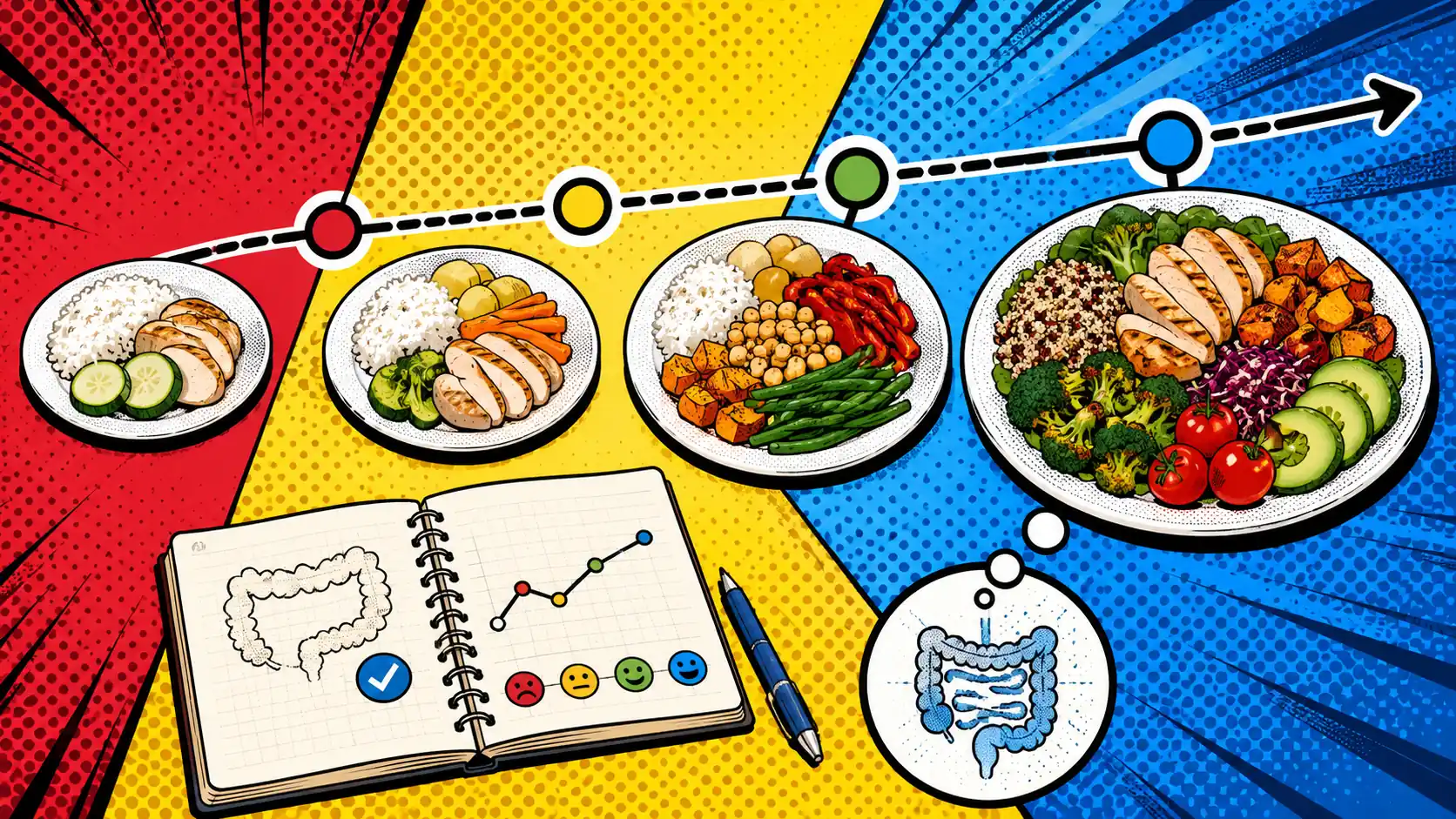
Low FODMAP works best when it is treated as a structured process: restriction, reintroduction, and personalization. Monash's current patient information describes this staged approach, and NIDDK notes that clinicians may recommend a low-FODMAP diet for IBS symptoms in some people 1 2.
The restriction phase is supposed to lower noise. The reintroduction phase is supposed to test specific FODMAP groups. Personalization is where the diet becomes yours. If you stay in restriction because it feels safe, the plan may be quieter but less complete than it needs to be.
This does not mean you failed if you are cautious. It means the next task is different. During elimination, the question was, "Can I lower symptoms enough to see a pattern?" After reintroduction, the question becomes, "Which foods can I bring back, in what amount, how often, and in what meal context?"
Diet diversity does not mean random variety. It means a wider rotation of foods you can read clearly. A practical version includes:
That is different from eating every high-FODMAP food because restriction feels too strict. It is also different from keeping the same five foods forever because the first challenge went badly.
The Monash re-challenge publication is useful here because it frames food challenges as a way to improve dietary variety and nutritional adequacy while still accounting for preference and usual habits 3. That is the right target: more variety, but not at the cost of readable symptom data.
Use a ladder, not a leap.
Start with a meal you trust. Add one variable: a small serve of a food from a group you partially tolerated, a different grain, a new produce serving, or a gentler fiber source. Keep the rest of the meal familiar. Repeat the test enough times to see whether the pattern is consistent.
Before blaming the food, review the context:
If the issue is mixed meals, use FODMAP stacking explained before cutting the food. If the problem is a confusing challenge week, return to when reintroduction fails.
Fiber diversity matters, but reactive guts usually need slower changes. NIDDK advises adding fiber little by little so the body can adjust 4. ACG's IBS guideline also separates soluble fiber from insoluble fiber and suggests soluble fiber for global IBS symptoms 5.
That means "more fiber" is too blunt. Better questions are:
Use types of fiber by symptom fit when the fiber style is the main question. Use fiber diversity and microbiome resilience when you are ready to think about variety more broadly.
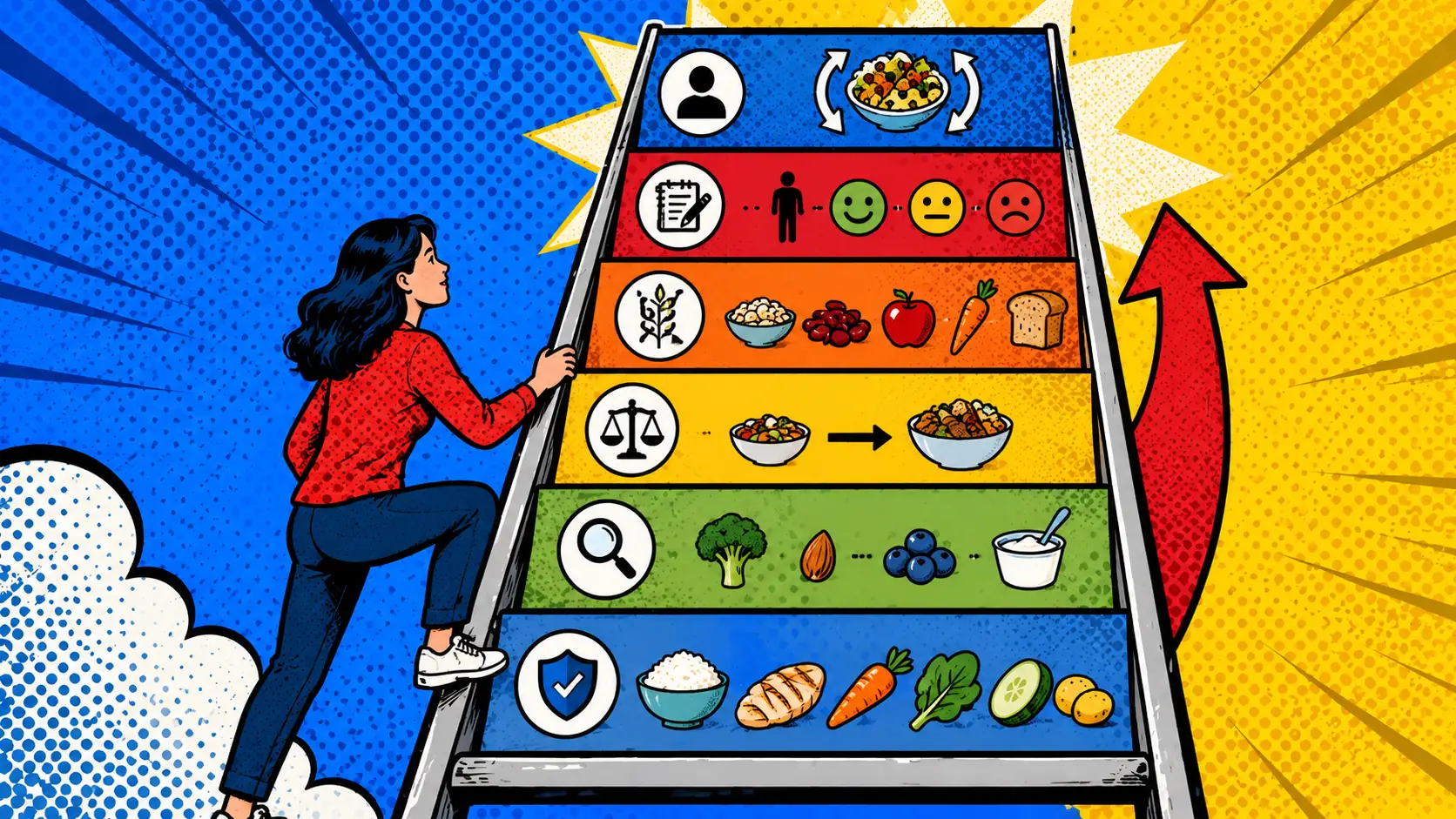
Download: Diet Diversity Rebuild Tracker and Low FODMAP Variety Ladder
A failed test is data, but it is not always a permanent verdict. If you tested fructans during a stressful week, added a larger portion than planned, skipped meals, or stacked multiple moderate foods, the signal may be distorted.
Use a reset when:
If low FODMAP never created a clearer baseline, use low FODMAP troubleshooting. That article keeps the door open to SIBO, bile acid patterns, celiac evaluation, dyspepsia overlap, and other routes instead of making you cut more foods. If the bigger issue is that Step 3 still feels chaotic before you can widen the diet, use low-FODMAP personalization mistakes for the tighter reset-and-interpretation route.
| If this is the main question | Best next read |
|---|---|
| You are still testing FODMAP groups | Low-FODMAP reintroduction guide |
| Challenge results keep contradicting each other | When reintroduction fails |
| Fiber is the main worry | Types of fiber by symptom fit |
| You want microbiome-supportive variety | Fiber diversity and microbiome resilience |
| You want a gentler food-first bridge before probiotics | Gentle variety before probiotics |
| Sensory food limits, routines, transitions, or bathroom planning make variety harder | Neurodivergent IBS routines, sensory foods, and bathroom planning |
| You need to rebuild variety without losing cultural foods or family tradition | Cultural foods and low FODMAP without losing tradition |
| You need low-FODMAP variety to fit diabetes, blood-sugar notes, fiber, and meal balance | Low-FODMAP with diabetes, blood sugar, and gut symptoms |
| You are rebuilding after antibiotics | Post-antibiotic food rebuilding |
| Healthy plant foods keep backfiring | Whole grains and plant-food tolerance |
| Plant-based meals are the bigger pattern | Plant-based eating and gut symptoms |
Low FODMAP is useful because it can reduce noise. But the endpoint is not a tiny perfect menu. The endpoint is a personalized diet that keeps symptoms manageable while giving you enough variety to live, travel, socialize, and support nutrition.
Start with one reliable anchor. Add one food. Hold the rest steady. Review the whole day before blaming the ingredient. Then repeat.
That is not dramatic. It is the point.
Xam Riche is a gut health solopreneur and founder of YourFitNature, dedicated to helping people navigate digestive wellness through evidence-based information and personal experience. After years of struggling with IBS and bloating, Xam discovered the transformative power of the low FODMAP diet and now shares practical, science-backed guidance to help others find relief. While not a medical professional, Xam combines extensive research with lived experience to create accessible, empowering resources for the gut health community. Learn more about our mission
As an affiliate, we may earn from qualifying purchases.