 By • Published on March 19, 2026 • 15 min read • 3,579 views
This article is for informational and educational purposes only and does not constitute medical advice. Always consult with a registered dietitian, gastroenterologist, or other qualified medical professional before making significant dietary changes.
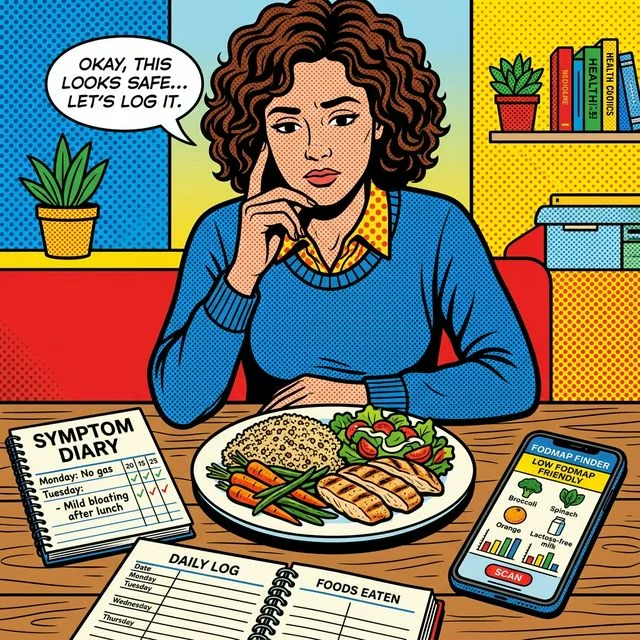
You followed the low-FODMAP rules, your meal looked safe, and you still felt bloated. This guide explains what FODMAP stacking is, when it matters, and how to troubleshoot the pattern without shrinking your food list even further.
Short answer: FODMAP stacking means a meal can look compliant on paper but still trigger symptoms when several tolerated foods, near-limit serves, or close eating windows add up into a bigger total load.
This page is for you if your symptoms mostly flare after mixed meals, snack heavy days, buffet-style eating, or "green-light" foods that seem fine alone but messy together.
Use a different page first if your bigger clue is packaged ingredients, sauces, supplements, or medications in the background. That pattern fits hidden FODMAPs better. If every challenge or whole weeks keep failing, move up to low FODMAP not working.
If you are frustrated, that makes sense.
This is one of the most confusing parts of the low-FODMAP diet. You read labels. You avoid obvious triggers. You build a meal that looks completely compliant. Then an hour or two later, your stomach feels tight, noisy, or unpredictable anyway.
That does not automatically mean the diet failed. It also does not mean every green-light food is secretly unsafe.
Here is the truth: sometimes the problem is not one "bad" ingredient. Sometimes it is the total FODMAP load of the meal, the timing of your snacks, or a symptom-heavy week that makes an otherwise okay meal feel worse. That is where FODMAP stacking comes in.
This article is for the person who is mostly doing okay on low FODMAP but still gets mystery flares after meals that look safe on paper. We will cover what stacking actually means, why low-FODMAP foods can still cause symptoms, how to reduce the pattern without obsessing, and when the real issue is probably something else. If your symptoms are broader than meal-specific flares, start with Low FODMAP not working.
This page is explaining a meal-logic problem:
This page is not mainly explaining:
If one of those sounds closer, route out early to hidden FODMAPs, when reintroduction fails, functional dyspepsia, or SIBO vs IBS vs food intolerance.
FODMAP stacking refers to the idea that several low-FODMAP serves eaten in one sitting can add up enough to trigger symptoms in some sensitive people 1.
The important part is this: the issue is total tolerated load, not just whether each ingredient looked safe by itself.
Monash says stacking applies to foods containing any type of FODMAP, not only repeated serves from the same subgroup 2. Monash also says its green-light cutoffs are deliberately conservative so many people can safely combine more than one green serve in a mixed meal without tracking every gram 3 4.
So this article should reduce food fear, not add to it.
It is not saying:
It is saying that if you improved on low FODMAP but still react to apparently compliant meals, stacking is one reasonable troubleshooting lens.
This is also why "green means unlimited" is the wrong mental model. A green serve means the food fits inside Monash's conservative cutoff system. It does not mean there is zero FODMAP content or zero chance of symptoms in a sensitive person eating several borderline serves together. If you need a refresher on the traffic-light system itself, review high vs low FODMAP foods.
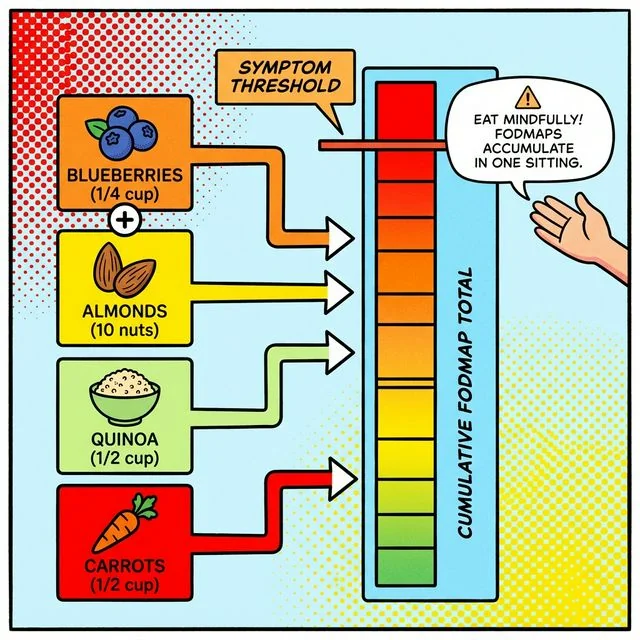
The simplest explanation is threshold.
FODMAP sensitivity is dose-dependent. In a randomized placebo-controlled rechallenge trial, IBS symptoms were induced in a dose-dependent way, and fructose, fructans, and their mixture all produced worse symptom control than glucose placebo 5.
That matters because "low FODMAP" does not always mean "no FODMAP." It usually means the serving size stays under a threshold that is often well tolerated.
A compliant meal can still go wrong when:
And food is not the only variable. A systematic review found that mental stress increases IBS-specific symptomatology and alters gastrointestinal motility 6. Monash also notes that for some people, factors other than FODMAPs, such as stress or anxiety, can explain symptoms that continue even on low-FODMAP foods 7.
Hormonal symptom shifts can muddy the picture too. IBS symptoms and rectal sensitivity can worsen during menses, which is one reason a meal may feel different from one week to the next even when the food looks similar 8.
Bottom line: if a "safe" meal still causes symptoms, think about dose, timing, and context before deciding the food itself is the whole story. If stress is clearly part of the picture, read how stress can lower your symptom threshold.
If the meal looked healthy but you are not sure whether the issue was FODMAP load, fiber, dairy, or constipation, this guide on bloating after eating healthy foods helps sort the pattern.
Monash's current general rule is that stacking mainly relates to a single sitting or meal, assuming meals and snacks are spaced at least 2 to 3 hours apart 9.
That is the wording to prioritize because it is the newer Monash guidance. An older Monash article used 3 to 4 hours as a more conservative spacing tip 10. In practice, the useful principle is the same: if you are snacking constantly, the gut has less time between exposures.
The point is not to hit a perfect timer. The point is to stop turning the whole day into one long, hard-to-read eating window.
Here is a simple way to think about it:
| Pattern | Lower-Risk Example | Higher-Risk Example |
|---|---|---|
| Meal spacing | Breakfast and snack 2-3+ hours apart | Snack within an hour of the previous meal |
| Portions | One clear green serve plus naturally low-FODMAP staples | Several near-limit serves in one bowl or grazing window |
| Food mix | Protein, rice or potato, and a few clear green foods | Multiple borderline fruits, grains, and snack foods close together |
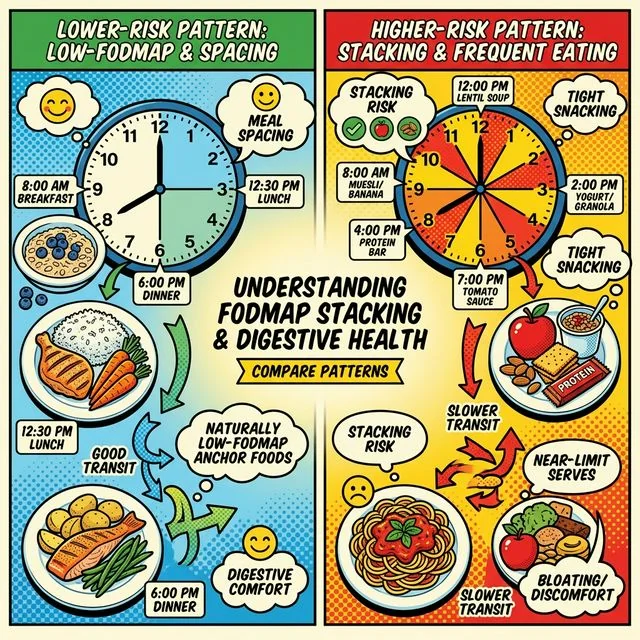
This is why some people feel better when they stop grazing and move back to simpler meal structure. A calmer eating rhythm can make it much easier to see whether stacking is the issue. If you need a lower-noise baseline, use this simple low-FODMAP meal structure.
Stacking is more likely when a pattern keeps repeating, not when one random meal goes badly.
It is more suggestive of stacking when:
It is less suggestive of stacking when:
| Pattern | More Suggestive of Stacking | More Suggestive of Another Issue |
|---|---|---|
| Timing | Flares after combo meals or close snacking | Flares regardless of meal composition |
| Predictability | Better when meals are simpler and spaced out | Still bad with simple meals |
| Confounders | Few obvious hidden ingredients | Restaurant meals, stress spikes, constipation, or red flags |
Use the decision tree below as a quick reset instead of jumping straight into more restriction:
If that decision tree keeps pointing toward "something else," move into other reasons Low FODMAP may not be working.
If the issue looks less like meal combinations and more like jars, powders, or labels, see our guide to hidden ingredients.
Download: Use the printable Stacking Troubleshooting Checklist after a symptom flare so you can review portions, timing, and confounders before cutting out more foods.
The Monash app is useful because it gives you more than one overall traffic light. It also shows how portion size shifts a food from green to amber to red and breaks down subgroup information within foods 11.
But this is where people can get stuck.
If your symptoms are mostly controlled, you probably do not need to analyze every meal like a spreadsheet. Monash is explicit about that too: if symptoms are well controlled and you have not been worrying about stacking, do not start now 12.
The app becomes more useful when:
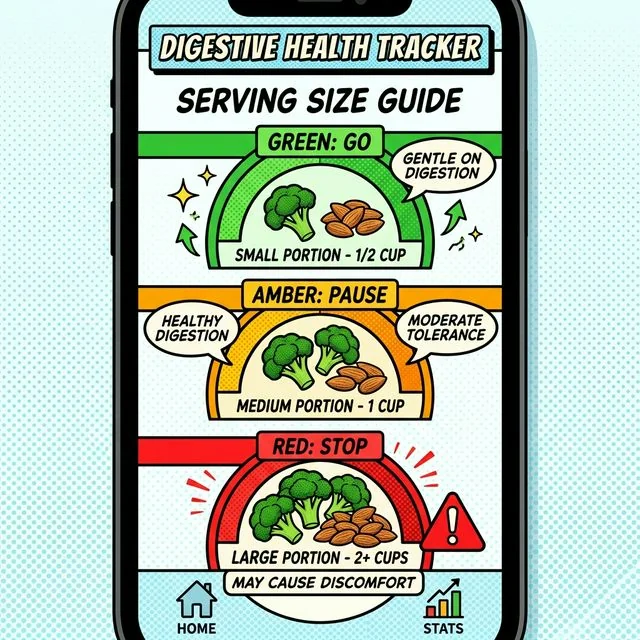
One practical move is to anchor meals with foods that are naturally low or essentially free of FODMAPs. Monash specifically names foods like rice, carrots, meat, fish, and eggs as options that reduce stacking pressure 13. That is why it helps to build meals around naturally low-FODMAP foods instead of stacking multiple borderline snack foods together.
Bottom line: use the app to spot patterns and portion creep. Do not use it to turn every meal into homework.
The goal here is not to eat fewer foods. The goal is to create fewer mystery flares.
Start with these practical rules:
If you want the practical kitchen version of that rule, use this low FODMAP meal prep system so moderate foods stay separate until serving time.
| Problem Pattern | Better Swap |
|---|---|
| Fruit-heavy breakfast plus quick snack | More filling protein-based breakfast and longer gap before next snack |
| Bowl with several moderate vegetables plus bread or another snack | Fewer borderline produce choices plus rice, potato, or plain protein |
| Grazing all day on "safe" snacks | 3 meals and 1 planned snack with spacing |
If snack-heavy days keep getting messy, switch to more structured low FODMAP snacks that are easier to portion.
This is also why stacking matters during reintroduction. If you are trying to test tolerance but the rest of your meals are noisy, the result is harder to interpret. Keep the rest of your meals low-noise during reintroduction so the challenge food stays readable.
Holiday meals are one of the clearest real-life examples of this pattern, so use this low-FODMAP holiday survival guide if buffet-style eating windows keep creating mystery flares.
Then stacking is probably not the whole story.
If symptoms stay severe or unpredictable even after you simplify meals, widen the lens. Hidden ingredients, constipation, stress, and non-FODMAP triggers can all keep symptoms alive. Monash says that when symptoms persist on low-FODMAP foods, other factors such as stress or anxiety may be involved 17.
That is the point where "try harder" stops being useful.
NICE recommends that exclusion diets such as low FODMAP should only be delivered by a healthcare professional with expertise in dietary management 18. If your reactions still make no sense, work with a GI dietitian or gastroenterologist instead of getting trapped in self-experiment loops.
Go back to the bigger troubleshooting ladder:
When constipation is the bigger issue, start with bloating from constipation to separate stool backup from food-noise. If the picture is clearly IBS-C, a more constipation-friendly low-FODMAP plan may help more than more stacking analysis.
When diarrhea and urgency are the dominant problem, an urgency-friendly low-FODMAP plan may help more than more stacking analysis alone.
Bottom line: if simple meals still cause chaos, the answer is probably not "cut more foods."
If a safe-looking meal still triggered symptoms, start here:
The good news is that understanding fodmap stacking can reduce a lot of the confusion that keeps people stuck in restriction mode. It gives you a way to explain some mystery flares without deciding your body is broken or that every green-light food is a lie.
It also keeps you honest: sometimes stacking is the issue, and sometimes it is not.
If you need a calmer baseline, review the meal plan. If you are trying to test foods more cleanly, use the reintroduction guide. If symptoms still feel bigger than meal combinations, go straight to Low FODMAP not working.
Fewer mystery flares. Less guesswork. More confidence.
This page can help you decide whether meal spacing, portion drift, or several near-limit foods in one sitting are making a low-FODMAP day hard to read. It cannot prove that stacking is the cause of every flare or tell you to keep shrinking your food list.
If simple meals still cause symptoms, if red flags appear, or if the diet keeps getting narrower without clearer answers, move from stacking analysis to the broader troubleshooting ladder or a GI dietitian conversation.
Xam Riche is a gut health solopreneur and founder of YourFitNature, dedicated to helping people navigate digestive wellness through evidence-based information and personal experience. After years of struggling with IBS and bloating, Xam discovered the transformative power of the low FODMAP diet and now shares practical, science-backed guidance to help others find relief. While not a medical professional, Xam combines extensive research with lived experience to create accessible, empowering resources for the gut health community. Learn more about our mission
As an affiliate, we may earn from qualifying purchases.