 By • Published on May 19, 2026 • 10 min read • 4,908 views
This article is for informational and educational purposes only and does not constitute medical advice. Do not start, stop, or change prescribed medicine without guidance from the clinician who manages it.
When your gut changes after a new prescription, an over-the-counter medicine, a supplement, an antibiotic, a mineral, or a dose-timing change, food can become the easy suspect.
You may start wondering whether to cut more foods, add a probiotic, increase fiber, try magnesium, use an antidiarrheal, or start over with a stricter diet. Sometimes diet is part of the picture. But if constipation, diarrhea, bloating, nausea, urgency, or appetite changes began near a medicine or supplement change, the better first question may be simpler: what changed when?
This page is a medication side effects vs IBS symptoms sorter. It does not diagnose side effects. It does not tell you to stop a prescribed medicine. It helps you build a cleaner timeline and bring sharper questions to a clinician or pharmacist before you make the diet smaller or the product stack bigger.
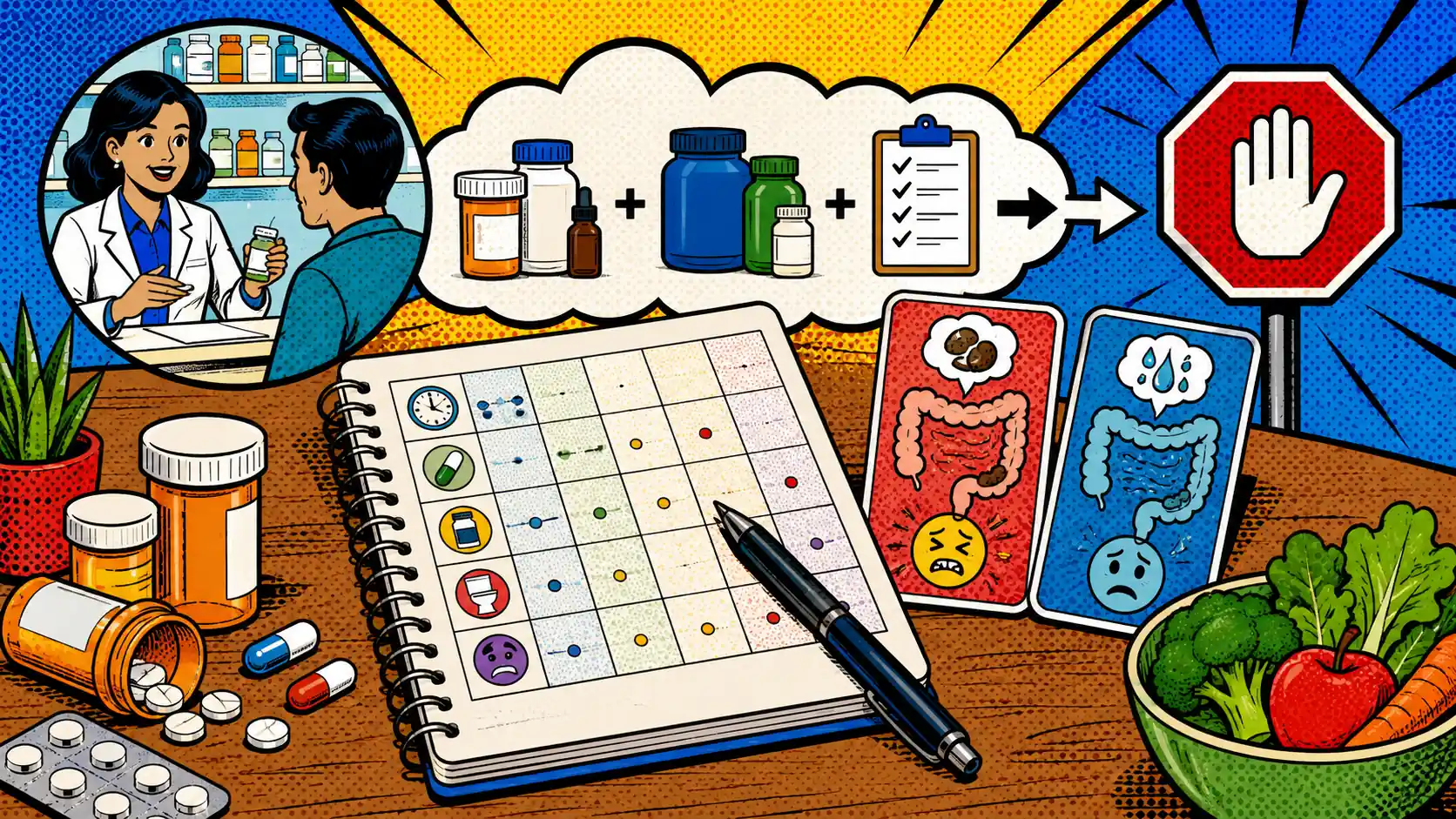
Some symptoms should not wait for a perfect timeline.
NIDDK lists diarrhea warning signs such as black or bloody stools, fever, severe pain, and dehydration symptoms, and constipation warning signs such as rectal bleeding, blood in stool, constant abdominal pain, inability to pass gas, vomiting, fever, and unexplained weight loss 1 2. NICE also recommends checking for red-flag indicators before treating possible IBS symptoms as routine IBS 3.
Move out of routine sorting and seek medical guidance promptly if you have:
If warning signs are the main story, start with IBS vs colorectal warning signs or urgent care guidance rather than a medication detective project.
IBS is not diagnosed by one symptom in isolation. NIDDK says clinicians diagnose IBS by reviewing symptoms, medical and family history, physical exam, and tests when needed 4. That matters because constipation, diarrhea, bloating, nausea, pain, and urgency can overlap with many explanations. A review on drug-induced gastrointestinal disorders notes that medication-related GI problems can mimic conditions such as IBS, which is why recognition can prevent unnecessary investigations or treatment 5.
Medicines and supplements add another layer. FDA advises patients to learn about possible side effects and work with a health care provider or pharmacist when side-effect questions arise 6. MedlinePlus notes that drug interactions can change how medicines work or cause side effects, and advises asking a health care provider or pharmacist about medicine questions 7.
Supplements deserve the same caution. NCCIH warns that dietary supplements can have side effects and interactions, and that natural does not automatically mean safe 8.
The useful conclusion is not "medicines are the problem." It is this:
Timing is a clue. It is not proof. That is why the goal is a better question, not a solo medication change.
Before you cut more foods or add another product, write down the sequence.
Use five short rows:
| Timeline row | What to write |
|---|---|
| Baseline | Your usual bowel pattern before the change: constipation, diarrhea, mixed pattern, urgency, bloating, nausea, or appetite level. |
| Medicine or supplement change | New prescription, OTC medicine, antibiotic, laxative, antidiarrheal, mineral, probiotic, fiber, magnesium, protein powder, dose change, timing change, or stopped product. |
| Symptom change | What changed first, when it began, whether it is improving or worsening, and whether it is clearly different from your usual IBS pattern. |
| Confounders | Illness, travel, sleep loss, stress, menstrual-cycle timing, new diet rules, alcohol, caffeine, restaurant meals, or flare-day choices. |
| Stop signs | Bleeding, black stool, fever, dehydration, vomiting, severe pain, weight loss, nighttime symptoms, or inability to pass gas or stool. |
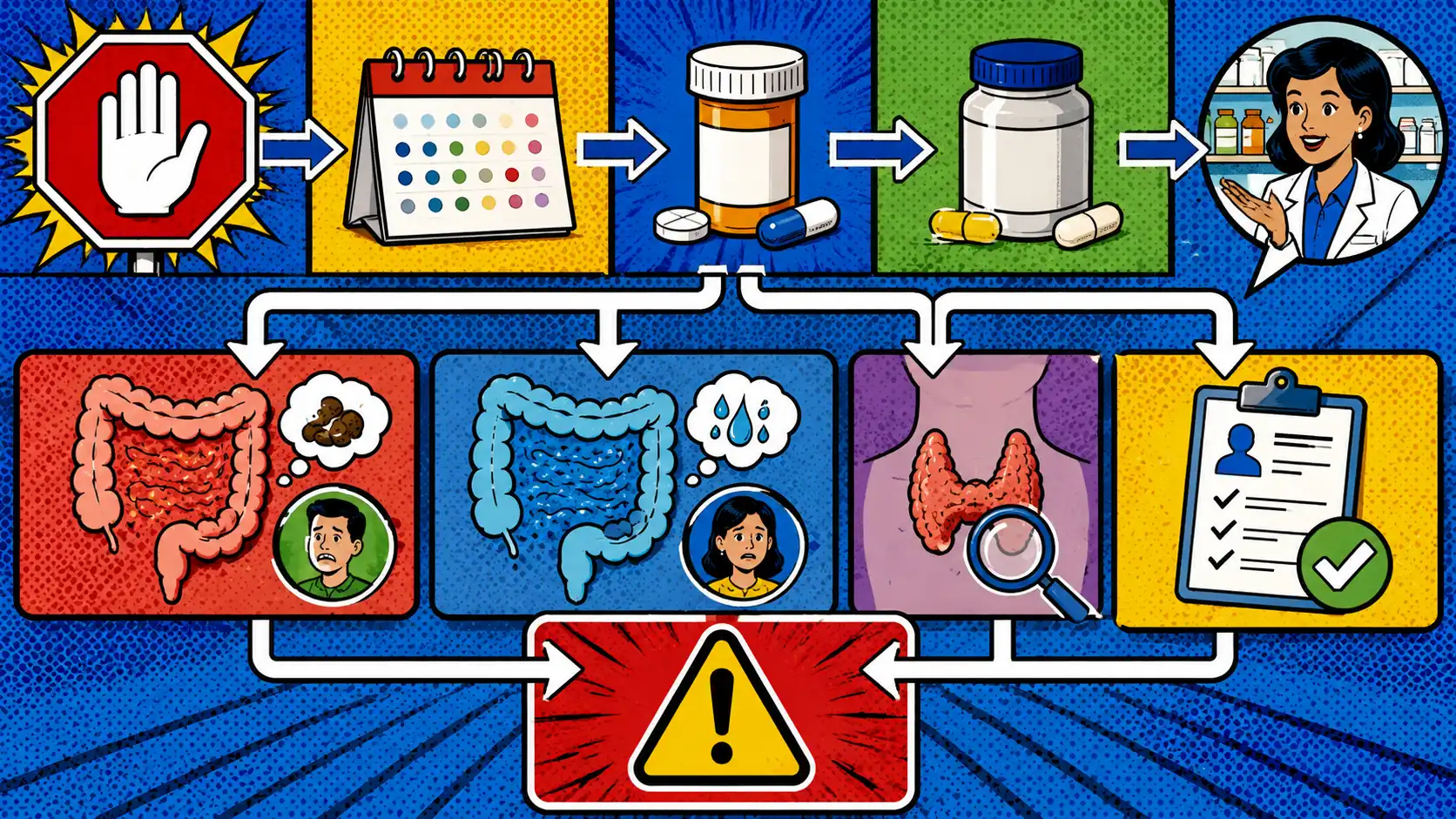
This is also where the symptom language should stay specific. "My IBS is worse" is less useful than "constipation changed from every other day to once every five days after X changed" or "watery urgency started three days after Y, and I also added magnesium."
If you need a broader appointment structure, use doctor visit prep for IBS next steps. If the main issue is that several supplements and products started together, use supplement stack audit for IBS.
This table is not a drug-side-effect list. It is a question map.
| Pattern | What may be worth reviewing | Better next route |
|---|---|---|
| Constipation became dominant after a medicine, mineral, antacid, pain-medicine change, travel routine, or supplement shift | Ask whether the timing, dose, hydration, fiber, mineral use, or another medicine could be part of the constipation pattern. | IBS-C constipation medications and fiber options |
| Diarrhea or urgency started after antibiotics, magnesium, a new supplement, an OTC tool, or a product with sweeteners or fibers | Ask whether the symptom timing, hydration risk, antibiotic history, magnesium, duplicate ingredients, or product label matters. | IBS-D medications and diarrhea options |
| Bloating became louder after adding fiber, prebiotics, probiotics, protein powder, enzymes, or several products at once | Ask whether the stack is hiding the signal before adding another product. | Supplement stack audit for IBS |
| Nausea, fullness, or appetite changed after a medicine or supplement began | Ask whether this belongs in medication review, dose-timing review, upper-gut symptom review, or clinician follow-up. | Doctor visit prep for IBS next steps |
| Constipation or diarrhea travels with fatigue, heat or cold sensitivity, heart-rate changes, tremor, skin or hair changes, or unexplained weight change | Ask whether a wider body-system question belongs in the visit. | Thyroid, constipation, diarrhea, or IBS |
| Bleeding, black stool, anemia concern, weight loss, severe pain, vomiting, dehydration, or persistent change appears | Stop routine sorting and raise the safety level. | IBS vs colorectal warning signs |
The route you choose depends on the dominant question. If stool backup and bloating are the main issue after safety review, the constipation lane may fit. If watery urgency and hydration risk are louder, the diarrhea lane may fit. If the whole body changed, do not turn the problem into a food-only story.
FDA describes pharmacists as medicine-safety resources for questions about medications, side effects, allergies, and medication experience 9. That makes the pharmacist especially useful when the question is practical: what is known about this medicine, this timing, this combination, or this product stack?
Bring the list, then ask:
That last question matters. A pharmacist can often help clarify side-effect and interaction questions, but diagnosis, testing, and treatment changes still belong with the clinician managing the condition.
Use the clinician visit for the bigger decision:
NIDDK describes IBS treatment as potentially including diet changes, lifestyle changes, medicines, probiotics, and mental health therapies depending on the person and symptoms 10. That is the reason to avoid narrowing the story too quickly. Sometimes the next step is diet adjustment. Sometimes it is a medicine review. Sometimes it is a testing or safety question.
Download: Clinician and Pharmacist Question Card for a one-page timeline, stop-sign check, pharmacist questions, and clinician questions.
| If this is the main situation | Best next read |
|---|---|
| You need to organize the appointment conversation itself | Doctor visit prep for IBS next steps |
| Diabetes, metformin, GLP-1 medicines, or diabetes motility clues are part of the symptom timeline | Diabetes, GLP-1, metformin, and IBS-like gut symptoms |
| The bowel-pattern change is happening in an older adult or caregiver context | IBS in older adults: medication, constipation, and diarrhea |
| Several supplements, powders, OTC tools, or gut products are muddying the signal | Supplement stack audit for IBS |
| Iron, calcium, magnesium, antacids, or multivitamins are the specific noisy variable | Iron, calcium, magnesium, and gut symptoms |
| Constipation became the dominant pattern after a medicine, mineral, or supplement change | IBS-C constipation medications and fiber options |
| Diarrhea or urgency became dominant after a medicine, antibiotic, magnesium, or supplement change | IBS-D medications and diarrhea options |
| Bowel changes travel with fatigue, heat or cold sensitivity, tremor, heart-rate changes, skin or hair changes, or weight change | Thyroid, constipation, diarrhea, or IBS |
| Blood, black stool, anemia concern, weight loss, severe pain, vomiting, dehydration, or persistent bowel change is present | IBS vs colorectal warning signs |
| Diarrhea is frequent enough that hydration is the first practical concern | Oral rehydration for diarrhea and IBS flares |
| Constipation and bloating remain the main pattern after safety review | Constipation and bloating connection |
If gut symptoms changed near a medicine or supplement change, do not make the diet smaller by default.
First, check for red flags. Then build the timeline: baseline, medicine or supplement change, symptom change, confounders, and stop signs. Bring that to a pharmacist when the question is side effects, interactions, duplicate ingredients, or timing. Bring it to a clinician when the question is diagnosis, testing, treatment fit, or whether a medicine plan needs review.
The goal is not to blame medicine or dismiss IBS. The goal is to stop guessing and ask the next safer question.
Xam Riche is a gut health solopreneur and founder of YourFitNature, dedicated to helping people navigate digestive wellness through evidence-based information and personal experience. After years of struggling with IBS and bloating, Xam discovered the transformative power of the low FODMAP diet and now shares practical, science-backed guidance to help others find relief. While not a medical professional, Xam combines extensive research with lived experience to create accessible, empowering resources for the gut health community. Learn more about our mission
As an affiliate, we may earn from qualifying purchases.