 By • Published on May 16, 2026 • 5 min read • 4,653 views
This article is for informational and educational purposes only and does not constitute medical advice. Always consult with a qualified healthcare professional for diagnosis, testing, and treatment decisions.
Bowel symptoms can belong to IBS and still deserve a wider lens when the rest of the body is changing too.
Constipation, diarrhea, bloating, and urgency are common reasons people land in IBS content. But thyroid hormones affect body speed, energy use, temperature, heart rhythm, skin, hair, mood, and bowel movement patterns. That does not mean every bowel change is thyroid disease. It means a bowel pattern plus whole-body clues can be worth a clinician conversation.
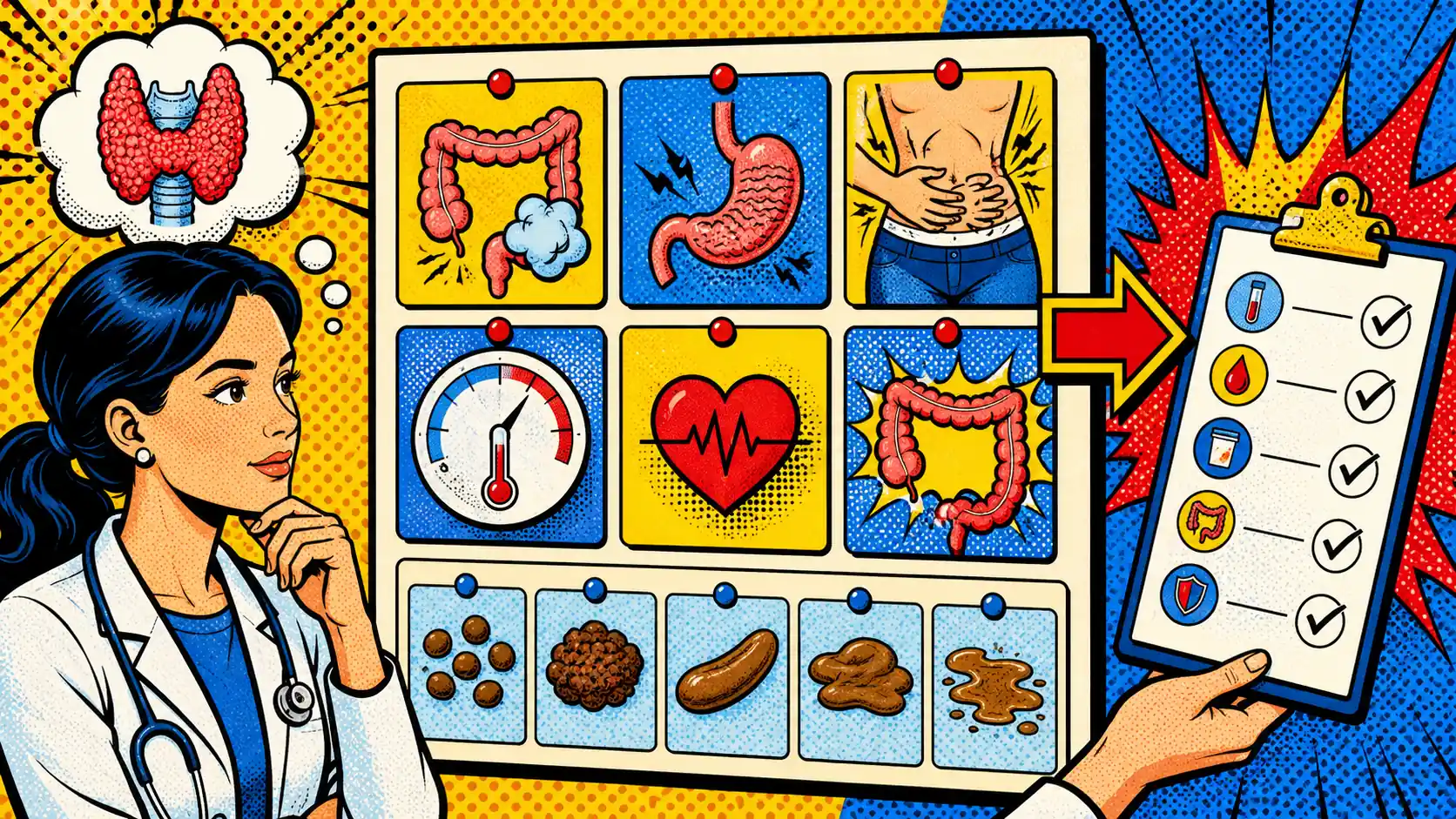
Use this page as a bridge. It does not diagnose hypothyroidism, hyperthyroidism, IBS-C, or IBS-D. It helps you decide when to stay in the IBS lane and when to bring thyroid context to the appointment.
Do not use thyroid or IBS articles to self-manage urgent symptoms. Get medical guidance right away for blood or black stool, fever, dehydration, persistent vomiting, severe or changed abdominal pain, unexplained weight loss, nighttime diarrhea, or inability to pass gas or stool. NIDDK lists blood, fever, vomiting, lightheadedness, weight loss, and dehydration concerns in diarrhea contexts, and constipation with bleeding, constant pain, vomiting, fever, weight loss, or inability to pass gas needs prompt attention 1 2.
If symptoms are not urgent but feel different from your usual pattern, keep reading with that context in mind.
Hypothyroidism means the thyroid gland does not make enough thyroid hormone. NIDDK explains that thyroid hormones affect nearly every organ, including how the body uses energy and how the heart beats 3. Constipation can be one symptom, but it is usually the body-wide pattern that makes the thyroid question stronger.
Hyperthyroidism means the thyroid gland makes too much thyroid hormone. NIDDK lists frequent bowel movements among possible symptoms, along with fast heartbeat, heat intolerance, trembling hands, sleep problems, weight loss, and other signs of a sped-up system 4.
That is the core distinction: IBS is a gut-pattern diagnosis; thyroid disease is an endocrine condition with gut symptoms as one possible clue.
| Pattern | More IBS-leaning | Thyroid-question leaning |
|---|---|---|
| Constipation | Familiar IBS-C pattern, bloating, pain changes with bowel movements | New or worsening constipation plus fatigue, cold sensitivity, dry skin or hair changes, weight gain, slower heart rate |
| Diarrhea | Familiar IBS-D urgency, stress/meal triggers, pain improves after stool | Frequent stools or diarrhea plus heat intolerance, fast heartbeat, tremor, sleep trouble, unexplained weight loss |
| Mixed bowel pattern | Alternating pattern already typical for you | Alternation plus clear body-wide change, new medication, postpartum timing, or family/personal thyroid history |
| Testing question | Symptoms fit a known IBS pattern and red flags are absent | Symptoms are new, progressive, different, or paired with systemic clues |
Use this table to prepare a better question, not to diagnose yourself.
Bring a short pattern summary instead of a long anxious story.
Track:
Download the printable Thyroid-Bowel Clue Checklist before your visit.
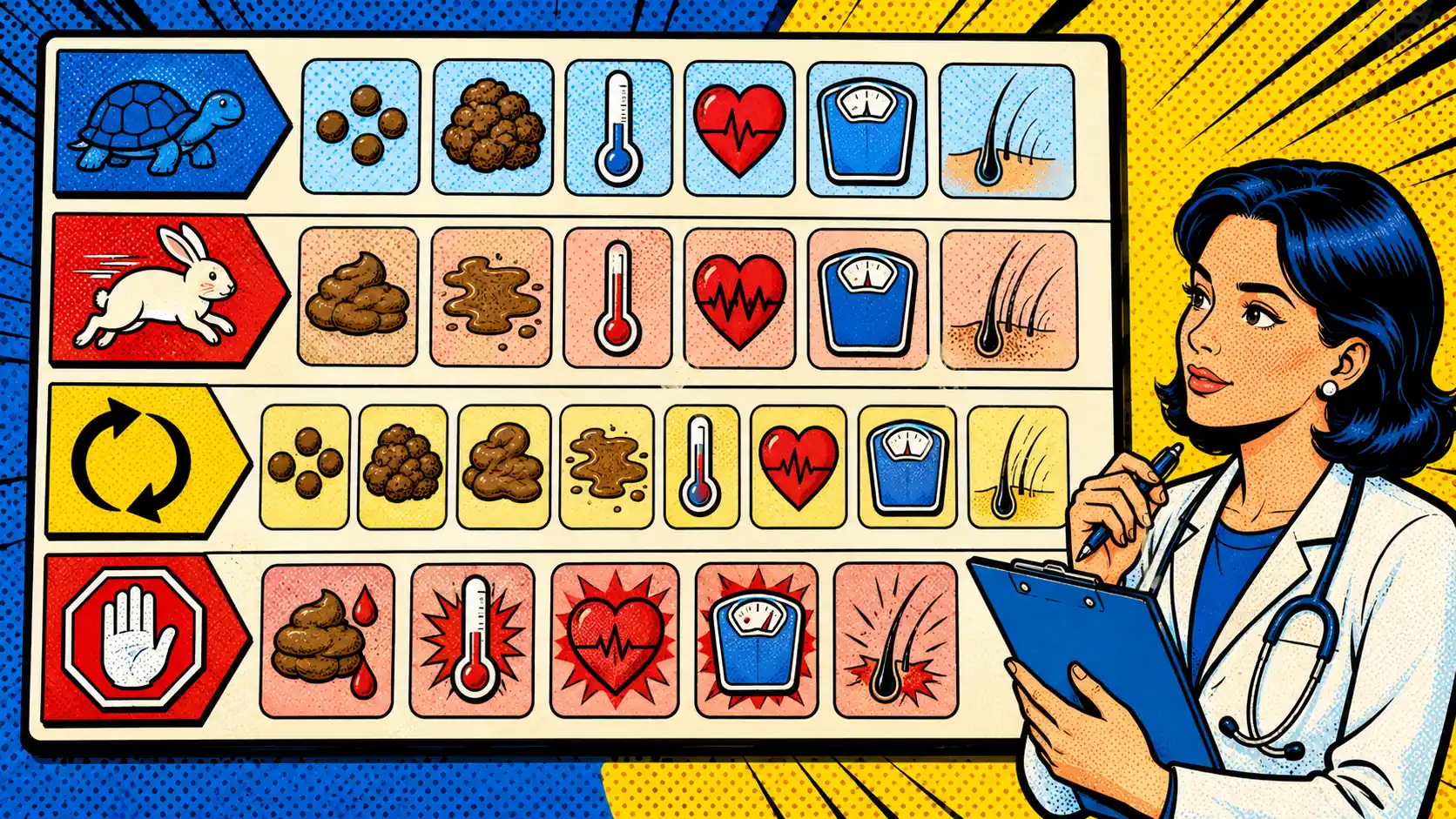
Do not start thyroid supplements, iodine products, glandular products, or major diet changes because constipation or diarrhea "might be thyroid." Thyroid conditions need proper testing and interpretation. Too much or too little thyroid hormone can matter for the heart, bones, pregnancy, mood, and overall health.
Also do not abandon IBS care if your symptoms still fit an IBS pattern. NIDDK notes IBS treatment may include diet changes, lifestyle changes, medicines, probiotics, and mental health therapies 5. The thyroid question should widen the lens, not erase the gut plan.
| Situation | Best next read |
|---|---|
| You need a testing conversation map | IBS tests, celiac, SIBO, calprotectin, and colonoscopy |
| You need to organize the appointment conversation itself | Doctor visit prep for IBS next steps |
| Bowel changes line up with a medicine, supplement, dose, or timing change | Medication side effects vs IBS symptoms |
| Bowel changes are happening in an older adult with medication or constipation concerns | IBS in older adults: medication, constipation, and diarrhea |
| Constipation and bloating are still the main pattern | Constipation and bloating connection |
| IBS-C treatment options are the practical next step | IBS-C constipation medications and fiber options |
| Diarrhea or urgency is the dominant pattern | IBS-D medications and diarrhea options |
| The whole IBS treatment plan needs review | IBS treatment options |
| Blood, weight loss, anemia, or persistent bowel change is the worry | IBS vs colorectal warning signs |
Constipation or diarrhea alone does not tell you whether the issue is IBS, thyroid, both, or something else. The useful clue is the pattern around the bowel change.
If your symptoms still match your familiar IBS baseline, stay with the IBS route. If bowel changes are new, persistent, or paired with fatigue, heat or cold sensitivity, heart-rate changes, tremor, skin or hair changes, or unexplained weight change, bring the thyroid question to a clinician instead of trying to solve it with food rules or supplements.
Xam Riche is a gut health solopreneur and founder of YourFitNature, dedicated to helping people navigate digestive wellness through evidence-based information and personal experience. After years of struggling with IBS and bloating, Xam discovered the transformative power of the low FODMAP diet and now shares practical, science-backed guidance to help others find relief. While not a medical professional, Xam combines extensive research with lived experience to create accessible, empowering resources for the gut health community. Learn more about our mission
As an affiliate, we may earn from qualifying purchases.