 By • Published on May 29, 2026 • 7 min read • 1,345 views
This article is for informational and educational purposes only and does not constitute medical advice, religious guidance, nutrition counseling, or medication guidance. Ask qualified religious and medical professionals for individualized fasting, health, and medication decisions.
Ramadan can compress the whole gut routine into a narrower window: food, fluids, caffeine, sleep, bowel timing, social meals, prayer schedule, work, and family obligations.
If you live with IBS, that compression can make symptoms harder to read. Was the bloating from the food? The larger meal? Less fluid? Caffeine withdrawal? A later bedtime? Constipation after routine change? Diarrhea that should not be managed at home?
This page is not religious guidance. It does not tell you whether to fast, when you are exempt, or how to change medicines. It is a symptom-planning map for readers who plan to fast and want to discuss gut symptoms more clearly with their care team.
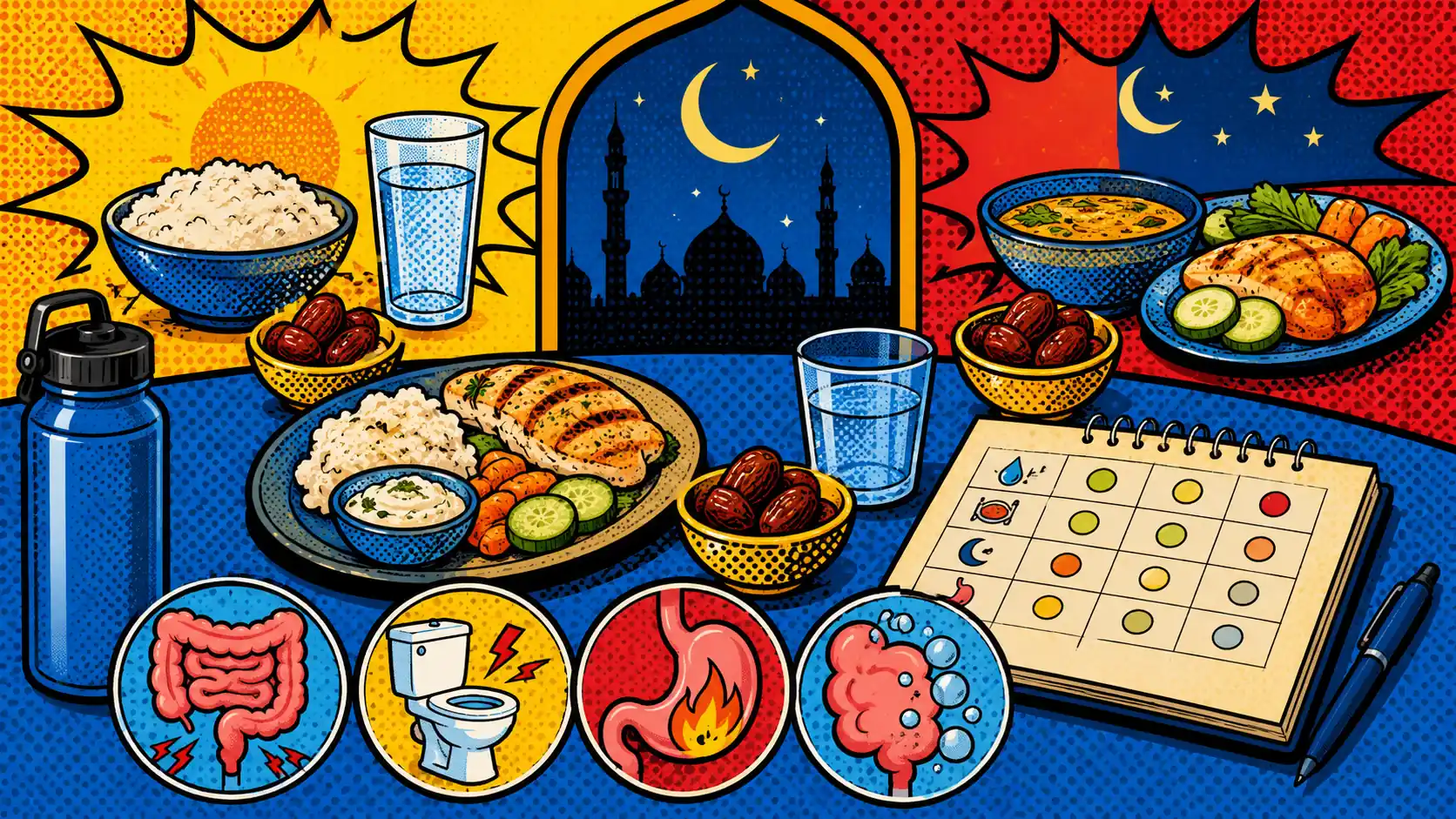
Fasting decisions can be medical decisions for some people. If you have diabetes, pregnancy, kidney disease, an eating-disorder history, recurrent dehydration, frailty, active infection, medication timing concerns, or symptoms outside your usual baseline, bring the question to a qualified clinician.
ADA 2026 Standards include prefasting risk assessment and individualized planning for people with diabetes who seek to fast during Ramadan 1. A diabetes-focused Ramadan review notes risks such as hypoglycemia, hyperglycemia, ketoacidosis, dehydration, and thrombosis, and emphasizes risk stratification, education, and medication planning 2.
Do not change medication timing because of a blog article. Ask the prescriber or pharmacist.
[!NOTE] Evidence boundary: Ramadan-focused diabetes guidance supports prefasting risk assessment, education, monitoring, hydration planning, and medication review for people whose health or medicines make fasting higher risk. IBS symptom guidance can help map constipation, diarrhea, reflux, and timing patterns. Neither evidence stream lets this page decide whether you personally should fast, stop fasting, change medicines, or change religious practice.
Use this script with a clinician, pharmacist, diabetes educator, dietitian, and qualified religious adviser as appropriate:
I want to plan Ramadan in a way that respects fasting and protects health. My main risks or symptoms are [diabetes, pregnancy, kidney disease, medication timing, dehydration, diarrhea, constipation, reflux, eating-disorder history, other]. What should I do before Ramadan, what should I monitor, which medicines or meal timings need a plan, and what signs mean I should break the fast or seek care?
Do not change medication timing, diabetes monitoring, hydration treatment, fasting decisions, or restriction plans based on this page alone.
Instead of asking "what food triggered me?" start with timing.
| Timing variable | Why it can matter |
|---|---|
| Suhoor size | A very small meal may leave you under-fueled; a very large meal may worsen fullness or reflux. |
| Iftar pace | Eating quickly after a long fast can amplify reflux, bloating, or urgency for some people. |
| Fluid window | Less daytime fluid can make constipation and dehydration risk harder to separate. |
| Caffeine shift | Changing coffee or tea timing can affect headaches, urgency, reflux, or sleep. |
| Sleep change | Short or shifted sleep can affect gut-brain sensitivity and bowel routine. |
| Social meals | Richer foods, later meals, and larger portions can stack with timing changes. |
Use meal timing and gut symptoms if the pattern is mostly about when you eat rather than what you eat.
Constipation during Ramadan may reflect less fluid opportunity, less routine, less movement, lower fiber, or delayed bathroom time. It may also reflect your usual IBS-C pattern becoming more visible.
Before adding a new fiber product, ask:
Constipation with swelling, vomiting, or inability to pass gas or stool is not a routine IBS experiment 3. Use constipation and bloating connection for a non-emergency sorting path.
Diarrhea during fasting deserves careful sorting because fluid replacement is limited during fasting hours. Severe diarrhea, dehydration, fever, blood, black stool, or worsening pain should move you out of routine IBS troubleshooting 4.
If symptoms are mild and familiar, track the timing:
Use hydration, electrolytes, and gut symptoms if the main problem is fluid loss, heat, diarrhea, or dizziness.
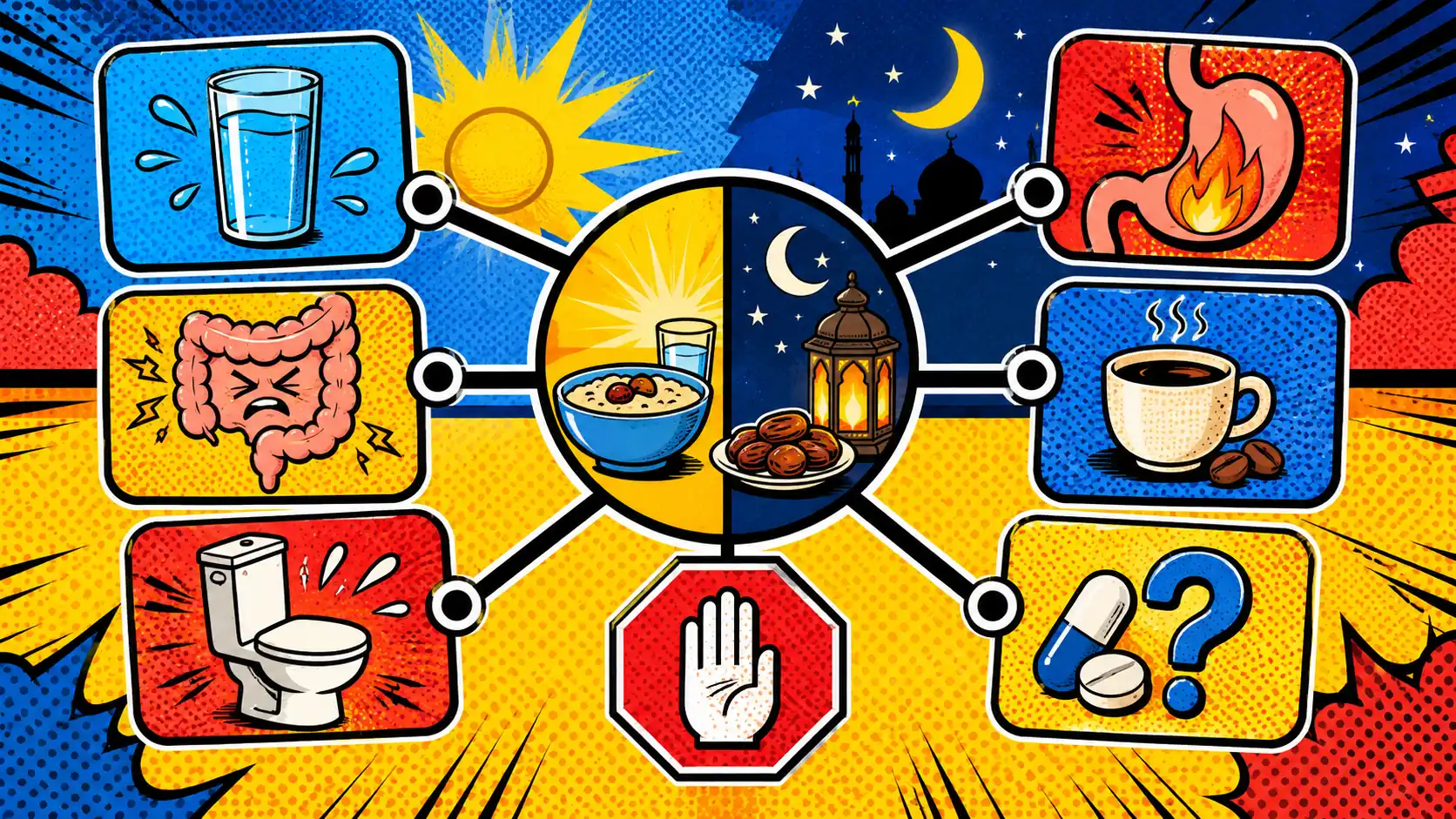
If reflux, burning, nausea, or early fullness is the main issue, the pattern may be less about FODMAPs and more about meal size, meal timing, lying down soon after eating, caffeine, rich foods, or an upper-gut condition.
Use acid reflux symptoms when burning, regurgitation, sour taste, chest discomfort, or night symptoms are central. Use medical care promptly for chest pain, trouble swallowing, vomiting blood, black stool, unexplained weight loss, or severe symptoms.
Some medicines are designed around meals, fluids, glucose monitoring, blood pressure, kidney function, or consistent timing. Ramadan changes those conditions.
Ask before Ramadan:
If diabetes medicines, metformin, GLP-1 medicines, nausea, appetite change, or upper-gut symptoms are in the picture, read diabetes, GLP-1, metformin, and IBS-like gut symptoms and bring the timeline to your diabetes care team.
Download: Ramadan IBS Meal-Timing Route Card
Seek medical advice promptly, or urgent care when severe, if fasting overlaps with fainting, confusion, severe dehydration, persistent vomiting, severe diarrhea, blood or black stool, fever, severe or worsening abdominal pain, inability to keep fluids down during non-fasting hours, pregnancy concerns, kidney disease symptoms, concerning glucose patterns, or symptoms that are outside your usual baseline. These are not "push through and troubleshoot food" signals.
| If this is loudest | Read next |
|---|---|
| Timing, late meals, or meal size | Meal timing and gut symptoms |
| Dehydration, diarrhea, heat, or dizziness | Hydration, electrolytes, and gut symptoms |
| Constipation and pressure | Constipation and bloating connection |
| Burning, sour taste, or night reflux | What are acid reflux symptoms? |
| Same-day flare decisions | IBS flare plan: what to do today |
Ramadan fasting can change the whole context around IBS symptoms: food timing, fluid access, caffeine, sleep, meal size, medication timing, and bowel routine.
Do not force every symptom into a single food-trigger story. Map the eating window, separate constipation from diarrhea from reflux, protect hydration, and ask care-team questions early when diabetes, medicines, pregnancy, kidney disease, eating-disorder history, or red flags are involved.
The goal is not to make fasting medicalized. It is to make the symptom pattern clear enough that you can plan respectfully and safely.
Xam Riche is a gut health solopreneur and founder of YourFitNature, dedicated to helping people navigate digestive wellness through evidence-based information and personal experience. After years of struggling with IBS and bloating, Xam discovered the transformative power of the low FODMAP diet and now shares practical, science-backed guidance to help others find relief. While not a medical professional, Xam combines extensive research with lived experience to create accessible, empowering resources for the gut health community. Learn more about our mission
As an affiliate, we may earn from qualifying purchases.