 By • Published on May 26, 2026 • 10 min read • 1,794 views
This article is for informational and educational purposes only and does not constitute medical advice. Do not start, stop, pause, change dose, or change the timing of diabetes, weight, or stomach medicines without guidance from the clinician who manages them.
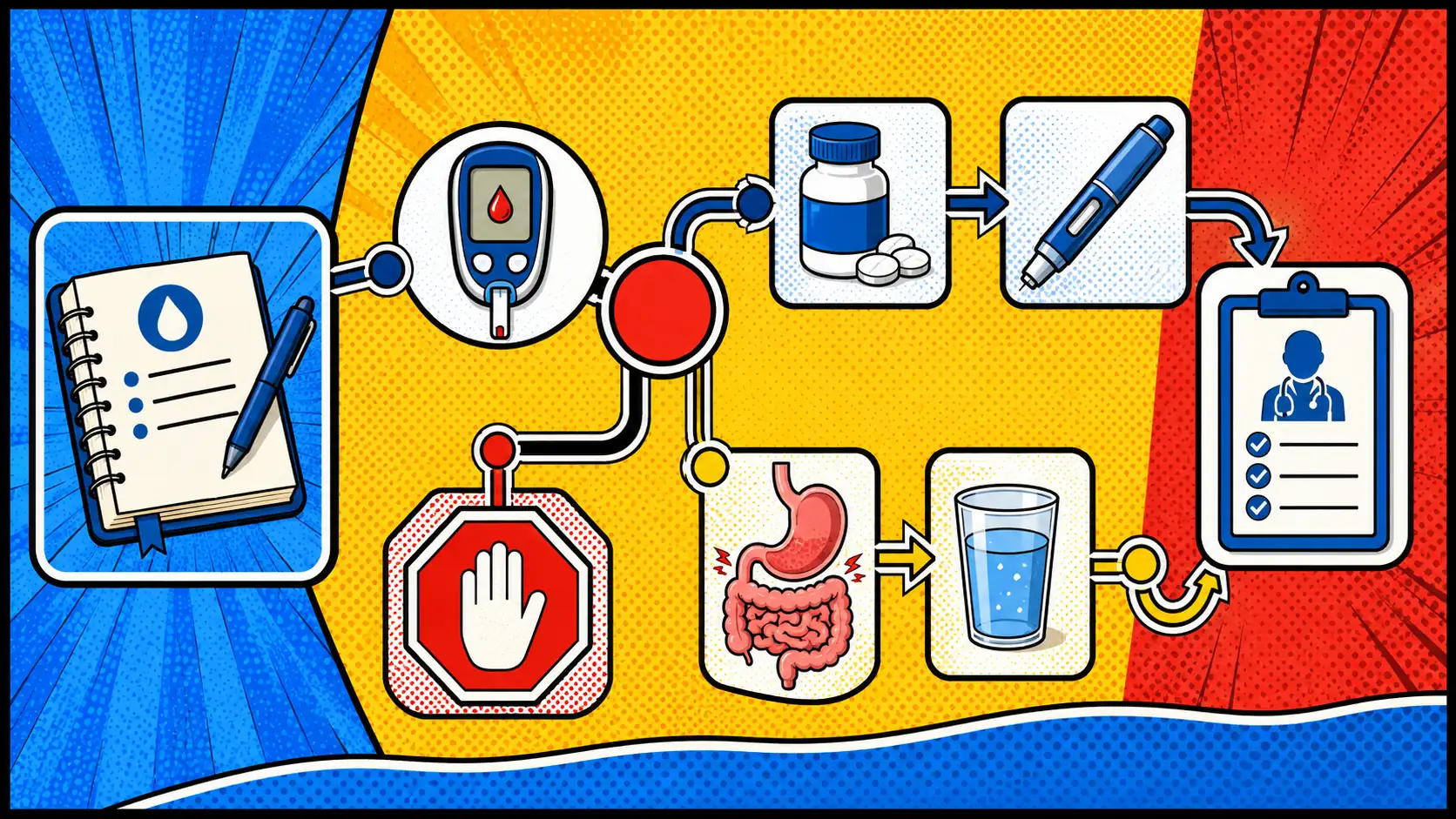
If nausea, diarrhea, constipation, fullness, appetite change, or bloating shows up while diabetes, metformin, a GLP-1 medicine, tirzepatide, or weight-loss care is also in the picture, it is easy to make food the only suspect.
That can send you into the wrong kind of experiment. You may tighten your diet, restart low FODMAP, add fiber, stop eating enough, or blame IBS before anyone has looked at medication timing, hydration, upper-gut symptoms, or diabetes motility clues.
This page is a sorting guide. It does not diagnose a side effect, diabetes complication, gastroparesis, SIBO, or IBS. It does not tell you to stop, start, pause, retime, or change the dose of any diabetes or weight medicine. It helps you ask a safer question: what changed, which symptom pattern is loudest, and who should review it?
Do not wait for a perfect symptom diary if the pattern is unsafe.
Move out of routine IBS sorting and get medical guidance promptly if symptoms include:
Those stop signs matter even if IBS is already on your chart. Use IBS vs colorectal warning signs when bleeding, anemia, weight loss, persistent bowel change, or a safety question is the main concern.
The same symptom words can point to different next steps.
IBS usually centers on recurrent abdominal pain plus bowel habit change. A diabetes or medication-overlap story may include that, but it may also include upper-gut symptoms, appetite change, dehydration risk, blood-sugar context, medicine timing, or motility clues.
NIDDK says diabetes-related autonomic neuropathy can affect the digestive system and may cause symptoms such as diarrhea alternating with constipation, swallowing problems, and gastroparesis 1. NIDDK also defines gastroparesis as delayed stomach emptying without a blockage, with symptoms such as nausea, vomiting, feeling full soon after starting a meal, post-meal fullness, bloating, and upper abdominal pain 2.
That does not mean every person with diabetes and bloating has gastroparesis. It means the location, timing, and medicine context matter.
If symptoms started close to a medicine, dose, supplement, or timing change, use medication side effects vs IBS symptoms as the broader medicine-review frame. If the pattern is mostly upper fullness, nausea, or post-meal heaviness, compare it with functional dyspepsia. If the pattern is broad bloating with motility risk factors, testing questions, or fermentation-style flares, keep SIBO vs IBS vs food intolerance in the route map too.
Before you change food rules, answer three practical questions.
| Question | Why it matters | Better next move |
|---|---|---|
| What changed when? | New or changed medicine, dose, timing, illness, hydration, fiber, caffeine, alcohol, or food rules can move the symptom signal. | Build a short timeline for the prescribing clinician or pharmacist. |
| Where is the symptom center? | Upper fullness and nausea need a different conversation than lower cramping, urgency, or constipation. | Route to upper-GI, lower-GI, hydration, or testing support by dominant pattern. |
| What needs review? | Medication questions, diabetes motility clues, and red flags sit above diet troubleshooting. | Use clinician prep instead of making solo medication or diet changes. |
If you need a general visit structure, use doctor visit prep for IBS next steps and bring the diabetes or medication context into that appointment.
Metformin can be part of a useful diabetes plan and still make gut symptoms harder to interpret.
The article should not become a metformin instruction sheet. The useful reader job is narrower: notice whether diarrhea, nausea, appetite change, abdominal discomfort, illness, dehydration risk, or a dose/timing change belongs in the conversation.
MedlinePlus advises readers taking metformin to tell a doctor if they recently had, or develop, serious infection, severe diarrhea, vomiting, fever, or if they drink much less fluid than usual for any reason 3. FDA's metformin warning update also notes common side effects such as diarrhea, nausea, and upset stomach 4.
That gives you a safer route:
If diarrhea is frequent enough that fluid loss is the first problem, use hydration, electrolytes, and gut symptoms before treating the day as a normal IBS flare.
GLP-1 receptor agonists and tirzepatide can change the gut-symptom conversation because they can affect appetite, nausea, vomiting, constipation, diarrhea, and gastric emptying.
FDA label examples for tirzepatide and semaglutide list gastrointestinal adverse reactions such as nausea, diarrhea, vomiting, constipation, decreased appetite, dyspepsia, or abdominal pain 5 6. A 2024 review also notes that GLP-1 receptor agonists and tirzepatide slow gastric emptying and small-intestinal motility as part of their effects, while also raising clinical questions in settings such as procedures or anesthesia 7.
That does not mean you should self-adjust the medicine. It means the symptom timeline is important:
Bring those questions to the clinician who manages the medication. If the main pattern is upper-GI fullness rather than lower-GI IBS, use functional dyspepsia as a symptom-language bridge, not as a replacement for medication review.
Sometimes the issue is not only the medicine. Diabetes itself can be part of the motility conversation.
Gastroparesis is the clearest upper-GI example. NIDDK says symptoms can include feeling full soon after starting a meal, feeling full long after eating, nausea, vomiting, bloating, belching, upper abdominal pain, poor appetite, and weight loss 8. The American College of Gastroenterology guideline describes gastroparesis as recognized through symptoms plus documentation of delayed gastric emptying 9.
That distinction matters: symptoms can suggest a conversation, but testing and clinical review make the diagnosis.
Diabetes-related autonomic neuropathy can also affect lower-GI patterns. NIDDK lists diarrhea alternating with constipation among digestive symptoms that can occur when autonomic neuropathy affects the digestive system 10.
If bloating and bowel changes come with diabetes, opioid use, surgery history, or motility clues, that can also make SIBO worth discussing in the right clinical context. Use SIBO vs IBS vs food intolerance to keep that question grounded instead of assuming every flare is SIBO.

Keep the tracker short enough that you will actually use it.
| Track this | Write down |
|---|---|
| Baseline | Your usual appetite, nausea, stool pattern, bloating, and pain pattern before the change. |
| Medicine context | Metformin, GLP-1 medicine, tirzepatide, insulin, other diabetes medicines, OTC tools, supplements, fiber, magnesium, or electrolyte products. |
| Timing | Start date, dose/timing changes, missed doses, restarts, illness, travel, or procedure planning. |
| Symptom center | Nausea, vomiting, early fullness, post-meal heaviness, diarrhea, urgency, constipation, bloating, pain, or low appetite. |
| Hydration and food intake | Whether you can keep fluids down, urine changes, dizziness, very low appetite, skipped meals, or diarrhea frequency. |
| Stop signs | Blood, black stool, fever, severe or worsening pain, dehydration, fainting, confusion, weight loss, persistent vomiting, or inability to pass gas or stool. |
Download: Diabetes Medication Gut Symptom Conversation Card to bring a concise timeline, symptom-center map, and clinician or pharmacist questions to the next visit.
[!NOTE] Evidence boundary: diabetes care standards support individualized medication, nutrition, monitoring, and education decisions. Medication labels and reviews can explain why nausea, diarrhea, constipation, appetite change, or fullness may overlap with metformin, GLP-1 medicines, or tirzepatide. That evidence does not let this page decide whether your dose, timing, medicine, or diabetes plan should change.
Use this script with the prescriber, pharmacist, diabetes educator, or gastroenterology clinician:
My gut symptoms changed around this timeline: [start date, dose/timing change, illness, travel, diet change]. The main symptoms are [nausea, vomiting, fullness, diarrhea, urgency, constipation, bloating, pain, low appetite]. Can we review whether this is a medication side effect, diabetes-related motility issue, hydration or intake problem, or a separate GI pattern? What should I monitor, and what symptoms mean I should seek care sooner?
Do not stop, restart, skip, or change diabetes medicines, GLP-1 medicines, metformin, insulin, glucose monitoring, or meal plans based on this page alone.
Move out of routine IBS troubleshooting if symptoms include persistent vomiting, inability to keep fluids down, dizziness, fainting, confusion, signs of dehydration, severe or worsening abdominal pain, fever, blood or black stool, unexplained weight loss, inability to pass gas or stool, very low intake, or concerning glucose patterns. Those are care-team or urgent-care questions, not a solo diet experiment.
| If this is the main situation | Best next read |
|---|---|
| Symptoms started around a medicine, supplement, dose, or timing change | Medication side effects vs IBS symptoms |
| You need to organize the appointment conversation | Doctor visit prep for IBS next steps |
| Nausea, early fullness, or post-meal heaviness is louder than bowel urgency | Functional dyspepsia and gut-brain communication |
| Bloating and bowel changes overlap with motility or SIBO questions | SIBO vs IBS vs food intolerance |
| Diarrhea, vomiting, heat, low intake, or dizziness makes hydration the first concern | Hydration, electrolytes, and gut symptoms |
| Blood, black stool, weight loss, anemia concern, severe pain, or persistent change is present | IBS vs colorectal warning signs |
| Appetite is low and you need gentle eating structure while you seek the right review | IBS safe foods when appetite is low |
When diabetes, metformin, GLP-1 medicines, tirzepatide, or diabetes-related motility questions overlap with IBS-like symptoms, do not make food the only suspect.
Start with stop signs. Then build a short timeline: what changed, when symptoms started, where the symptom center sits, and what else was moving at the same time. Bring that to the clinician or pharmacist who can review the medicine, diabetes context, hydration risk, and whether the pattern still fits routine IBS troubleshooting.
The goal is not to blame a medicine or dismiss IBS. The goal is to stop guessing and ask the next safer question.
Xam Riche is a gut health solopreneur and founder of YourFitNature, dedicated to helping people navigate digestive wellness through evidence-based information and personal experience. After years of struggling with IBS and bloating, Xam discovered the transformative power of the low FODMAP diet and now shares practical, science-backed guidance to help others find relief. While not a medical professional, Xam combines extensive research with lived experience to create accessible, empowering resources for the gut health community. Learn more about our mission
As an affiliate, we may earn from qualifying purchases.