 By • Published on May 29, 2026 • 5 min read • 1,163 views
This article is for informational and educational purposes only and does not constitute medical advice, diagnosis, therapy, nutrition counseling, or medication guidance. Work with qualified healthcare professionals for individualized care.
IBS-like symptoms in an older adult can be familiar, but a caregiver should not treat every bowel change as a routine flare.
The safer first question is: what changed? A new medicine, missed fluid, lower appetite, travel, infection, reduced movement, supplement timing, constipation, diarrhea, or dehydration risk can all change the next step.
This home guide is not a diagnosis tool. It helps a family caregiver collect the pattern clearly enough to know when to hydrate, when to call, what to bring to a visit, and when not to make another diet change.
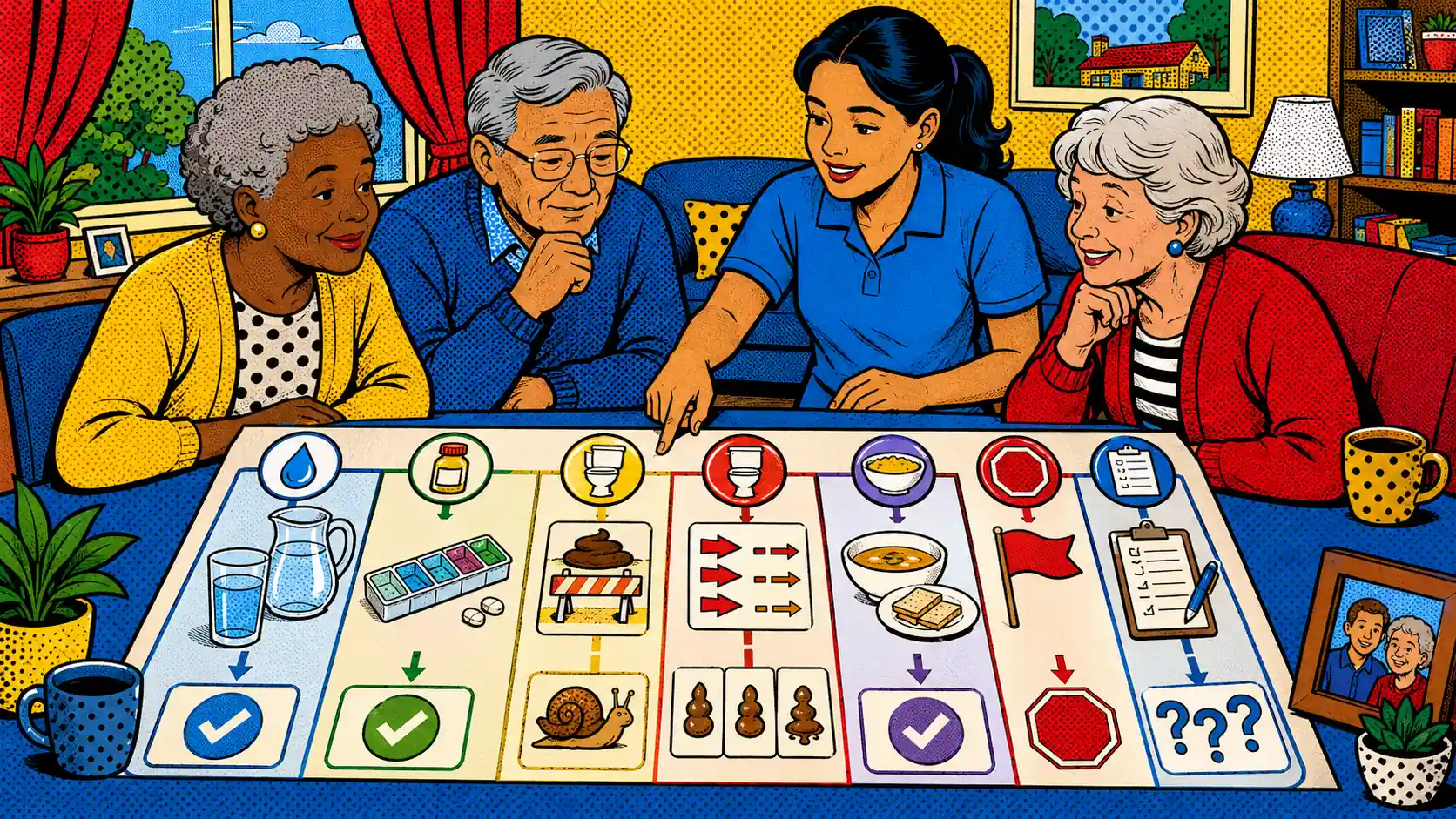
IBS is commonly described as repeated abdominal pain with bowel changes such as diarrhea, constipation, or both 1. That does not mean an older adult's new bowel change should be managed as ordinary IBS.
Move out of routine home sorting for blood or black stool, rectal bleeding, fever, persistent vomiting, severe or constant pain, dehydration signs, unexplained weight loss, new anemia concern, constipation with swelling or inability to pass gas, or a persistent change from baseline 2 3.
If warning signs are present, use IBS vs colorectal warning signs and call the clinician rather than testing foods at home.
Caregivers often notice pattern changes before the older adult has the energy or memory to explain them. The goal is not surveillance. The goal is a clean handoff.
Track:
| Lane | What to write down |
|---|---|
| Baseline | Usual stool pattern, appetite, fluid intake, mobility, pain, bloating, urgency, and sleep. |
| Change | New symptom, start date, travel, illness, missed meals, reduced fluids, or procedure. |
| Medicines | Prescriptions, OTC products, laxatives, antidiarrheals, pain medicines, antacids, vitamins, minerals, herbals, and supplements. |
| Risk | Dehydration, falls, confusion, weight loss, fever, vomiting, bleeding, or worsening pain. |
| Question | What needs a pharmacist, clinician, dietitian, or urgent-care answer? |
FDA encourages older adults to keep a complete medicine list that includes prescriptions, OTC medicines, vitamins, herbals, supplements, and topical products 4. Bring that list when bowel symptoms change.

Do not jump straight to more fiber. First ask what changed: fluid intake, movement, appetite, pain medicines, antacids, iron, calcium, magnesium, laxatives, or a new prescription.
A systematic review of constipation treatment in older adults found several laxative classes more effective than placebo in short-term trials, but also noted quality limits and the need for individualized decisions 5. For caregivers, that means treatment choices belong with the clinician or pharmacist, especially when frailty, kidney disease, heart disease, or polypharmacy is present.
Use IBS in older adults: medication, constipation, diarrhea for the deeper medication-overlap route.
Diarrhea and urgency can become a hydration and safety issue before they become a food-trigger puzzle. NIDDK describes dehydration as a serious diarrhea complication and lists warning symptoms that should prompt medical contact 6.
Write down stool frequency, whether the person is drinking, whether urine is darker or less frequent, whether dizziness or confusion is present, and whether diarrhea started after antibiotics, magnesium, alcohol, infection, a restaurant meal, or a medicine change.
For immediate fluid planning after a mild flare, use oral rehydration for diarrhea and IBS flares. If symptoms are persistent, bloody, feverish, dehydrating, or outside baseline, call.
Bring these questions:
| Situation | Read next |
|---|---|
| Medicine or supplement timing may be involved | IBS in older adults: medication, constipation, diarrhea |
| The visit needs a better agenda | Doctor visit prep for IBS next steps |
| Diarrhea raises hydration concerns | Oral rehydration for diarrhea and IBS flares |
| Bleeding, weight loss, anemia concern, or persistent change is present | IBS vs colorectal warning signs |
Caregiver support for IBS in older adults should start with safety and pattern, not tighter food rules.
Write down baseline, what changed, medicines and supplements, constipation or diarrhea details, hydration risk, appetite, and stop signs. Bring that timeline to the right person: pharmacist for medicine questions, clinician for diagnosis and red flags, dietitian for food structure, and urgent care when warning signs are present.
Xam Riche is a gut health solopreneur and founder of YourFitNature, dedicated to helping people navigate digestive wellness through evidence-based information and personal experience. After years of struggling with IBS and bloating, Xam discovered the transformative power of the low FODMAP diet and now shares practical, science-backed guidance to help others find relief. While not a medical professional, Xam combines extensive research with lived experience to create accessible, empowering resources for the gut health community. Learn more about our mission
As an affiliate, we may earn from qualifying purchases.