 By • Published on May 29, 2026 • 6 min read • 2,248 views
This article is for informational and educational purposes only and does not constitute medical advice, diabetes care, nutrition counseling, or medication guidance. Do not change diabetes medicines, carbohydrate targets, glucose monitoring, or prescribed treatment without your care team.
Low FODMAP and diabetes planning can feel like two dashboards on one plate.
One dashboard asks: did this meal worsen pain, bloating, constipation, urgency, or diarrhea? The other asks: what happened to blood sugar, appetite, energy, medication timing, and meal balance?
Those dashboards can overlap, but they are not the same. Low FODMAP is not a low-carb diet. Diabetes nutrition is not a FODMAP list. If you merge them without help, you can accidentally remove fiber, shrink variety, under-eat, or make blood-sugar patterns harder to interpret.
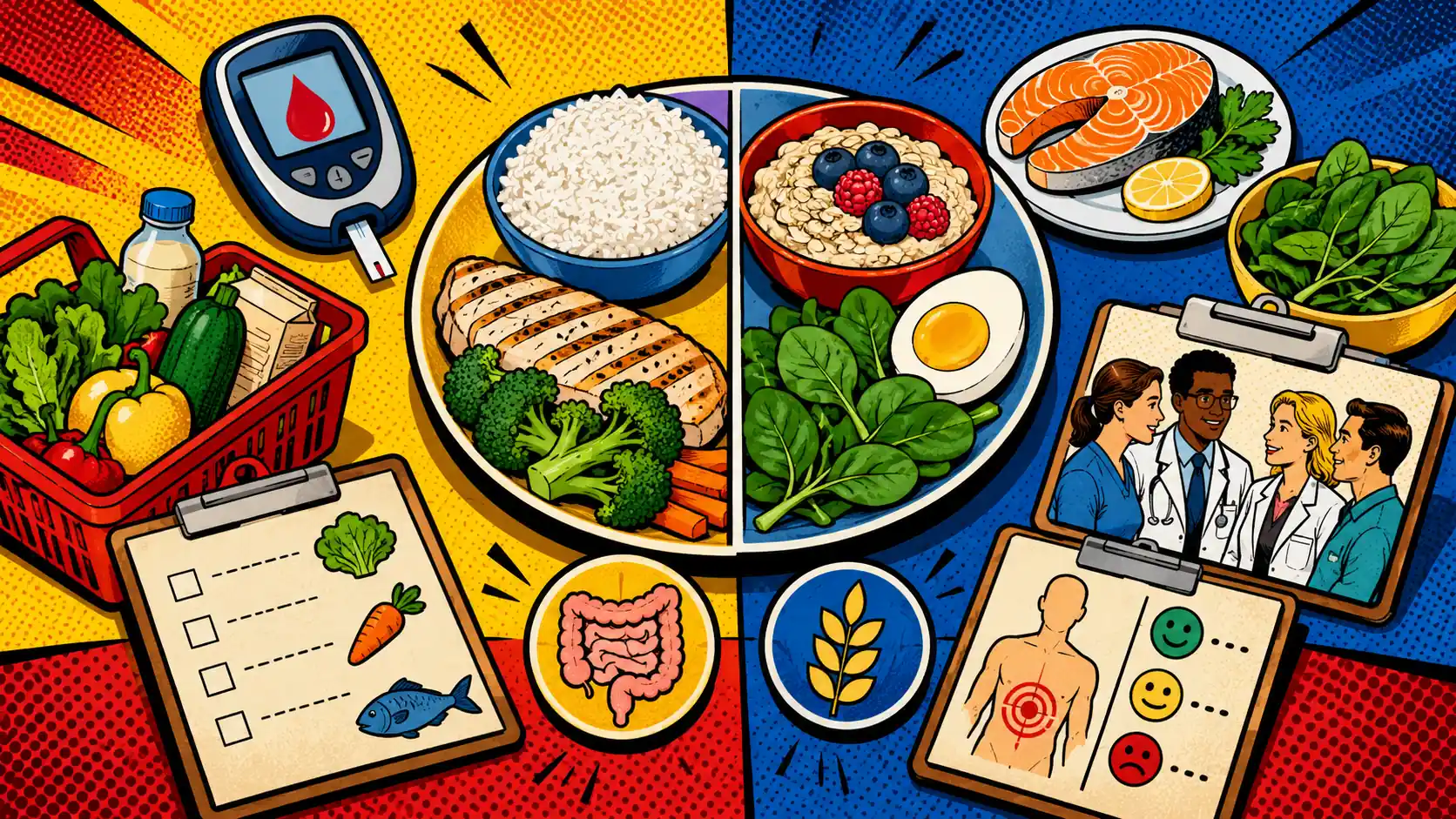
Do not start low FODMAP by changing diabetes medicines, insulin timing, carbohydrate targets, glucose monitoring, or prescribed treatment on your own.
Bring the plan to your diabetes care team if you use insulin, sulfonylureas, SGLT2 inhibitors, GLP-1 medicines, metformin, or other glucose-lowering medicines; if appetite is low; if vomiting or diarrhea occurs; or if meal timing is changing. ADA 2026 Standards frame diabetes care around individualized education, nutrition support, monitoring, medication use, activity, and healthy eating behaviors 1.
If diabetes medicines and IBS-like symptoms are already tangled, start with diabetes, GLP-1, metformin, and IBS-like gut symptoms.
Low FODMAP reduces certain fermentable carbohydrates that can draw water into the bowel or be fermented by gut bacteria. It does not remove all carbohydrate foods.
That distinction matters for diabetes. Rice, oats, potatoes, some fruits, lactose-free dairy, quinoa, sourdough portions, and other foods may be low-FODMAP in some servings but still contain carbohydrate. Some high-fiber or diabetes-friendly foods may also need FODMAP portion testing.
NIDDK notes that IBS food responses vary and that doctors may recommend dietary changes or a dietitian for IBS diet management 2. Monash also discusses adapting low-FODMAP choices for diabetes with attention to carbohydrate-containing foods and overall meal quality 3.
Instead of starting with a long forbidden list, build a plate that answers four questions:
| Question | Why it matters |
|---|---|
| What carbohydrate food is here? | Diabetes planning often depends on amount, timing, and type of carbohydrate. |
| What protein or fat supports the meal? | Meal composition can affect fullness and glucose patterns. |
| What fiber fits my gut pattern? | Constipation, diarrhea, and bloating may need different fiber choices. |
| What FODMAP group am I testing? | Reintroduction should identify patterns, not remove foods forever. |
Use low-FODMAP meal prep for practical batch meals and low-FODMAP grocery list for beginners for starter foods. Use types of fiber by symptom fit before adding fiber aggressively.
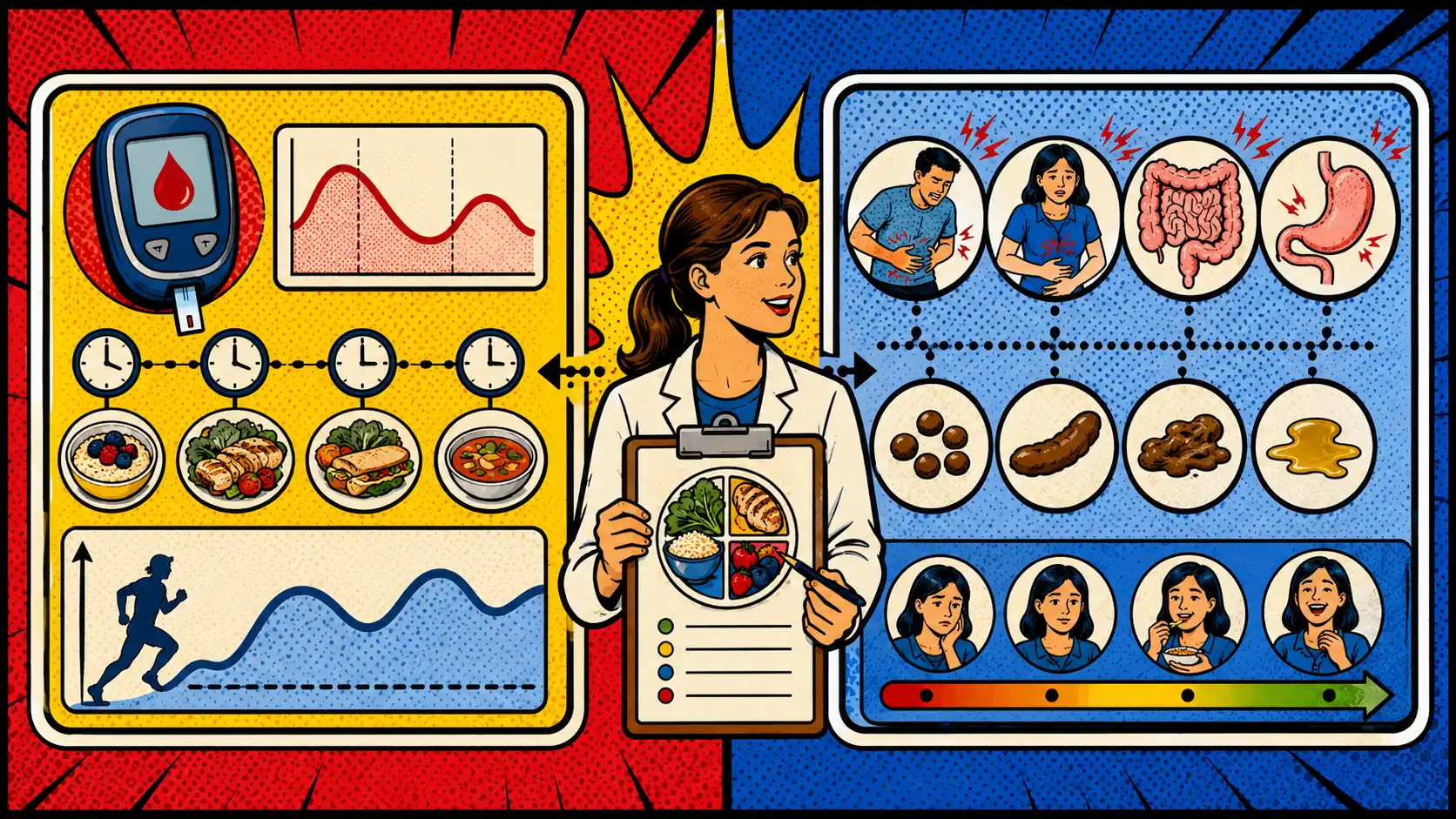
Use two columns for two weeks or for one specific food experiment.
| Blood-sugar column | Gut-symptom column |
|---|---|
| Meal timing | Pain timing |
| Carbohydrate food and portion if you track it | Bloating, urgency, constipation, diarrhea |
| Glucose notes if your care team asks you to monitor | Stool pattern |
| Medication timing question | Appetite, nausea, reflux, fullness |
| Activity or illness | Sleep, stress, cycle timing, travel |
A blood-sugar change does not prove an IBS trigger. A gut flare does not prove a blood-sugar problem. The goal is to see whether a pattern repeats strongly enough to discuss with your care team.
[!NOTE] Evidence boundary: IBS nutrition guidance supports a structured low-FODMAP process for some adults, and diabetes standards emphasize individualized nutrition, monitoring, medicines, activity, and education. That evidence supports coordinated planning. It does not mean low FODMAP should be treated as low carb, that carbohydrate goals should change, or that diabetes medicines can be adjusted from a gut-symptom article.
Use this script with the diabetes clinician, registered dietitian, diabetes educator, pharmacist, or gastroenterology clinician:
I want to test whether FODMAP patterns are affecting gut symptoms, but I also need to protect blood sugar, appetite, fiber, meal timing, and medication safety. Which carbohydrate targets, glucose checks, medication precautions, fiber goals, and stop signs should stay fixed while I do the gut-symptom experiment?
Do not change diabetes medicines, insulin timing, glucose monitoring, carbohydrate targets, fasting plans, or weight-loss medicine timing based on this page alone.
Ask for professional support before continuing if you use insulin or sulfonylureas, have frequent lows or highs, are eating much less than usual, have vomiting or diarrhea, are losing weight unintentionally, have kidney disease, are pregnant, have an eating-disorder history, or cannot keep enough carbohydrate, fluid, fiber, or medication routine in place. Seek urgent care for severe dehydration, confusion, fainting, persistent vomiting, severe abdominal pain, blood or black stool, or concerning glucose patterns.
When diabetes is also in the picture, strict long-term restriction can make meal planning harder. Reintroduction helps identify which FODMAP groups actually matter for your gut symptoms and which foods can return in useful portions.
A network meta-analysis supports low-FODMAP as an IBS intervention for some adults 4. That evidence supports a structured process, not indefinite avoidance.
Use low-FODMAP reintroduction guide and diet diversity after low FODMAP when you are ready to move beyond restriction.
| If this is your main question | Read next |
|---|---|
| Medicines, GLP-1, metformin, nausea, or appetite changes | Diabetes, GLP-1, metformin, and IBS-like gut symptoms |
| Batch cooking and practical meals | Low-FODMAP meal prep |
| Shopping basics | Low-FODMAP grocery list for beginners |
| Fiber choices | Types of fiber by symptom fit |
| Getting out of restriction | Diet diversity after low FODMAP |
Low FODMAP with diabetes is possible for some people, but it should be coordinated. Treat blood sugar and gut symptoms as two related dashboards, not one blame story.
Keep diabetes medicines and glucose goals with your care team. Keep low-FODMAP as a structured restriction, reintroduction, and personalization process. Protect fiber, variety, meal timing, appetite, and safety signals. The best plan is not the strictest one. It is the one that helps both patterns become clearer without making food life smaller than it needs to be.
Xam Riche is a gut health solopreneur and founder of YourFitNature, dedicated to helping people navigate digestive wellness through evidence-based information and personal experience. After years of struggling with IBS and bloating, Xam discovered the transformative power of the low FODMAP diet and now shares practical, science-backed guidance to help others find relief. While not a medical professional, Xam combines extensive research with lived experience to create accessible, empowering resources for the gut health community. Learn more about our mission
As an affiliate, we may earn from qualifying purchases.