 By • Published on May 15, 2026 • 11 min read • 1,780 views
This article is for informational and educational purposes only and does not constitute medical advice. Always consult with a qualified healthcare professional before using symptom information to make diagnosis, medication, testing, or treatment decisions.
If constipation is still running the day, the next step may be a better escalation conversation, not another food rule.
IBS-C can make every lever feel personal. You try low FODMAP, more water, breakfast changes, fiber, walking, coffee timing, probiotics, and still feel backed up, bloated, strained, or incomplete. At that point, the useful question may stop being "what else should I cut?" and become "which constipation option conversation fits my pattern?"
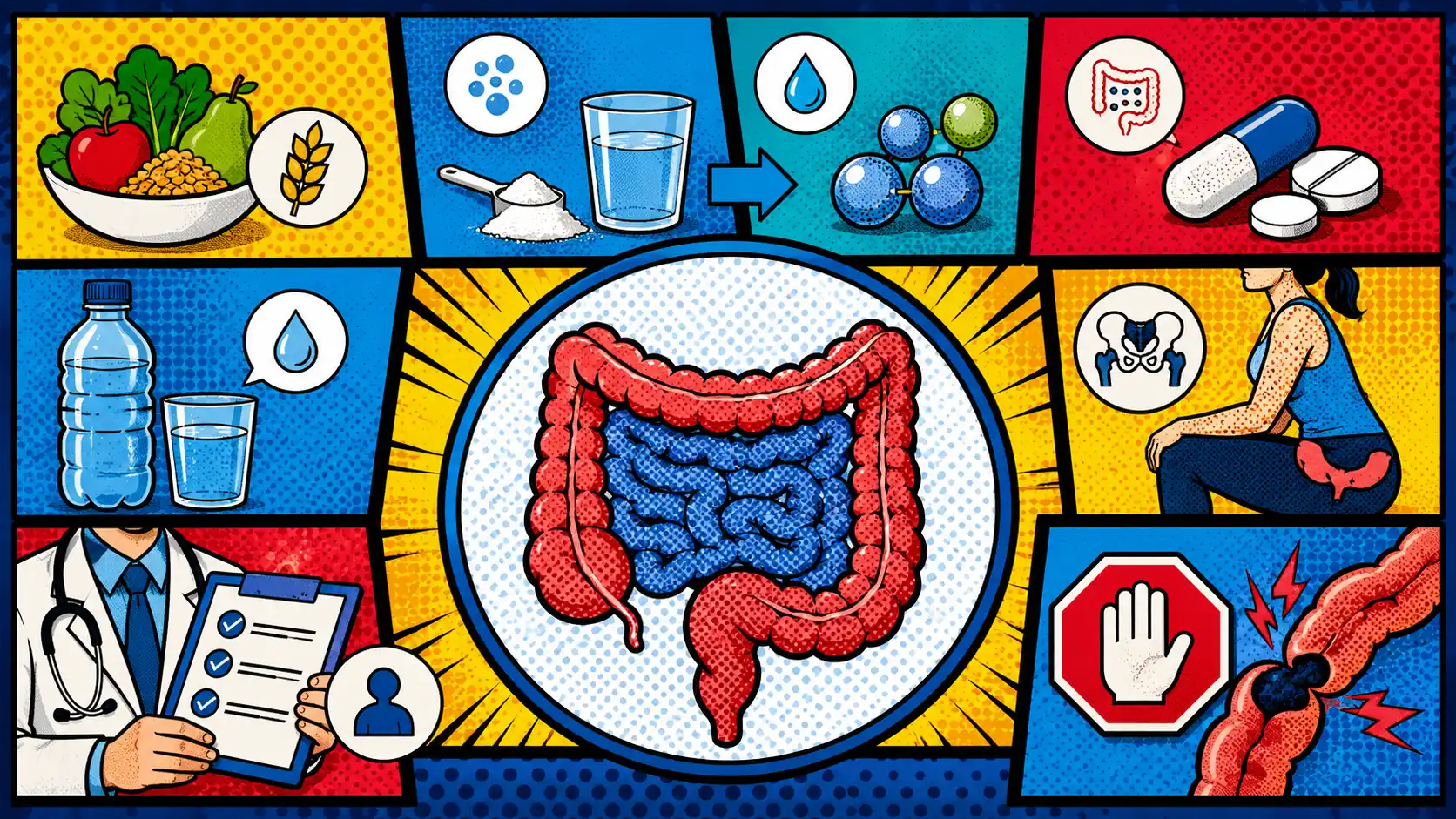
This page is a sorter. It does not tell you what to take. It helps you decide whether the next route is routine repair, fiber type, hydration, PEG or magnesium discussion, prescription IBS-C medication, pelvic-floor evaluation, or obstruction/red-flag care.
Do not treat every constipation flare as routine IBS-C.
NIDDK says you should see a doctor right away if constipation comes with rectal bleeding, blood in stool, constant abdominal pain, inability to pass gas, vomiting, fever, lower back pain, or unexplained weight loss 1. MedlinePlus describes intestinal obstruction as a partial or complete blockage where food or stool cannot move through the intestines, and lists severe abdominal pain or cramping, vomiting, bloating, abdominal swelling, inability to pass gas, and constipation among symptoms 2.
Stop self-management and get medical guidance promptly if constipation comes with:
If the symptom cluster is obstruction-like, use possible gut obstruction signs and seek care when symptoms are acute or escalating. Do not start more fiber, more magnesium, a cleanse, or a stronger laxative when obstruction is a real concern.
Constipation is not just "how many times did you go?"
The pattern matters:
| Dominant pattern | Better first question | Useful route |
|---|---|---|
| Hard stool and low frequency | Do I need fiber, fluids, PEG, magnesium, or a prescription option? | This page |
| Straining and incomplete evacuation | Is stool too hard, or does evacuation itself feel blocked? | Pelvic-floor discussion |
| Bloating pressure improves after bowel movement | Is stool backup driving the pressure? | Constipation and bloating |
| Breakfast or morning routine is chaotic | Can I create a repeatable bowel signal first? | Constipation-first breakfast strategy |
| Fiber keeps backfiring | Am I using the wrong type, dose, or timing? | Types of fiber by symptom fit |
| Fluids, caffeine, or diarrhea overlap | Is hydration changing the stool context? | Hydration, electrolytes, and gut symptoms |
| Severe swelling, vomiting, or no gas/stool | Could this be obstruction-like? | Possible gut obstruction signs |
NICE says IBS medication choices should be determined by the predominant symptom or symptoms 3. That is the same logic here: pick the conversation by the pattern in front of you.
Routine repair is not glamorous, but it is still part of IBS-C care.
Before asking for a stronger medication, check whether the basics were actually readable:
NIDDK says treatment may include changing what you eat and drink, getting regular physical activity, and trying bowel training, such as having bowel movements at the same time each day 4. If breakfast is the easiest place to make the pattern repeatable, use the constipation-first breakfast strategy before adding multiple new products.
This does not mean routine is enough for everyone. It means routine gives you a cleaner baseline before the medication conversation.
Fiber is a route, not a command to eat rougher food.
NIDDK recommends eating enough fiber, drinking liquid to help fiber work better, and adding fiber gradually so the body can adjust 5. That gradual and water-aware part matters for IBS-C because sudden rough-fiber pushes can make bloating and pressure louder.
For IBS specifically, ACG suggests soluble, not insoluble, fiber for global IBS symptoms 6. NICE also discourages insoluble fiber such as bran in IBS and points readers toward soluble-fiber options such as ispaghula or oats 7.
Ask about the fiber route when:
Use types of fiber by symptom fit if the main question is which fiber behavior fits constipation, bloating, or IBS-style sensitivity.
If you have narrowed the route to a familiar powder, compare Metamucil and Benefiber before choosing a fiber trial. That comparison separates psyllium evidence from wheat-dextrin usability and keeps a neither route open.
PEG and magnesium belong in a safety-screened constipation conversation, not a casual escalation contest.
AGA suggests polyethylene glycol laxatives for IBS-C 8. NIDDK lists osmotic agents such as polyethylene glycol and magnesium hydroxide among common constipation treatments, and it also lists stimulant laxatives as a type of laxative that causes intestinal muscle contraction 9. ACG notes that PEG is widely available and FDA-approved for occasional constipation, while also suggesting against PEG products for relief of global IBS-C symptoms because pain and global IBS outcomes are different from stool frequency alone 10.
That distinction is the whole point:
Bring your current medicines, supplements, kidney history, pregnancy status, and prior laxative response to a clinician or pharmacist before stacking OTC products.
Prescription IBS-C options are not all the same.
AGA's IBS-C guidance includes tenapanor, plecanatide, linaclotide, tegaserod, lubiprostone, and PEG laxatives. It recommends linaclotide and suggests tenapanor, plecanatide, tegaserod, lubiprostone, and PEG, with a tegaserod implementation note about use in women under 65 without a history of cardiovascular ischemic events 11. ACG recommends chloride channel activators and guanylate cyclase activators for global IBS-C symptoms 12. NICE says linaclotide may be considered only after laxatives from different classes have not helped and constipation has lasted at least 12 months, with follow-up after 3 months 13.
Use this route when:
This page does not rank one prescription as universally best. The useful question is which mechanism and safety profile fits your pattern.

Sometimes stool is not only too hard or too slow. Sometimes evacuation is the problem.
Consider asking about pelvic-floor or defecation-disorder evaluation when the pattern includes:
That pattern should not be answered with endless fiber escalation. It may need clinical evaluation, pelvic-floor physical therapy, or biofeedback-style care, depending on the diagnosis.
Use this table to prepare a clinician conversation. It is not a medication shopping list.
| Option or route | Best fit question | What to clarify first |
|---|---|---|
| Routine and breakfast rhythm | Is the bowel signal too irregular to read? | Meal timing, breakfast, movement, bathroom window, sleep, travel, and caffeine |
| Hydration | Is low fluid making fiber or hard stool worse? | Urine color, thirst, sweating, diuretics, diarrhea, and how much fiber changed |
| Soluble fiber | Is stool hard or low-volume, and can fiber be trialed calmly? | Fiber type, dose pace, fluid intake, bloating response, and rough bran backfire |
| PEG | Is stool frequency or hardness the main issue? | Prior response, pain/bloating response, duration, other laxatives, and clinician plan |
| Magnesium | Is an osmotic option being considered? | Kidney history, pregnancy, other medicines, diarrhea risk, and pharmacist guidance |
| Stimulant laxative | Is short-term rescue or a supervised plan needed? | Frequency of use, cramping, dependency fears, contraindications, and clinician advice |
| Secretagogues | Is IBS-C still active despite simpler measures? | Diarrhea risk, access, cost, pain/bloating pattern, and prior laxative response |
| Tenapanor | Is stool and bloating burden still high after usual options? | Diarrhea risk, eligibility, access, and clinician fit |
| Tegaserod | Is a 5-HT4 route relevant and safe? | Sex, age, cardiovascular history, and local availability |
| Pelvic-floor evaluation | Does evacuation feel blocked or incomplete despite treatment? | Straining, blockage sensation, manual maneuvers, and response to laxatives |
| Obstruction care | Are swelling, vomiting, severe pain, or no gas/stool present? | Stop self-management and seek urgent medical evaluation |
Bring a pattern, not just the word constipation.
Useful notes include:
Download: IBS-C Clinical Options Discussion Guide
| Situation | Next read |
|---|---|
| You are still in the low-FODMAP execution lane | IBS-C and low FODMAP |
| Stool backup seems to drive bloating and pressure | Constipation and bloating |
| Breakfast is the easiest routine lever | Constipation-first breakfast strategy |
| Fiber type keeps confusing the pattern | Types of fiber by symptom fit |
| Psyllium already fits and the remaining question is capsule format and label | Current NOW psyllium capsule details |
| Constipation changed around a medicine, mineral, supplement, dose, or timing change | Medication side effects vs IBS symptoms |
| Incomplete evacuation, straining, pelvic discomfort, or poor response to more fiber stands out | Pelvic-floor dyssynergia and IBS-C constipation |
| Fluids, caffeine, stool pattern, or dehydration are tangled | Hydration, electrolytes, and gut symptoms |
| The day is noisy and you need stop signs first | IBS flare plan |
| The pattern feels obstruction-like | Possible gut obstruction signs |
| You need the broader IBS treatment landscape | IBS treatment options |
IBS-C escalation works better when it starts with the constipation pattern.
Routine, fluids, and soluble fiber matter. PEG and magnesium are stool-focused conversations. Prescription IBS-C medicines are clinician-guided routes when the pattern remains active despite simpler measures. Pelvic-floor clues should not be answered with endless fiber. Obstruction-like symptoms sit above all home troubleshooting.
If constipation is still running the day, stop making the diet smaller by default. Bring the pattern to your clinician and ask which IBS-C route fits the evidence in front of you.
Xam Riche is a gut health solopreneur and founder of YourFitNature, dedicated to helping people navigate digestive wellness through evidence-based information and personal experience. After years of struggling with IBS and bloating, Xam discovered the transformative power of the low FODMAP diet and now shares practical, science-backed guidance to help others find relief. While not a medical professional, Xam combines extensive research with lived experience to create accessible, empowering resources for the gut health community. Learn more about our mission
As an affiliate, we may earn from qualifying purchases.