 By • Published on March 20, 2026 • 13 min read • 2,932 views
This article is for informational and educational purposes only and does not constitute medical advice. Always consult with a registered dietitian, gastroenterologist, or other qualified medical professional before making significant dietary changes.
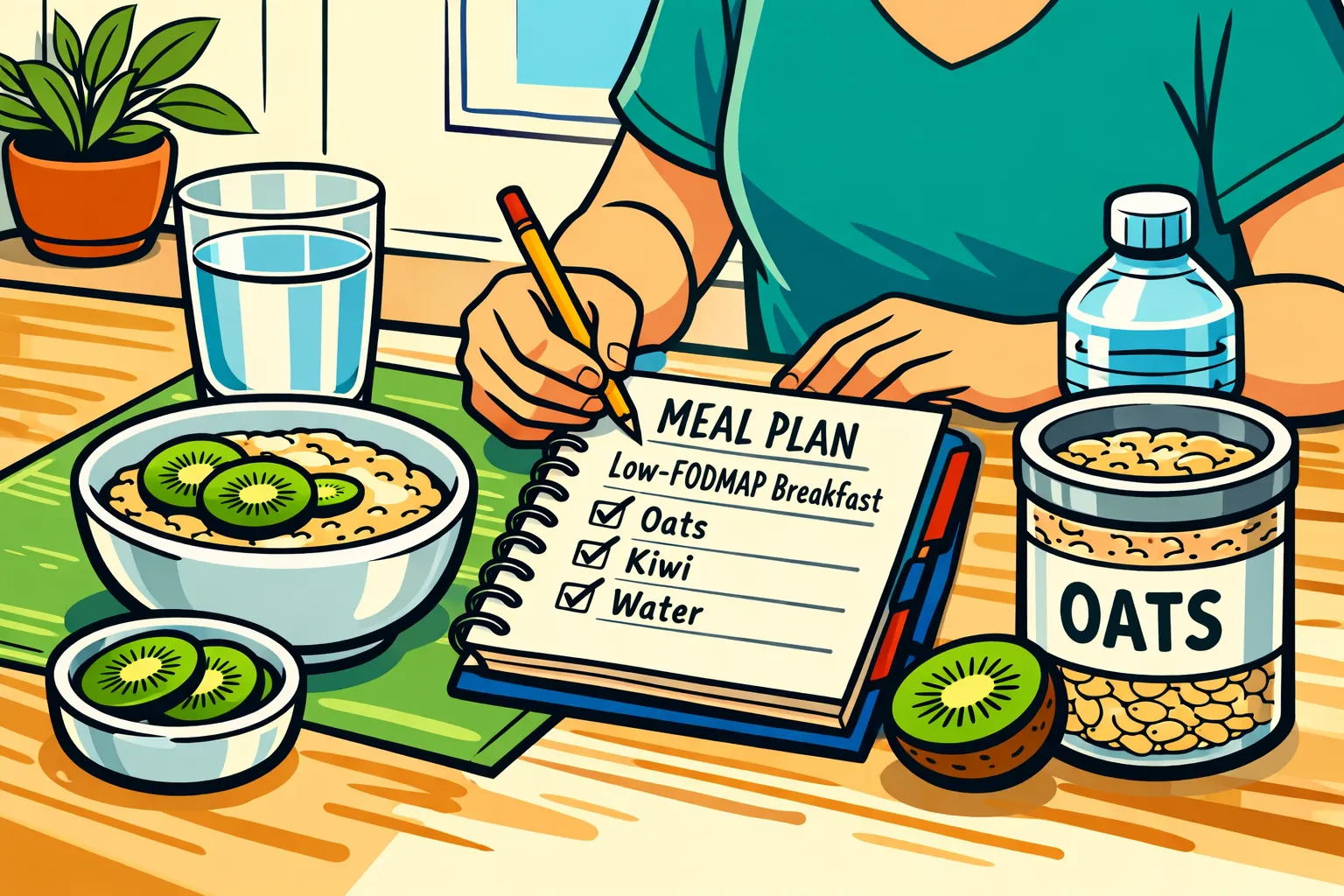
Low FODMAP can absolutely be part of an IBS-C plan. But if constipation is your main issue, the answer is usually not "be stricter." It is to make the plan more supportive, more fiber-aware, and easier for your body to move through.
Short answer: IBS-C usually needs a more supportive version of low FODMAP, not a stricter one. The plan often works better when you protect soluble fiber, meal rhythm, fluids, and escalation options instead of cutting more foods.
This page is for you if you already know low FODMAP can help, but your main question is how to adapt it when constipation is still the dominant problem.
Use a different page first if you still need the general low-FODMAP setup in Low FODMAP Diet for Beginners: How to Start, or if the broader plan never worked at all in When Low FODMAP Does Not Work: Next Steps.
If you started IBS-C low FODMAP hoping it would fix everything, you are not alone if the main thing still bothering you is that nothing feels like it is moving.
Maybe the bloating came down a little. Maybe meals feel "cleaner." But your gut still feels heavy, your stools still feel hard, and now the whole plan is starting to look beige, repetitive, and a little joyless.
That is a real problem. And it does not mean you failed.
Here is the truth: low FODMAP may still help if you have IBS-C, but constipation usually needs more than restriction alone. It often needs better fiber choices, better meal rhythm, enough fluid, more movement, and sometimes a clinician-guided step beyond food 1 2.
Start here if you need the big-picture version first: this builds on starting low FODMAP, but with the constipation-specific adjustments many readers never get told about.
Yes, but the answer needs nuance.
The American College of Gastroenterology notes that the strongest evidence for low FODMAP is in non-constipated IBS. People with IBS-C may still see relief in pain and bloating, but constipation itself is often less responsive if the plan stops at food restriction 3.
That matters because many readers hear "try low FODMAP" and assume it should normalize every symptom. For IBS-C, that expectation often sets people up for confusion. If abdominal pain improves but bowel frequency does not, the diet may still be doing something useful. It just may not be the whole answer.
This is also why the diet should stay inside the full 3-step process, not become a forever list of "safe" foods. Monash frames low FODMAP as restriction, reintroduction, and personalization, not lifelong elimination 4.
Bottom line: low FODMAP can reduce symptom noise in IBS-C, but constipation often needs a more supportive version of the plan.
This is where many people get stuck.
They remove obvious triggers, but they also quietly remove fiber variety, meal volume, and routine. The diet shifts toward rice, crackers, cheese, eggs, and other foods that feel simple and "safe" but do not do much to help bowel movement. Then water intake slips, meals get skipped, and the whole day turns into one long low-fiber holding pattern.
About IBS says that too little fiber can worsen constipation and abdominal pain in IBS 5. NICE adds that regular meals, avoiding long gaps between eating, and drinking at least 8 cups of fluid a day still matter in IBS care 6.
So if low FODMAP made your IBS-C plan feel more restricted but not more effective, the problem may not be that you need fewer foods. The problem may be that the advice stayed too food-list-focused and not constipation-focused enough.
Use this reset lens:
| If This Is Happening | Change This First | Why |
|---|---|---|
| Meals feel tiny and beige | Add more soluble-fiber foods and more produce | Prevent accidental low-fiber over-restriction |
| You skip meals or leave long gaps | Move to regular meals and one planned snack | Helps bowel rhythm and reduces all-day grazing |
| You rely on cheese, eggs, rice, and crackers | Rebalance with oats, kiwi, vegetables, or psyllium support | Stops the plan from becoming constipating by default |
| Food changes are not moving the needle | Discuss laxatives or IBS-C treatment with a clinician | Diet is not the only tool in IBS-C |
[!TIP] Download: Constipation-Friendly Low-FODMAP Reset Checklist Use it before you tighten the diet any further.
Start with the goal, not just the ingredient list.
If constipation is the main issue, the plan needs foods that make stool easier to pass, meals that are substantial enough to create movement, and enough variety that the diet does not collapse into a low-fiber routine.
NICE specifically highlights oats and linseeds as useful food-first options in IBS care and favors soluble fiber over rough insoluble fiber 7. Kiwifruit also has direct IBS-C evidence, with trials showing better bowel movement frequency and improved GI comfort 8 9.
That does not mean one food fixes everything. It means your plate should stop working against the symptom you actually care about most.
If you need a broader starting list, build from the low-FODMAP foods guide rather than guessing from random social posts. And if your cart keeps drifting toward snack foods, step back to the low-FODMAP grocery list for beginners to rebuild the basics.
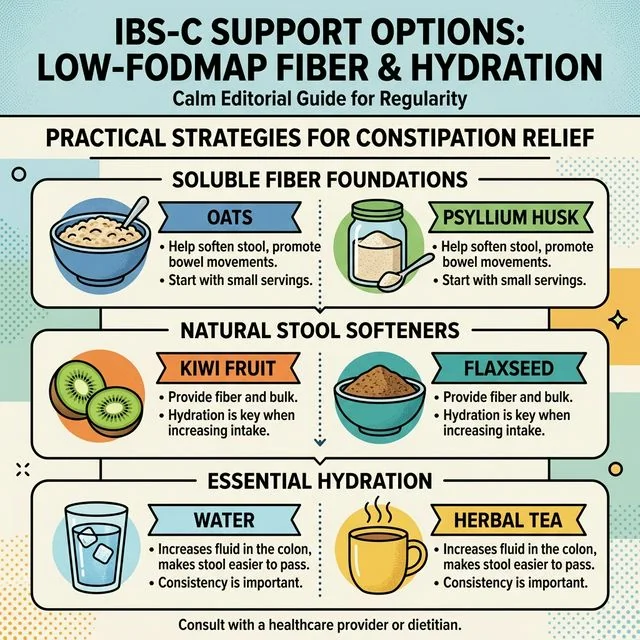
This is usually the real adjustment.
For IBS, the best-supported fiber strategy is soluble fiber, not rough insoluble bran 10. ACG's patient-facing guidance goes even further and notes that psyllium may be especially helpful for IBS-C and IBS-M because it softens stool, increases fecal biomass, and may improve frequency, consistency, and straining 11.
That is why "just eat more fiber" is not specific enough. The type matters. The speed matters. And the rest of the day still matters.
| Option | Best Use | Caution |
|---|---|---|
| Oats / porridge | breakfast anchor | increase gradually if you have been very low fiber |
| Psyllium | structured supplement option | start low and take it with enough fluid |
| Kiwi | food-based bowel-supportive example | treat it as one tool, not the whole strategy |
| Linseeds / flax | easy food add-on | keep portions personalized and gradual |
| Bran-heavy cereals | common "constipation" default | more likely to aggravate bloating for IBS readers |
Two rules matter here:
If you want a quick printable version, use the Low-FODMAP Soluble-Fiber Upgrade List as your reset guide.
If you are also trialing supplements, the IBS probiotic strain guide can help you decide whether adjunctive support makes sense alongside fiber and food changes. And if you specifically want to compare prebiotics, probiotics, and synbiotics for constipation, that decision guide is the better next read before you buy a combo product.
This is the part many food-first plans underweight.
NICE recommends regular meals, avoiding long gaps between eating, and drinking at least 8 cups of fluid per day 12. ACG also notes that exercise may be especially useful in IBS-C 13.
So if your current pattern is "safe breakfast, not enough water, long gap, desk-bound afternoon, random snack, heavy dinner," the food list alone is not the only thing to fix.
Use swaps like these:
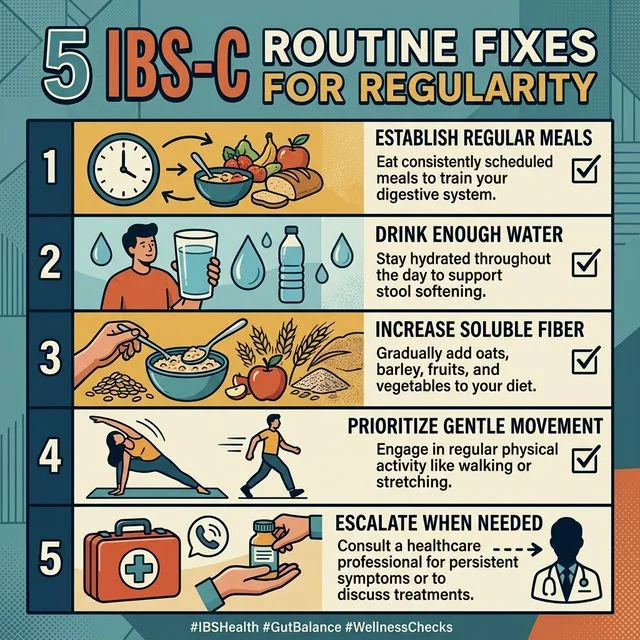
This is also where structure helps more than perfection. A simple meal plan can reduce decision fatigue, and a planned low-FODMAP snack can stop the long-gap cycle from turning into random grazing.
Bottom line: if the routine stays constipation-friendly, the food changes are more likely to work.
This is where you stop expecting one diet to do everything.
If constipation is still dominating despite food upgrades, fluid, and movement, it may be time to talk about additional tools. NICE says laxatives should be considered for constipation in IBS and that linaclotide may be considered when previous laxatives from different classes have not helped and constipation has been persistent 14.
That does not mean this article is telling you to self-prescribe. It means you are allowed to stop treating diet as the only respectable answer.
| Situation | Best Next Move |
|---|---|
| Pain and bloating improved, constipation still mild | tune food pattern and routine |
| Constipation still frequent with straining or incomplete evacuation | add structured soluble-fiber support and talk to a clinician |
| Constipation dominates despite multiple changes | clinician-guided escalation and broader workup |
This is also a good place to widen the lens beyond food alone. If your IBS-C symptom pattern overlaps with bloating, the probiotic guide's IBS-C section may help you think through one possible support layer. If the broader low-FODMAP plan is still failing, use the full low FODMAP not working troubleshooting ladder rather than cutting more foods at random.
Sometimes constipation is not just one symptom. It becomes the thing that makes the whole picture harder to read.
Backed-up stool can amplify bloating. Stress can amplify pain. Staying in elimination too long can make the plan narrower without making the signal clearer. And if the routine is messy, it becomes hard to tell what the food is actually doing.
This is where course correction matters:
The goal is not to prove you can follow the strictest version of the diet. The goal is to build the calmest, most functional version of the plan your body can actually use.
If you want the short version, start here:
The good news is that you do not need a more punishing version of low FODMAP. You need a version that actually matches the symptom you are living with.
If your next best move is practical, keep the meal plan close, use the foods guide to rebuild variety, and go straight to troubleshooting if constipation still dominates the whole picture.
If breakfast is the easiest place to influence the bowel pattern, use the constipation-first breakfast strategy before adding more restrictions or random fiber products.
Fewer beige meals. Better bowel support. Less guessing.
Xam Riche is a gut health solopreneur and founder of YourFitNature, dedicated to helping people navigate digestive wellness through evidence-based information and personal experience. After years of struggling with IBS and bloating, Xam discovered the transformative power of the low FODMAP diet and now shares practical, science-backed guidance to help others find relief. While not a medical professional, Xam combines extensive research with lived experience to create accessible, empowering resources for the gut health community. Learn more about our mission
As an affiliate, we may earn from qualifying purchases.
Choose a focused guide for what you are noticing or deciding next.