 By • Published on May 19, 2026 • 9 min read • 1,805 views
This article is for informational and educational purposes only and does not constitute medical advice. Always consult with a qualified healthcare professional before using symptom information to make diagnosis or treatment decisions.
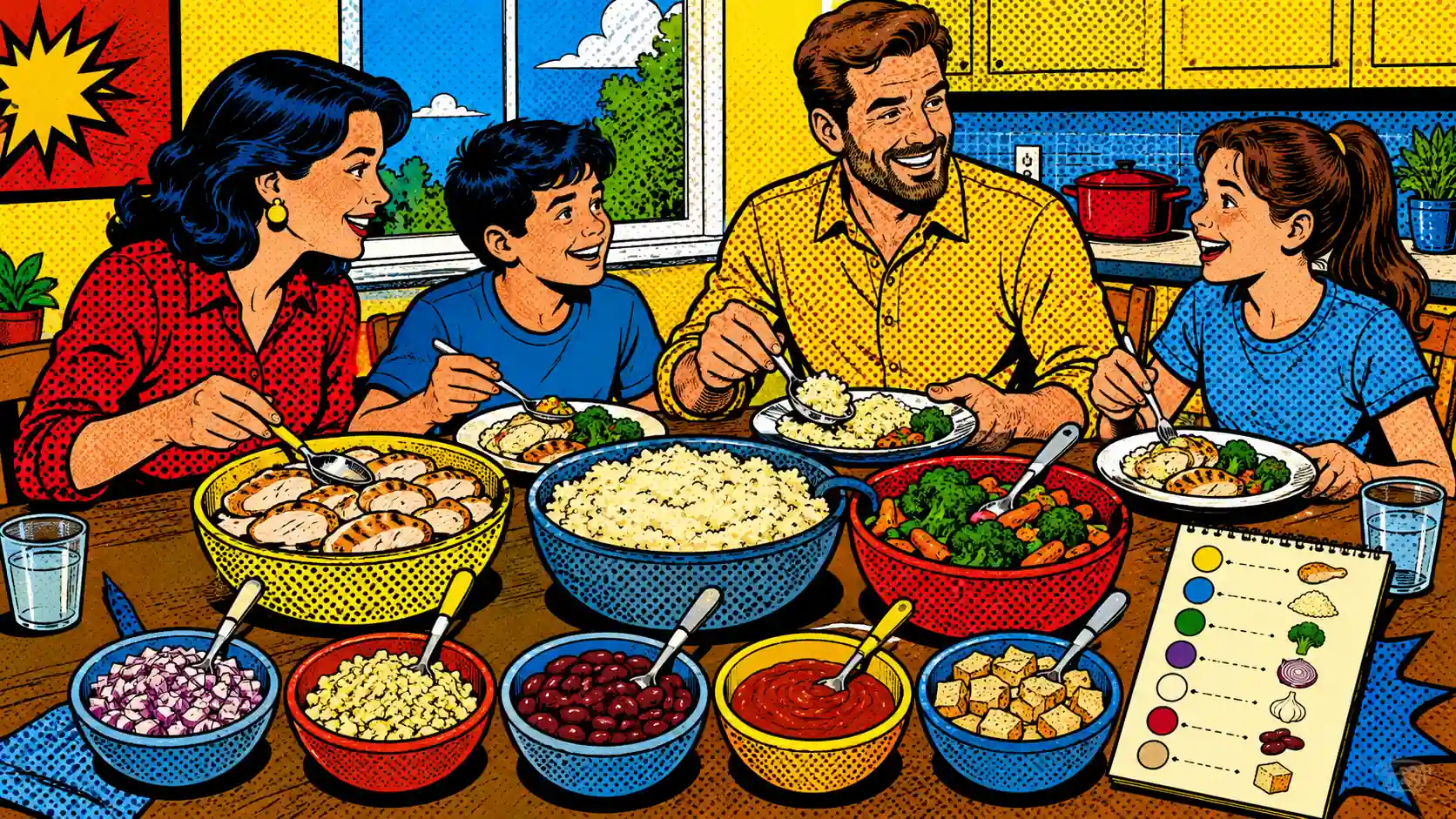
Low-FODMAP family meals can feel like a social problem before they feel like a food problem.
One person is trying to keep symptoms calmer. Everyone else still wants the normal dinner. The cook is staring at onion, garlic, pasta, sauces, kids' preferences, budget, and the clock, wondering whether low FODMAP now means two separate kitchens.
It usually does not.
The better system is one shared base with flexible add-ons. Build the part of the meal that can work for the low-FODMAP person first, remove that portion, then let the rest of the household add the ingredients, sauces, breads, beans, or toppings that do not fit the low-FODMAP portion.
This page is not another beginner food list. If you still need the protocol itself, start with how to start the low-FODMAP diet. If the week is falling apart because you have no prep system, use low-FODMAP meal prep. This guide solves a narrower home problem: how to eat at the same table without making one person feel isolated or making everyone else follow unnecessary restriction.
Think of dinner in two parts:
The shared base is the part everyone can eat or at least build from: plain protein, rice or potatoes, a checked vegetable, a simple fat, and a flavor direction that does not depend on onion, garlic, wheat-heavy sauces, or mystery seasoning mixes.
The optional finishers are what make the meal normal for everyone else: sauteed onion, garlic sauce, beans, regular bread, extra vegetables, spicy sauce, cheese, hummus, mushrooms, or whatever fits the household.
Monash gives the same practical idea for family cooking: use low-FODMAP recipes as the base, then cook key higher-FODMAP ingredients separately and stir them through for the rest of the family after the low-FODMAP portion is removed 1.
That is the whole system. You are not cooking two dinners. You are controlling the order of assembly.
A low-FODMAP shared meal works best when each layer has a job.
| Layer | What it does | Family-meal example |
|---|---|---|
| Protein anchor | Makes the meal satisfying and less snack-driven | Plain chicken, fish, eggs, firm tofu, tempeh, or tolerated cheese |
| Starch base | Gives everyone a familiar foundation | Rice, potatoes, rice noodles, quinoa, oats, corn tortillas, or another checked base |
| Low-noise produce | Keeps the low-FODMAP portion readable | Carrots, cucumber, lettuce, spinach, green beans, zucchini, tomato, or another checked serve |
| Split flavor | Lets the table customize without contaminating the base | Garlic-infused oil, herbs, lemon, separate onion, separate garlic, table sauces |
Monash's meal-planning guidance gives a similar practical direction: adapt meals you already like, learn label reading, write the week's meals down, and prepare some low-FODMAP food ahead so dinner is not decided under stress 2.
The family-meal version is even simpler:
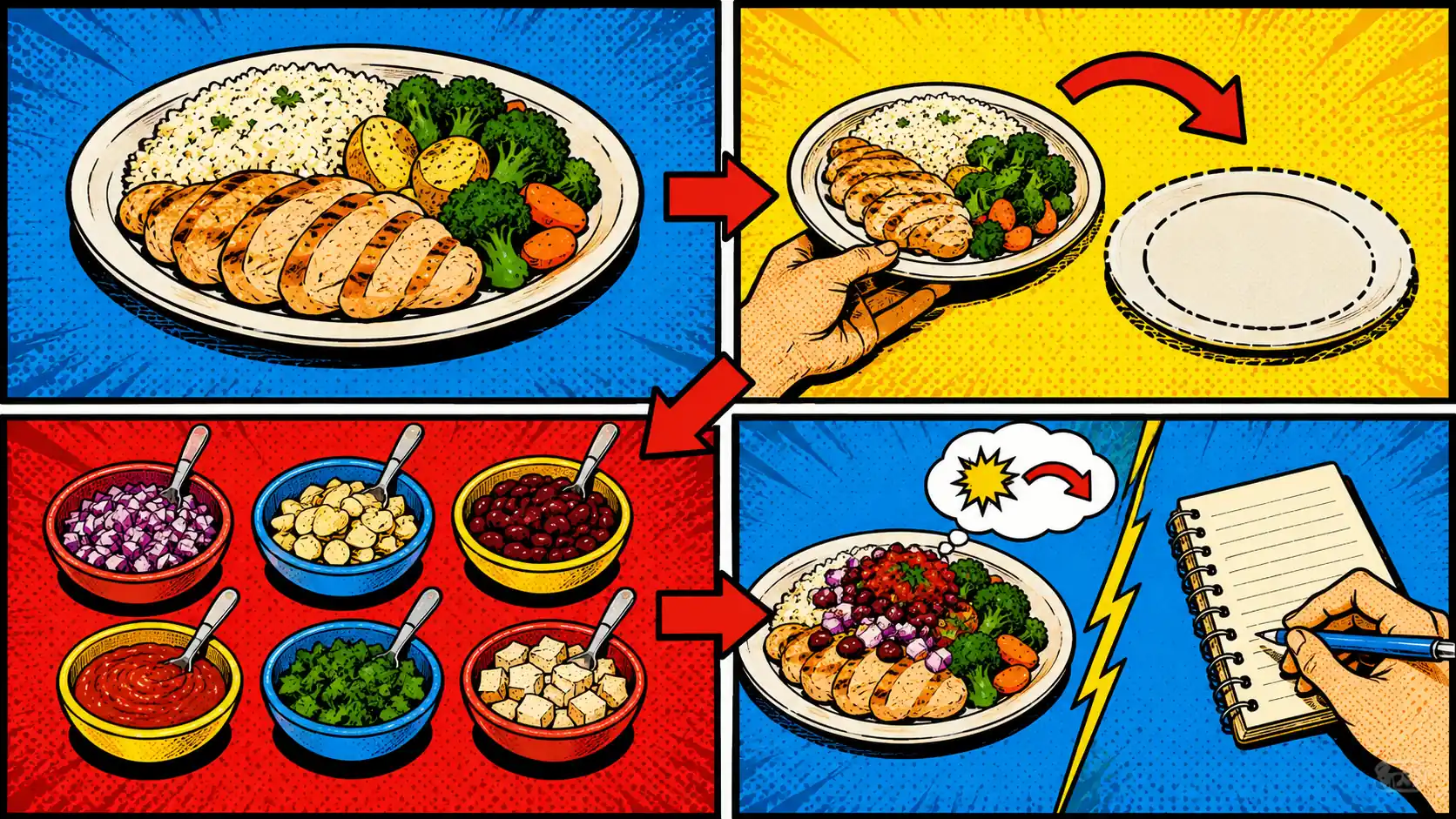
Do not turn low FODMAP into a whole-household identity.
Monash frames the low-FODMAP diet as three steps: restriction, reintroduction, and personalization, with the long-term goal of a minimally restrictive personalized diet 3. NIDDK similarly says a doctor may recommend low FODMAP for IBS, and if symptoms improve, may recommend slowly adding FODMAP-containing foods back into the diet 4.
That matters at home. The goal is not:
If the diet is shrinking, weight is dropping, eating feels unsafe, or a child needs low-FODMAP changes, get individualized help. NHS inform states that low FODMAP should only be followed with support from a specialist dietitian trained in the process and that it is not suitable for everyone 5.
Onion and garlic are the household friction point because they sit at the start of so many recipes.
Instead of trying to make every recipe identical, change the cooking sequence:
Monash notes that garlic-infused oil can be a useful way to bring garlic flavor because FODMAPs are water-soluble rather than oil-soluble, while the practical details still matter 6.
The same split approach works for sauces. A shared sauce should be checked before it touches the whole meal. Monash's label-reading guide flags onion, garlic, inulin, fructooligosaccharides, and galactooligosaccharides as common watch points, especially in breads, wraps, dips, sauces, pastes, stocks, snack bars, and health-food products 7.
If label reading is the bigger problem, use hidden FODMAPs in products before you redesign the whole family menu.
Use these as templates, not fixed recipes. Exact serving sizes still need current low-FODMAP guidance.
| Meal night | Shared base | Family add-ons | Low-FODMAP note |
|---|---|---|---|
| Rice bowls | Rice, plain protein, cucumber, carrots, spinach | Garlic sauce, beans, onion, spicy toppings | Keep sauce off the base until portions are plated |
| Taco bowls | Corn tortillas or rice, plain protein, lettuce, tomato | Onion, beans, salsa, regular wraps | Build the low-FODMAP bowl first |
| Pasta or noodles | Rice noodles or checked pasta, protein, simple vegetables | Wheat pasta, garlic bread, onion sauce | Use separate sauce or finishers |
| Sheet-pan dinner | Protein, potatoes, carrots, zucchini | Onion wedges, mushrooms, regular sauce | Use separate tray zones when possible |
| Soup or curry | Plain broth base, protein, rice or potatoes, checked vegetables | Onion, garlic, lentils, extra spice | Remove the low-FODMAP portion before finishing |
| Breakfast-for-dinner | Eggs, potatoes, spinach, tomato | Regular toast, avocado, beans, onion | Easy when dinner energy is low |
If protein is the sticking point, especially in a vegetarian household, use the low-FODMAP vegetarian protein guide. If cost is the sticking point, use low FODMAP on a budget.
The shared-base method should make the low-FODMAP process easier to run. It should not freeze the household in the strictest phase forever.
The American Gastroenterological Association expert review describes the low-FODMAP diet as a three-phase diet: restriction, reintroduction, and personalization 8. A 2024 trial also supports the logic of a reintroduction phase after an elimination response, because the point is to identify which FODMAPs matter for the individual rather than stay broadly restricted 9.
In family-meal terms:
If you are already in Step 3 and the meal signal keeps getting messy, use low-FODMAP personalization mistakes to sort serving size, stacking, stress, timing, and baseline noise before cutting more foods.
Free Download: Low FODMAP Shared Meal Swap Card Use it to plan one shared base, the low-FODMAP portion, family add-ons, and sauce checks before dinner gets busy.
| If your real problem is... | Go next |
|---|---|
| The week falls apart before dinner | Low-FODMAP meal prep |
| Cultural foods, staple dishes, or tradition need to stay visible in the plan | Cultural foods and low FODMAP without losing tradition |
| Groceries are getting expensive | Low FODMAP on a budget |
| The kitchen is tiny or shared | Small apartment low-FODMAP meal prep |
| Protein is hard in a vegetarian household | Low-FODMAP vegetarian protein guide |
| You still need the protocol basics | How to start the low-FODMAP diet |
| Sauces and packaged foods keep surprising you | Hidden FODMAPs in products |
| You are ready to test foods back in | Low-FODMAP reintroduction guide |
| Shared meals outside the home are harder | Restaurant choice gut symptom decision guide |
| You already chose the restaurant and need ordering tactics | Low-FODMAP eating out |
| You want cookbook support for shared meals | Low-FODMAP cookbook comparison guide |
If the shared meal is happening at a wedding, date, holiday table, or other higher-pressure event, use IBS Social Events, Weddings, Dates, and Shared Meals to plan the social-pressure route before adding more food rules.
Low-FODMAP family meals do not have to mean two complete dinners.
Start with one low-FODMAP-compatible base. Remove the portion that needs to stay low-noise. Then let the rest of the household add normal extras separately. That one shift can make dinner feel less isolating, less expensive, and less chaotic.
The deeper point is still the protocol. Low FODMAP is meant to move from restriction into reintroduction and personalization, not keep everyone in a permanent restricted pattern. Use the shared-base method to protect the signal while you need it, then widen meals as your tolerance picture gets clearer.
Xam Riche is a gut health solopreneur and founder of YourFitNature, dedicated to helping people navigate digestive wellness through evidence-based information and personal experience. After years of struggling with IBS and bloating, Xam discovered the transformative power of the low FODMAP diet and now shares practical, science-backed guidance to help others find relief. While not a medical professional, Xam combines extensive research with lived experience to create accessible, empowering resources for the gut health community. Learn more about our mission
As an affiliate, we may earn from qualifying purchases.