 By • Published on May 15, 2026 • 7 min read • 3,116 views
This article is for informational and educational purposes only and does not constitute medical advice. Always consult with a qualified healthcare professional before using symptom information to make diagnosis or treatment decisions.
Low FODMAP can look affordable in theory and expensive the moment you stand in front of the gluten-free aisle.
A cart full of specialty bread, certified snacks, branded sauces, lactose-free everything, and single-use meal replacements can make the diet feel like a subscription service instead of a short therapeutic process. That pressure is real. But the answer is not to give up or shrink the diet to five foods forever.
This page is a budget route map. It shows how to build low FODMAP on a budget from anchor meals, repeatable staples, smarter packaged-food decisions, and a clear path back toward reintroduction and personalization.
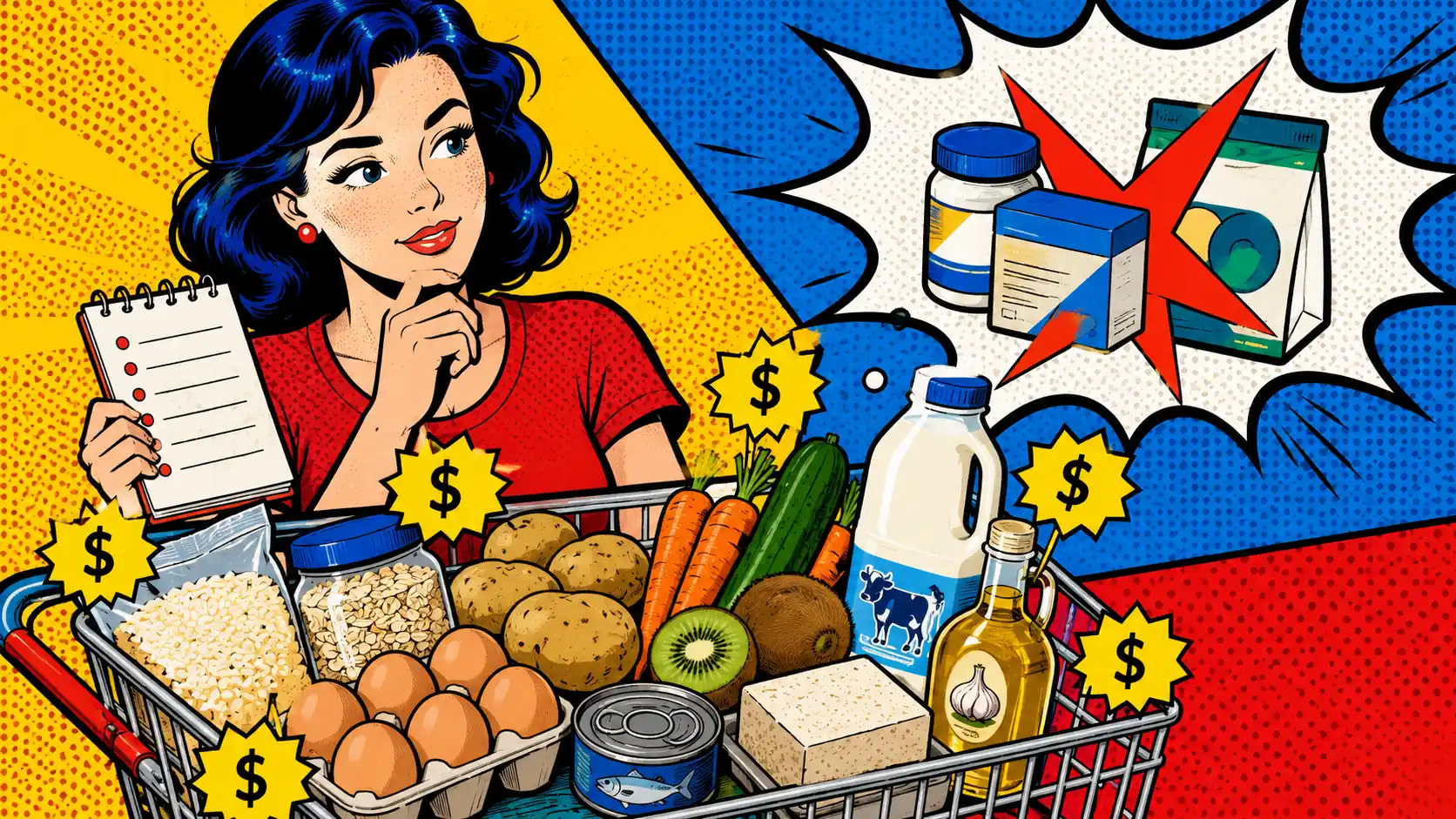
A cheaper low-FODMAP plan still has to be a low-FODMAP plan, not a permanent poverty version of restriction.
NIDDK says doctors may recommend the low-FODMAP diet for some people with IBS 1. Monash frames the diet as a 3-step process: low-FODMAP restriction, reintroduction, and personalization 2. NHS inform adds an important safety boundary: low FODMAP should be followed with support from a specialist dietitian trained in the process 3.
Budget strategy should make that process easier to execute. It should not trap you in strict elimination because the only foods you trust are the cheapest ones you found first.
The most useful low-FODMAP budget rule is simple: buy the meals you can repeat before you buy the products that imitate your old diet.
An anchor meal is boring in the best way. It has:
That might look like eggs with potatoes and spinach, rice with canned tuna and cucumber, oats with lactose-free milk and kiwi, or firm tofu with rice and carrots. These examples still need serving-size checks, but the structure is the point: the meal is built from staples, not from a specialty product hunt.
USDA MyPlate's budget guidance says planning meals and making a grocery list can help people get organized, save money, and choose healthy options 4. For low FODMAP, planning does one more job: it makes the symptom signal easier to read.
Use this as a starter framework, not a permanent food list. Current serving guidance matters, and your own tolerance matters too.
| Cart section | Budget-friendly low-FODMAP direction | What to watch |
|---|---|---|
| Proteins | Eggs, canned tuna or salmon, plain chicken when on sale, firm tofu, hard cheese, lactose-free yogurt if tolerated | Marinades, garlic/onion seasonings, expensive single-serve portions |
| Starches | Rice, potatoes, oats, corn tortillas, rice noodles, quinoa when affordable | Assuming every gluten-free bread or pasta is worth the price |
| Produce | Carrots, cucumber, lettuce, spinach, zucchini, oranges, kiwi, firm bananas when tolerated | Buying many fragile items that spoil before you use them |
| Flavor | Garlic-infused oil, herbs, salt, pepper, lemon, simple tolerated condiments | Onion/garlic powders, inulin, honey, high-fructose corn syrup |
| Snacks | Popcorn, rice cakes, lactose-free yogurt, fruit portions, tolerated nuts in checked serves | Specialty bars, protein powders, sugar alcohols |
Monash's shopping-list guidance notes that a shortlist of low-FODMAP staples can make getting started easier, while the full food guide remains the better place for wider serving details 5. That is the balance: use a short cart to reduce overwhelm, then verify details when a food or product is unclear.
The expensive part of low FODMAP is often not the food you need. It is the panic substitute.
Be careful with:
This is where hidden FODMAPs in products can save money as well as symptoms. A product that looks “wellness friendly†can still be wrong for the elimination phase, and a plain cheaper option may be more useful.
USDA's shop-smart guidance also recommends comparing unit prices to find better buys 6. In low-FODMAP terms, compare the unit price and the usefulness: can this item make three repeat meals, or is it an expensive emergency snack?
Meal prep is where budget strategy becomes practical. The goal is not seven different recipes. The goal is enough repeatable food that you do not have to make every gut decision while hungry.
Try this weekly structure:
If you need the deeper workflow, use low FODMAP meal prep. If you need a ready week to copy, use the 7-day low-FODMAP meal plan. If protein cost is the hard part, especially without relying on meat every day, use the low-FODMAP vegetarian protein guide.
The key is to avoid turning a budget plan into indefinite restriction. Once your baseline is calmer, the plan still needs to move toward reintroduction and personalization. If that stage feels chaotic, route to low-FODMAP personalization mistakes instead of staying in the cheapest strict version forever.
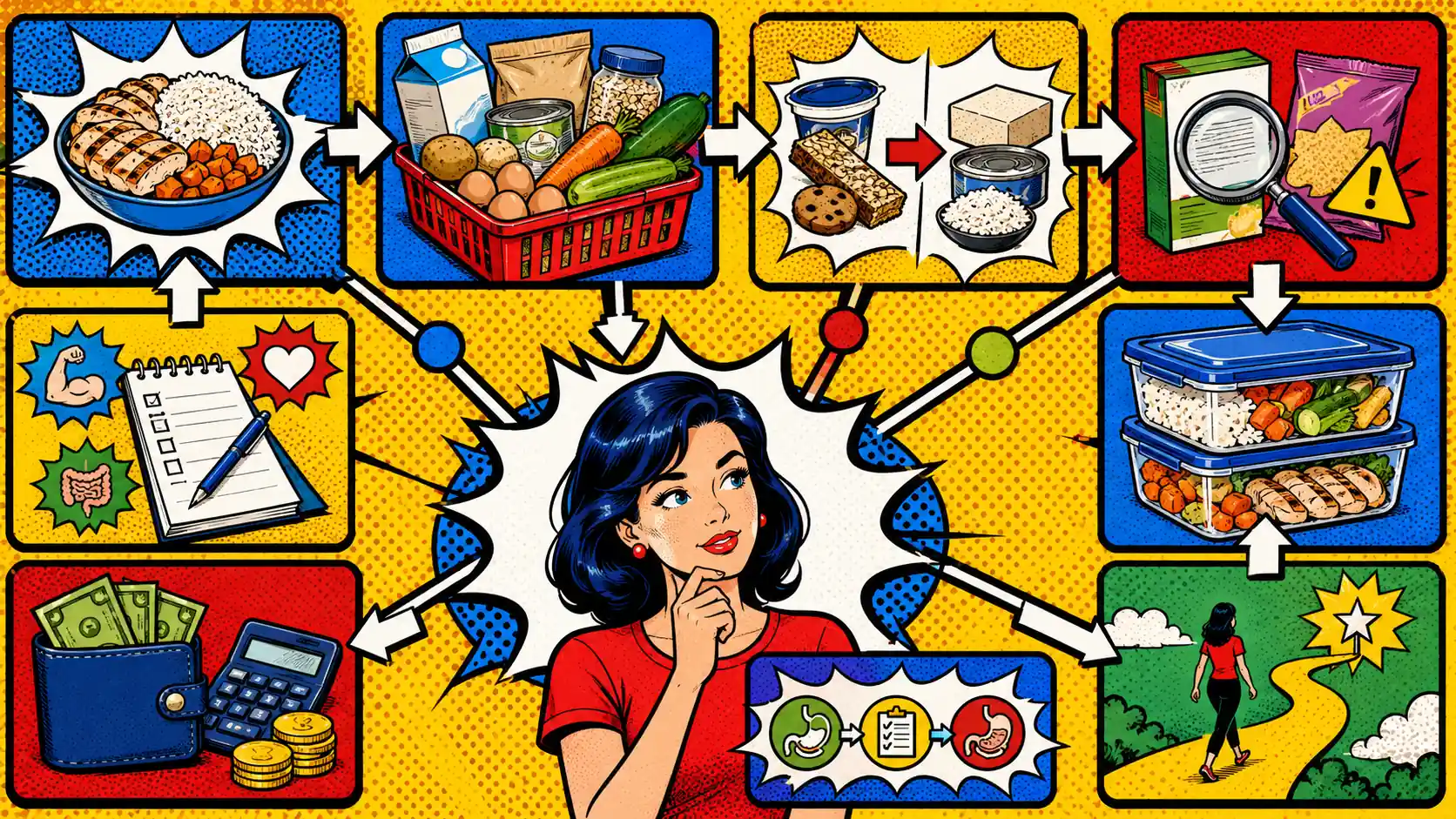
Download: Low FODMAP Budget Grocery Builder
Use the worksheet before a grocery run. Pick your anchor meals first, then decide whether any specialty item actually solves a real problem.
The budget question is not “Can I buy every low-FODMAP food?†The better question is “What few foods make this week calmer, affordable, and still connected to the protocol?â€
| Situation | Best next read |
|---|---|
| You need the basic aisle-by-aisle shopping list | Low FODMAP grocery list for beginners |
| You need to turn staples into a week of meals | Low FODMAP meal prep |
| Storage, equipment, or a shared kitchen is the limiting factor | Small apartment low-FODMAP meal prep |
| A dorm room, dining hall, shared bathroom, or class schedule changes the budget plan | College dorm low-FODMAP and IBS flare plan |
| You need one affordable family dinner instead of separate cooking | Low FODMAP family meals without separate cooking |
| Disability, fatigue, sensory load, mobility, or caregiver support changes the budget plan | Accessibility, disability, IBS, and low-FODMAP planning |
| You want a ready structure for the week | 7-day low-FODMAP meal plan |
| Protein cost is the sticking point | Low-FODMAP vegetarian protein guide |
| Packaged swaps keep getting expensive or suspicious | Hidden FODMAPs in products |
| Restriction is lasting too long because budget makes testing hard | Low-FODMAP personalization mistakes |
| Symptoms are not improving despite tighter food rules | When low FODMAP does not work |
Low FODMAP on a budget works best when you stop building the week from specialty swaps and start building it from anchor meals.
Use affordable staples, repeat the meals that make the week readable, compare unit prices, and keep packaged products on trial instead of letting them own the cart. But keep the bigger shape intact: restriction is temporary, reintroduction matters, and personalization is the long-term goal.
If budget pressure is making the diet smaller, scarier, or harder to leave, that is not just a grocery problem. It is a signal to get more support and use the next-read routes above before restriction becomes the whole plan.
Xam Riche is a gut health solopreneur and founder of YourFitNature, dedicated to helping people navigate digestive wellness through evidence-based information and personal experience. After years of struggling with IBS and bloating, Xam discovered the transformative power of the low FODMAP diet and now shares practical, science-backed guidance to help others find relief. While not a medical professional, Xam combines extensive research with lived experience to create accessible, empowering resources for the gut health community. Learn more about our mission
As an affiliate, we may earn from qualifying purchases.