 By • Published on January 15, 2026 • 16 min read • 4,889 views
This article is for informational and educational purposes only and does not constitute medical advice. Always consult with a qualified healthcare professional before using diet, testing, or symptom information to make diagnosis or treatment decisions.
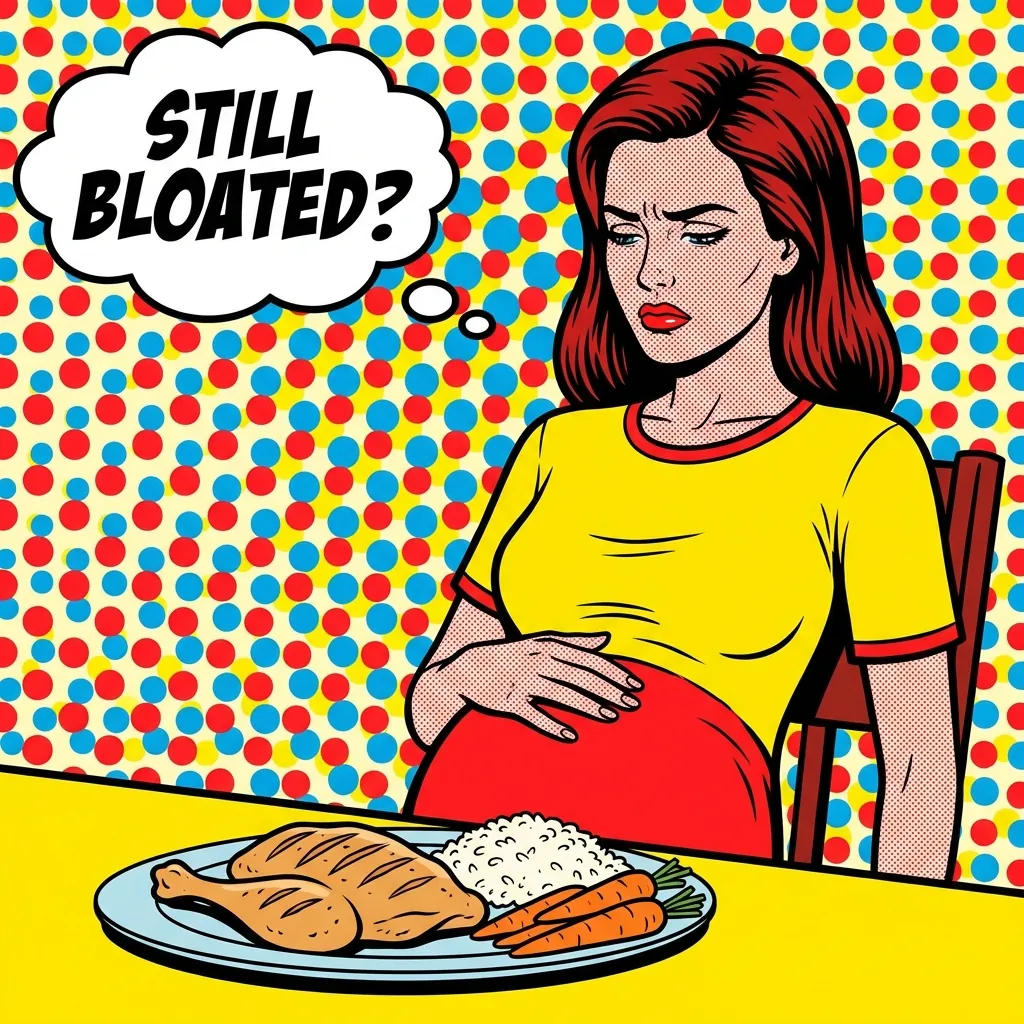
Persistent bloating despite weeks of perfect FODMAP compliance? You're not failing the diet. The diagnosis may be failing you. This guide unmasks the hidden culprits, from sneaky filler ingredients to commonly missed conditions like SIBO, and arms you with the exact tests and self-advocacy scripts to finally get answers. Stop guessing and start investigating.
If you are here, you have already moved past beginner advice. This guide is for readers who gave the diet a real try and now need to decide whether the next move is cleaner execution, structured retesting, stress-directed care, or medical investigation.
If you are not at that stage yet, use a narrower page first: go to low FODMAP basics and phases if you are still learning the plan, or use SIBO vs IBS vs food intolerance if your bigger problem is still sorting the diagnosis rather than troubleshooting the diet itself.
You've done everything right.
You've eliminated every trigger. You've tracked every bite in the Monash app. You've respectfully declined the birthday cake and the pasta dinner. And yet, every afternoon, the bloating returns just like it always did.
If you're reading this feeling frustrated, exhausted, or like your body is somehow "broken", stop for a second. Take a breath.
You're not failing. You're just missing a piece of the puzzle.
Research shows that while the low FODMAP diet helps 50-86% of patients 1, that still leaves many people (14-50%) without relief.
If you're in that group, it doesn't mean you're bad at dieting. It often means that "FODMAPs" were never the main culprit to begin with.
This guide is an invitation to put down the shame and pick up a magnifying glass. We're going to transition from "dieter" to "detective" and look for the underlying causes that are often masquerading as simple IBS.
Here's what we’re going to investigate together:
Let's figure out what your body is actually trying to tell you.
Before exploring alternative diagnoses, it's worth double-checking a few common issues that can undermine even the most careful FODMAP elimination.
If your symptoms are more about early fullness, upper stomach discomfort, or nausea after meals than lower-GI instability, review our guide to functional dyspepsia before assuming the IBS frame explains the whole picture.
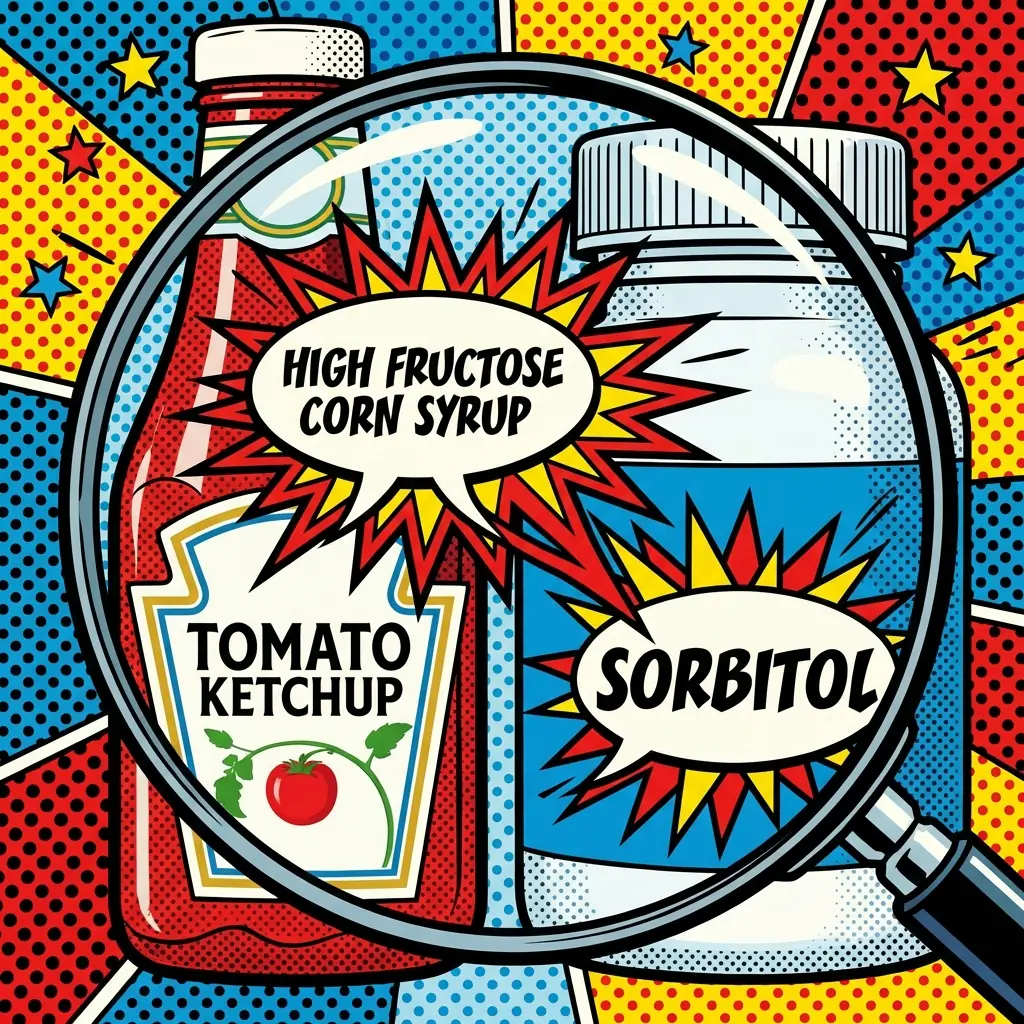
FODMAPs hide in surprising places. Even if you're avoiding obvious triggers like onion and garlic, sneaky sources can sabotage your efforts:
Another common issue is FODMAP stacking, which happens when you consume multiple low-FODMAP foods that, when combined, exceed your tolerance threshold.
If you suspect the problem is meal combinations rather than hidden ingredients, review our guide to FODMAP stacking.
If the confusion starts earlier with fruit, yogurt, salads, or whole grains, read why healthy foods still cause bloating before tightening your diet further.
If the problem mostly appears when you leave your own kitchen, use the low FODMAP eating out guide before assuming the whole protocol failed.
Research Insight: Studies show that "label reading accuracy" and hidden ingredients are significant barriers to adherence 2. Furthermore, patients working with a dietitian are significantly more likely to correctly avoid triggers compared to those doing it alone 3.
Pro tip: Use the Monash University FODMAP app for the most up-to-date food data. Lists from websites can become outdated as foods are retested.
If packaged foods are part of the confusion, review this low-FODMAP grocery shopping guide to simplify what goes in your cart.
If you need the full label-reading version that also covers supplements and medications, use our guide to hidden FODMAPs in sauces, supplements, and medications.
Here's a reality that frustrates many people: you can follow the diet perfectly and still have symptoms if stress is dysregulating your nervous system.
The gut-brain connection means that stress can trigger:
If you're under chronic stress, your "perfect diet" may fail not because of what you're eating, but because of how your nervous system is responding.
If you want the clinical-neuroscience version of that pattern, read our guide to the neuroscience of IBS.
The elimination phase of the low FODMAP diet requires a minimum of 4-6 weeks of strict adherence to draw meaningful conclusions. Some considerations:
If you've addressed all of these factors and still aren't improving, it's time to explore whether something else might be happening.
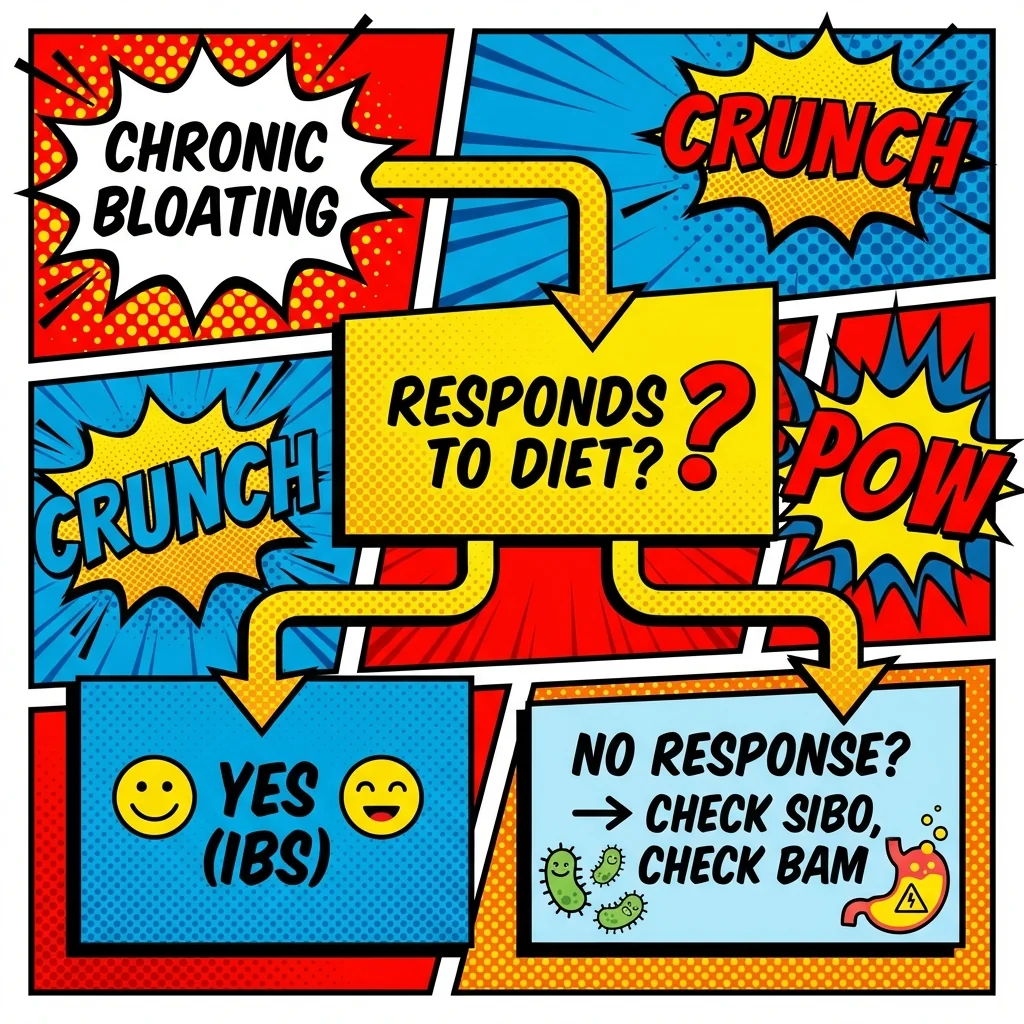
IBS is what doctors call a "diagnosis of exclusion". It's what you have when tests don't find anything else.
But sometimes, conditions are missed. Research shows that IBS diagnosis can take an average of 6.6 years from symptom onset 5, and 10% of IBD patients are initially misdiagnosed with IBS 6.
Here are conditions worth considering if low FODMAP isn't helping.
What it is: An overgrowth of bacteria in the small intestine, where relatively few bacteria should exist.
The connection: According to meta-analyses, approximately 30-40% of IBS patients have SIBO 7, and IBS patients are 2.6 times more likely to test positive than healthy controls.
The "Weed" Analogy: Imagine your digestive tract is a garden. Your large intestine is supposed to be a wild, dense forest of bacteria (the microbiome).
Your small intestine, however, is meant to be a neat, manicured flowerbed with very few bacteria.
SIBO is what happens when the "weeds" from the forest invade the flowerbed. They ferment your food before you can digest it, creating massive amounts of gas in a space that can't handle it.
Why FODMAP helps but doesn't cure: The low FODMAP diet stops feeding the weeds temporarily, which reduces the gas. But it doesn't pull the weeds out. Once you eat normal food again, they feast and the bloating returns.
How it's diagnosed: Hydrogen and methane breath testing after a lactulose or glucose challenge.
Key sign: If symptoms improve on low FODMAP but return immediately when you try to reintroduce foods, SIBO is worth investigating.
If you are unsure whether your reactions reflect a true trigger or a messy test setup, review our low FODMAP reintroduction guide before assuming every food is the problem.
For the narrower Step-2 version of that problem, use this guide on what to do if reintroduction causes symptoms.
If you are still stuck on whether this sounds more like IBS, SIBO, or a specific food trigger, use our side-by-side guide to SIBO vs IBS vs food intolerance.
What it is: Your body produces bile to digest fats, acting like dish soap to break up grease. Usually, this "soap" is recycled at the end of the small intestine. In BAM, the recycling mechanism is broken, and the "soap" spills into the colon, causing irritation and watery diarrhea.
The connection: Research shows 28-32% of patients with IBS-D (diarrhea-predominant) have bile acid malabsorption 8 9. It's significantly under-diagnosed.
How it's diagnosed: SeHCAT scan is the gold standard (more available in UK/Europe than US). Some doctors will trial bile acid sequestrants as a diagnostic test.
The good news: 96% of patients with severe BAM respond well to bile acid sequestrant medications.
Key sign: Watery diarrhea that's worse after fatty meals, and no improvement on low FODMAP despite being IBS-D.
If you still suspect IBS-D is the main frame, start with this guide to IBS-D and low FODMAP. If the narrower question is whether watery diarrhea deserves a bile-acid lens, use bile-acid diarrhea vs IBS-D before assuming the answer is stricter elimination.
Several other conditions can mimic IBS symptoms:
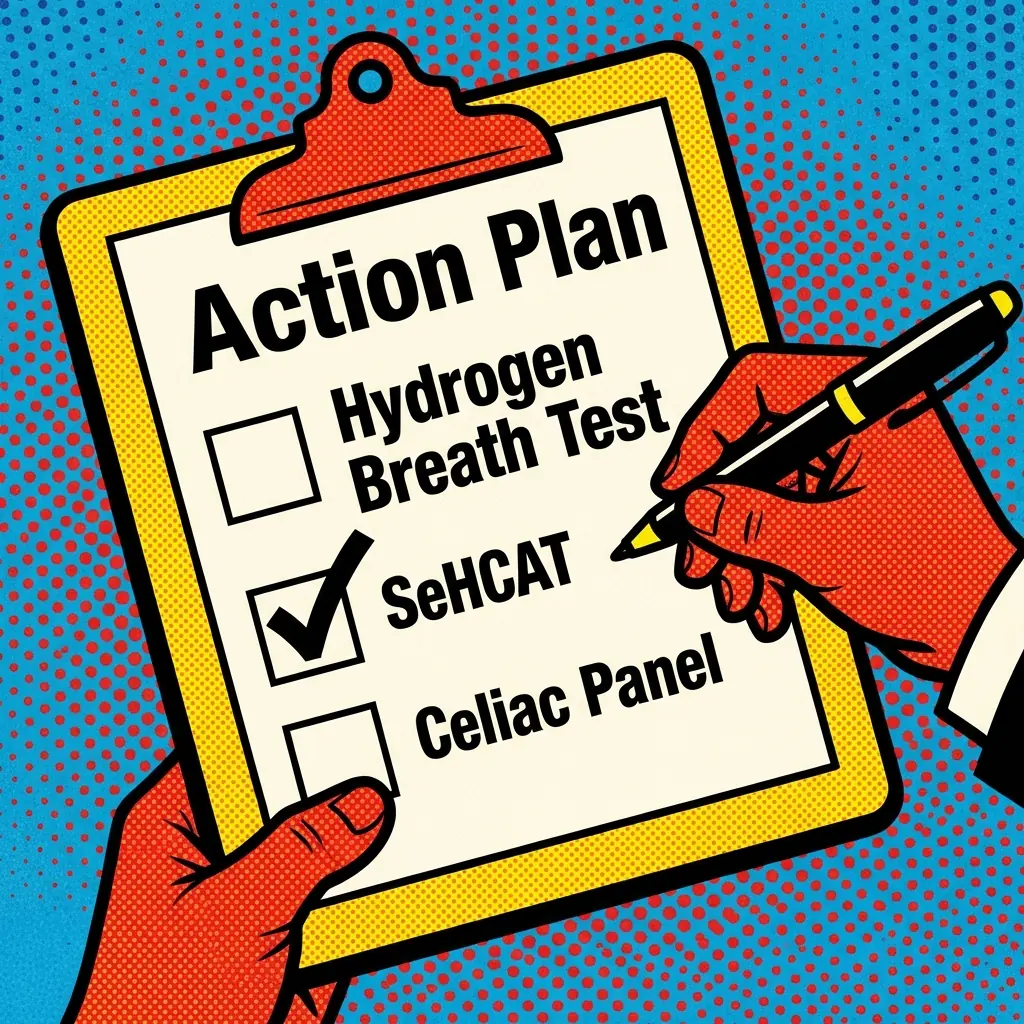
One of the most empowering things you can do is arrive at your appointment knowing what tests exist.
Validation Pause: Reading this list might feel overwhelming. You might be thinking, "My doctor never mentioned any of these." That's unfortunately common. You're not "being difficult" by asking for these tests; you're being a responsible partner in your own healthcare.
| Test Type | What It Reveals | Request If... |
|---|---|---|
| Hydrogen breath test | SIBO, lactose/fructose malabsorption | Persistent bloating despite strict diet |
| SeHCAT scan | Bile acid malabsorption | IBS-D with no dietary improvement |
| Fecal elastase | Pancreatic enzyme insufficiency | Fatty stools, unexplained weight loss |
| Fecal calprotectin | Inflammatory markers (IBD) | Blood in stool, severe pain |
| Celiac panel + biopsy | Celiac disease | Negative blood test but symptoms persist |
| Gastric emptying study | Gastroparesis | Early fullness, nausea, vomiting |
Advocating for yourself can feel intimidating, especially if you've been dismissed before. Here are scripts to help you sound confident and collaborative, not confrontational:
Opening the conversation:
"I've strictly followed a low FODMAP diet for [X weeks] with guidance from [dietitian/Monash app], but I haven't seen significant improvement. I understand that other conditions like SIBO or bile acid malabsorption can cause similar symptoms. Could we discuss whether testing might be appropriate?"
Requesting specific testing:
"Given my persistent [bloating/diarrhea/symptoms], I've read that [SIBO/BAM] affects around [35%/30%] of IBS patients. Could we arrange a [breath test/SeHCAT scan] to rule this out?"
If you feel dismissed:
"I understand IBS is a diagnosis of exclusion, but I've been managing this for [time period] without relief. I'd appreciate a referral to a gastroenterologist for a second opinion. What would I need to do to arrange that?"
[!TIP] Download: Doctor Visit Checklist Don't leave your appointment without a plan. This printable checklist includes the exact SIBO/BAM tests to request and self-advocacy scripts to help you get heard.
If FODMAP isn't working and testing hasn't revealed another diagnosis, other dietary approaches may be worth exploring with professional guidance.
Consider this if your symptoms worsen with aged cheeses, fermented foods, alcohol, or cured meats. Histamine intolerance can cause bloating, diarrhea, and abdominal pain that overlaps significantly with IBS.
The SCD eliminates all complex carbohydrates (grains, starches, most sugars), allowing only monosaccharides. Some find it helpful when low FODMAP fails. However, a head-to-head randomized trial found that while SCD provided some relief, the Low FODMAP diet demonstrated significantly stronger efficacy for IBS symptoms 10.
Stop and see a doctor promptly if you experience:
| Professional | Best For |
|---|---|
| GP/Primary Care | Initial assessment, basic blood tests |
| Gastroenterologist | Endoscopy, colonoscopy, complex diagnoses |
| GI Dietitian | FODMAP guidance, dietary troubleshooting |
| GI Psychologist | Gut-directed hypnotherapy, CBT for IBS |
If slow transit is driving the picture more than hidden ingredients, start with this guide to constipation-led bloating. If the pattern clearly looks chronic and IBS-C-like, move next to IBS-C and low FODMAP.
Here's the truth: diet alone often isn't enough.
The most successful IBS management typically combines:
If you're just starting your FODMAP journey, our complete beginner's guide can help you get it right from the start. And if you need to understand the full 3-phase protocol, we've covered that in depth.

If the low FODMAP diet isn't working for you, here's your action plan:
Optional checklist while you investigate:
Remember: not responding to the low FODMAP diet doesn't mean you're doing something wrong. It often means your body is trying to tell you something important.
When low FODMAP is not working, the next move is not automatically stricter elimination. First sort whether the problem is execution, hidden ingredients, FODMAP stacking, stress physiology, an unstable baseline, failed reintroduction, or a condition that needs medical evaluation.
Use the next-read routes below to choose the safest lane before restarting the diet, cutting more foods, or treating every symptom as proof that the protocol failed.
Xam Riche is a gut health solopreneur and founder of YourFitNature, dedicated to helping people navigate digestive wellness through evidence-based information and personal experience. After years of struggling with IBS and bloating, Xam discovered the transformative power of the low FODMAP diet and now shares practical, science-backed guidance to help others find relief. While not a medical professional, Xam combines extensive research with lived experience to create accessible, empowering resources for the gut health community. Learn more about our mission
As an affiliate, we may earn from qualifying purchases.
Choose a focused guide for what you are noticing or deciding next.