 By • Published on December 1, 2025 • 14 min read • 2,690 views
This article is for informational and educational purposes only and does not constitute medical advice. Always consult with a qualified healthcare professional before using symptom, supplement, diet, or treatment information to make diagnosis or treatment decisions.
If you are trying to figure out how to reduce bloating, this page is the best place to start when the cause is still unclear. The short answer is that bloating usually improves when you match the fix to the pattern: food-triggered gas, constipation, stress-sensitive gut-brain flares, upper-GI fullness, or a condition that deserves medical review.
This guide is for readers who need a symptom-entry map before picking a diet, supplement, or test. If you already know the main pattern, a narrower page may fit better: use low FODMAP troubleshooting if the diet failed, IBS vs SIBO vs food intolerance if the diagnosis still feels blurry, or functional dyspepsia if the problem is mostly upper-abdominal fullness or nausea after meals.
What follows is the broader triage view: what bloating usually means, which levers are most worth trying first, and when it is smarter to escalate than to keep experimenting.
Bloating is the uncomfortable feeling of fullness or tightness in your belly that can strike after meals, during stressful days, or seemingly out of nowhere. For many people, it isn’t “just gas”; it’s how the gut handles food, fluid, and movement. The good news: most bloating has fixable triggers. In this guide on how to reduce bloating, we’ll explore what a bloating stomach really is, review common causes, and dive into proven remedies. You’ll learn how digestive enzymes for bloating, the low FODMAP diet, over-the-counter aids, and natural bloating remedies (from peppermint tea to probiotics) can all help bring relief. Let’s get started on the path to a calmer, happier gut!
→ Take the 3-Minute Bloating Quiz to discover your personal triggers and get a customized action plan.
A bloating stomach is the sensation of abdominal pressure, fullness, or tightness. It may appear with or without visible swelling (distension). Typical signs include:
Everyone produces gas daily; that’s normal physiology. Bloating becomes a problem when gas or fluid isn’t handled well (slow movement, “trapped” pockets), or when the gut is hypersensitive—so normal amounts feel uncomfortable. Bloating often overlaps with IBS, functional dyspepsia, food intolerances (like lactose), or constipation, but it can also occur in otherwise healthy people after big meals, fizzy drinks, or fast eating.
When to seek medical advice: new, severe, or persistent bloating; unintended weight loss; blood in stool; fever; nighttime pain; or if you have a history of GI disease. A clinician can rule out celiac disease, IBD, or other conditions and guide testing for intolerances or SIBO.
If the overlap between IBS, SIBO, and food triggers feels hard to sort, use our guide on how to tell IBS, SIBO, and food intolerance apart.
Bloating has many contributors. The most common are:
1) High-FODMAP foods
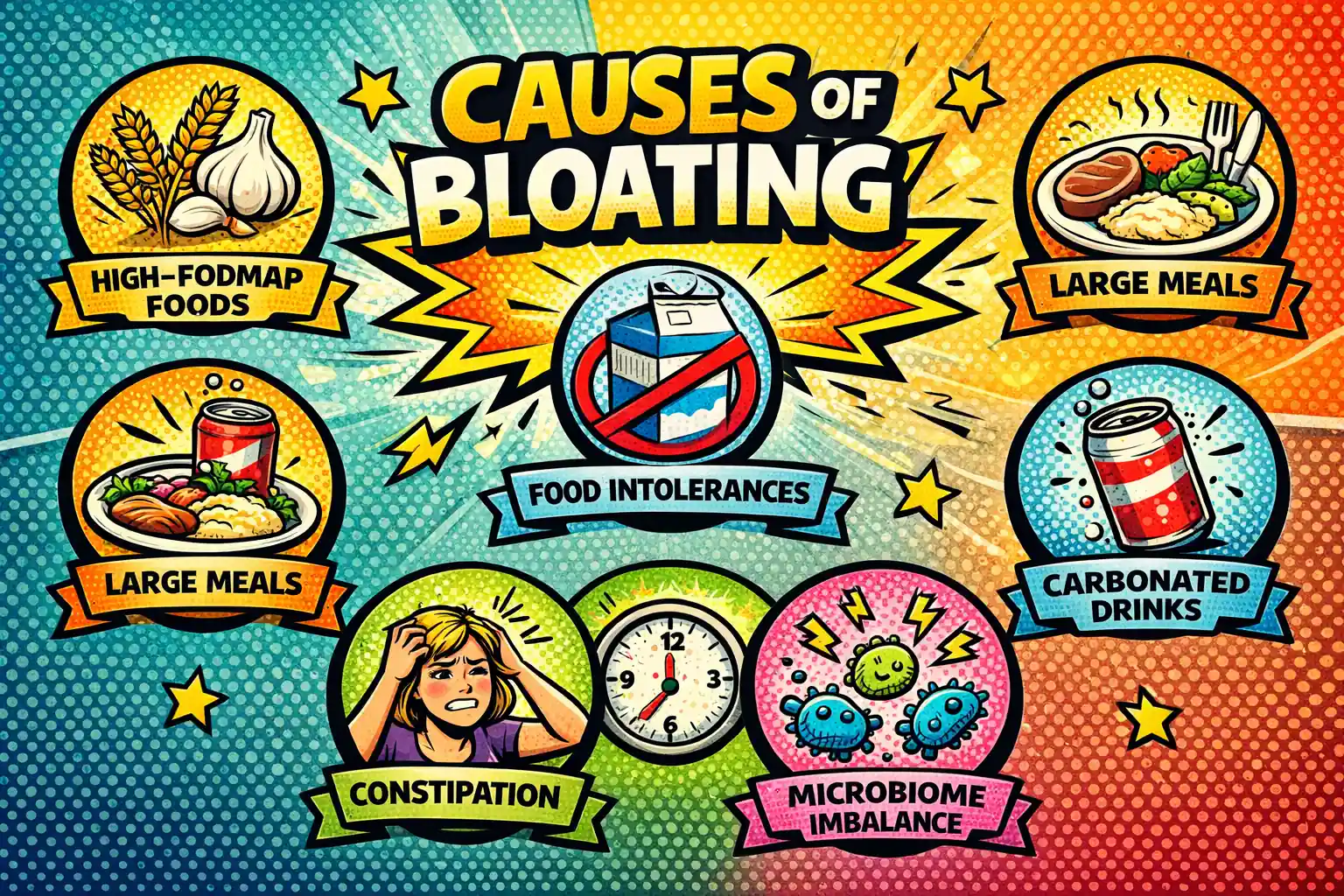
FODMAPs are fermentable carbs found in wheat/rye (fructans), legumes (GOS), dairy (lactose), certain fruits (fructose), and sugar alcohols like sorbitol/mannitol. They draw water into the intestine and get fermented by gut bacteria—both can cause pressure and gas. Portions matter: small amounts may be fine, big portions can trigger bloating.
2) Food intolerances
3) Meal size and meal speed
Large, fast meals stretch the stomach and delay emptying, leading to pooling of gas and a “food-baby” feeling. Eating quickly also means more swallowed air.
4) Carbonated drinks and habits that add air
Sodas, sparkling water, straws, gum chewing, and smoking increase swallowed air and burping.
5) Constipation and slow transit
When stool moves slowly, gas builds up behind it. Increasing fluids, soluble fiber (gradually), and daily movement helps.
6) Microbiome imbalance & SIBO
If “colon bacteria” move upstream into the small intestine (SIBO), fermentation happens earlier and closer to nutrient absorption, leading to bloating soon after meals1.
7) Hormones & stress
Hormonal shifts (e.g., premenstrual) and heightened stress activate the gut–brain axis, alter motility, and amplify gut sensitivity.
Want to dive deeper?
Many of these causes are interconnected and often overlooked in traditional approaches.
Discover The Gut Secret → — a free guide that reveals the hidden connections between your gut health, energy levels, and chronic bloating.
Short answer: Often, yes—when your bloating stems from specific foods that are hard for you to break down.
How they work
Evidence snapshot
How to use
Want to learn more about specific enzymes? Check out our comprehensive guide: Digestive Enzymes for Bloating: What They Are, How They Work, and When to Use Them to understand which enzyme types work best for your specific food triggers.
The low FODMAP diet is one of the most studied dietary approaches for IBS-related bloating. It’s a temporary elimination to identify your personal triggers—not a forever diet2.
How it works (3 phases):
Why it helps
FODMAP restriction reduces both osmotic water pull into the gut and bacterial fermentation, the two big drivers of bloat. Many people report less gas, less abdominal pressure, and steadier bowels during elimination and—more importantly—after personalization.
Keys for success
If you want the broader whole-body version of why microbiome diversity matters beyond symptom control alone, read our guides to the gut-heart axis, the gut-liver axis, and the gut-kidney axis. If you want the food-first version of that microbiome conversation, use polyphenol foods for gut health.
Examples of swaps
Simethicone (Gas-X, Phazyme)
A safe, non-absorbed surfactant that coalesces gas bubbles, making them easier to pass. Use after meals or when gas builds. Side effects are rare. If it does little, your bloating may be less about gas volume and more about motility or sensitivity.
Activated charcoal
Marketed for gas but evidence is mixed. Can darken tongue/stool and bind medications if taken close together. Consider only occasionally and with caution.
Digestive enzymes
Alpha-galactosidase: with high-fiber meals to prevent gas.
Lactase: with dairy for lactose intolerance.
Blends: at meal start for general heaviness.
Useful before the meal (prevention), not after.
Probiotics
Certain Bifidobacterium and Lactobacillus strains may ease bloating over 2–4 weeks by supporting microbiome balance. If you're considering probiotics for IBS, strain matters; not all products help everyone. If no improvement after a month, consider a different strain or approach.
If you are looking at probiotics for a narrower goal than symptom relief, we also reviewed male fertility-focused probiotic evidence so the fertility claims are not confused with bloating support.
If constipation is part of the picture
Soluble fiber (psyllium): increase gradually with water; helps stool form and move without excessive gas.
PEG (e.g., Miralax): draws water into stool for gentle relief.
Avoid jumping to large doses of insoluble fiber; it can worsen bloating in some people.
If bloating and constipation travel together, start with the constipation and bloating connection to see whether stool backup is the bigger driver. If the pattern clearly looks IBS-C-like, use our low-FODMAP approach for IBS-C to make the diet more bowel-friendly instead of simply stricter.
Step 1: Find your triggers (food + habits)
Keep a 2-week food & symptom log. Note meals, portions, beverages, timing, stress, and symptoms. Patterns quickly emerge (e.g., sparkling water at lunch → afternoon bloat).
Step 2: Eat smaller meals at a slower pace
Four to five smaller meals/snacks beat two giant plates. Chew thoroughly, set utensils down between bites, and avoid multi-tasking while eating. Less swallowed air, fewer motility hiccups.
Step 3: Stay hydrated and move your body
Aim for steady water intake across the day. After meals, take a 10–15 minute walk to prevent “pooling.” Gentle yoga poses (child’s pose, knees-to-chest, spinal twists) mobilize gas. If intense workouts aggravate your gut, favor low-to-moderate activity for a while.
Step 4: Manage stress
The gut is wired to your nervous system. Daily breathwork, mindfulness, or short meditations can downshift gut sensitivity. Protect your sleep. For stubborn IBS-type bloating, gut-directed hypnotherapy or CBT are validated options. If you want the full evidence-first breakdown, start with does gut-directed hypnotherapy work for IBS.
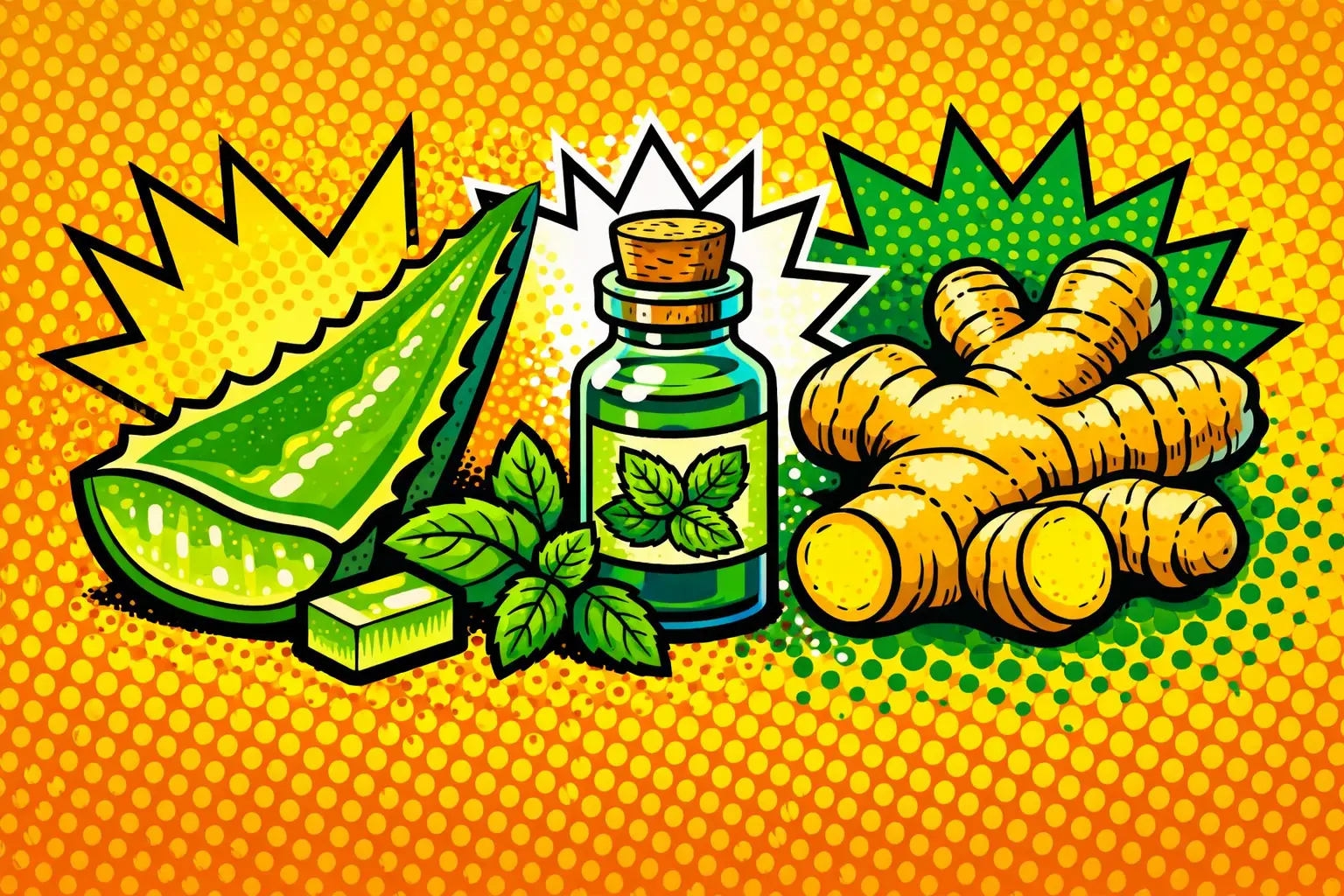
Step 5: Use teas and botanicals for relief
If peppermint is the remedy you keep hearing about, this evidence-first guide on peppermint oil for IBS explains what it actually helps, where capsules differ from tea, and when it is a poor fit.
Body position & massage
Left-side lying post-meal can help gas move. Gentle abdominal self-massage (clockwise circles) encourages transit. Simple, physical relief when you need it.
Pelvic floor & biofeedback
If you feel “stuck” and can’t pass gas or stool easily, consider evaluation for pelvic floor dysfunction. Biofeedback therapy retrains coordination and can reduce recurrent bloating from outlet problems.
You've learned the science, the strategies, and the remedies. Now it's time to put it all together with expert guidance. Join our FREE Bloating Breakthrough Workshop → where you'll get:
Don't let bloating control your life any longer. Take action today.
You don’t need a perfect gut to feel better—you need a clear, personal plan. If you’ve been wondering how to reduce bloating, start with simple levers: smaller, slower meals; steady hydration; a post-meal walk; and a peppermint or ginger tea.
If you suspect food triggers, test digestive enzymes strategically (learn more in our Complete Digestive Enzymes Guide) or consider a guided low FODMAP trial to identify culprits.
When constipation contributes, lean on psyllium (gradually) and PEG. Layer in stress care, sleep, and gentle movement. If bloating persists or you notice red flags, speak to a clinician to screen for conditions like SIBO, celiac, or IBD.
Most importantly, keep it practical. Tweak one or two things each week, track results, and keep what works. Over time you’ll build a sustainable routine that keeps bloating in check and helps you feel lighter, clearer, and more energized.
If bloating comes with cramping waves, vomiting, marked distention, inability to pass gas or stool, or pain that stops feeling routine, use possible gut obstruction signs first. Use bowel obstruction pain patterns when the pain pattern itself is the question after the safety lane is clear.
More Articles:
Note: This guide is for educational purposes and not a substitute for medical advice. If symptoms are severe, persistent, or accompanied by red-flag signs, consult a healthcare professional.
Download: Bloating Route Map
This page is now the main bloating hub. Use the next route by the pattern that is loudest, not by the word "bloating" alone.
| Main pattern | Best next read | Why |
|---|---|---|
| Bloating follows FODMAP-heavy meals | Low FODMAP diet for bloating | It explains when a structured trial fits. |
| Bloating is tied to backed-up stool | Constipation and bloating connection | Stool backup can create pressure, gas, and distension. |
| Early fullness, nausea, or upper-abdominal heaviness dominate | Functional dyspepsia and gut-brain communication | This is a different upper-GI lane than ordinary bloating. |
| Urgency follows meals | Urgency after meals | It separates caffeine, fat, sugar alcohols, and red flags. |
| Beer, wine, cocktails, carbonation, or rich meals are common triggers | Beer, wine, cocktails, and gut symptoms | Alcohol-related symptoms are often stacked with mixers, timing, and meal size. |
| Poor sleep or irregular rhythm makes bloating louder | Sleep and gut symptoms in IBS | It keeps gut-brain context visible before more restriction. |
| Severe pain, vomiting, progressive swelling, or inability to pass gas or stool appears | Possible gut obstruction signs | Obstruction-like clusters need safety routing before food troubleshooting. |
| Bleeding, black stool, anemia, unexplained weight loss, or persistent bowel change appears | IBS vs colorectal warning signs | Colorectal warning signs need their own clinician-review lane. |
| You are comparing simethicone, peppermint oil, and digestive enzymes | Bloating options symptom-fit comparison | It separates trapped-gas, cramping, and food-component questions without naming a universal winner. |
| You are unsure whether any product belongs in the plan | Gut health product decision guide | It separates books, trackers, comfort tools, OTC options, targeted enzymes, supplements, and the no-buy route. |
Bloating is a symptom pattern, not one diagnosis. Use this page as the hub: start with safety, then route by whether the main pattern is FODMAPs, constipation, upper-GI fullness, urgency, alcohol or rich meals, sleep context, or warning signs.
Xam Riche is a gut health solopreneur and founder of YourFitNature, dedicated to helping people navigate digestive wellness through evidence-based information and personal experience. After years of struggling with IBS and bloating, Xam discovered the transformative power of the low FODMAP diet and now shares practical, science-backed guidance to help others find relief. While not a medical professional, Xam combines extensive research with lived experience to create accessible, empowering resources for the gut health community. Learn more about our mission
As an affiliate, we may earn from qualifying purchases.