 By • Published on April 15, 2026 • 14 min read • 2,421 views
This article is for informational and educational purposes only and does not constitute medical advice. Always consult with a qualified healthcare professional for diagnosis, treatment, medication decisions, or liver-disease management.
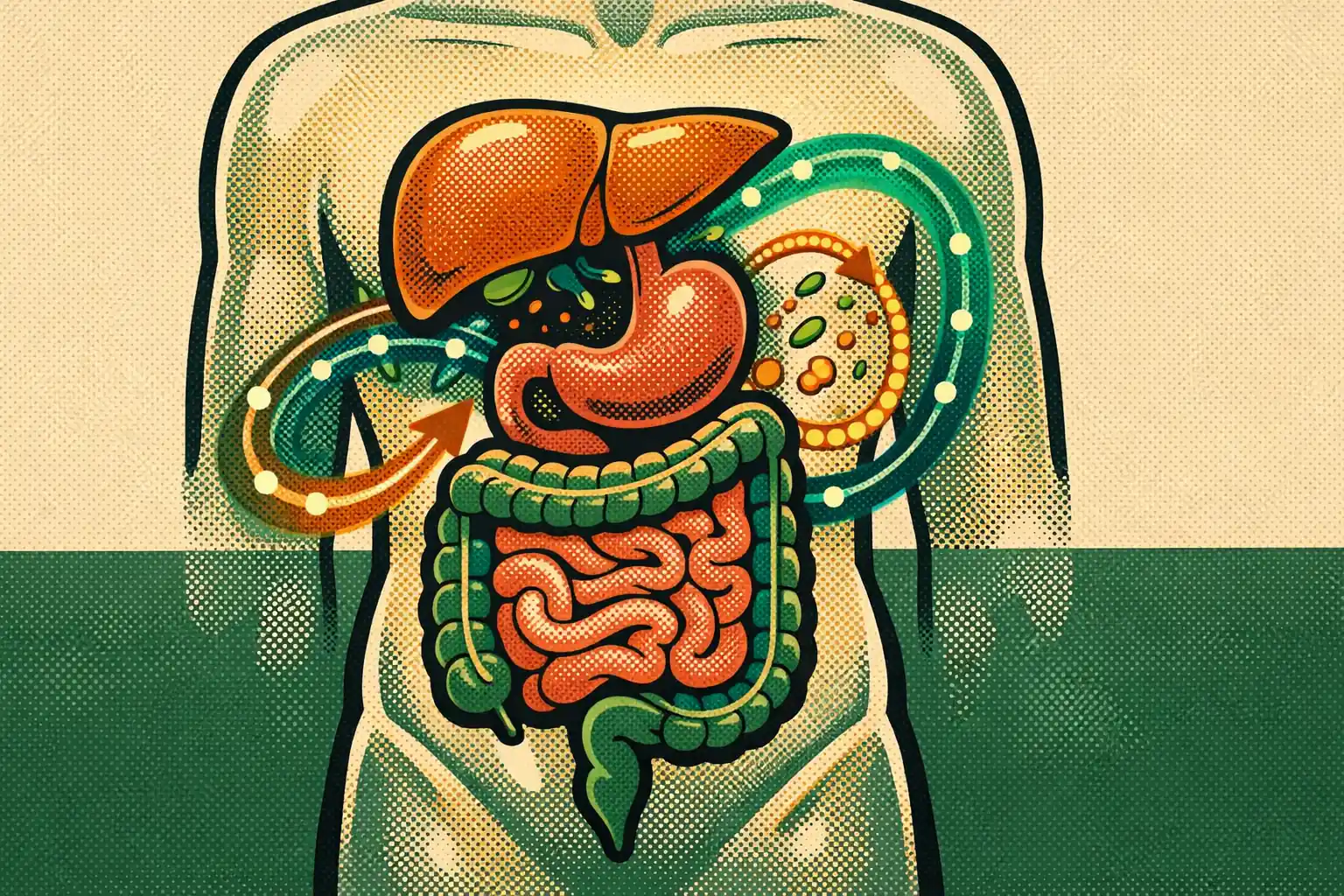
Here's the truth: the gut-liver axis is real science, but it gets distorted fast. One version makes it sound like "leaky gut" secretly explains every liver problem. The other version dismisses the whole idea as wellness noise. The better read is more useful: your gut can influence liver signaling, but liver health still belongs inside real metabolic and medical care.
Short answer: the gut-liver axis explains how gut microbes, barrier integrity, bile acids, and inflammatory signals may affect liver health, but it does not turn microbiome enthusiasm into proof of treatment.
This page is for you if you want the science behind liver-health headlines that mention the microbiome and need a cleaner map of what is plausible versus proven.
Use a different page first if you want the shelf opener or the symptom-side starting point. Start with gut-heart-axis or gut-lung-axis for the broader systems shelf, or use how to reduce bloating if your concern is practical gut symptoms.
This page explains a gut-to-liver mechanism bridge:
This page is not mainly explaining:
The liver is not floating somewhere separate from the digestive system.
It sits directly downstream from the gut. Compounds absorbed or produced in the intestine can travel toward the liver through portal circulation, while the liver sends bile acids and other signals back into the digestive tract.
That back-and-forth is the gut-liver axis.
Researchers use this framework because gut microbes, microbial metabolites, intestinal barrier function, immune signaling, bile-acid metabolism, diet, alcohol exposure, and metabolic health can all intersect in liver disease 1 2.
The practical mistake is jumping from that framework to a miracle claim.
The gut-liver axis does not mean:
The stronger takeaway is simpler.
The gut-liver axis helps explain why liver disease is often a whole-system issue. It gives you a better map for interpreting MASLD, inflammation, bile acids, and microbiome research. It does not give you permission to skip the basics.
If you want the cardiovascular side of the same systems idea, read our guide to the gut-heart axis. This article is the liver-metabolic counterpart: what the axis means, where the evidence is strongest, and what to do with the information without turning it into hype.
In plain English, the gut-liver axis is the relationship between:
That matters because the liver is one of the first major organs exposed to many gut-derived signals.
Some of those signals are normal and necessary. Nutrients, microbial metabolites, and bile-acid signals are part of everyday physiology. The problem is not that the gut communicates with the liver.
The problem is when the system becomes disrupted.
A disturbed microbiome, a more vulnerable gut barrier, altered bile-acid metabolism, alcohol exposure, high-energy diets, insulin resistance, medications, infections, and other stressors can shift the conversation from normal signaling toward inflammation and liver stress 3 4.
Here is the simplest way to visualize it:
Bottom line: the gut-liver axis is not a single pathway. It is a traffic system.
That is why the most useful version of this topic is not "fix the gut, fix the liver." It is "understand the traffic, then prioritize the right next steps."
You will often hear this described as "leaky gut."
That phrase can be useful if it is translated carefully. It can also become vague fast.
The more precise idea is intestinal barrier dysfunction. When the gut barrier is more disrupted, gut-derived products, microbial components, toxins, or antigens may reach the liver more easily through portal circulation. Reviews of the gut-liver axis describe this as one way disturbed gut homeostasis can contribute to impaired liver function and liver-disease pathways 5.
This does not mean you can diagnose liver risk from bloating.
It does mean the gut barrier is part of the serious liver-disease conversation, especially when it interacts with dysbiosis, inflammation, alcohol exposure, metabolic dysfunction, or advanced liver disease.
Bile acids are not just digestive detergents.
They are also signaling molecules.
Your liver makes bile acids, sends them into the gut, and then recycles many of them back through enterohepatic circulation. Gut microbes can modify bile acids, and reviews describe the gut microbiota-bile acid axis as relevant to chronic liver disease, including liver fibrosis pathways 6.
This is where the gut-liver axis becomes more interesting than generic "gut health."
The liver shapes the gut environment through bile. The gut reshapes parts of the bile-acid pool through microbial metabolism. Those changes can feed back into liver signaling, inflammation, and metabolic regulation.
That loop is one reason microbiome research keeps showing up in liver disease.
Dysbiosis means a disrupted microbial community.
It is not always the original cause of disease. Sometimes it may be a contributor. Sometimes it may be a consequence. Sometimes it may amplify a problem already driven by diet quality, alcohol exposure, insulin resistance, adiposity, medication history, infection, or genetics.
That distinction matters.
In MASLD, the gut microbiome is best understood as one part of a metabolic disease network. A 2024 review describes MASLD as linked with gut dysbiosis, oxidative stress, metabolic dysfunction, and the bidirectional gut-liver axis 7.
So the message is not "your microbiome caused your fatty liver."
The message is this: gut microbiome changes may sit inside the same pattern as insulin resistance, liver fat accumulation, inflammation, and fibrosis risk. That makes the gut relevant. It does not make it the only target.
| Pathway | Plain-English Meaning | Practical Reader Takeaway |
|---|---|---|
| Barrier dysfunction / microbial translocation | A more disrupted gut barrier may allow more inflammatory signals to reach the liver. | Care about gut integrity, but do not self-diagnose liver risk from one symptom. |
| Bile-acid signaling | Gut microbes help reshape bile-acid metabolism that can influence liver and metabolic signaling. | The gut-liver axis is about metabolism and signaling, not only digestion. |
| Dysbiosis plus metabolic dysfunction | Microbiome shifts often sit alongside insulin resistance, adiposity, oxidative stress, and inflammation. | Focus on liver-metabolic basics before chasing microbiome shortcuts. |
This is where older versions of this topic often become a disease catalog.
That is not the best use of the article.
The better move is to use a few conditions as evidence windows. MASLD is the main window. Cirrhosis and hepatocellular carcinoma show why the axis matters later in disease progression, but they deserve their own deeper articles.
MASLD stands for metabolic dysfunction-associated steatotic liver disease.
It is the current name for what many people still know as NAFLD. AASLD's nomenclature page explains that steatotic liver disease is the umbrella term, NAFLD is now MASLD, and NASH is now MASH 8.
This naming shift matters because it puts metabolic dysfunction back at the center.
MASLD is not only about fat in the liver. It is tied to broader metabolic health, including patterns such as insulin resistance, type 2 diabetes risk, obesity, dyslipidemia, and cardiovascular risk factors.
That is why it is the clearest bridge between the gut microbiome and liver disease.
The gut microbiome may influence MASLD through several overlapping routes:
The key word is may.
The research is strong enough to take the framework seriously. It is not strong enough to pretend a single microbiome intervention replaces medical assessment, metabolic care, or fibrosis-risk evaluation.
In cirrhosis, gut-barrier and microbiome disruption can become more clinically visible.
A cirrhosis review describes dysbiosis and gut-barrier dysfunction as linked to compensated cirrhosis and to complications in decompensated cirrhosis, including bacterial infections, hepatic encephalopathy, extrahepatic organ failure, and progression to acute-on-chronic liver failure 9.
That does not mean a person with cirrhosis should experiment alone with probiotics, antibiotics, or fecal microbiota strategies.
It means the gut-liver axis becomes part of the clinical complexity. At this stage, changes in gut microbes, barrier function, immune activity, and infection risk can carry higher stakes.
If cirrhosis is known or suspected, the next step is medical care, not content consumption.
Hepatocellular carcinoma, or HCC, is the most common primary liver cancer.
The gut microbiome is being studied in HCC because microbes can influence metabolism, inflammation, immunity, chronic liver disease progression, and hepatocarcinogenesis pathways 10.
Newer reviews also discuss gut-liver-axis and microbiota crosstalk in hepatic cancers as a promising direction for diagnostics and therapy, including possible interaction with immune and genomic pathways 11.
This is exciting research.
It is not a replacement for HCC surveillance, liver specialist care, imaging, laboratory follow-up, or oncology treatment when those are needed.
Here is the useful version of the gut-liver axis:
It should help you prioritize better.
It should not send you into a rabbit hole of detoxes, stool tests, supplement stacks, or fear-based food restriction.
If you have elevated liver enzymes, suspected MASLD, type 2 diabetes, metabolic syndrome, obesity, high triglycerides, heavy alcohol exposure, or known liver disease, start with appropriate medical follow-up.
AASLD maintains MASLD guidance inside formal clinical assessment and management pathways, which is the right framing for this topic 12.
The gut-liver axis can inform the conversation. It should not replace it.
Use the checklist if you need a simple way to prepare for follow-up:
Download: Liver Red Flags and Next Steps Checklist
The safest practical pattern is boring in the best way:
If you want the food-first version of microbiome support, start with polyphenol foods for gut health. If you want the mechanism layer behind those food claims, read polyphenols and the gut microbiome explained.
And if you are already restricting foods for gut symptoms, do not confuse restriction with gut repair. A short-term low FODMAP phase can be useful for IBS, but it should move into low FODMAP reintroduction and personalization when appropriate.
Not all gut-liver claims sit on the same evidence tier.
Some are strong framework claims. Some are disease-association claims. Some are early therapy or biomarker concepts.
That difference matters because "promising" is not the same as "proven."
Download: Gut-Liver Axis Evidence Ladder

This section matters because gut-liver content is easy to overstate.
Here is the cleaner version:
| Reader Thought | Reasonable Interpretation | Overclaim to Avoid |
|---|---|---|
| "My gut may influence my liver." | Yes, this is a valid disease framework. | "All liver disease starts in the gut." |
| "MASLD and the microbiome are connected." | Yes, this is one of the clearest disease windows for the axis. | "Fixing dysbiosis alone cures fatty liver." |
| "Probiotics or prebiotics might help someday." | Promising, depending on the intervention and disease context. | "A probiotic replaces liver workup or treatment." |
| "I should avoid unnecessary long-term restriction if tolerated." | Often reasonable because diet quality and microbial diversity matter. | "Any restrictive diet is automatically bad or causes liver disease." |
Microbiome-directed therapies are under active study. Reviews discuss the gut-liver axis as a research direction and possible target for novel treatments in liver disease, but not as a replacement for standard care 13.
That is not the same as routine self-treatment.
If you want a careful primer on intervention language before you buy into marketing claims, read our explainer on prebiotics, probiotics, and synbiotics. If a supplement, test, or protocol claims to "heal your liver through your gut," ask what evidence tier it actually sits on.
The gut-liver axis is useful education.
It is not a screening test.
Talk with a qualified healthcare professional if:
For symptom-first gut questions, use our guide to gut-health basics. For liver-risk questions, bring the conversation back to labs, risk factors, fibrosis assessment, alcohol exposure, medication review, and clinician-guided follow-up.
The gut-liver axis is not hype when it is handled carefully.
It is a useful map for understanding how gut microbes, barrier integrity, bile acids, immune signaling, metabolism, and liver disease can connect.
But the map is not the treatment plan.
Start here:
That is the real value of the gut-liver axis.
It gives you a better way to interpret the science without surrendering to microbiome hype.
Xam Riche is a gut health solopreneur and founder of YourFitNature, dedicated to helping people navigate digestive wellness through evidence-based information and personal experience. After years of struggling with IBS and bloating, Xam discovered the transformative power of the low FODMAP diet and now shares practical, science-backed guidance to help others find relief. While not a medical professional, Xam combines extensive research with lived experience to create accessible, empowering resources for the gut health community. Learn more about our mission
As an affiliate, we may earn from qualifying purchases.