 By • Published on April 8, 2026 • 10 min read • 4,120 views
This article is for informational and educational purposes only and does not constitute medical advice. Always consult with a registered dietitian, gastroenterologist, or other qualified medical professional before making significant dietary changes.
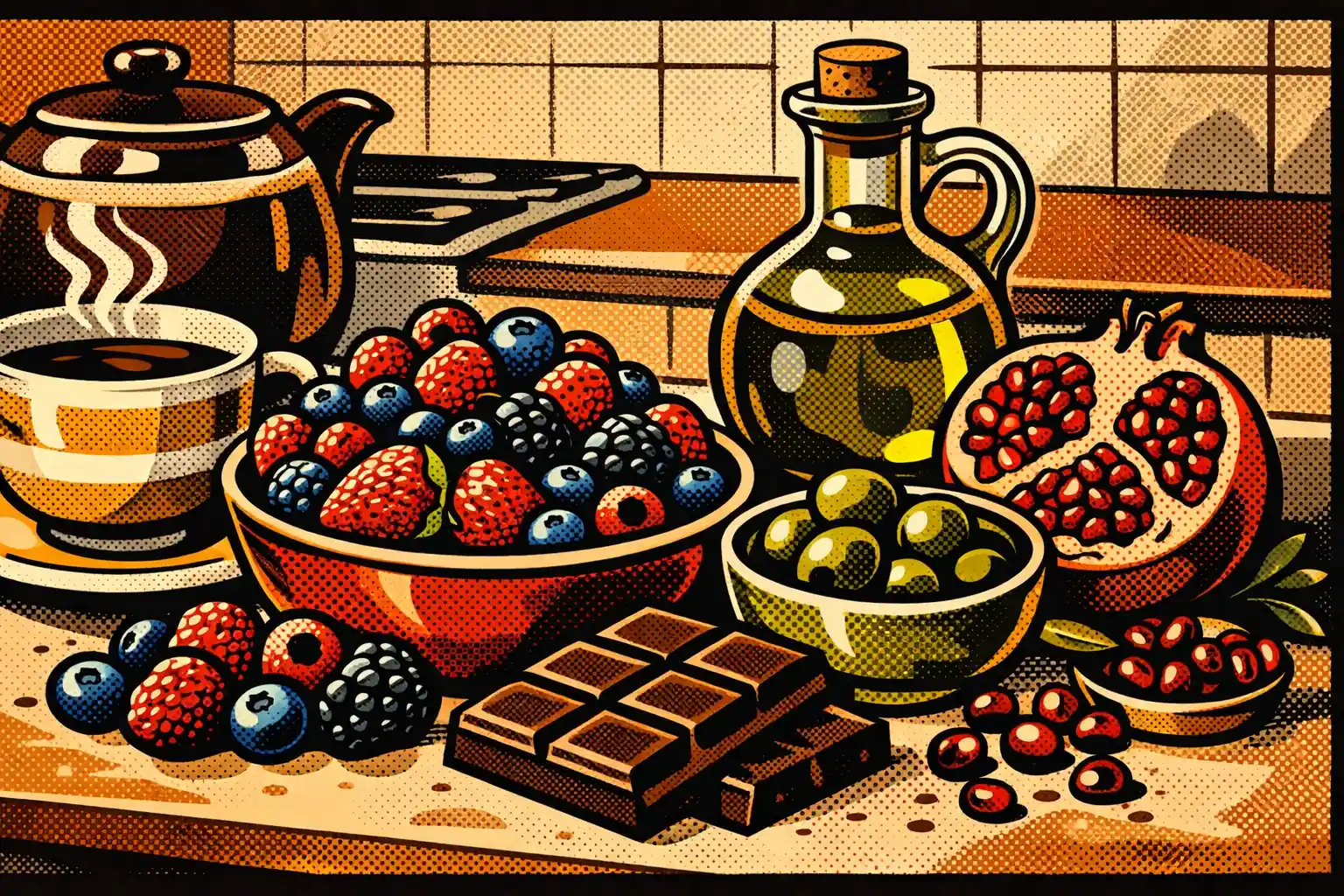
You do not need a gut-health superfood. You need a food pattern you can actually repeat. Polyphenol-rich foods matter because many of them reach the colon, interact with gut microbes, and fit naturally inside the kind of plant-forward eating pattern that supports long-term health.
Short answer: polyphenol foods are most useful when treated as practical food upgrades, not miracle compounds. The goal is a repeatable food pattern, not a perfect superfood list.
This page is for you if you already understand the polyphenol science and now want the food-first version you can actually eat.
Use a different page first if you need the mechanism layer or a supplement-category comparison. Start with polyphenols-gut-microbiome-science or prebiotics-probiotics-synbiotics-constipation.
If you have been told to "eat more plants for your gut," you already know how vague that advice can feel.
Which plants? How much? And why do some "healthy" foods still make your abdomen feel loud?
Here is the truth: polyphenol foods for gut health are worth knowing, but not because one berry, tea, or chocolate square is secretly magic. They matter because they give you a practical way to build more variety into your diet while also feeding the microbiome story with something real, not hype 1.
If you need the broader symptom-first map before you zoom in on polyphenols, start with our guide to broader gut-friendly diet strategies. This article is the narrower food-first version: what polyphenols are, which foods are the easiest starting points, and how to use them without making your diet weird.
If the bigger pattern is that Mediterranean-style, plant-rich, or anti-inflammatory eating keeps worsening IBS symptoms, use when anti-inflammatory eating worsens IBS symptoms before adding more colorful foods.
This page explains a food-list utility:
This page is not mainly explaining:
Polyphenols are plant compounds found in foods such as berries, tea, cocoa, olives, herbs, apples, grapes, pomegranate, coffee, soy foods, and many other colorful plant foods 2.
You do not need to memorize their chemical subclasses.
The practical version is simpler:
That last point matters because a lot of wellness content talks about polyphenols as if they are a supplement ingredient first. They are not. They are built into normal foods, which is why a food-first approach is the cleanest way to use this concept.
Many dietary polyphenols are not fully absorbed in the upper digestive tract. That means a meaningful share reaches the colon, where gut microbes can act on them and transform them into smaller metabolites 4.
That is the microbiome hook.
In plain language:
This is one reason researchers keep discussing polyphenols alongside beneficial gut bacteria. It is also why microbiome science shows up in bigger systems conversations such as the gut-heart axis, the gut-liver axis, and the gut-kidney axis, not just in bloating or IBS articles.
You will sometimes see polyphenols described as prebiotics. That wording needs care. The ISAPP consensus definition of a prebiotic requires selective utilization by host microorganisms plus a documented health benefit 5. So the safest consumer language is this: polyphenol-rich foods may have prebiotic-like effects, and they are a promising part of food-first microbiome support. If you want the sibling page that focuses on actual prebiotic fiber source groups rather than polyphenol-rich foods, use that utility next.
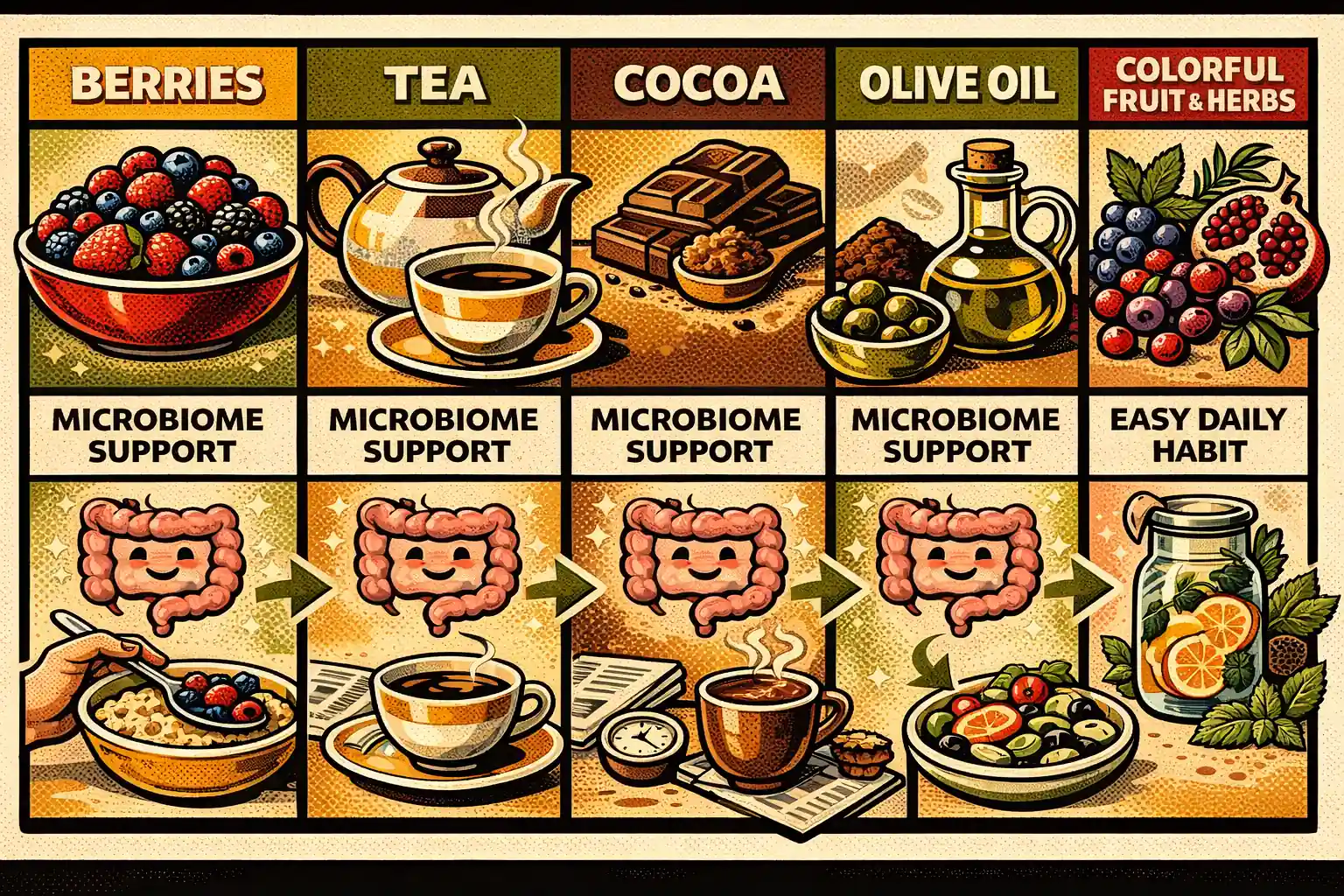
The easiest way to use this topic is by food groups, not by chasing a chemical score.
| Food group | Why it keeps showing up | Practical starting move |
|---|---|---|
| Berries | rich in polyphenols and easy to pair with normal meals | add one serving to breakfast or yogurt |
| Tea | one of the easiest repeat habits | swap one sugary drink for tea |
| Cocoa or dark chocolate | practical way to add cocoa polyphenols | use cocoa in oats or choose a modest dark chocolate portion |
| Olives and extra virgin olive oil | fits Mediterranean-style eating patterns | use olive oil as a default fat for meals |
| Pomegranate, grapes, apples, herbs, and similar plant foods | broaden plant variety | rotate them in across the week instead of overloading one day |
Berries are one of the best entry points because they are familiar, easy to portion, and repeatedly discussed in polyphenol-microbiome reviews 6.
Pomegranate and grape-derived compounds also show up often in the literature, especially when researchers discuss microbial metabolites and recurring organisms such as Akkermansia 7.
That does not mean you need to micromanage specific fruits. It means rotating a few colorful fruits into your week is a believable, food-based way to use this evidence.
Tea is one of the simplest habit upgrades because it drops easily into an existing routine. Reviews regularly discuss tea polyphenols in relation to gut microbiota modulation, even though the human data are not perfectly consistent 8 9.
Coffee also contains polyphenols, but this is where meal context matters. If caffeine makes your gut noisier, the best move is not forcing more coffee in the name of microbiome support.
Cocoa gives you a practical polyphenol source without asking for a major meal change. That makes it useful, but portion still matters.
If dark chocolate turns into a large high-sugar dessert, it stops being a clean "gut-health habit" and becomes a different conversation. Think modest portions, not permission to turn the whole category into a halo food.
Olives and extra virgin olive oil fit naturally into the broader Mediterranean-style pattern that keeps appearing in conversations about cardiometabolic and microbiome support.
This is one of the least flashy but most useful polyphenol habits because it is easy to repeat. A default oil choice you actually use is usually more valuable than a rare specialty powder you forget in the cabinet.
The best polyphenol strategy is boring in a good way.
Start with one or two habits:
Bottom line: aim for repeatability, not a perfect rainbow every day.
If you want a more plant-forward meal framework, the companion move here is our plant-based gut-friendly meals. The goal is not extreme variety on day one. The goal is a pattern you can keep. If you want the broader bridge on why varied fiber patterns may matter for microbial diversity and resilience, use fiber diversity and microbiome resilience.
This is where many readers get tripped up.
A food can be objectively nutritious and still feel rough on a sensitive gut because of FODMAP load, acidity, caffeine, lactose, large portions, or the fact that several digestive wild cards showed up in one meal. If that sounds like your experience, you are not imagining it.
Start here instead:
If symptom sensitivity is the bigger story, use our low-FODMAP foods guide as the practical filter. If stress clearly changes how meals land, read how stress can amplify gut symptoms. And if you keep feeling confused because "good" meals still backfire, our guide to bloating after eating healthy foods is the right next step.
Usually, no.
That does not mean polyphenol extracts are useless. Some studies do use extracts or concentrated interventions. But that is not the same thing as proving that every reader should buy a bottle.
Foods make more editorial sense because:
This is especially important in gut health, where people are already vulnerable to exaggerated claims. If a supplement sounds easier than food, that is usually the moment to slow down and ask whether the product is selling confidence more than evidence.
The science is promising. It is not magic.
The strongest fair claims are:
The weaker claims are the ones you should watch carefully:
Human evidence is also more mixed than a lot of wellness content admits. Some interventions look promising. Others do not show a dramatic microbiome shift in practice 11.
That is why food pattern thinking is the better lens than miracle-food thinking.
[!TIP] Download: 7-Day Polyphenol Starter Checklist Use this printable checklist to add more polyphenol-rich foods in a way that feels sustainable instead of performative.
If you want the shortest version of this whole article, use these four moves:
The good news is that this does not require a dramatic reset.
You do not need a perfect gut-health pantry. You need a calmer, more believable food pattern. If you want the deeper mechanism layer behind these food claims, read our science companion on polyphenols and the gut microbiome. If your bigger goal is simply feeling better after meals, stay practical and keep using food choices inside a broader gut-support plan.
Xam Riche is a gut health solopreneur and founder of YourFitNature, dedicated to helping people navigate digestive wellness through evidence-based information and personal experience. After years of struggling with IBS and bloating, Xam discovered the transformative power of the low FODMAP diet and now shares practical, science-backed guidance to help others find relief. While not a medical professional, Xam combines extensive research with lived experience to create accessible, empowering resources for the gut health community. Learn more about our mission
As an affiliate, we may earn from qualifying purchases.