 By • Published on May 18, 2026 • 8 min read • 1,692 views
This article is for informational and educational purposes only and does not constitute medical advice. Always consult with a qualified healthcare professional for diagnosis, testing, and treatment decisions.
IBS symptoms are real. Restriction risk is real too.
That is the tension this page is here to hold. Low FODMAP can be a useful IBS tool for some people. But if you have an eating-disorder history, ARFID-like restriction, food fear, under-eating, over-tracking, or a safe-food list that keeps shrinking, strict elimination may be the wrong next step.
The goal is not to dismiss your bloating, diarrhea, constipation, pain, or urgency. The goal is to stop a symptom plan from becoming a restriction spiral.
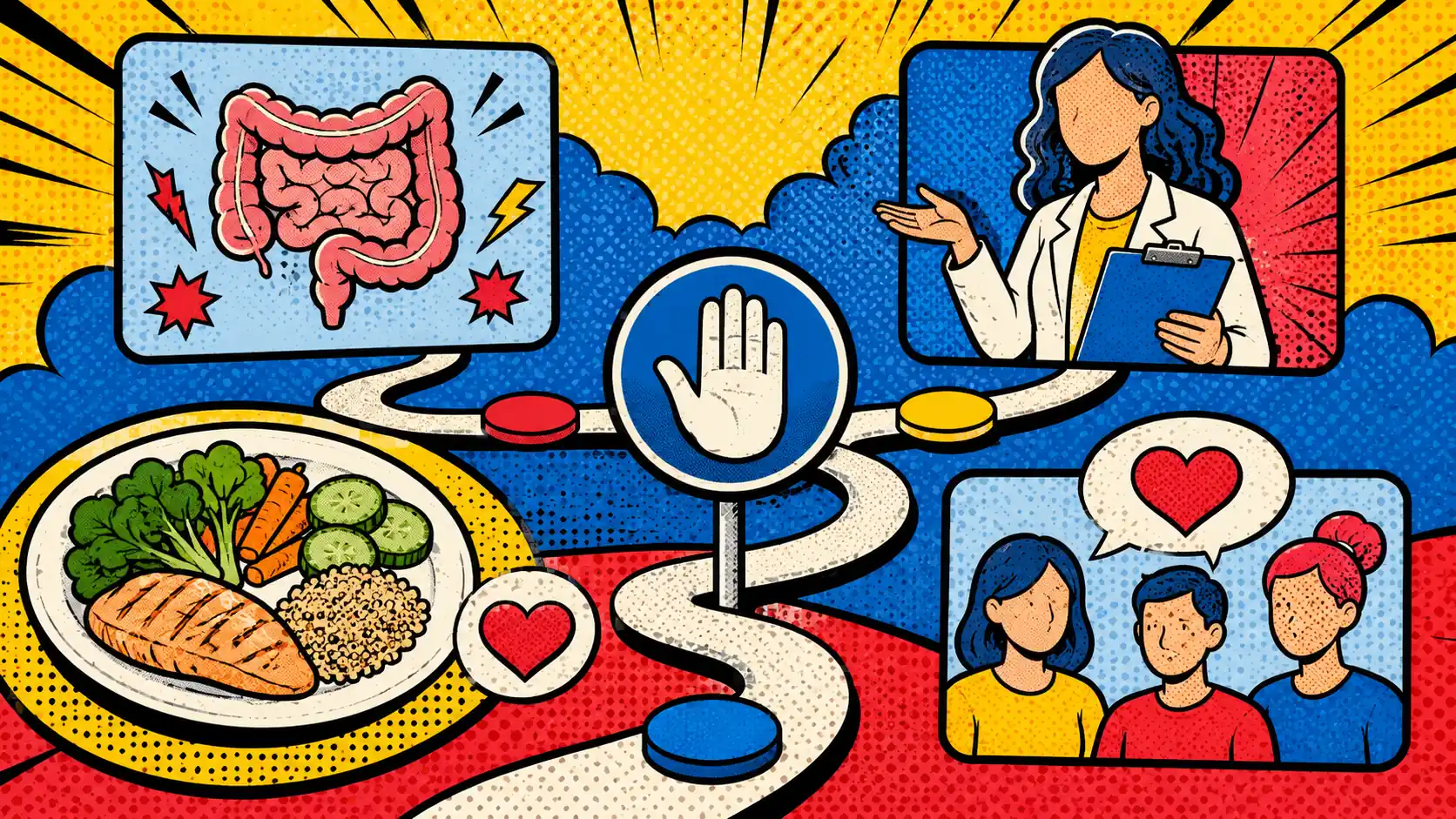
If standard low-FODMAP guidance fits your situation, start with the low FODMAP beginner guide. If restriction itself is part of the danger, stay here first.
Do not start or restart strict low FODMAP alone if any of these are active:
NICE eating-disorder guidance includes worrying dieting or restrictive eating practices among signs that should raise concern, and it also flags abdominal pain associated with vomiting or dietary restriction when not fully explained by a medical condition 1.
That does not mean every person with IBS and food fear has the same diagnosis. It means restriction is no longer a casual self-help tool. It becomes a care team decision.
The low-FODMAP process is often misunderstood as "cut more foods until symptoms stop." That is not the intended design.
Monash describes the low-FODMAP diet as three stages: restriction, reintroduction, and personalization 2. The middle and final stages matter because the point is not to keep the diet as small as possible. The point is to learn which FODMAP groups and portions actually matter, then return to the broadest pattern that works.
If you already tend toward food fear, the first stage can become sticky. You may feel safer with fewer foods, then feel terrified of reintroducing them. Or every symptom may become "proof" that another food needs to go.
That is the moment to pause.
If you are already in the process and reintroduction feels frightening, use the low FODMAP reintroduction guide only with support. If you keep tightening a personalized plan, review low FODMAP personalization mistakes through a restriction-risk lens.
When symptoms are loud, doing nothing can feel impossible. But "not strict low FODMAP right now" does not mean "no plan."
Safer first moves may include:
| Pattern | Lower-risk next step |
|---|---|
| Constipation and bloating | Stabilize meals, fluids, movement, and bathroom routine before cutting more foods |
| Diarrhea or urgency | Review caffeine, alcohol, sugar alcohols, fatty meals, hydration, and medication questions |
| Reflux or upper-GI symptoms | Sort reflux, fullness, meal size, and timing before broad restriction |
| Stress-sensitive symptoms | Add nervous-system support without blaming symptoms on stress |
| Nutrition concerns | Review adequacy with a dietitian before eliminating more staples |
| New or worsening symptoms | Discuss testing rather than solving with diet alone |
NIDDK lists IBS treatment options beyond diet, including lifestyle changes, medicines, probiotics, and mental health therapies 3. That wider menu matters when restriction is risky.
If nutrient adequacy is already a worry, read nutrient gaps in restrictive gut diets before removing another food group. If low FODMAP did not work, use when low FODMAP does not work instead of trying to make the diet stricter.
The best support depends on the risk pattern.
A gastroenterology clinician can help decide whether IBS is still the right working label and whether celiac disease, inflammatory markers, bile-acid diarrhea, constipation, medication effects, or other issues need discussion. An IBS-aware dietitian can help adjust food patterns without collapsing the diet into a tiny list. An eating-disorder-informed clinician or therapist can help protect recovery, flexibility, and safety while gut symptoms are addressed.
Monash notes that disordered eating is common enough in IBS care that professionals should know when to refer for comprehensive assessment 4. NCBI Bookshelf is even more direct: clinicians should screen for eating disorders before initiating low FODMAP because the diet may reinforce overly restrictive eating patterns 5.
Useful questions to ask:
[!NOTE] Evidence boundary: low FODMAP can be an IBS tool for some people, and specialist guidance flags disordered-eating screening before restrictive gut diets. That evidence supports a pause-and-refer approach when restriction risk is present. It does not let this page diagnose an eating disorder, decide that strict low FODMAP is safe for you, or replace eating-disorder-informed care.
Use this script with a GI clinician, IBS-aware dietitian, eating-disorder-informed clinician or therapist, caregiver, or trusted support person:
I am trying to manage gut symptoms, but restriction, food fear, tracking, or safe-food rules may be risky for me. Can we choose a plan that protects regular eating, nutrition adequacy, flexibility, and symptom care? What signs mean we should stop the diet experiment, and who should I contact if food fear gets worse?
Do not start, intensify, or continue strict low FODMAP, fasting, calorie restriction, purging compensation, supplement use, or weight-control behavior based on this page alone.
Get professional support promptly if eating feels unsafe, the safe-food list is shrinking, meals are being skipped, weight is changing unintentionally, tracking feels compulsive, reintroduction feels impossible, laxatives or supplements are being misused, purging or compensatory exercise is present, or caregivers are worried. Seek urgent help for fainting, chest pain, severe weakness, confusion, dehydration, vomiting blood, suicidal thoughts, or feeling unable to keep yourself safe.
Detailed food tracking can be useful for some people. For others, it becomes a compulsion.
If tracking increases food fear, use a lighter pattern note:
That kind of tracking keeps the focus on the clinical pattern rather than turning every ingredient into a threat.
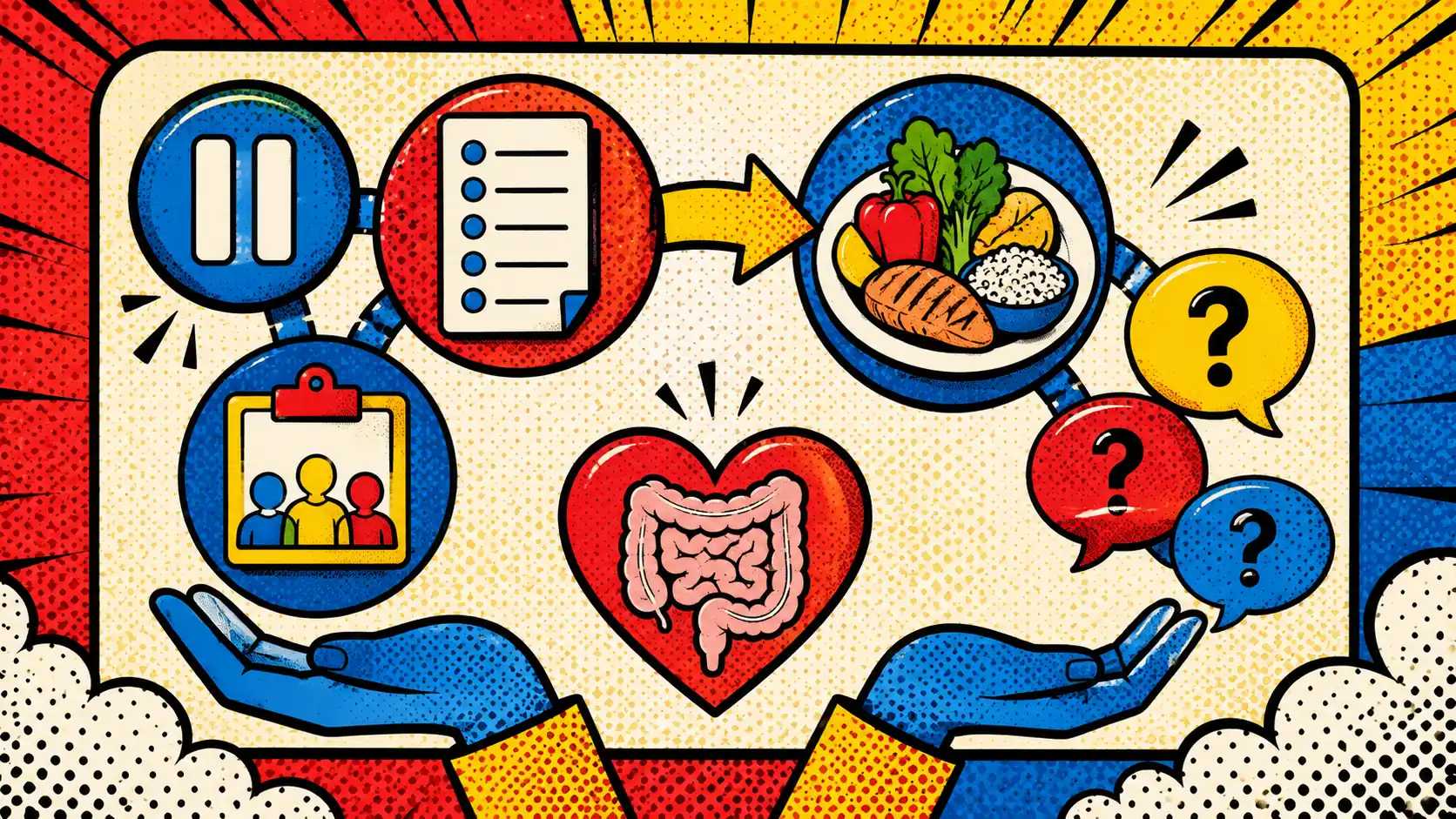
Download: Restriction-Risk Conversation Card to bring to a clinician, dietitian, therapist, or caregiver before starting a stricter gut-symptom diet.
| Situation | Go here next |
|---|---|
| You need the standard low-FODMAP starting map and no restriction-risk signs are active | Low FODMAP diet for beginners |
| You are already afraid to reintroduce foods | Low FODMAP reintroduction guide |
| The safe-food list keeps shrinking | Nutrient gaps in restrictive gut diets |
| You need to clarify which professional owns diet, medical, medicine, or therapy questions | IBS dietitian visit prep and care-team roles |
| Low FODMAP did not make symptoms readable | When low FODMAP does not work |
| Symptoms returned after a personalized plan had been helping | Symptoms return after low FODMAP |
Low FODMAP is not automatically unsafe. But strict low FODMAP is also not automatically the right next step.
If food fear, eating-disorder history, ARFID concerns, under-eating, over-tracking, weight concerns, or a shrinking safe-food list are part of the picture, pause before adding more rules. Get support that can protect both gut symptoms and food flexibility.
IBS care should make life bigger over time, not smaller.
Xam Riche is a gut health solopreneur and founder of YourFitNature, dedicated to helping people navigate digestive wellness through evidence-based information and personal experience. After years of struggling with IBS and bloating, Xam discovered the transformative power of the low FODMAP diet and now shares practical, science-backed guidance to help others find relief. While not a medical professional, Xam combines extensive research with lived experience to create accessible, empowering resources for the gut health community. Learn more about our mission
As an affiliate, we may earn from qualifying purchases.