 By • Published on May 16, 2026 • 7 min read • 4,277 views
This article is for informational and educational purposes only and does not constitute medical advice. Always consult with a qualified healthcare professional for diagnosis, testing, and treatment decisions.
A guided path from low-FODMAP basics through elimination, reintroduction, failed challenges, and symptom return.
You're reading: Symptoms Return After Low FODMAP: What To Check Before Restarting Elimination
Symptoms returning after low FODMAP can feel like the whole plan stopped working. It usually means you need a better sorting step before you change the diet again.
The low-FODMAP process is not supposed to be a permanent test of willpower. It is a structured way to calm symptoms, test categories, and build a more personal pattern. When symptoms come back, the first move is not automatically "start over." The better first question is: which part of the process got noisy?
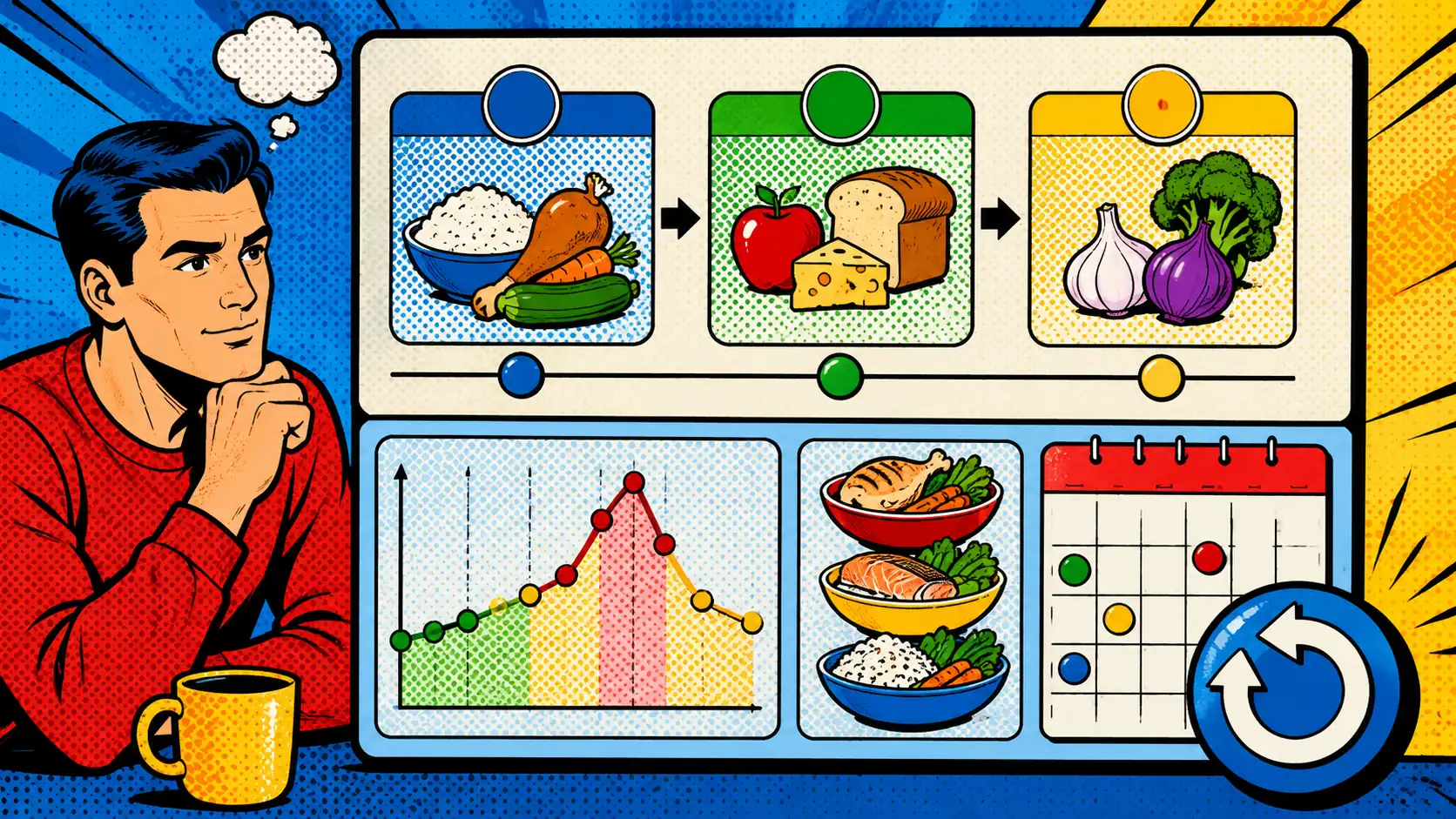
This page is the low-FODMAP-specific sibling to the broader IBS relapse plan after symptoms return. Use it when low FODMAP helped for a while, but now symptoms are back during reintroduction, personalization, or maintenance.
Do not troubleshoot a diet plan when the symptom pattern needs medical review. Get urgent or prompt medical guidance if symptoms include blood or black stool, fever, dehydration, persistent vomiting, severe or changed pain, unexplained weight loss, nighttime diarrhea, or inability to pass gas or stool. NIDDK lists blood, fever, vomiting, weight loss, and dehydration-style symptoms among diarrhea warning contexts, and constipation with bleeding, constant pain, vomiting, fever, weight loss, or inability to pass gas belongs above diet experimentation 1 2.
If the symptoms are familiar, mild to moderate, and not clearly unsafe, move into phase sorting.
The same symptom return means different things in different phases.
| Phase | What symptom return may mean | Best first check |
|---|---|---|
| Elimination | The baseline never got steady enough | Hidden FODMAPs, constipation, stress/sleep, diagnosis fit |
| Reintroduction | One challenge was too much or too close to noise | Challenge food, dose, timing, and symptom diary |
| Personalization | The personalized pattern got too loose or too narrow | Stacking, routine drift, and avoided foods |
| Maintenance | A new non-FODMAP variable entered the picture | Illness, medication, travel, stress, cycle, sleep, hydration |
If you are still trying to understand one challenge, use when reintroduction fails. If the whole diet never helped enough, use when low FODMAP does not work.
Symptoms can come back when several "tolerated" foods are eaten close together. That does not mean every food failed. It may mean the total load was too high for that day. Use FODMAP stacking explained if the pattern appears after mixed meals, snacks close together, restaurant meals, or "all technically allowed" days.
Personalization often starts carefully, then portions slowly drift. A few extra bites, a larger serving, or two repeat servings in one day can change the signal. Before restarting elimination, compare the current portion with the portion that was tolerated during testing.
Monash emphasizes using a diary and controlled reintroduction process so symptoms can be interpreted in context 3. If a challenge happened during poor sleep, high stress, illness, a period, heavy exercise, travel, or constipation, the result may be hard to interpret.
Low FODMAP can look like it failed when the bigger change is meal timing, caffeine, alcohol, hydration, sleep, travel, or medication. NIDDK notes IBS care may include diet changes, physical activity, stress reduction, sleep, medicines, probiotics, and mental health therapies 4. That broader treatment map matters when symptoms return.
If the clearest disruption is a trip, use the low-FODMAP travel guide to rebuild the airport, hotel, or road-trip food system before restarting elimination.
Long strict restriction can make eating more stressful and less varied. If the diet keeps shrinking because you are afraid to test, the next step may be a dietitian-guided reset, not another round of self-directed elimination. Use low-FODMAP personalization mistakes if the problem is Step 3 becoming too rigid or too loose.
Do not restart strict elimination from one noisy day, one unclear challenge, or one restaurant meal. Also avoid restarting if the symptom pattern is clearly different from your usual IBS pattern, if warning signs are present, or if food fear is growing faster than useful data.
Instead, write down:
Download the printable Low-FODMAP Symptom Return Reset Checklist before changing the plan.
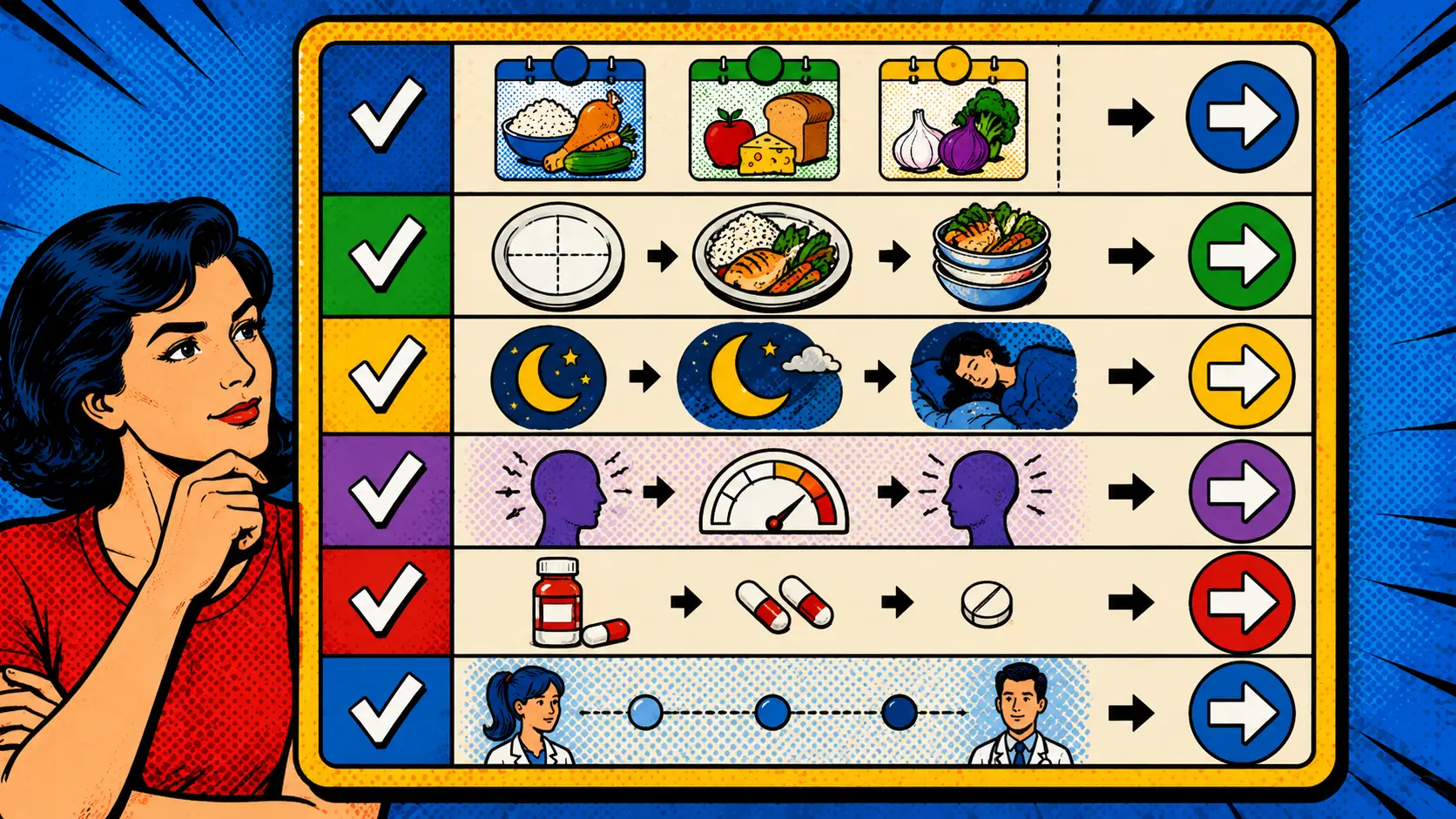
A short reset may make sense when symptoms clearly returned after a predictable stacking pattern, a few larger portions, or a messy challenge week. Keep it short, specific, and tied to a question. The goal is to rebuild signal, not to prove you can stay restricted.
Examples:
If every reintroduction challenge seems to fail, or symptoms never became calm enough to test, move to when low FODMAP does not work and IBS tests, celiac, SIBO, calprotectin, and colonoscopy.
| If the main question is... | Use this page |
|---|---|
| "Today is loud and I need the next few hours." | IBS flare plan |
| "Low FODMAP helped, then symptoms returned." | This page |
| "I was better for weeks or months, and now the pattern is back." | IBS relapse plan after symptoms return |
| "I added too many products and cannot read the signal." | Supplement stack audit for IBS |
| "This is persistent, different, severe, medication-related, or medically complex." | Doctor visit prep for IBS next steps |
Download: IBS Maintenance Pathway Card for the five-page route chooser across flare, low-FODMAP signal repair, relapse reset, supplement-stack audit, and clinician prep.
| Situation | Best next read |
|---|---|
| Today is loud and you need short-term stabilization | IBS flare plan |
| One challenge went badly | When reintroduction fails |
| Symptoms returned after personalization | Low-FODMAP personalization mistakes |
| Mixed meals look compliant but trigger symptoms | FODMAP stacking explained |
| Symptoms returned around travel, hotel meals, or disrupted timing | Low-FODMAP travel guide |
| The whole protocol never helped enough | When low FODMAP does not work |
| Symptoms returned but the issue is broader than food | IBS relapse plan after symptoms return |
| Testing questions are now the main concern | IBS tests, celiac, SIBO, calprotectin, and colonoscopy |
| Symptoms are persistent, different, severe, or tangled with medicines and supplements | Doctor visit prep for IBS next steps |
If symptoms return after low FODMAP, do not treat that as automatic failure. Name the phase, check dose and stacking, look for routine disruption, and screen for stop signs before restarting strict elimination.
The best low-FODMAP plan is not the strictest plan. It is the plan that gives you enough symptom control, enough food variety, and enough confidence to know which next step actually fits.
Xam Riche is a gut health solopreneur and founder of YourFitNature, dedicated to helping people navigate digestive wellness through evidence-based information and personal experience. After years of struggling with IBS and bloating, Xam discovered the transformative power of the low FODMAP diet and now shares practical, science-backed guidance to help others find relief. While not a medical professional, Xam combines extensive research with lived experience to create accessible, empowering resources for the gut health community. Learn more about our mission
As an affiliate, we may earn from qualifying purchases.
Choose a focused guide for what you are noticing or deciding next.