 By • Published on May 8, 2026 • 7 min read • 4,472 views
This article is for informational and educational purposes only and does not constitute medical advice. Always consult with a qualified healthcare professional before using symptom information to make diagnosis or treatment decisions.
A restrictive gut diet can be useful and incomplete at the same time. That is the part many people miss.
Maybe low FODMAP helped. Maybe cutting beans, wheat, dairy, certain fruits, restaurant meals, protein bars, and "healthy" snacks made symptoms easier to read. But now the diet feels small. You are eating fewer meals on repeat. You are not sure whether you are getting enough protein, calcium, iron, zinc, magnesium, or fiber diversity.
This page is not here to diagnose deficiencies. It is here to help you notice where a symptom-control diet may need an adequacy check before it becomes your default long-term pattern.
If protein is the main issue, start with the low-FODMAP vegetarian protein guide. If the broader issue is plant-food tolerance, use plant-based eating and gut symptoms. This article sits across those routes: what might be missing when the whole diet has shrunk.

Food restriction is not automatically wrong. For some IBS readers, a structured low-FODMAP trial can reduce symptoms enough to make patterns visible. NIDDK notes that clinicians may recommend low FODMAP for IBS in some cases 1. Monash frames the diet as a three-step process, not a forever elimination list 2.
The adequacy problem appears when the temporary plan becomes a smaller and smaller permanent diet.
Watch for these patterns:
That is when the first question is not "Which supplement fixes this?" It is "Which food groups disappeared, and what anchors can safely come back?"
If a consumer food-sensitivity report is driving the list, use Food Sensitivity Tests for IBS: Are They Worth It? before treating it as a reason to remove more foods.
The most useful watch list is not exotic. It is practical:
| Nutrient area | Why it comes up on restrictive gut diets |
|---|---|
| Protein | Beans, wheat products, dairy, meat alternatives, and protein powders may all become complicated. |
| Iron | Plant-forward or low-meat diets may need more deliberate iron planning. NIH ODS notes iron needs depend on age, sex, and whether someone eats a mostly plant-based diet 3. |
| Zinc | Zinc is present in foods and supplements, but supplement excess can matter, so guessing is not ideal 4. |
| Magnesium | Magnesium is found in many foods, including nuts, seeds, legumes, and whole grains, which are often reduced in restrictive patterns 5. |
| Calcium | Calcium becomes a bigger question when milk, yogurt, cheese, fortified milks, or calcium-set tofu are reduced 6. |
| Fiber diversity | A low-noise diet can become low-variety if fiber sources never expand. |
This table is a prompt, not a diagnosis. If you have fatigue, dizziness, unintentional weight loss, heavy menstrual bleeding, anemia concern, chronic diarrhea, or medical complexity, food planning should not replace clinical care.
Protein gets messy when the first ideas are beans, wheat-based meat alternatives, protein bars, or powders. For symptom-prone readers, repeatable anchors usually work better than exciting products.
Depending on your diet pattern, anchors may include:
Monash's vegan low-FODMAP guidance and protein-powder guidance are useful here because they keep the focus on food form, serving size, and labels rather than assuming every plant protein behaves the same 7 8.
If you need a deeper protein route, use the low-FODMAP vegetarian protein guide. If packaged products keep backfiring, check hidden FODMAPs in products before buying another powder or bar. If the main question is whether the scoop itself is the trigger, use protein powder and IBS for the dedicated product-sorting version of that problem.
Old nutrition content often asks, "Which foods are highest in iron, zinc, or magnesium?" That is not the best question for a reactive gut.
Better questions are:
For example, magnesium-rich foods can include nuts, seeds, legumes, and whole grains, but those may be portion-sensitive for IBS readers. Calcium may depend on dairy, lactose-free dairy, fortified plant milks, calcium-set tofu, or other patterns. Iron and zinc may require more deliberate planning in mostly plant-based diets.
The point is not to chase a perfect list. The point is to rebuild dependable anchors.
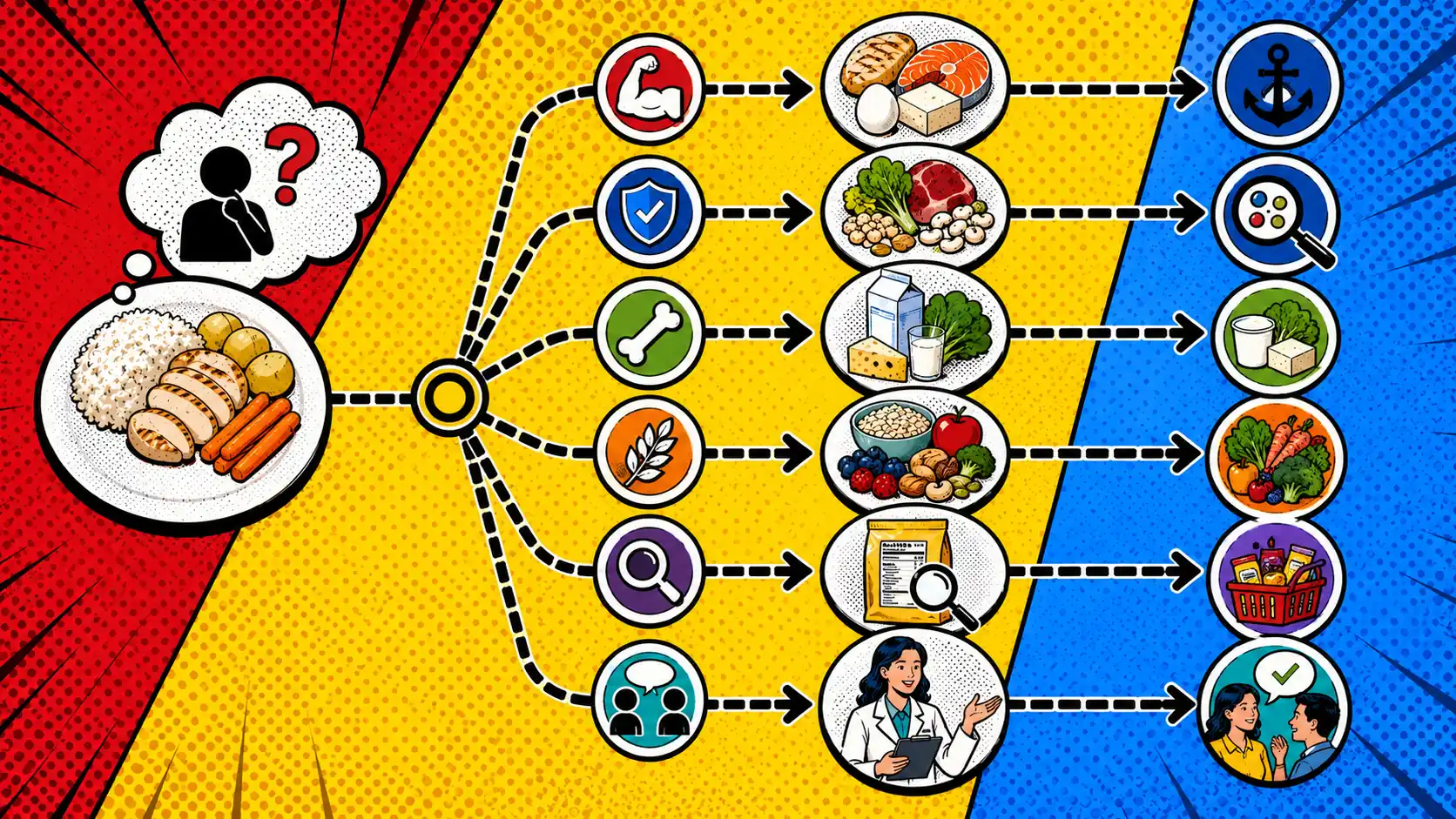
Download: Restrictive Gut Diet Adequacy Audit and Protein and Mineral Anchor Sheet
Fiber diversity is not only a microbiome topic. It is also a diet-quality topic. If most fruits, vegetables, legumes, whole grains, nuts, and seeds disappear, the diet may become easier to tolerate but harder to maintain.
That does not mean you should jump from a low-fiber baseline to a giant bean bowl. NIDDK advises adding fiber gradually 9. Use types of fiber by symptom fit when you need a gentler route. Use fiber diversity and microbiome resilience when you are ready to think beyond one safe food at a time.
If healthy foods keep making you bloated, do not turn that into proof that all healthy foods are wrong for you. Use why healthy foods still cause bloating to sort fiber load, FODMAP stacking, lactose, constipation, meal size, and product triggers.
If the restriction pattern started as an anti-inflammatory, Mediterranean-style, or "clean eating" reset, use when anti-inflammatory eating worsens IBS symptoms before the plan becomes too narrow to protect symptom control and diet quality.
Get help sooner when:
If eating-disorder history, food fear, or ARFID-like restriction is part of the pattern, use the low-FODMAP restriction-risk boundary before adding more food rules.
You do not need to wait until everything is falling apart. A dietitian can help translate symptom limits into a more complete plan. A clinician can decide when labs, evaluation, or medical treatment matter.
A quieter diet is useful. A diet that stays too small for too long needs a review.
Start with anchors: protein, calcium, iron and zinc sources, magnesium-rich foods, and fiber diversity. Test foods in controlled ways. Use products only when the label makes sense. Bring the pattern to a professional when restriction is prolonged, medically complex, or anxiety-driven.
If dairy, lactose-free milk, or plant milks are part of the calcium and protein question, use Dairy, Lactose, and Plant Milks to compare symptom fit with fortification, protein, and label quality.
Symptom control and nutrient adequacy are not enemies. The mature plan protects both.
Xam Riche is a gut health solopreneur and founder of YourFitNature, dedicated to helping people navigate digestive wellness through evidence-based information and personal experience. After years of struggling with IBS and bloating, Xam discovered the transformative power of the low FODMAP diet and now shares practical, science-backed guidance to help others find relief. While not a medical professional, Xam combines extensive research with lived experience to create accessible, empowering resources for the gut health community. Learn more about our mission
As an affiliate, we may earn from qualifying purchases.