 By • Published on May 8, 2026 • 7 min read • 4,851 views
This article is for informational and educational purposes only and does not constitute medical advice. Always consult with a qualified healthcare professional before using symptom information to make diagnosis or treatment decisions.
Dairy, lactose, and plant milks often get collapsed into one messy question: "Should I cut dairy?" That question is too blunt for a symptom-prone gut. One person may react to lactose. Another may tolerate hard cheese but not a large milkshake. A third may switch to oat milk or almond milk and feel worse because the product contains added fiber, sweeteners, or not enough protein to replace the meal role it removed.
The goal is not to defend dairy or promote plant milks. The goal is to give you decision criteria: symptom fit, lactose fit, label fit, protein, calcium, vitamin D, and whether the swap keeps your diet workable.
That distinction matters because restrictive gut diets can quietly remove calcium, vitamin D, protein, and reliable meal anchors. If dairy, soy, fortified plant milks, or yogurt-like products disappear without a replacement, the diet may get calmer and less adequate at the same time. Use this page with nutrient gaps on a restrictive gut diet when the bigger question is whether symptom control has made the diet too small.
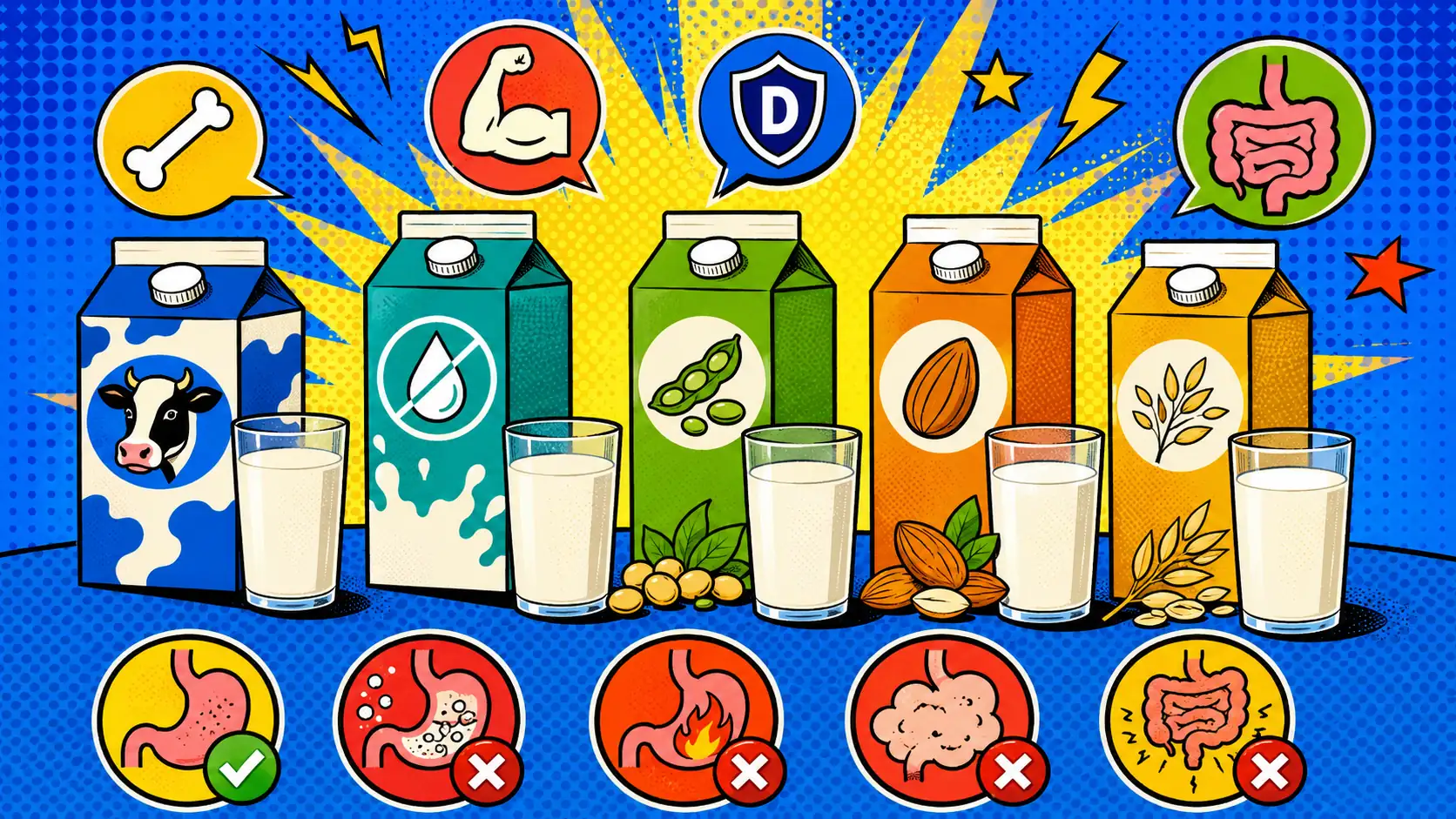
"Dairy bothers me" can mean several different things. It might mean lactose intolerance. It might mean a high-fat creamy meal worsens reflux or fullness. It might mean a large portion was tested during a stressful or constipated day. It might mean the issue is not lactose at all.
NIDDK advises people with lactose intolerance to work with a doctor or dietitian so symptoms are managed while nutrients are protected. NIDDK also notes that many people with lactose intolerance can tolerate some lactose, and that avoiding all milk and milk products may reduce calcium and vitamin D intake 1.
That is the key: lactose intolerance is not the same as milk allergy, and lactose reduction is not the same as removing every dairy-adjacent food. If allergy-type symptoms are possible, such as hives, wheezing, swelling, or throat symptoms, stop treating this as a lactose test and seek medical guidance.
If lactose is the likely issue, lactose-free dairy can be a lower-disruption test than removing the entire category. It keeps the question narrow: "Does lowering lactose change my symptoms?" rather than "Do I need to avoid every dairy food?"
NIDDK lists several practical lactose strategies: smaller amounts with meals, adding milk products gradually, trying yogurt or hard cheeses that are lower in lactose, and using lactase products when appropriate 2. Those options give a more nuanced path than all-or-nothing restriction.
Use the same serving size and meal context when you compare regular milk, lactose-free milk, yogurt, hard cheese, or a plant milk. If the symptom pattern changes only when lactose changes, you have useful information. If symptoms track more with fat load, meal size, timing, or product additives, widen the audit.
Plant milks are not interchangeable. Monash's FODMAP guidance treats milk alternatives as ingredient- and serving-specific, and notes that soy milk made from soy protein can differ from soy milk made from whole soybeans 3. Monash also emphasizes checking calcium fortification when using dairy alternatives 4.
FDA makes the same nutrition point from a label perspective: plant-based milk alternatives can differ from dairy milk and from each other, so consumers should check nutrients such as protein, calcium, vitamin D, and added sugars 5.
Use this quick scan before you decide what to test:
| Option | Symptom question | Nutrition question | Label question |
|---|---|---|---|
| Lactose-free dairy milk | Does lactose reduction change symptoms? | Protein, calcium, and vitamin D are often preserved | Check added sugar if flavored |
| Yogurt or hard cheese | Does lower lactose fit better? | Can contribute calcium and protein | Check portion and additives |
| Soy-protein milk | Does soy fit your gut? | Often stronger protein than many plant milks | Check fortification and base type |
| Almond milk | Is the serving tolerated? | Often low protein | Check calcium fortification |
| Oat milk | Does the serving or formulation bloat you? | Often modest protein | Check added fibers, gums, and sugar |
| Rice or coconut milk | Does the texture or serving fit? | Often low protein | Check fortification and sugar |
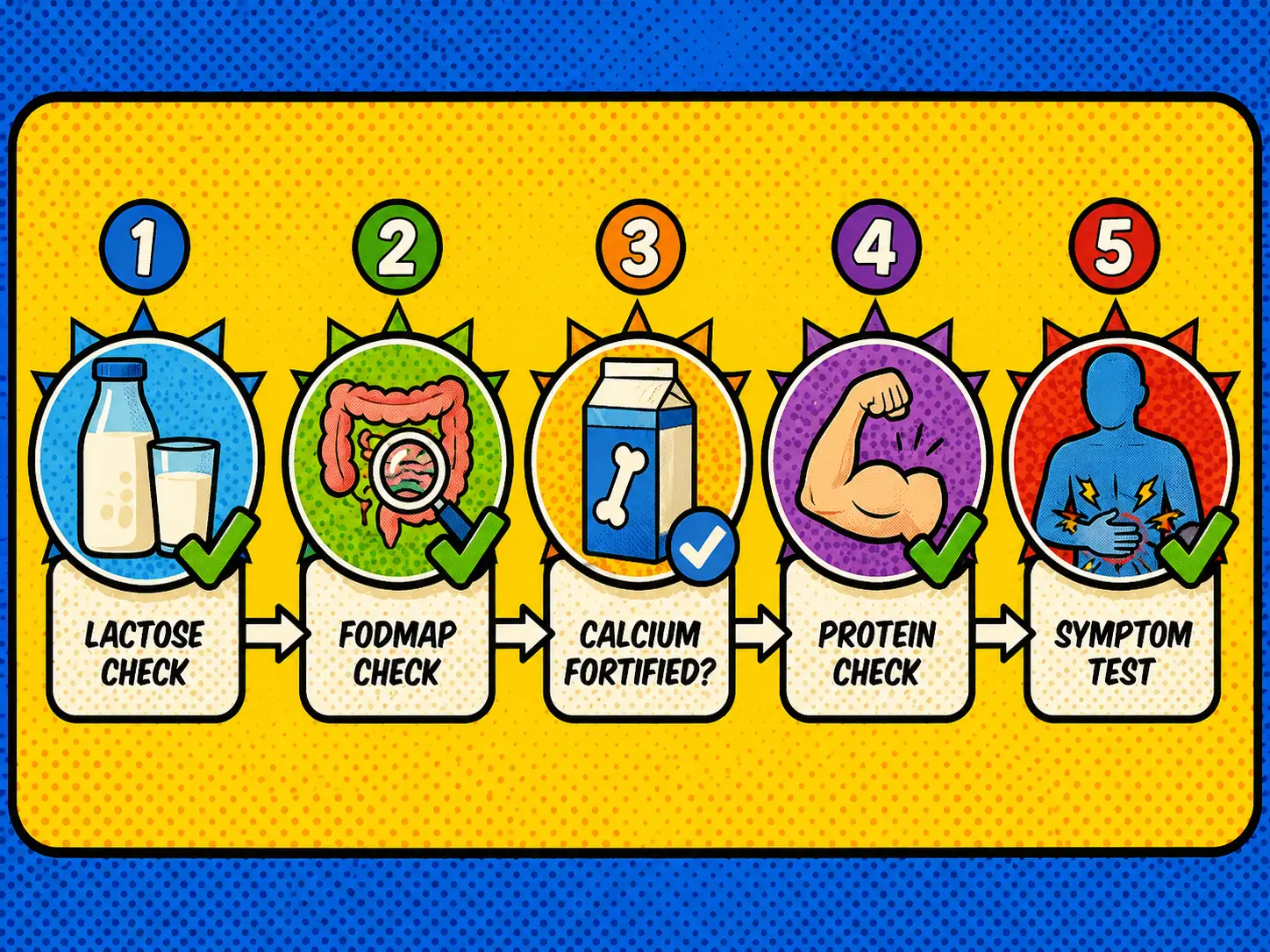
A milk choice has two jobs. It needs to fit your gut well enough to use, and it needs to cover the nutrition role you expect it to cover. Those are separate questions.
A low-calorie almond drink may be easy to sip but may not replace the protein or calcium contribution of dairy or fortified soy milk. A lactose-free dairy milk may preserve protein, calcium, and vitamin D, but may not fit someone with a separate allergy concern. A plant milk may be fine for coffee but not enough as a breakfast protein anchor.
For vegetarian or plant-forward readers, use the low-FODMAP vegetarian protein guide when milk, soy milk, tofu, tempeh, eggs, dairy, legumes, or protein powders are doing real work in the diet. For product-level clues such as inulin, chicory root, sugar alcohols, or added fiber blends, route to hidden FODMAPs in products.
Do not test five products at once. Pick one comparison and keep the meal stable.
Download: Dairy and Plant Milk Fit Checklist
If symptoms appear after "healthy" swaps, the issue may be the product format rather than the health value of the food. See why healthy foods can still cause bloating for that broader pattern.
Ask for clinician or dietitian support if restriction keeps expanding, calcium or protein sources are disappearing, symptoms are severe, weight is changing unintentionally, or you suspect allergy rather than lactose intolerance.
Download: Calcium and Protein Milk Alternative Map
| If this is the main question | Best next read |
|---|---|
| Calcium, protein, or mineral adequacy is the bigger worry | Nutrient gaps on a restrictive gut diet |
| Vegetarian protein anchors are getting narrow | Low-FODMAP vegetarian protein guide |
| Protein powders, shakes, or fortified drink mixes are the confusing variable | Protein powder and IBS |
| The label includes added fibers, sweeteners, or confusing ingredients | Hidden FODMAPs in products |
| Lactose is the specific problem and you need to inspect a lactase format | Current Lactaid Fast Act product details |
| Healthy swaps keep causing bloating | Why healthy foods still cause bloating |
| Plant-forward eating is the wider pattern | Plant-based eating and gut symptoms |
The best milk choice is not the most virtuous carton. It is the option that fits your symptoms, covers its nutrition job, and keeps your diet from getting smaller without a reason.
Xam Riche is a gut health solopreneur and founder of YourFitNature, dedicated to helping people navigate digestive wellness through evidence-based information and personal experience. After years of struggling with IBS and bloating, Xam discovered the transformative power of the low FODMAP diet and now shares practical, science-backed guidance to help others find relief. While not a medical professional, Xam combines extensive research with lived experience to create accessible, empowering resources for the gut health community. Learn more about our mission
As an affiliate, we may earn from qualifying purchases.
Choose a focused guide for what you are noticing or deciding next.