 By • Published on May 5, 2026 • 13 min read • 4,124 views
This article is for informational and educational purposes only and does not constitute medical advice. Always consult with a registered dietitian, gastroenterologist, or other qualified healthcare professional before making major diet changes, especially if IBS, celiac disease, inflammatory bowel disease, severe bloating, unexplained weight loss, persistent diarrhea, or food restriction is part of the picture.
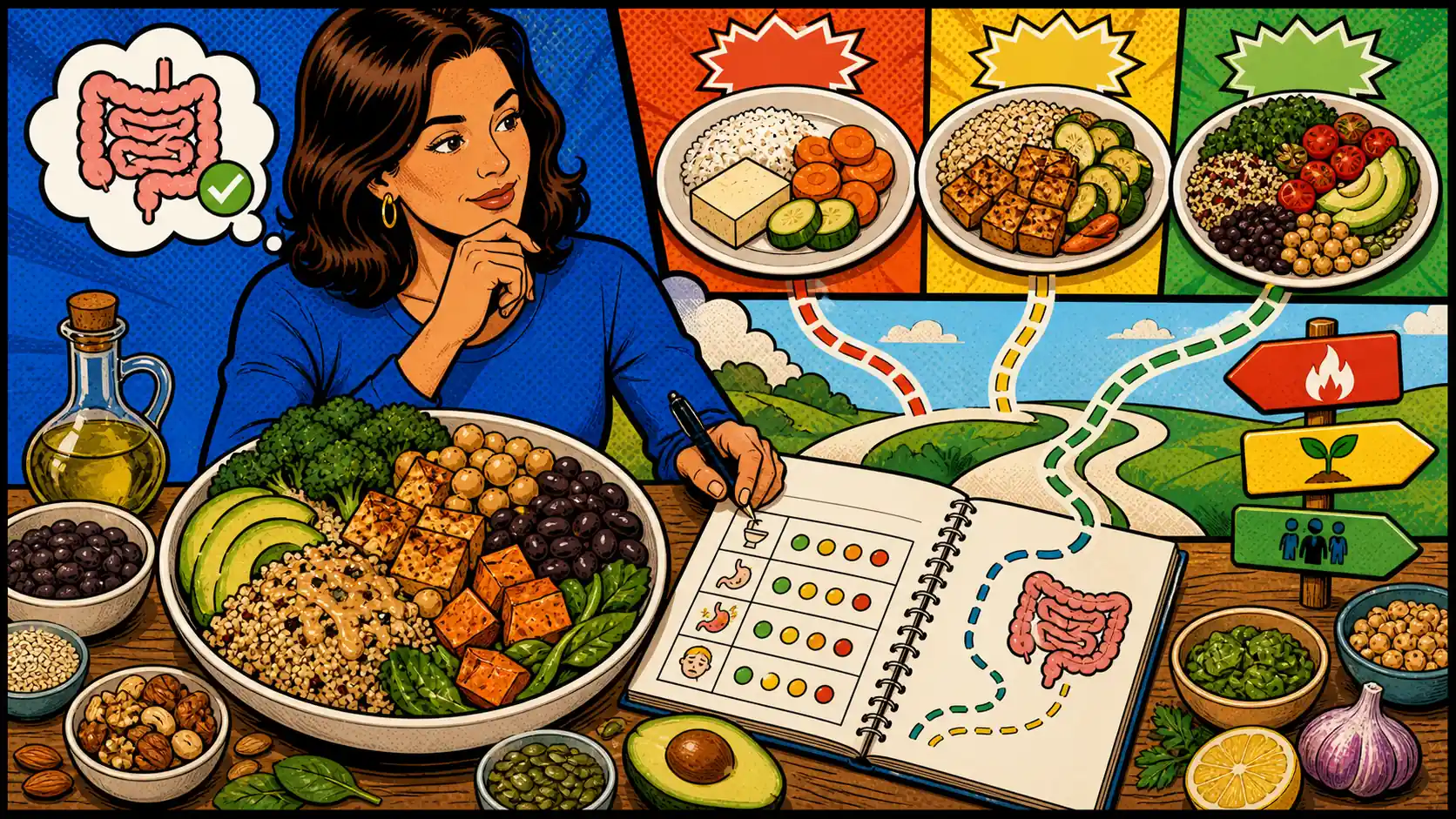
You tried to eat more plant-based because it sounded like the responsible gut-health move. More beans. More lentils. More salads. More oats, seeds, avocado, tofu bowls, nut sauces, whole grains, fermented vegetables, smoothies, or meat alternatives. Then your abdomen felt tighter, your stool changed, or a meal that looked perfect on paper felt heavy for hours. That does not mean plant-based eating is wrong for you. It means the pattern needs a gut-state map.
Short answer: plant-based eating can support a healthy long-term food pattern, but symptom fit depends on serving size, fiber style, FODMAP load, food form, plant-fat amount, bowel pattern, and whether you are in a flare. A plant-based food can be good for the long game and too loud today.
This page is for you if plant-based or plant-forward eating sounds right in principle, but beans, grains, raw vegetables, nuts, seeds, avocado, soy foods, or packaged vegan products keep changing your bloating, gas, constipation, urgency, reflux, or fullness.
Use a different page first if your main question is specifically grains, fermented foods, vegetarian low-FODMAP protein, or broad healthy-food bloating. Those fit whole grains, plant foods, and gut tolerance, fermented foods and gut health, low-FODMAP vegetarian protein, or why healthy foods still make you bloated.
The best plant-based pattern changes with the gut state.
If your gut is stable, the long-term job is usually variety: vegetables, fruits, whole grains, legumes if tolerated, nuts, seeds, olives, avocado, and enough protein to keep meals satisfying. Current U.S. dietary guidance emphasizes whole, minimally processed foods, vegetables and fruits, whole grains, protein from animal and plant sources, and healthy fats from foods such as nuts, seeds, olives, and avocados 1.
If your gut is bloating-prone, the first job is not maximum plant diversity. It is making the meal readable. That means reducing stacked fermentable foods, using cooked textures, lowering portions, and separating beans from other likely triggers.
If constipation is the main issue, plant foods may help, but the fiber style and speed matter. NICE recommends reviewing fiber intake in IBS, adjusting it while monitoring symptoms, and using soluble options such as ispaghula or foods high in soluble fiber when fiber is increased 2.
If you are in an IBS flare, a simpler plant-based plate may be more useful than a perfect-looking one. Low-FODMAP or single-food avoidance work can help some people, but NICE says that kind of dietary management should be given by a healthcare professional with dietary-management expertise 3.
So the question is not:
Is plant-based eating good or bad for the gut?
The better question is:
Which plant-based version fits this gut, this week, in this serving size?
"Plant-based" can mean several different diets.
It might mean a vegan diet with no animal foods. It might mean vegetarian meals with eggs or dairy. It might mean a Mediterranean-style pattern with vegetables, beans, whole grains, fish, olive oil, nuts, and yogurt. It might mean a plant-forward diet where most meals are built around plants but not every food choice is vegan. It might also mean a freezer full of meat alternatives, protein bars, vegan cheeses, and high-fiber packaged products.
Those patterns do not behave the same in a sensitive gut.
A tofu, rice, cooked carrot, spinach, and olive-oil bowl is different from a large chickpea, raw kale, onion, wheatberry, avocado, cashew dressing, and kombucha meal. Both can look plant-based. Only one may be a readable test for a gut that is already noisy.
That is why this article does not treat plant-based eating as an identity test. It treats it as a meal pattern with levers.
The levers are:
Change the lever and the same general diet can feel very different.
NIDDK explains that some carbohydrates are not fully digested in the stomach and small intestine. When they reach the large intestine, bacteria can break them down and create gas 4. That is normal physiology, not a moral failure of beans.
But the dose can overwhelm comfort.
Common plant-based symptom triggers include:
NIDDK also notes that some people have more gas symptoms with too much fiber, and others notice more symptoms with high-fat foods 5. That is a useful clue for plant-based eating because "healthy" plant-based meals often stack fiber and fat together.
For example:
None of those foods has to be permanently banned. The point is simpler: if you test all of them at once, you cannot tell what helped and what hurt.
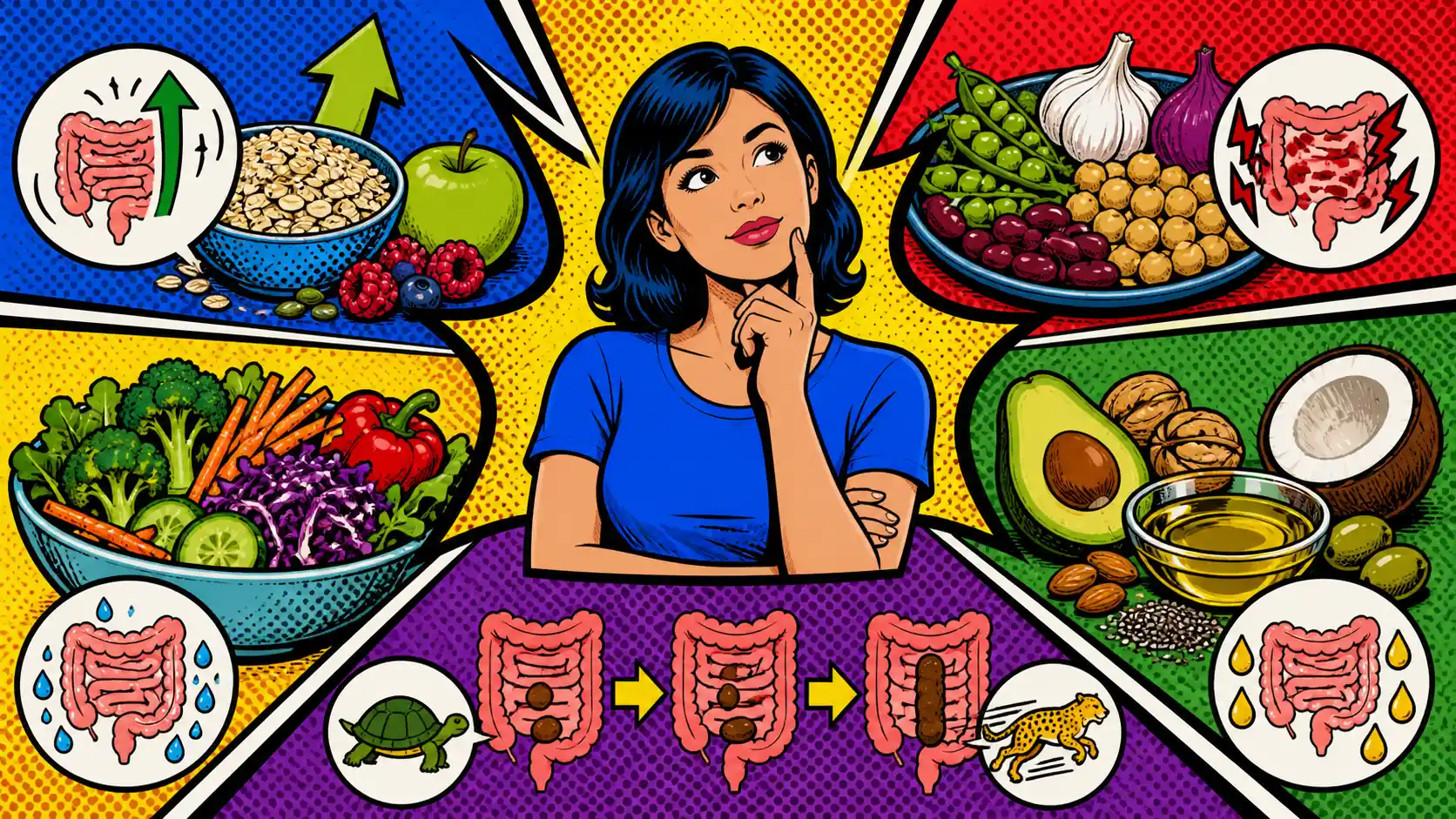
Plant-based fats deserve their own lane because they can be both useful and confusing.
Nuts, seeds, olives, avocado, and plant oils can belong in a healthy plant-forward pattern. A review on plant-based fats and gut microbiota reports that nuts, vegetable oils, and Mediterranean-style patterns rich in unsaturated fats and phytochemicals have been associated with microbiota diversity and beneficial taxa in some studies 6.
That is interesting. It is not the same as saying avocado will calm bloating tonight.
Microbiome relevance and symptom tolerance are different questions. A spoon of olive oil in a meal is not the same as a bowl with avocado, tahini, nuts, seeds, fried tofu, and a creamy dressing. For some people, a higher-fat meal can feel slower, heavier, or more reflux-prone even when the fat source is a nutrient-dense food.
Use plant fats as a lever:
The practical rule: keep fat quality and fat amount separate. You can choose better fats and still need a smaller serving in a sensitive week.
If plant-forward meals are mostly noisy when avocado, nuts, oils, seeds, or creamy dressings are involved, use avocado, nuts, and plant fats before cutting broader plant variety. If the plan was explicitly anti-inflammatory or Mediterranean-style and many changes happened at once, use when anti-inflammatory eating worsens IBS symptoms to translate the pattern without abandoning plant foods.
Use this as a route map, not a diagnosis.
Use a simpler plate.
That might look like rice or potatoes, firm tofu or eggs if you use them, cooked carrots or zucchini, spinach, a modest amount of olive oil, and one seasoning pattern you already tolerate.
The goal is lower symptom noise. It is not to prove your gut can handle every plant food while it is already irritated.
Avoid turning flare simplification into a permanent identity. After symptoms settle, start rebuilding.
Start with fermentable load.
Look at beans, lentils, chickpeas, onion, garlic, wheat, large fruit servings, cruciferous vegetables, sweeteners ending in "-ol," and added fibers. Also look at stacking: several moderate foods can become one loud meal.
Use FODMAP stacking when the problem is not one food but the total bowl.
Do not solve constipation by dumping every high-fiber plant food into the same day.
NICE recommends reviewing fiber intake in IBS and monitoring symptoms when it is adjusted 7. The British Society of Gastroenterology guideline also highlights soluble fiber such as ispaghula for global IBS symptoms and abdominal pain, while warning that insoluble fiber such as wheat bran may worsen symptoms for some people 8.
Use types of fiber by symptom fit if the word "fiber" is doing too much work.
Plant-based low-FODMAP eating is possible, but it needs structure.
Monash notes that firm tofu, tempeh, and soy milk made from soy protein can be useful lower-FODMAP vegan protein options 9. Monash also explains that drained firm tofu differs from silken tofu because processing affects the FODMAP profile 10.
That is why the meal anchor matters. If you remove meat and then rely only on whole beans, lentils, large salads, and high-fiber products during restriction, the diet can become both harder and noisier.
Use the low-FODMAP vegetarian protein guide when protein is the bottleneck.
If plant-based restriction has narrowed the whole pattern, use nutrient gaps on a restrictive gut diet to check protein, minerals, calcium, and fiber diversity without turning the next step into a supplement list.
Plant-based does not automatically mean light.
A meal can be vegan and still be very large, very high in fat, high in raw volume, spicy, acidic, carbonated, or eaten quickly. If the symptom is upper-GI heaviness, test meal size and fat concentration before blaming all fiber or all plants.
Try:
The first job is readable data.
Change one variable for two or three similar meals before escalating. If you add beans, switch grains, double vegetables, add avocado, use a new protein powder, and drink kombucha in the same week, you have created a guessing game.
Use this sequence:
[!TIP] Download: Plant-Based Gut Fit Checklist and Plant-Based Meal Test Tracker before changing several plant foods at once.
Then build slowly:
One change. One signal.
That is how a plant-based pattern becomes personal instead of chaotic.
Pause self-experimenting and get medical support if you have:
Also get support if you are trying to combine vegan eating, low FODMAP, allergies, eating-disorder recovery, pregnancy, inflammatory bowel disease, celiac disease, kidney disease, diabetes, or major medication changes. That is not a willpower problem. It is a complexity problem.
Plant-based eating is not automatically gentle. It is not automatically harmful either.
It is a pattern with adjustable parts.
If your gut is stable, plant variety may be a good long-term direction. If your gut is flaring, the right move may be a smaller, cooked, lower-stack plate. If protein is hard, use dependable anchors instead of making every meal all beans. If fullness is the problem, test fat concentration and meal size. If constipation is the problem, think about fiber type and pace. If you are doing low FODMAP, make it structured and temporary, then reintroduce toward personalization.
For the next step, use whole grains, plant foods, and gut tolerance if grains and plant variety are the sticking point. Use fermented foods and gut health if fermented foods are the confusing part. Use plant polyphenol foods if you want a food-first microbiome route. Use low-FODMAP reintroduction when the real goal is rebuilding tolerance after restriction.
Plant-based eating works best when it stops being a slogan and becomes a testable pattern: this gut, this week, this meal, this dose.
Medical note: This article is educational and is not a diagnosis or treatment plan. If symptoms are severe, persistent, new, or associated with red flags, work with a qualified healthcare professional.
Xam Riche is a gut health solopreneur and founder of YourFitNature, dedicated to helping people navigate digestive wellness through evidence-based information and personal experience. After years of struggling with IBS and bloating, Xam discovered the transformative power of the low FODMAP diet and now shares practical, science-backed guidance to help others find relief. While not a medical professional, Xam combines extensive research with lived experience to create accessible, empowering resources for the gut health community. Learn more about our mission
As an affiliate, we may earn from qualifying purchases.