 By • Published on May 8, 2026 • 6 min read • 4,642 views
This article is for informational and educational purposes only and does not constitute medical advice. Always consult with a qualified healthcare professional before using symptom information to make diagnosis or treatment decisions.
Avocado, nuts, seeds, olive oil, tahini, and nut butters can all belong in a good diet. They can also make a meal feel heavy, refluxy, bloating-prone, or urgent for some symptom-prone readers.
That does not mean plant fats are "bad." It means the question is too broad. The useful question is: which lever changed the symptom signal? Was it the avocado portion, the nut butter, the total fat load, the meal size, the timing, or the bowel pattern that was already active?
Use this guide as a focused follow-up to fat, sugar alcohols, and post-meal symptoms. If the wider pattern is plant-rich eating, keep plant-based eating and gut symptoms open. This page stays narrower: avocado, nuts, oils, seeds, and rich plant-forward meals.
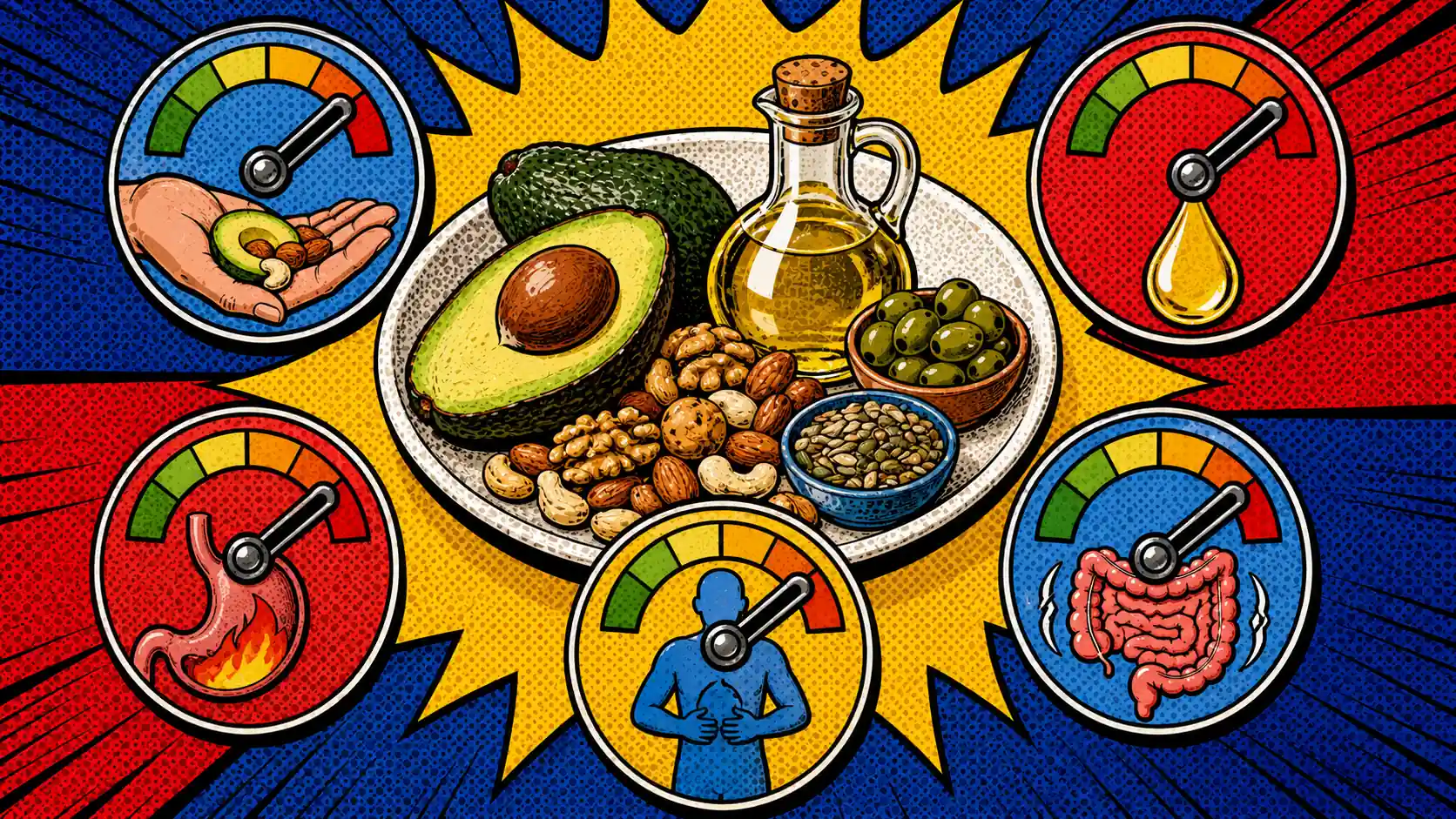
"Healthy fat" is a nutrition phrase. It is not a symptom diagnosis.
A spoon of olive oil, half a smoothie with avocado, a bowl with tahini dressing, a trail mix snack, a nut-butter breakfast, and a restaurant meal cooked in a lot of oil may all include plant fats. But they differ in serving size, fiber, FODMAP load, meal volume, speed of eating, and timing.
NIDDK notes that some people have more gas symptoms when they eat too much fiber and that others may have more symptoms with high-fat foods, which can increase bloating 1. That is why the first move is not a ban. The first move is sorting.
Ask:
Avocado is the classic "healthy food, confusing gut response" example. It is creamy, nutrient-dense, and easy to add generously. It also has FODMAP nuance.
Monash explains that avocado guidance changed after retesting and that the polyol identified in avocado is expected to behave similarly to sorbitol and mannitol in the gut, so serving guidance remains cautious 2.
That means the most useful test is usually not "never eat avocado." It is:
If avocado only bothers you in a giant bowl with nuts, oil, beans, raw greens, and coffee, the avocado may not be the whole story.
Nuts and seeds can be useful. They can also become concentrated quickly. A small sprinkle is different from a handful. A teaspoon of nut butter is different from a thick smoothie plus nut butter plus chia plus avocado.
For low-FODMAP work, detailed serving information belongs in the Monash app, because food tolerance is portion-sensitive and product-specific 3. For symptom tracking, the practical question is whether the food is acting as:
If the trigger is a packaged bar, powder, flavored nut, sweetened spread, or "gut-friendly" product, check hidden FODMAPs in products before blaming nuts.
Plant-fat reactions are easier to read when you start with the symptom.
| Main symptom | More useful next lens |
|---|---|
| Burning, sour taste, regurgitation | Reflux-like symptoms |
| Early fullness, nausea, upper-stomach pressure | Functional dyspepsia |
| Lower-belly gas or distension | FODMAP load, fiber jump, meal size |
| Urgent loose stool after rich meals | Fat load, caffeine, polyols, broader IBS-D context |
| Symptoms mainly at restaurants | Low-FODMAP eating out |
NIDDK reflux guidance supports individualized avoidance of foods and drinks that worsen GERD symptoms and meal-timing changes when reflux is present 4. That is different from saying every plant fat causes reflux.
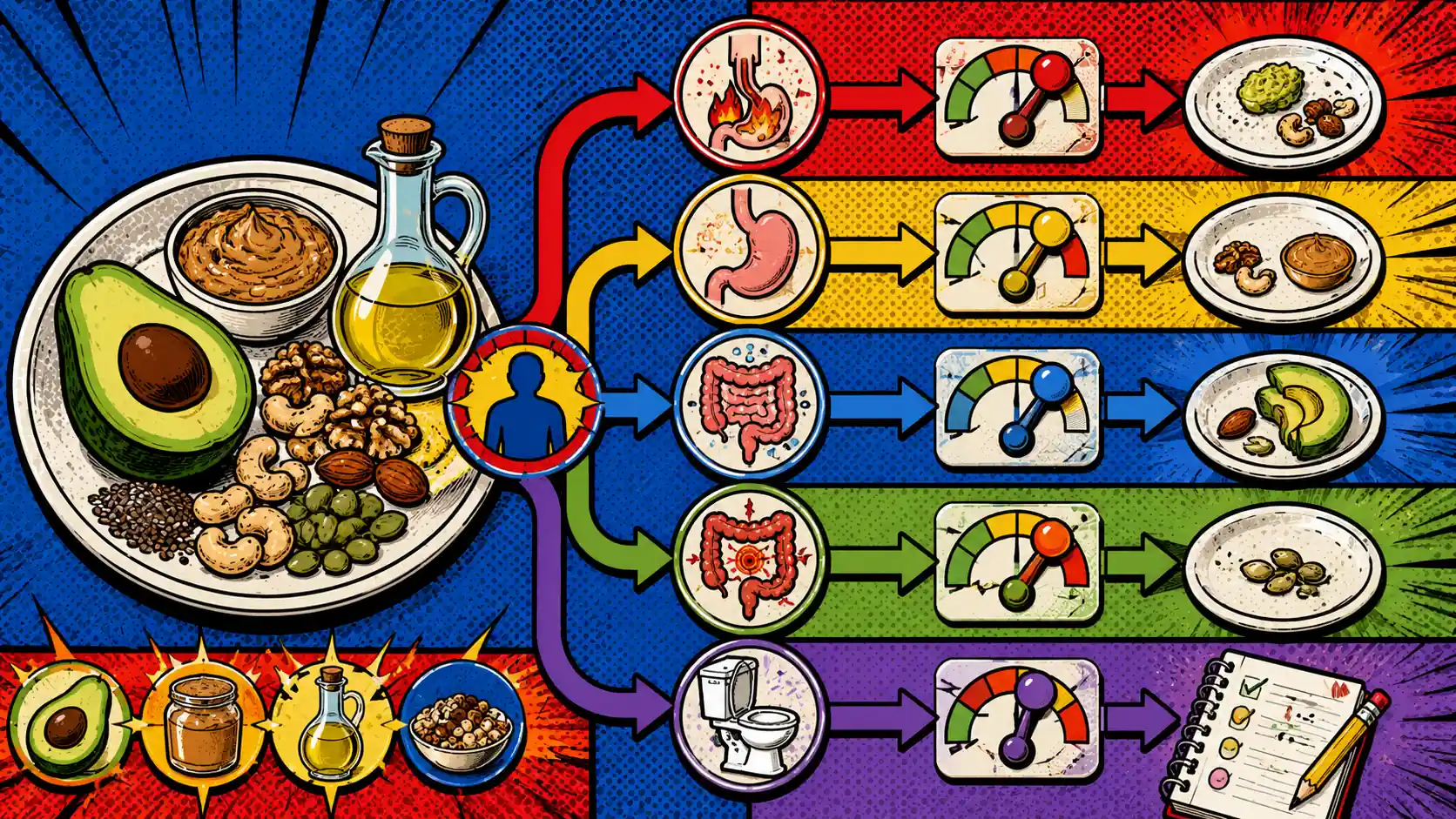
Download: Plant-Fat Symptom Fit Tracker and Avocado, Nuts, and Oils Portion Audit
Use one week to make the signal readable:
This keeps the goal realistic: not proving a food is good or bad, but learning how much, how often, and in what context it fits.
| If this is the issue | Best next read |
|---|---|
| Rich meals or post-meal symptoms are broad | Fat, sugar alcohols, and post-meal symptoms |
| The whole pattern is plant-forward | Plant-based eating and gut symptoms |
| Burning or regurgitation dominates | Reflux-like symptoms |
| Early fullness dominates | Functional dyspepsia |
| Restaurant meals are the main problem | Low-FODMAP eating out |
Avocado, nuts, seeds, and oils do not need to become fear foods. They need a better test.
When symptoms follow rich plant-forward meals, separate the levers: portion, fat load, FODMAP nuance, product ingredients, meal size, timing, and the dominant symptom. The answer may be a smaller serving, a simpler meal, a different timing pattern, or a different next-read route.
Xam Riche is a gut health solopreneur and founder of YourFitNature, dedicated to helping people navigate digestive wellness through evidence-based information and personal experience. After years of struggling with IBS and bloating, Xam discovered the transformative power of the low FODMAP diet and now shares practical, science-backed guidance to help others find relief. While not a medical professional, Xam combines extensive research with lived experience to create accessible, empowering resources for the gut health community. Learn more about our mission
As an affiliate, we may earn from qualifying purchases.