 By • Published on January 17, 2026 • 13 min read • 3,183 views
This article is for informational and educational purposes only and does not constitute medical advice. Always consult with a registered dietitian, gastroenterologist, or other qualified medical professional before making significant dietary changes.
Dining out with IBS often feels like navigating a dietary minefield, turning what should be a joyful social occasion into a source of anxiety. This practical guide cuts through the confusion with restaurant-tested strategies, safe cuisine cheat sheets, and exact scripts for communicating with staff. Master the art of the 'menu audit' to confidently rejoin your friends at the table without compromising your digestive comfort.
Short answer: eating out on low FODMAP works better when you audit the menu early, choose simpler cuisines, use short ingredient scripts, and keep one backup plan ready before you sit down.
This page is for you if the hard part is restaurant meals, dinner invitations, or staff communication once you are away from your own kitchen.
Use a different page first if the harder part comes before or after the restaurant. Use the low-FODMAP travel guide for airports and hotel logistics, or the holiday survival guide for buffet-style social eating windows.
This page is explaining a restaurant-ordering problem:
This page is not mainly explaining:
If those sound closer, route to low-fodmap travel, holiday survival, or low FODMAP for beginners.
You know that specific pause when a friend suggests dinner? That split second where excitement should be, but instead, your brain starts calculating: Is there garlic in the sauce? Will I be bloated before the main course? Will I need to rush to the bathroom?
It's exhausting to manage a medical condition while trying to be a "fun" friend.
It is completely normal to feel this hesitation. Many people with IBS withdraw from social activities because symptom unpredictability changes how safe meals feel outside the home 1.
But here is the truth: You don't have to choose between your social life and your gut health.
The isolation is real, but so is the solution. With the right strategy, you can reclaim your seat at the table. This guide isn't just about what to avoid; it's about how to become a "menu detective" so you can order with confidence.
The battle is often won before you even leave the house. A little detective work upfront can lower your anxiety levels significantly.
"Low FODMAP dining out" starts with your smartphone. Most restaurants post their menus online. Look for places with:
A low FODMAP dining guide from The IBS Dietitian recommends reviewing menus online and calling ahead to ask about flexibility 2. This simple step lets you walk in with a plan, rather than panicking when the server is hovering with a notepad.
Not all cuisines are created equal when you have IBS. Think of this as putting on your "Ingredient Filter", as some places are naturally quieter while others are full of high-FODMAP noise.
Note on Italian and pizza: Gluten-free does not automatically mean low FODMAP. Restaurant pizza and pasta can still involve garlic, onion, sauces, and wheat-contact concerns, so simple ordering is usually safer than relying on one label alone.
If you can, try to dine slightly earlier than the peak rush. Kitchens are less slammed at 6:00 PM than 7:30 PM, meaning the chef has more mental bandwidth to pay attention to your "no garlic, no onion" request.
Also, give yourself permission to be anxious. Managing pre-meal anxiety is key, as stress itself triggers the gut-brain axis and can mimic food reaction symptoms.
Think of the server as your ally, not your adversary. Most staff want you to enjoy your meal; they just need clear instructions.
You don't need to explain the fermentation process of oligosaccharides. Frame your request as "food intolerances." This implies a medical need without requiring a biology lesson.
If you are not sure whether your pattern is really a food intolerance or part of a bigger IBS picture, review this comparison guide.
Script 1: The Basic Request
"Hi, I have food intolerances to garlic, onion, and wheat. Could you tell me if the [dish name] contains these?"
Script 2: The Modification Request
"Could I have the grilled salmon, but prepared without the marinade? Just olive oil, salt, and pepper would be great. And could I swap the asparagus for steamed broccoli?"
Script 3: The Substitution
"I see this comes with pasta. Is it possible to substitute that for plain rice or a baked potato?"
Script 4: The Sauce Check
"Is the salad dressing made in-house? If it has garlic or onion, could I just get oil and vinegar on the side instead?"
If sauce uncertainty keeps tripping you up, compare these restaurant risks with our guide to hidden sauce ingredients.
If the server seems unsure or says "I think so," purely out of guessing, politely ask: "Would you mind double-checking with the kitchen? I'd really appreciate it." In high-end restaurants, chefs are often happy to come out and discuss safe options for you.
We've got you covered with specific strategies for popular restaurant types.
| Cuisine | Safe Bets | Red Flags |
|---|---|---|
| Italian | Risotto, Grilled Fish, Polenta | Garlic Bread, Cream Sauces, Regular Pasta |
| Thai | Pad Thai (mod), Plain Rice, Stir-fry | Curry Paste, Pre-made Sauces |
| Japanese | Sashimi, Sushi (plain), Edamame | Tempura, Teriyaki, Miso Soup |
| Mexican | Corn Tortillas, Grilled Meat, Chips | Flour Tortillas, Refried Beans, Salsa |
| Steakhouse | Grilled Protein, Baked Potato, Salad | Seasoned Fries, Creamed Spinach, BBQ |
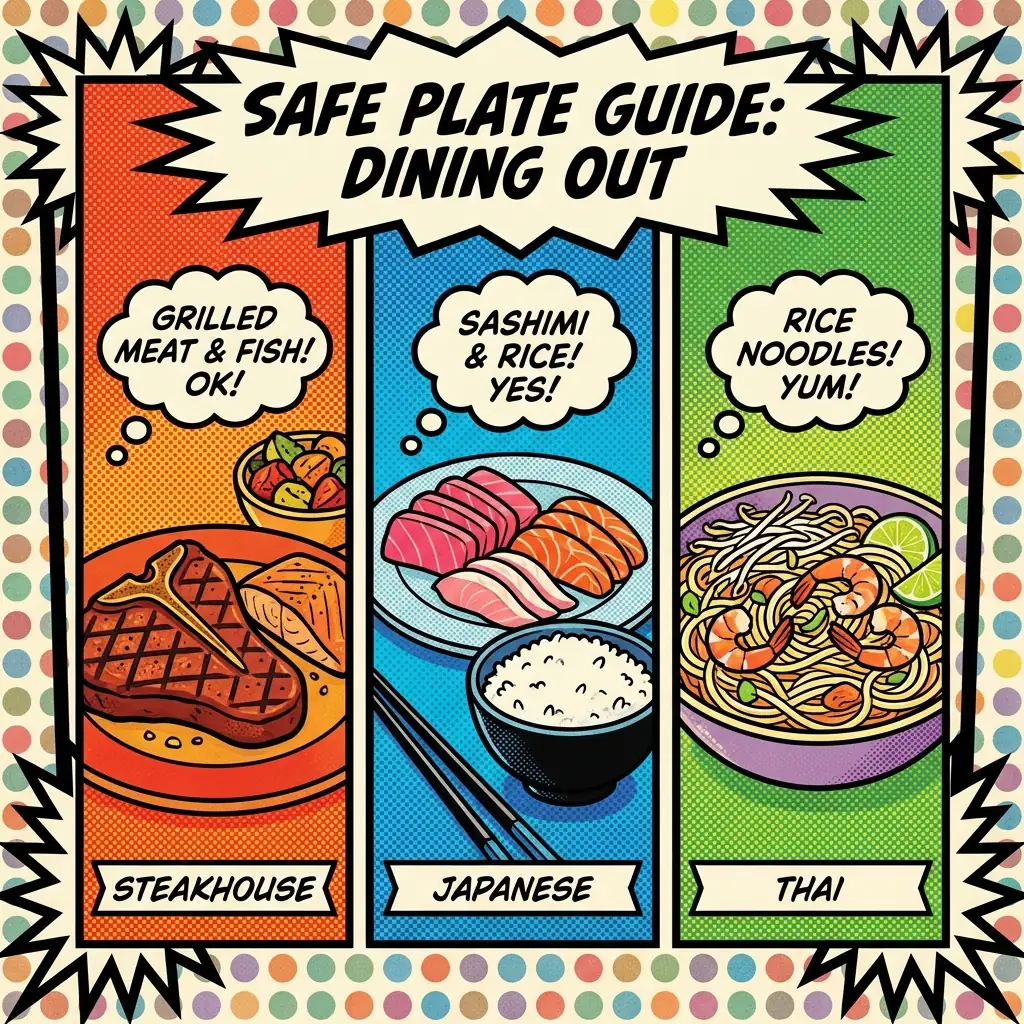
Thai is often a favorite because it uses rice noodles and fresh ingredients.
Japanese is fantastic for pure proteins.
Chinese can be tricky due to heavy garlic use.
Validation Pause: Does this feel like a lot to remember? Take a deep breath. You don't have to memorize this list. Just bookmark this page or download our cheat sheet below to keep on your phone.
One of the easiest places to eat low FODMAP.
Restaurants use buzzwords that sound delicious but spell trouble for IBS. Monash University lists common high-FODMAP ingredients like honey and high fructose corn syrup that often hide in these descriptions 3.
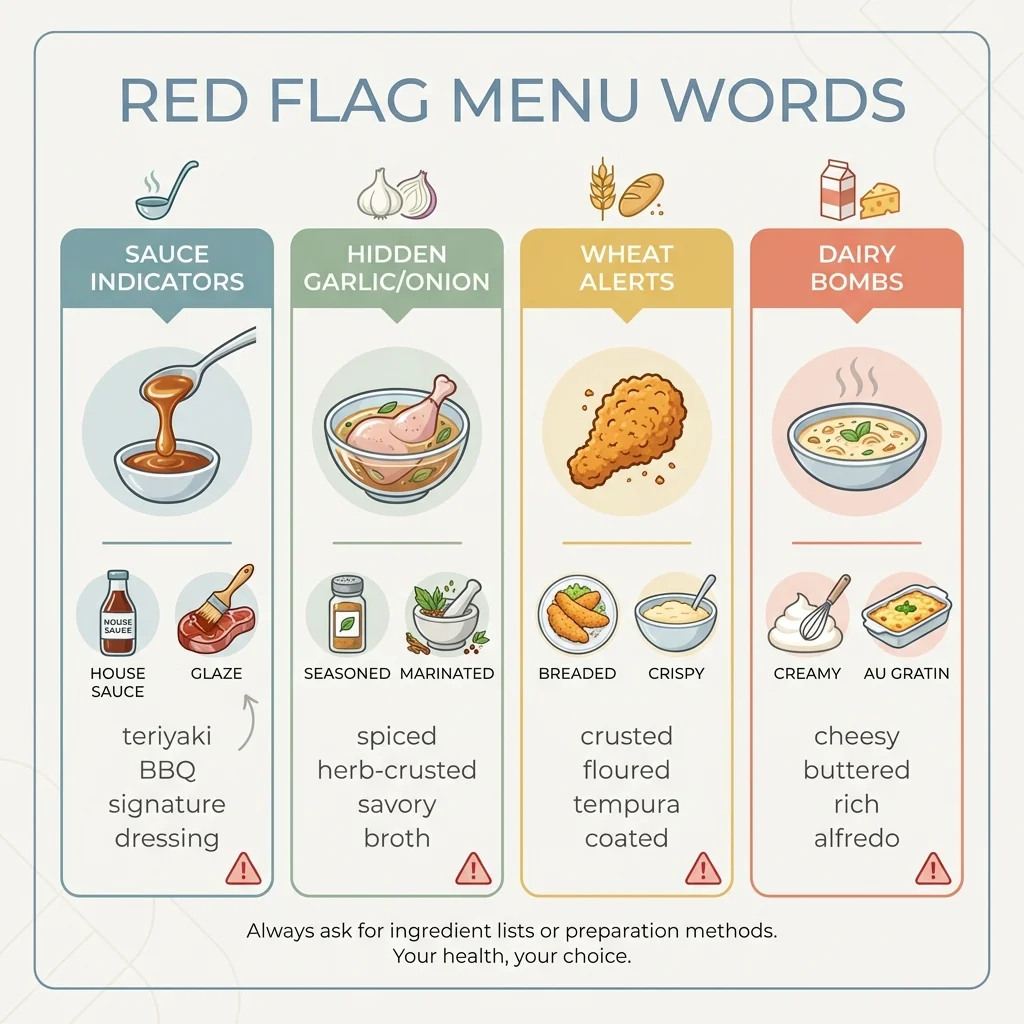
Create a mental checklist. If you see "Marinated Grilled Chicken," your alarm bell should ring: Ask about the marinade.
Reality check: You might do everything right, ask the questions, order the plain chicken, and still get a little bloated. That is not your fault. It is the nature of invisible ingredients.
Even with the best planning, mistakes happen. Maybe the kitchen slipped up, or a "safe" sauce had hidden onions. Think of this section as your safety net: you hopefully will not need it, but knowing it is there makes the meal easier to enjoy.
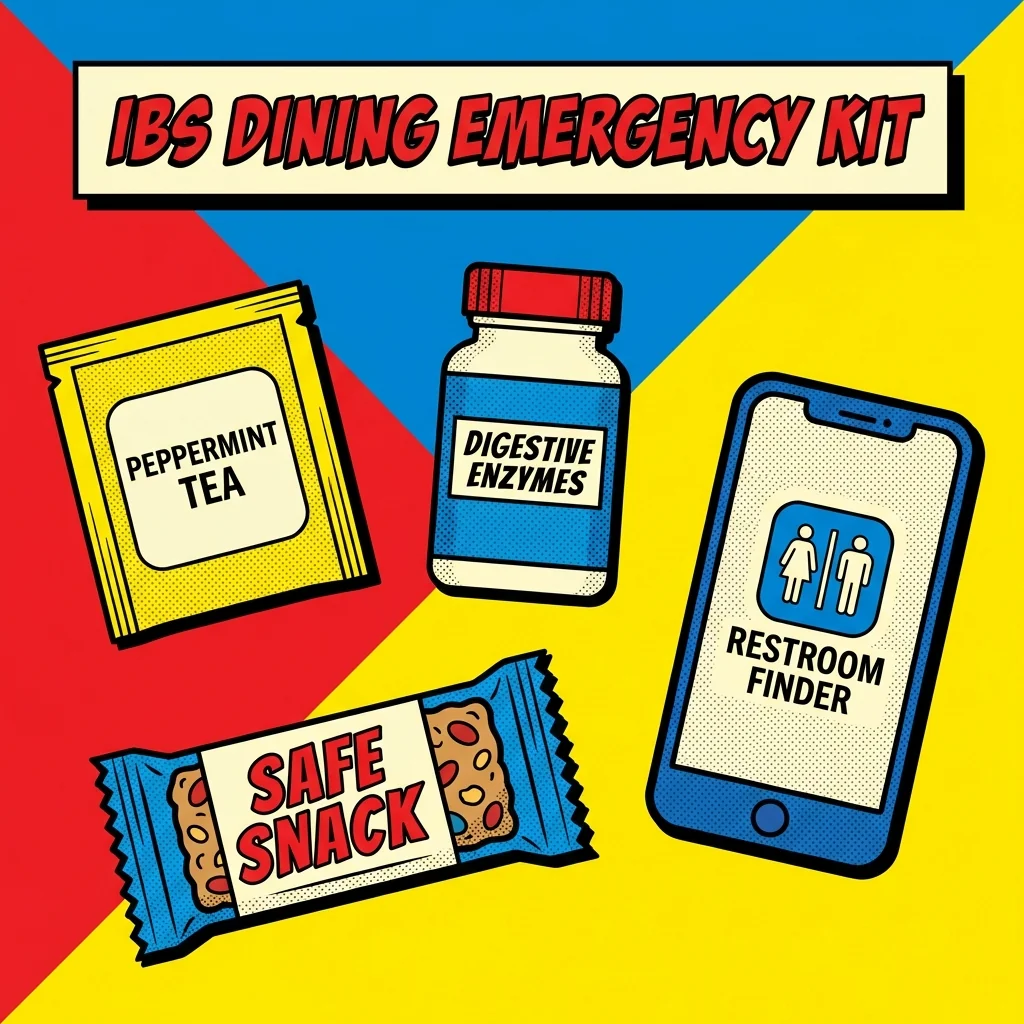
Don't panic. Stress worsens symptoms. If you realize you've eaten a trigger:
Tea can be soothing in the moment, but if you want the actual evidence behind capsules, see does peppermint oil actually help IBS.
If a little onion slips in, it is not a failure. It is useful data. The goal is not 100% restaurant perfection forever; it is a pattern you can repeat often enough to keep both symptom control and real life intact.
If every restaurant meal still feels unreadable despite careful ordering, move up to what to do when low FODMAP is not working instead of tightening the rules by reflex.
Dining out is a skill, just like cooking. The more you do it, the better you'll get at scanning menus and advocating for yourself.
For now, stick to your safe food lists and trust that you can handle this.
| Situation | Best next read |
|---|---|
| You have not picked the restaurant yet and need a decision route | Restaurant choice gut symptom decision guide |
| The dining problem is a college dining hall, campus cafe, shared bathroom, and class schedule | College dorm low-FODMAP and IBS flare plan |
| The choice is a meal kit or prepared meal, not a restaurant | Meal delivery kits and low-FODMAP labels |
| The meal is a wedding, date, family event, or high-pressure shared table | IBS social events, weddings, dates, and shared meals |
| You need the bigger beginner system behind restaurant decisions | Low FODMAP diet for beginners |
| Restaurant meals are part of a larger trip | Low FODMAP travel guide |
| Lactose is the specific restaurant variable and you need to inspect a lactase format | Current Lactaid Fast Act product details |
| Family meals or buffets are the harder social context | Low FODMAP holiday survival guide |
| Restaurant spending is the bigger problem | Low FODMAP on a budget |
| A personalized plan becomes noisy once meals get less controlled | Low-FODMAP personalization mistakes |
| Even careful restaurant ordering does not make the pattern readable | When low FODMAP does not work |
Dining out with IBS requires extra steps, but it should not require you to stay home. By researching beforehand, keeping your communication simple, and choosing safer cuisines, you can enjoy meals with friends again.
And when you are eating at home, a weekly low FODMAP meal prep system can prevent the midweek panic that sends you back to risky takeout.
For the stretch before you even reach the restaurant, use this low-FODMAP travel guide for airports, hotels, and road trips.
If the harder situation is not the restaurant but the family table, use this low-FODMAP holiday survival guide for shared dishes, buffets, and holiday food pressure.
Your action plan:
Free Download: Low FODMAP Restaurant Cheat Sheet A pocket-sized guide with safe ordering tips, red flag words, and server scripts.
Xam Riche is a gut health solopreneur and founder of YourFitNature, dedicated to helping people navigate digestive wellness through evidence-based information and personal experience. After years of struggling with IBS and bloating, Xam discovered the transformative power of the low FODMAP diet and now shares practical, science-backed guidance to help others find relief. While not a medical professional, Xam combines extensive research with lived experience to create accessible, empowering resources for the gut health community. Learn more about our mission
As an affiliate, we may earn from qualifying purchases.
Choose a focused guide for what you are noticing or deciding next.