 By • Published on January 7, 2026 • 11 min read • 1,430 views
This article is for informational and educational purposes only and does not constitute medical advice, diagnosis, or individualized nutrition counseling. Work with a registered dietitian, gastroenterologist, or other qualified healthcare professional before starting, extending, or intensifying a low-FODMAP elimination diet, especially if symptoms are severe, weight is changing, food restriction is increasing, or you have a medical condition.
Follow this 7-part series to learn everything you need to know to successfully start and complete the low-FODMAP diet for bloating relief.
You're reading: 7-Day Low FODMAP Meal Plan for Bloating Relief
Bloating can turn even healthy meals into hours of pressure, gas, and frustration. This 7-day low FODMAP meal plan maps out simple IBS-friendly breakfasts, lunches, dinners, and snacks, and it pairs safe portions with smart swaps so you can calm symptoms without guessing. Use quick tips to avoid FODMAP stacking, prep once, and track triggers, then start reintroduction with confidence.
Short answer: this page is the execution utility for the elimination phase. Use it when you already know the rules and want a repeatable 7-day structure for breakfast, lunch, dinner, and snacks.
This page is for you if your next question is: "What should I actually eat this week so the plan stays calm and readable?"
Use a different page first if you still need the general setup in Low FODMAP Diet for Beginners: How to Start, or if you need the grocery-building step in Low FODMAP Grocery List for Beginners.
Need more grab-and-go ideas between meals? Start with these low FODMAP snacks for busy days.
Do you ever feel like your stomach is a balloon ready to pop after a "healthy" meal? You're not alone. Chronic bloating is one of the most frustrating digestive symptoms, often leaving you feeling uncomfortable in your own skin, struggling to zip up your favorite jeans, and utterly confused about what you can actually eat.
Ironically, many foods we consider healthy—like apples, beans, and cauliflower—are often the biggest culprits. This is because they are high in FODMAPs, a group of fermentable carbohydrates that can wreak havoc on sensitive guts.
The good news? The Low FODMAP Diet has a 50-80% success rate in significantly reducing bloating and abdominal pain for those with Irritable Bowel Syndrome (IBS) and other functional gut disorders.
By the end of this article, you'll have a complete 7-day meal plan to start feeling like yourself again.
Before diving into your meal plan, it helps to understand why certain foods cause bloating in the first place.
FODMAPs are short-chain carbohydrates that are poorly absorbed in the small intestine, leading to water retention and gas production from bacterial fermentation. 1 2
For a complete breakdown of the science and studies behind this, read our deep-dive: What is the Low FODMAP Diet for Bloating? Understanding the Basics.
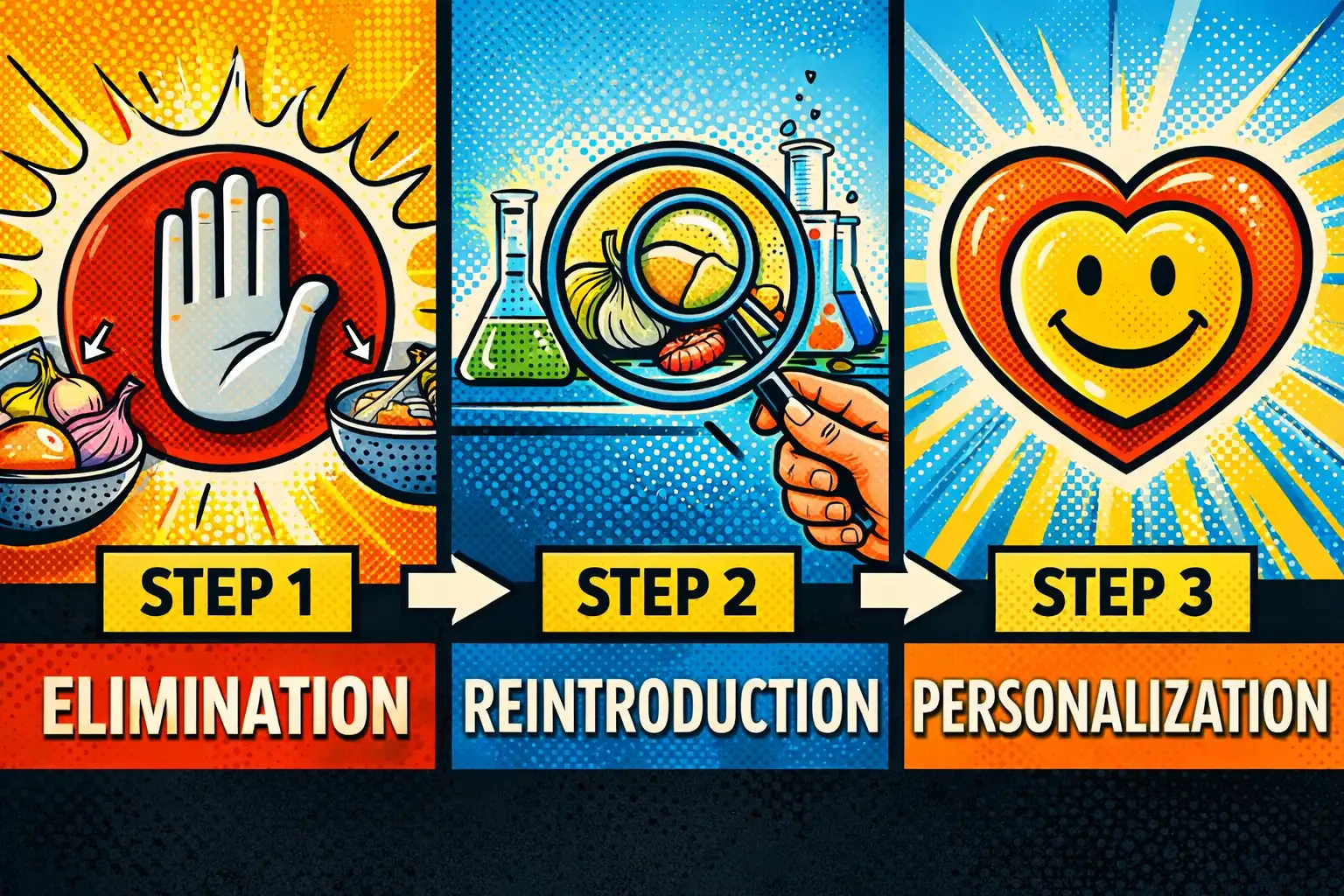
The Low FODMAP diet isn't meant to be forever—it's a strategic 3-phase process to find YOUR specific triggers.
The diet consists of an Elimination Phase (2-6 weeks), a Reintroduction Phase (testing triggers), and a Personalization Phase (long-term plan).
If you want the mechanism and realistic timeline behind this approach, read how the low FODMAP diet helps with bloating.
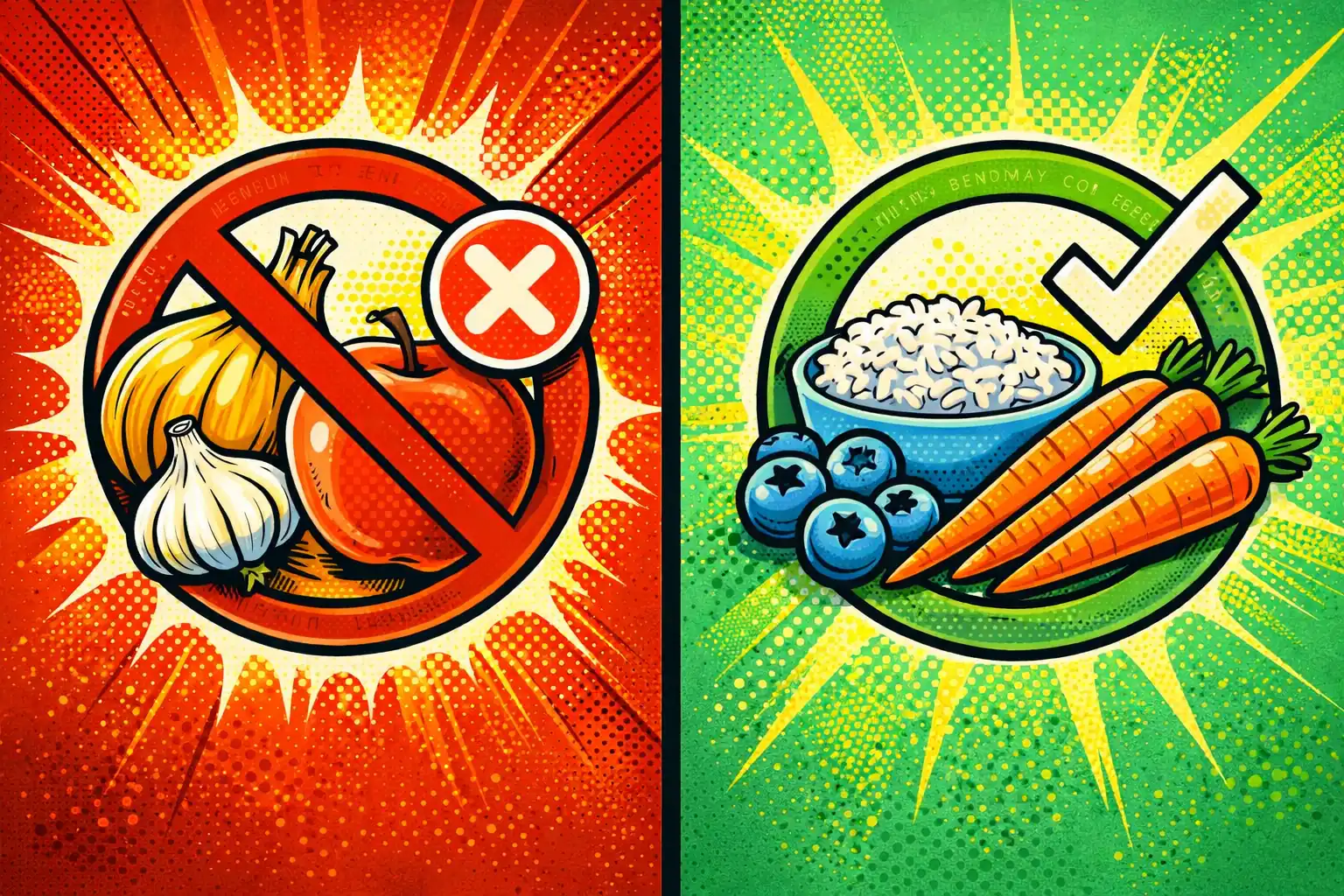
Knowing what to put on your plate—and what to leave behind—is half the battle.
For a complete list of foods to stock up on, see: Low FODMAP Foods to Eat for Bloating Relief.
And for a detailed guide on what to eliminate, check out: High FODMAP Foods to Avoid for Bloating.
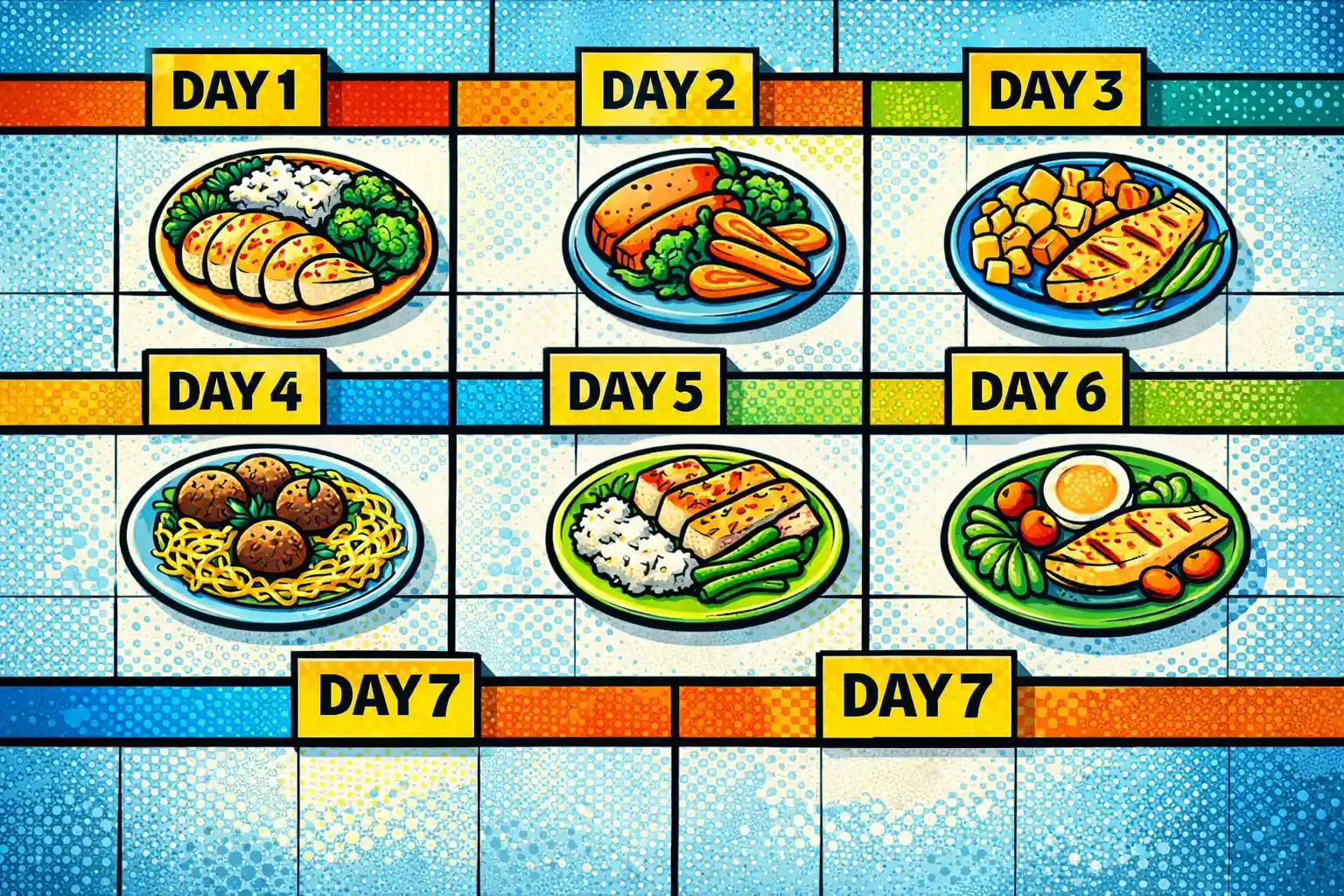
All portions should be adjusted to individual needs. Use garlic-infused oil (strained) for flavor without the FODMAPs. When in doubt, check portion sizes using the Monash FODMAP app. 3
Theme: Starting fresh with simple, soothing meals.
| Meal | Recipe |
|---|---|
| Breakfast | Oatmeal Powerhouse – ½ cup rolled oats cooked in lactose-free milk, topped with a handful of blueberries, 1 tbsp chopped walnuts, and a drizzle of maple syrup. |
| Lunch | Grilled Chicken Spinach Salad – 150g grilled chicken breast over a bed of baby spinach, sliced cucumber, 5 cherry tomatoes, shredded carrot, and a simple lemon-olive oil dressing. |
| Dinner | Baked Salmon & Roasted Veggies – Salmon fillet (skin-on) baked with lemon and dill, served with roasted carrots and steamed baby potatoes. |
| Snack | Rice cakes (2) with 1 tbsp natural peanut butter. |
Theme: Bright flavors without the bloat.
| Meal | Recipe |
|---|---|
| Breakfast | Savory Egg Toast – 2 scrambled eggs with a handful of sautéed spinach, served on 1 slice of gluten-free or low-FODMAP sourdough toast. |
| Lunch | Tuna Lettuce Wraps – Canned tuna mixed with mayo (no onion/garlic), a squeeze of lemon, and cracked pepper. Wrap in large butter lettuce leaves with sliced cucumber. |
| Dinner | Ginger Beef Stir-Fry – Sliced beef stir-fried with bell peppers, bok choy, and fresh ginger in a splash of tamari (gluten-free soy sauce), served over steamed white rice. |
| Snack | 1 firm banana (less ripe = lower FODMAP) or a small handful (30g) of macadamia nuts. |
Theme: Satisfying comfort food, gut-friendly style.
| Meal | Recipe |
|---|---|
| Breakfast | Berry Chia Smoothie – Blend ½ cup lactose-free yogurt, ½ cup strawberries, 1 tbsp chia seeds, and a splash of almond milk until smooth. |
| Lunch | Quinoa Buddha Bowl – Cooked quinoa, roasted zucchini slices, cubed firm tofu (pan-fried with garlic-infused oil), pumpkin seeds, and a tahini drizzle. |
| Dinner | Crispy Chicken Thighs with Polenta – Oven-roasted chicken thighs (skin-on for crispiness) with creamy polenta and a side of steamed green beans (limit to ¾ cup). |
| Snack | Small pot of lactose-free yogurt or a slice of aged cheddar cheese. |
Theme: Leaning into low-FODMAP vegetables.
| Meal | Recipe |
|---|---|
| Breakfast | Protein-Packed Start – 2 hard-boiled eggs with a side of ¾ cup cantaloupe or honeydew melon cubes. |
| Lunch | "Clean Out the Fridge" Soup – A simple soup made with low-FODMAP vegetable broth, diced carrots, potato, kale (limit to 1 cup), and shredded leftover chicken or turkey. Season with salt, pepper, and fresh thyme. |
| Dinner | Simple Bolognese – Gluten-free pasta with a homemade tomato-based meat sauce (use garlic-infused oil instead of garlic, skip onions, use canned crushed tomatoes). |
| Snack | Carrot sticks with 2 tbsp tahini or a small handful of pumpkin seeds. |
Theme: Easy meals with leftovers in mind.
If you want to batch cook beyond one weekend theme and turn this plan into a full workweek system, use this low FODMAP meal prep guide.
| Meal | Recipe |
|---|---|
| Breakfast | Fluffy GF Pancakes – Pancakes made with a gluten-free flour blend, topped with pure maple syrup and ¼ cup fresh raspberries. |
| Lunch | Leftover Bolognese from Day 4 – reheat and enjoy! |
| Dinner | Classic Steak Night – Grilled steak (your preferred cut), creamy mashed potatoes (made with butter and lactose-free milk), and a simple green salad with olive oil dressing. |
| Snack | Air-popped popcorn (plain or lightly salted, about 2 cups). |
Theme: Quick, no-fuss meals.
| Meal | Recipe |
|---|---|
| Breakfast | Cheesy Herb Omelet – 2-egg omelet with shredded cheddar cheese and fresh chives (the green tops of green onions are low FODMAP!). |
| Lunch | Turkey Club Sandwich – Sliced turkey, lettuce, tomato, and mustard on gluten-free bread. Serve with a side of plain potato chips (check ingredients). |
| Dinner | Lemon-Herb Baked Fish – White fish fillet (cod, tilapia, or sole) baked with lemon slices, olive oil, and fresh herbs. Serve with rice pilaf (ensure broth is onion/garlic-free) and steamed zucchini. |
| Snack | 1 kiwi fruit. |
Theme: Ending the week with flavorful, satisfying dishes.
| Meal | Recipe |
|---|---|
| Breakfast | Tropical Cottage Cheese Bowl – ½ cup lactose-free cottage cheese topped with ½ cup fresh pineapple chunks and a sprinkle of unsweetened shredded coconut. |
| Lunch | Vietnamese-Inspired Noodle Soup – Rice noodles in a clear, low-FODMAP chicken broth with sliced chicken, bean sprouts, fresh cilantro, and a squeeze of lime. (Avoid pre-made broths with onion/garlic.) |
| Dinner | Low FODMAP Taco Night! – Corn tortillas filled with seasoned ground beef (cumin, paprika, oregano, salt – no taco seasoning packets with onion/garlic powder), shredded lettuce, diced tomato, shredded cheddar, and a dollop of lactose-free sour cream. |
| Snack | 2-3 squares of dark chocolate (70% cocoa or higher). |
Even "safe" foods can cause issues if you eat too much of multiple foods containing the same FODMAP type in one meal. For example, combining oats (fructans), a large portion of almonds (oligosaccharides), and wheat-based bread in a single sitting could push you over the threshold. Space out your low-FODMAP servings. 4
For a deeper breakdown of why compliant meals can still backfire, see why safe foods still cause symptoms.
Drinking enough water (aim for 6-8 glasses daily) supports healthy digestion and helps move things along. However, carbonated beverages introduce extra gas into your digestive system—exactly what you're trying to avoid. Stick to still water, herbal teas (peppermint is excellent for digestion), or infused water with cucumber and citrus. 5 6

Digestion begins in your mouth. Chewing thoroughly breaks down food and signals your stomach to prepare digestive enzymes. Eating too fast often leads to swallowing air, which contributes directly to bloating. Try putting your fork down between bites.
While raw vegetables are nutritious, large raw salads can be harder to digest for sensitive stomachs. During the elimination phase, consider lightly steaming, roasting, or sautéing your vegetables to make them gentler on your gut.
FODMAP traps hide in unexpected places. Watch out for ingredients like:
You now have a complete 7-day low FODMAP meal plan designed specifically to help reduce bloating and bring back your comfort. Remember, the first few days might feel like an adjustment—you're essentially resetting your gut—but most people start noticing a difference within the first week.
Key Takeaways:
This meal plan is your Phase 1. Once you feel relief, the next step is the Reintroduction Phase, where you'll systematically test foods to discover your personal triggers. Working with a registered dietitian specializing in gut health can make this process smoother and more personalized.
When you are ready, use this low FODMAP reintroduction guide to test foods without confusing results.
Your Next Step: Bookmark this page, share it with a friend who needs it, or download the printable 7-day meal plan to make the week easier to follow.
Need the aisle-by-aisle version? Start with our full low FODMAP grocery list for beginners.
Want to prep the whole week instead of deciding meals day by day? Follow this low FODMAP meal prep system.
You've got this.
Xam Riche is a gut health solopreneur and founder of YourFitNature, dedicated to helping people navigate digestive wellness through evidence-based information and personal experience. After years of struggling with IBS and bloating, Xam discovered the transformative power of the low FODMAP diet and now shares practical, science-backed guidance to help others find relief. While not a medical professional, Xam combines extensive research with lived experience to create accessible, empowering resources for the gut health community. Learn more about our mission
As an affiliate, we may earn from qualifying purchases.