
BloatingRoadmap
YourFitNatureplusdescription Logo
CommunityWorkshopBuild Your Stack
Mobile Menu Background
Top Picks
Blog
BloatingRoadmapCommunityWorkshop
Build Your Stack
YourFitNatureplusdescription Logo
Find Your Custom Stack

Heal Your Gut. Reclaim Your Energy.

Science-backed tools to rebalance your microbiome
and fuel your clarity from the inside out.

ShopBlogGut Bloating ResourcesBloating ToolkitCommunity Challenge
Hiipa Compliance
About YourFitNature
BloatingRoadmap
YourFitNatureplusdescription Logo
CommunityWorkshopBuild Your Stack
Mobile Menu Background
Top Picks
Blog
BloatingRoadmapCommunityWorkshop
Build Your Stack
Fat, Sugar Alcohols, and Post-Meal Symptoms: When "Safe" Foods Still Trigger Reflux, Fullness, Bloating, or Urgency
Discover the secrets to a healthier gut!Learn more

Fat, Sugar Alcohols, and Post-Meal Symptoms: When "Safe" Foods Still Trigger Reflux, Fullness, Bloating, or Urgency

By Xam Riche on May 8, 2026 • 5 min read

This article is for informational and educational purposes only and does not constitute medical advice. Always consult with a qualified healthcare professional before using symptom information to make diagnosis or treatment decisions.

Affiliate Disclosure: This post contains affiliate links. If you click and make a purchase, we may earn a commission at no extra cost to you.Medical Disclaimer: This article is for informational and educational purposes only and does not constitute medical advice. Always consult with a qualified healthcare professional before using symptom information to make diagnosis or treatment decisions.
Last updated on May 8, 2026
  1. Home
  2. Blog
  3. Fat Sugar Alcohols Post Meal Gut Symptoms
IBS, Bloating & Gut Symptoms
1,097 views

Sometimes the food looks safe and the meal still backfires.

You checked the app. You picked the low-FODMAP option. You chose a protein bar with a clean-looking label, avocado in a measured portion, sugar-free gum, or a restaurant meal that avoided garlic and onion. Then reflux, fullness, bloating, or urgency showed up anyway.

That does not always mean the food is secretly forbidden. It may mean the meal format was louder than the ingredient list. Fat load, sugar alcohols, added fibers, caffeine, carbonation, meal size, and timing can all change the symptom pattern.

Use this page when the food list is not enough. If product ingredients are the main issue, keep hidden FODMAPs in products open. If urgency dominates, use IBS-D and low FODMAP. If burning or early fullness dominates, route to reflux-like symptoms or functional dyspepsia.
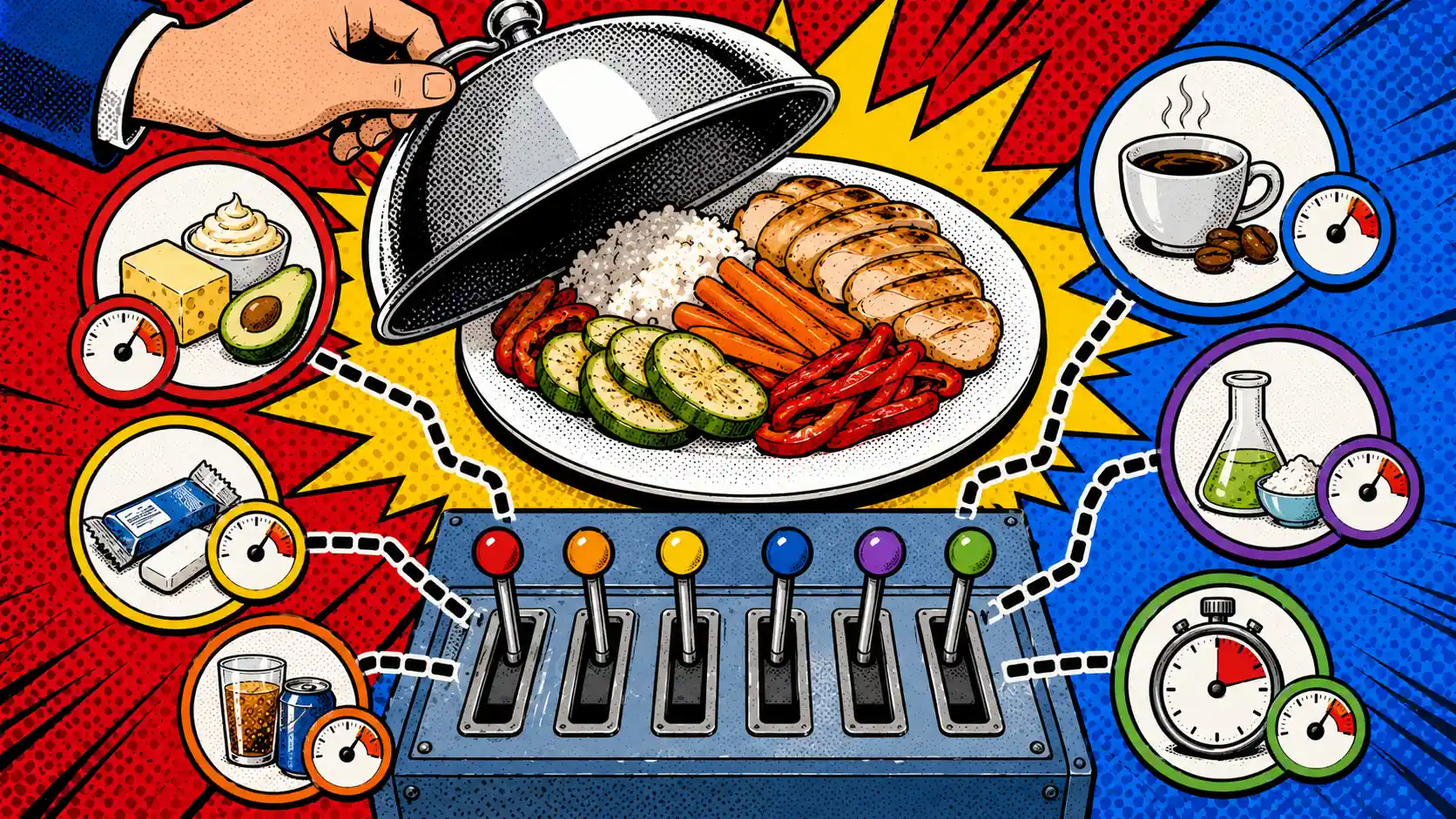
Pop art style hero showing a safe-looking meal with hidden trigger levers for fat load, sugar alcohols, caffeine, product additives, and timing.
The food may be allowed, but the meal can still be noisy.

"Safe Food" Does Not Always Mean "Safe Meal"

Low-FODMAP lists answer one question: does this serving contain a concerning FODMAP load? They do not answer every post-meal symptom question.

A meal can still be noisy because it is:

  • large,
  • higher in fat,
  • eaten quickly,
  • paired with coffee, alcohol, or carbonation,
  • built from a bar or powder with sugar alcohols,
  • stacked with multiple moderate ingredients,
  • eaten after a long fast,
  • layered on constipation, diarrhea, stress, or poor sleep.

That is why the next test should often be a simpler meal format, not a stricter food list.

Fat Load Can Change Reflux, Fullness, and Urgency

Fat is not bad. Avocado, nuts, oils, seeds, fish, eggs, and plant-based fats can fit many diets. But a high-fat or rich meal can be a symptom-context lever for some readers.

If burning, sour taste, regurgitation, or chest-throat discomfort dominates, use reflux-like symptoms. NIDDK notes that clinicians may recommend avoiding foods and drinks that worsen GERD symptoms, eating earlier before lying down, and changing meal habits 1.

If early fullness, nausea, upper-stomach heaviness, or post-meal discomfort is the main pattern, use functional dyspepsia. If urgent loose stools are the loudest issue, use IBS-D and low FODMAP.

Persistent watery diarrhea that is worse after fatty meals deserves a wider clinical lens. Research has found bile acid malabsorption in a subset of patients with IBS-D-type symptoms 2. That does not mean every post-fatty-meal reaction is bile-acid related. It means persistent watery diarrhea should not be handled by endless food cutting alone.

Sugar Alcohols and Polyols Are a Product-Trigger Pattern

Sugar-free does not mean symptom-free.

Polyols are sugar alcohols such as sorbitol, mannitol, xylitol, maltitol, and isomalt. They can appear in gums, mints, candies, protein bars, powders, drinks, and "no sugar" products. Monash identifies polyols as particularly relevant for IBS and discusses sorbitol and mannitol symptom effects in IBS research 3.

Monash's label-reading guidance also warns readers to be careful with low-sugar or no-sugar products when polyol tolerance is an issue and notes that added prebiotic fibers can cause gas, bloating, or distension in some people with IBS 4.

So if symptoms show up after gum, mints, sugar-free drinks, protein bars, or "gut-friendly" snacks, the question may be the label, not your willpower.

Protein Products, Bars, Gums, and Healthy Swaps

Front labels are often too vague for IBS troubleshooting. The useful clues are in the ingredient list:

  • sorbitol, mannitol, xylitol, maltitol, isomalt,
  • inulin or chicory root,
  • FOS or GOS,
  • lactose or whey concentrate,
  • dried fruit concentrates,
  • large added-fiber doses,
  • multiple sweeteners in one small product.

If the product is a protein item, use the low-FODMAP vegetarian protein guide before assuming powders are easier than food anchors. If the broader product pattern is confusing, use hidden FODMAPs in products.
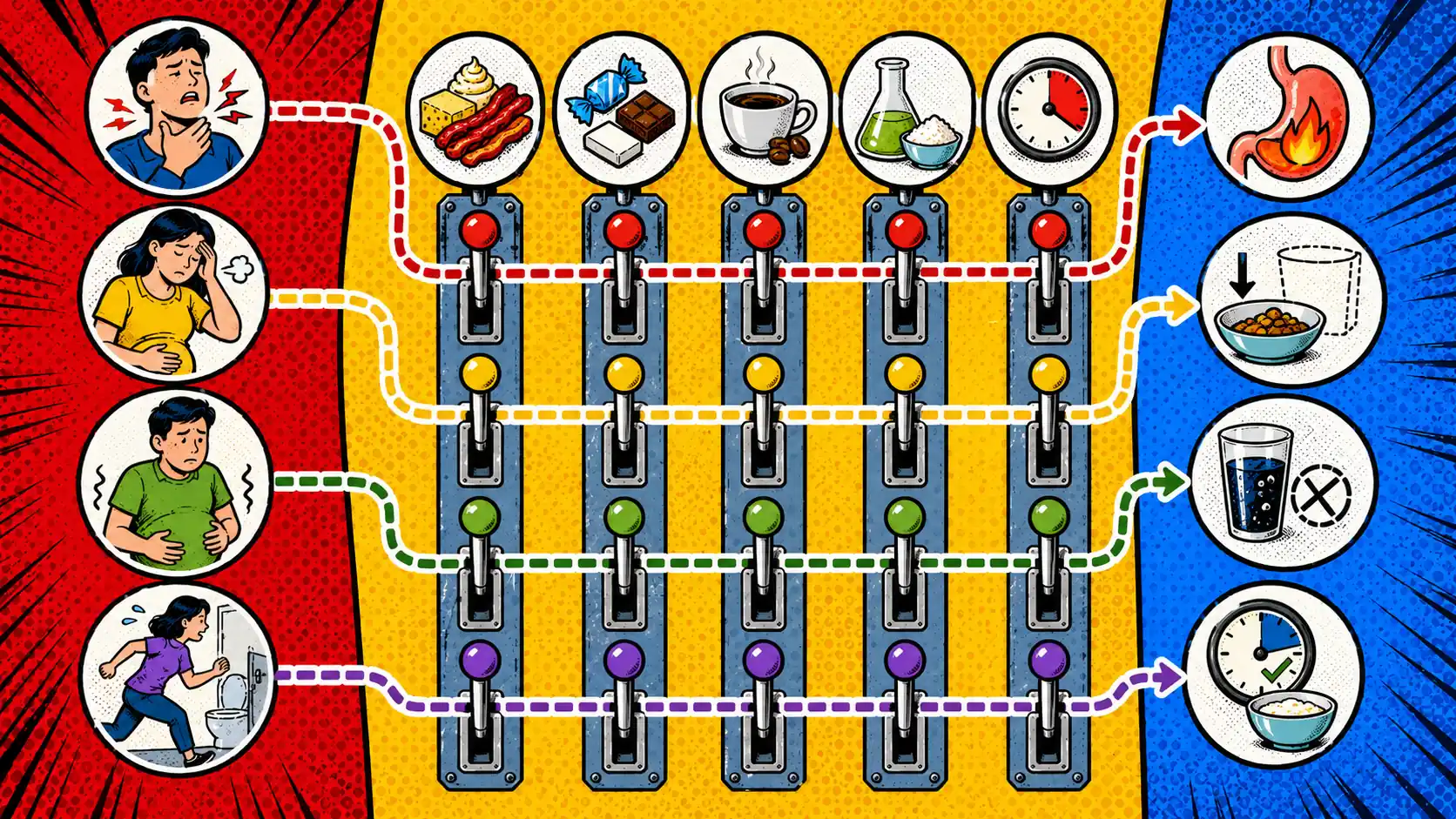
Pop art style route card matching reflux, fullness, bloating, and urgency to fat load, polyols, caffeine, additives, and meal timing.
Test the format before you ban the ingredient.

Download: Post-Meal Trigger Audit and Product Label Trigger Checklist

How To Test the Pattern Without Changing Everything

Use a seven-day audit:

  1. Pick one recurring symptom: reflux, fullness, bloating, urgency, or diarrhea.
  2. Keep two or three meals simple and repeatable.
  3. Change one variable: fat load, product, sweetener, caffeine, carbonation, or timing.
  4. Track when symptoms start.
  5. Review bowel pattern before blaming the meal.
  6. Stop testing if symptoms are severe, progressive, bloody, or persistent.

For beverages, use coffee, tea, and gut symptoms. For restaurant patterns, use low-FODMAP eating out. For plant-fat and plant-pattern questions, use plant-based eating and gut symptoms.

Best Next Read by Situation

If this is the main pattern Best next read
Product labels are confusing Hidden FODMAPs in products
Urgency dominates IBS-D and low FODMAP
Burning or regurgitation dominates Reflux-like symptoms
Early fullness or nausea dominates Functional dyspepsia
Coffee or tea is involved Coffee, tea, and gut symptoms
Skipped meals, grazing, or late meals dominate Meal timing and gut symptoms
The issue is restaurants Low-FODMAP eating out

The Bottom Line

A food list is useful, but it is not the whole meal.

Before you ban another ingredient, test the format. Was the meal rich? Was the product sweetened with polyols? Was there added fiber? Was caffeine involved? Was the symptom reflux, fullness, bloating, or urgency?

The better question is not "Is this food good or bad?" It is "Which lever made this meal louder?"

X

Xam Riche

Gut Health Solopreneur & IBS Advocate

Xam Riche is a gut health solopreneur and founder of YourFitNature, dedicated to helping people navigate digestive wellness through evidence-based information and personal experience. After years of struggling with IBS and bloating, Xam discovered the transformative power of the low FODMAP diet and now shares practical, science-backed guidance to help others find relief. While not a medical professional, Xam combines extensive research with lived experience to create accessible, empowering resources for the gut health community. Learn more about our mission

Xam Riche - Gut Health Solopreneur & IBS Advocate. Xam Riche is a gut health solopreneur and founder of YourFitNature, dedicated to helping people navigate digestive wellness through evidence-based information and personal experience. After years of struggling with IBS and bloating, Xam discovered the transformative power of the low FODMAP diet and now shares practical, science-backed guidance to help others find relief. While not a medical professional, Xam combines extensive research with lived experience to create accessible, empowering resources for the gut health community.
Recommended Products

As an affiliate, we may earn from qualifying purchases.

Related Questions

Diet Diversity After Low FODMAP: How to Rebuild Variety Without Losing Symptom Signal

LOW FODMAP DIET

A restriction-recovery guide for readers who improved on low FODMAP but need a calmer way to rebuild food variety.

Nutrient Gaps on a Restrictive Gut Diet: Protein, Iron, Zinc, Magnesium, Calcium, and Fiber Diversity

GUT MICROBIOME & NUTRITION

A nutrient-adequacy utility for symptom-prone readers who have cut foods and now need a safer way to check what might be missing.

Fat, Sugar Alcohols, and Post-Meal Symptoms: When "Safe" Foods Still Trigger Reflux, Fullness, Bloating, or Urgency

IBS, BLOATING & GUT SYMPTOMS

A post-meal symptom sorter for readers whose food list looks safe but whose meal format, fat load, polyols, or products still trigger symptoms.

Meal Timing and Gut Symptoms: Why Skipping, Grazing, and Late Meals Can Make IBS Harder to Read

IBS, BLOATING & GUT SYMPTOMS

A practical meal-rhythm sorter for readers whose symptoms change with skipping, grazing, late meals, or compressed eating windows.

Dairy, Lactose, and Plant Milks: Gut-Symptom Fit Without Losing Calcium or Protein

GUT MICROBIOME & NUTRITION

A practical dairy and plant-milk sorter for symptom-prone readers who still need calcium, protein, and a readable label.

Post-Antibiotic Food Rebuilding: Diet Diversity Without Probiotic Overpromising

GUT MICROBIOME & NUTRITION

A food-first post-antibiotic rebuilding guide that separates mild disruption from symptoms needing medical review.

Visceral Hypersensitivity in IBS: Why Normal Digestion Can Feel Painful

GUT-BRAIN & WHOLE-BODY HEALTH

A gut-brain pain translator for readers whose IBS pain feels louder than the gut event itself and who need a safer next step than endless food restriction.

Coffee, Tea, and Gut Symptoms: Microbiome Benefits, Reflux Risk, and IBS Fit

IBS, BLOATING & GUT SYMPTOMS

A symptom-fit beverage guide for readers deciding whether coffee, tea, yerba mate, cinnamon drinks, or superfood claims help or hurt their gut pattern.

Microbiome and Probiotic Claims in Colorectal Cancer Care: What They Do Not Mean

GUT MICROBIOME & NUTRITION

Microbiome and probiotic research around colorectal cancer is real, but it is easy to overread. This guide separates plausible science from claims that should not guide cancer screening, diagnosis, or treatment decisions.

Gut-Spine Claims Explainer: What Microbiome Research Can and Cannot Say About Back Pain

GUT-BRAIN & WHOLE-BODY HEALTH

A claims-sorting explainer for readers who have seen gut-spine or microbiome back-pain headlines and need a practical route back to gut symptoms, safety checks, and evidence level.

Showing 10 of 85

Stay Updated!

Subscribe to our newsletter for the latest articles and updates.

YourFitNatureplusdescription Logo
Find Your Custom Stack

Heal Your Gut. Reclaim Your Energy.

Science-backed tools to rebalance your microbiome
and fuel your clarity from the inside out.

ShopBlogGut Bloating ResourcesBloating ToolkitCommunity Challenge
Hiipa Compliance
About YourFitNature