By • Published on May 26, 2026 • 5 min read • 1,273 views
This article is educational and is not a diagnosis or treatment plan for a child or teen. Work with a qualified pediatric clinician for new, severe, progressive, or disruptive symptoms, growth concerns, dehydration, bleeding, fever, weight loss, nighttime symptoms, or mental health concerns.
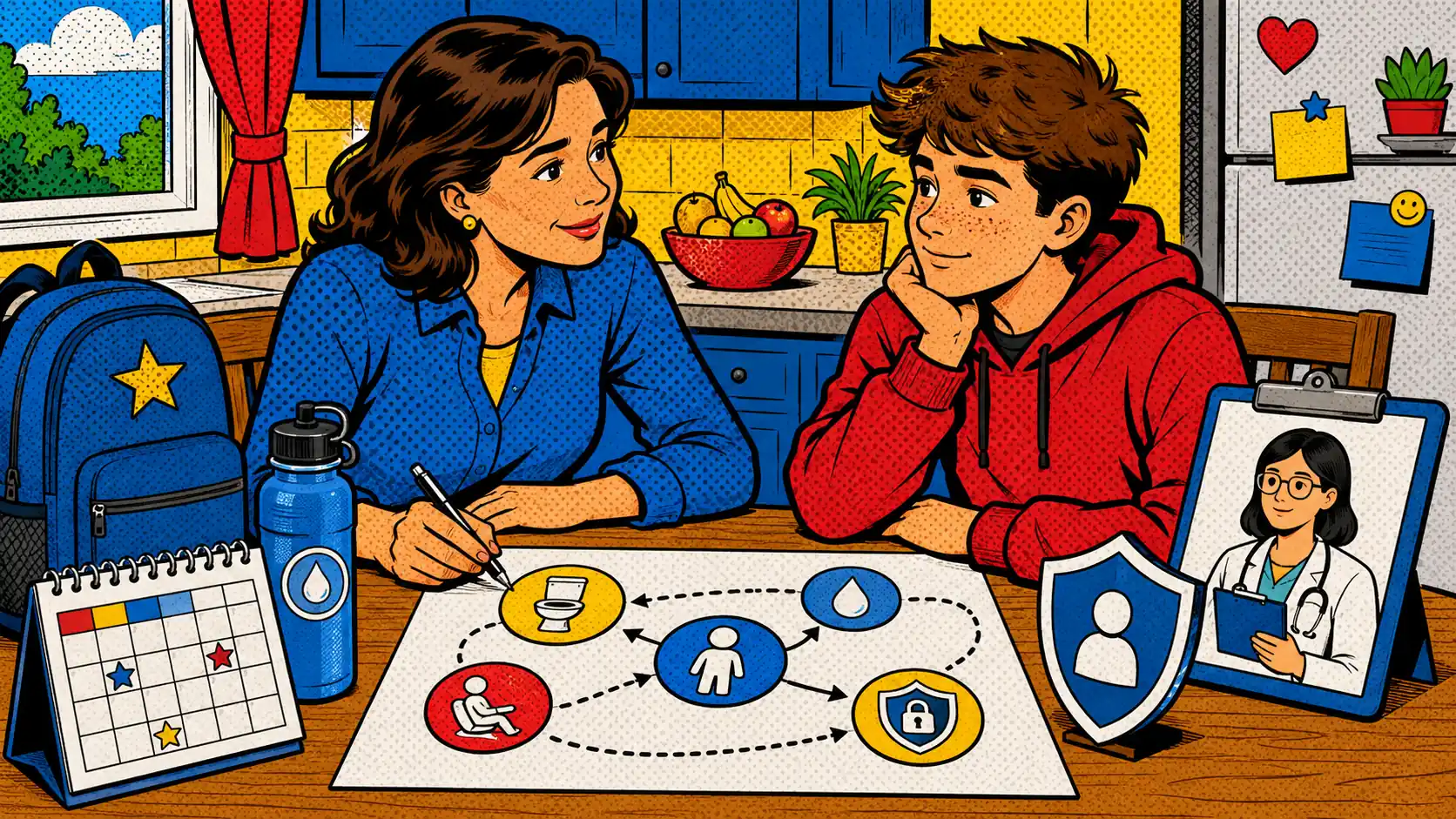
When a teen has IBS symptoms at school, the caregiver role is not to control every bite, every bathroom trip, or every feeling. The role is to help build a plan the teen can actually use.
NIDDK says doctors diagnose IBS in children by reviewing symptoms, medical and family history, and doing a physical exam 1. Pediatric IBS and related functional abdominal pain disorders can affect quality of life, so school support is not a luxury when symptoms disrupt the day 2.
The best caregiver plan protects dignity first. It gives the teen a route, not a spotlight.
Before solving bathroom passes or lunch choices, check whether the symptom pattern needs medical review.
Ask the clinician promptly about:
If the pattern is already known and the clinician has ruled out urgent concerns, then the school plan can focus on access, timing, communication, and support.
The teen should not have to prove every symptom in public. A good school plan answers practical questions before the day gets loud.
| Planning question | Why it matters |
|---|---|
| Which bathroom feels usable? | Access is only helpful if the teen can actually use it |
| Who is the trusted adult? | One known person beats explaining symptoms repeatedly |
| What happens during tests or locked-class time? | Rigid timing can worsen fear and avoidance |
| Where are backup supplies? | Quiet preparation reduces embarrassment |
| What should stay private? | Privacy protects dignity and trust |
CDC notes that students with chronic health needs may require coordinated support across school and health systems 3. For IBS, coordination may mean a bathroom route, attendance plan, nurse-office route, meal timing flexibility, or clinician note. It does not mean every adult needs every detail.

A useful tracker is short enough that the teen can tolerate it.
Track:
Do not require a long diary forever. Use a two-week snapshot before an appointment, school meeting, or dietitian visit. For appointment structure, use doctor visit prep for IBS.
Food can matter, but school symptoms are not always solved by removing more foods. A teen might be dealing with urgency, constipation, stress, limited bathroom access, skipped breakfast, caffeine, sleep loss, or fear of eating at school.
If low FODMAP is being considered, treat it as a supervised clinical tool, not a quick school hack. The low-FODMAP process is structured, temporary, and should move toward reintroduction and personalization, especially for young people whose growth, social life, and school schedule matter.
Use low-FODMAP diet for beginners for the adult protocol overview, then ask a pediatric clinician or dietitian how much applies to the teen.
Keep the meeting concrete:
Download: Teen IBS Caregiver School Meeting Card to prepare bathroom access, symptom notes, food boundaries, and clinician questions with the teen before the meeting.
| Situation | Next read |
|---|---|
| The teen needs a teen-facing school bathroom plan | IBS in teens: school bathroom plan |
| A caregiver needs appointment structure | Doctor visit prep for IBS |
| Work, school, commuting, or access logistics are the wider issue | IBS at work, school, and commuting |
| The next transition is dorm living, dining halls, and shared bathrooms | College dorm low-FODMAP and IBS flare plan |
| Today is already a flare day | IBS flare plan |
| Food restriction is becoming the default answer | Low-FODMAP personalization mistakes |
| Bathroom fear is becoming avoidance | Bathroom anxiety route map for IBS |
Teen IBS school support should protect dignity, access, and medical clarity.
Start with safety signs. Then build the plan with the teen: bathroom route, trusted adult, backup supplies, meal timing, appointment notes, and privacy boundaries. Use food changes carefully and with pediatric guidance. The goal is not to make school perfect. The goal is to make the next school day less fragile and less lonely.

Xam Riche is a gut health solopreneur and founder of YourFitNature, dedicated to helping people navigate digestive wellness through evidence-based information and personal experience. After years of struggling with IBS and bloating, Xam discovered the transformative power of the low FODMAP diet and now shares practical, science-backed guidance to help others find relief. While not a medical professional, Xam combines extensive research with lived experience to create accessible, empowering resources for the gut health community. Learn more about our mission
As an affiliate, we may earn from qualifying purchases.