 By • Published on May 18, 2026 • 9 min read • 4,246 views
This article is for informational and educational purposes only and does not constitute medical advice. Always consult with a qualified healthcare professional for diagnosis, testing, and treatment decisions.
A teen with IBS should not have to choose between symptoms and dignity at school.
The hard part is not only the pain, bloating, constipation, diarrhea, or sudden urgency. It is the timing. A bathroom pass is embarrassing. A test has already started. The bus is leaving. Lunch feels risky. A teacher may not understand why "I need to go now" is different from ordinary restlessness.
That is why a teen IBS plan has to be more practical than "avoid stress" or "watch what you eat." NIDDK describes pediatric IBS as repeated abdominal pain with bowel-movement changes, such as diarrhea, constipation, or both, without visible digestive-tract damage 1. That definition matters, but the school day still needs a route.
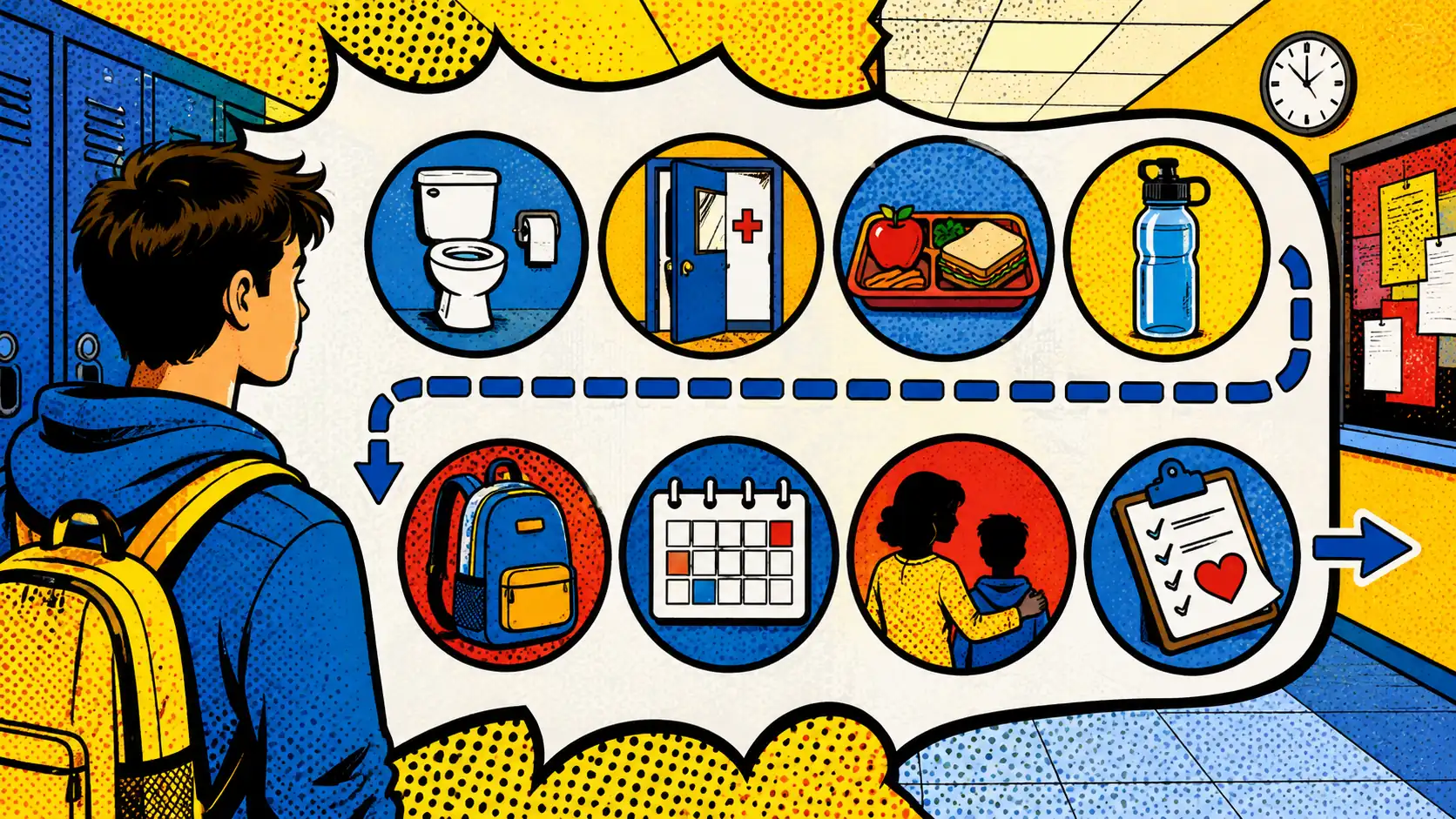
This guide is for teens, parents, caregivers, and school-support adults. It does not diagnose IBS. It helps you build a school-day plan that protects bathroom access, reduces unnecessary guessing, and makes it clearer when the next step is medical review.
Before you adjust meals, passes, or class timing, check whether this is still a school-logistics problem.
Get medical guidance promptly if symptoms include:
NIDDK warns that diarrhea can lead to dehydration and that blood, fever, severe pain, or persistent diarrhea should be checked 2. If the day feels unsafe, use the same-day IBS flare plan instead of trying to solve the whole semester at once.
If symptoms are familiar, mild to moderate, and already being evaluated or managed, move into the school plan.
Teen IBS is not one bathroom pattern.
Some teens mainly deal with urgency or diarrhea. Others have constipation, trapped gas, bloating, or the feeling that they cannot fully empty. Some have pain that gets louder before a test, during a long bus ride, after lunch, or after a string of poor sleep nights.
ACG explains that functional abdominal pain in children is real and is not "just in the head" 3. That sentence is worth holding onto. Stress can amplify symptoms without making the symptoms fake.
The practical question is:
| Pattern | School-day problem | Better first move |
|---|---|---|
| Urgency after lunch | Fear of being stuck in class | Bathroom access plus lunch-pattern tracking |
| Constipation and bloating | Discomfort builds through the day | Morning routine, hydration, and clinician review if persistent |
| Pain before tests | Anticipation and gut sensitivity stack | Permission plan plus stress-support tools |
| Frequent nurse visits | School day is not stable enough | Clinician documentation and a clearer support plan |
| Food fear | Teen starts skipping meals | Stop restriction and involve a clinician or dietitian |
If the main issue is meal-triggered urgency, use urgency after meals as a sibling guide. If the challenge is public-day logistics across school, work, buses, and activities, use the broader IBS at work, school, and commuting guide.
Bathroom access is not a luxury detail. For a teen with urgency, diarrhea, pain, or anxiety around symptoms, it can be the difference between staying in school and avoiding school.
A useful plan answers five questions:
The best plan is specific enough that the teen does not have to renegotiate it every time symptoms flare.
For example:
That is not special treatment. It is a practical access plan for a health pattern that can be unpredictable.
School symptoms often get blamed on one food. Sometimes a specific food matters. Often the stack matters more:
NIDDK notes that doctors may treat IBS in children with food changes, mental health therapies, probiotics, and medicines, depending on the child and the plan 4. That does not mean a teen should start a restrictive diet alone to survive school.
Start with lower-risk pattern work:
If fluids, electrolytes, heat, sports, or diarrhea days are part of the pattern, use hydration and gut symptoms as the next practical route.
Stress support is useful when it does not sound like accusation.
"It is anxiety" can make a teen feel dismissed. A better frame is: "Your gut and nervous system can amplify each other, and we can support both." NIDDK notes that mental health therapies may help children with IBS symptoms, coping, and school or activity interference 5.
School support can include:
If stress, sleep, and gut symptoms are tightly linked, use the gut-brain stress and bloating guide for the broader mechanism. The point is not to blame stress. The point is to reduce the number of triggers hitting at once.
The most useful tracking is not a giant diary. It is a one-page pattern summary.
Bring:
If the diagnosis is uncertain, the testing conversation matters. Use the IBS testing map when symptoms need a wider workup rather than another school workaround.
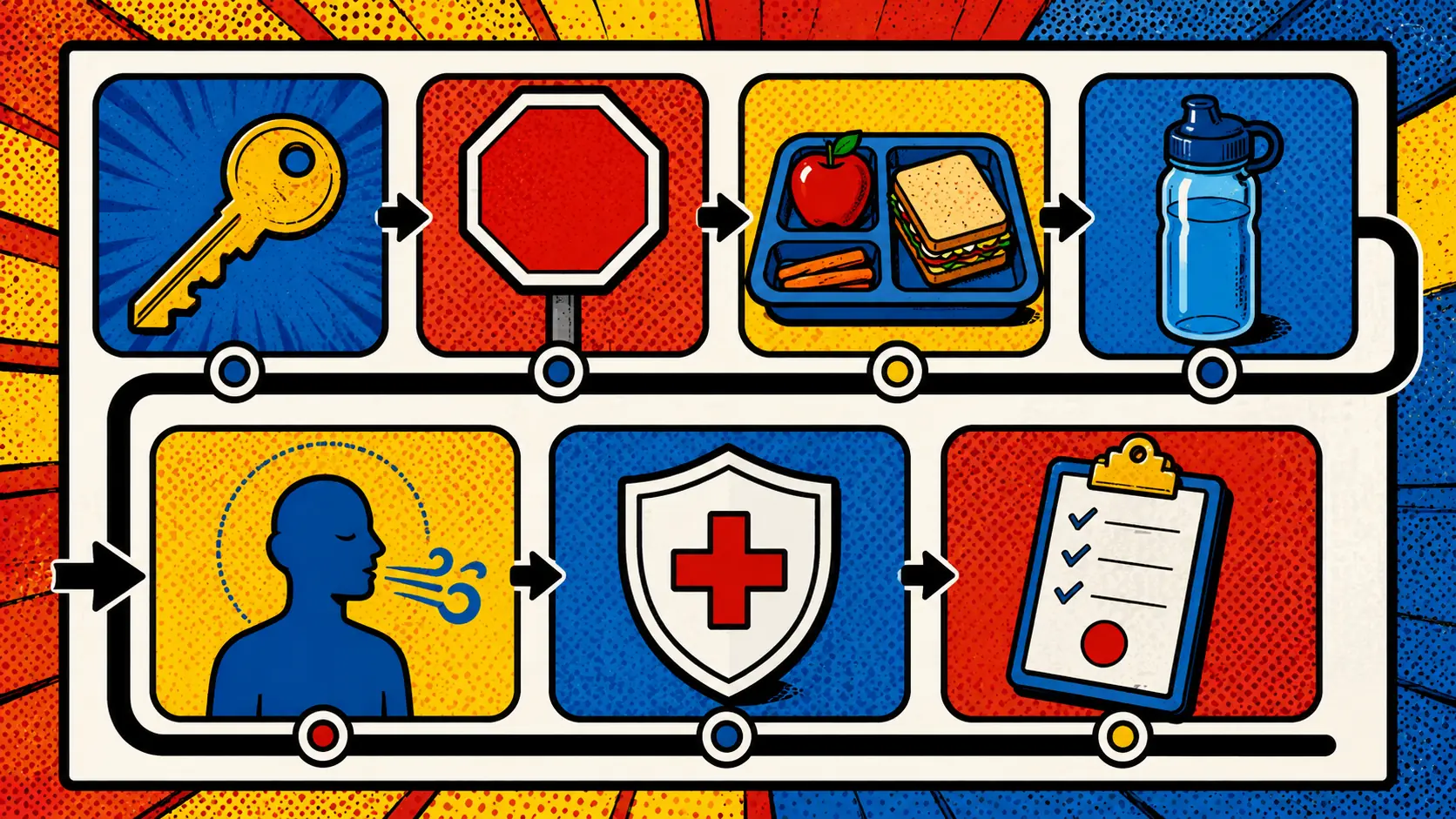
Download: Teen IBS School-Day Route Card to review bathroom access, stop signs, meals, hydration, stress support, and appointment prep.
| If the main situation is... | Use this page |
|---|---|
| "I am pregnant or postpartum and symptoms changed." | Pregnancy, postpartum, and IBS symptoms |
| "A teen needs bathroom access or school support." | This page |
| "Symptoms changed around menopause or perimenopause." | Menopause, perimenopause, and IBS symptoms |
| "Symptoms follow my menstrual cycle." | Menstrual cycle and IBS symptoms |
| "Pelvic pain, sex pain, or possible endometriosis is part of the pattern." | IBS, endometriosis, or pelvic pain |
| "Work, school, commuting, or bathroom access is the barrier." | IBS at work, school, and commuting |
| "Shift work, sleep timing, or rotating meals changed the pattern." | Shift work, sleep, meal timing, and gut symptoms |
Download: IBS Life Context Route Card for the situation-first chooser across pregnancy/postpartum, school, midlife, cycle timing, pelvic pain, public-day logistics, and shift-work rhythm.
| Situation | Go here next |
|---|---|
| The main issue is school, bus, work, or public-day logistics | IBS at work, school, and commuting |
| A parent or caregiver needs the school meeting version | Caregiver guide for teen IBS school support |
| The loudest symptom is urgent bathroom runs after lunch | Urgency after meals |
| Today is a noisy symptom day and you need a short-term route | IBS flare plan |
| Symptoms are persistent, different, severe, or need an adult-supported medical conversation | Doctor visit prep for IBS next steps |
| Stress and symptoms keep amplifying each other | Stress, bloating, and the gut-brain axis |
| Bathroom fear is becoming avoidance outside school too | Bathroom anxiety route map for IBS |
| Symptoms need a clinician testing conversation | IBS tests, celiac, SIBO, calprotectin, and colonoscopy |
An IBS school plan for teens should protect dignity first.
Start with stop signs. Then make bathroom access specific, private, and repeatable. Keep meals and hydration steady enough to read the pattern. Treat stress support as real support, not blame. Bring the clinician a short summary of what happens during school days, not just a vague report that "my stomach hurts."
The goal is not to make a teen prove every symptom. The goal is to keep school life possible while the right care team helps sort what the symptoms mean.
Xam Riche is a gut health solopreneur and founder of YourFitNature, dedicated to helping people navigate digestive wellness through evidence-based information and personal experience. After years of struggling with IBS and bloating, Xam discovered the transformative power of the low FODMAP diet and now shares practical, science-backed guidance to help others find relief. While not a medical professional, Xam combines extensive research with lived experience to create accessible, empowering resources for the gut health community. Learn more about our mission
As an affiliate, we may earn from qualifying purchases.