 By • Published on May 12, 2026 • 9 min read • 2,930 views
This article is for informational and educational purposes only and does not constitute medical advice. Always consult with a qualified healthcare professional before using symptom information to make diagnosis or treatment decisions.
A symptom-sorting sequence for bloating, constipation, urgency, IBS lookalikes, testing questions, and warning signs.
You're reading: Urgency After Meals: How to Sort IBS-D, Caffeine, Fatty Meals, and Red Flags
Urgency after meals can feel so fast that it becomes its own decision-making system. You think about where the bathroom is before you think about the menu. You replay breakfast, coffee, lunch timing, the rich dinner from last night, the sugar-free gum, or the one protein bar that looked safe. Then the question turns into guesswork: was it the food, the meal setup, or something wider than food?
This page is for that exact pattern. It is not a generic diarrhea article and it is not a replacement for IBS-D care. It is a sorter for one symptom: urgency after meals.
If the whole meal-format question is still messy, keep fat, sugar alcohols, and post-meal symptoms open. If the broader bowel-pattern question is already clearly IBS-D, use IBS-D and low FODMAP. This page sits in between: the main question is the urgent rush after eating, and you want to know which pattern deserves the next test.
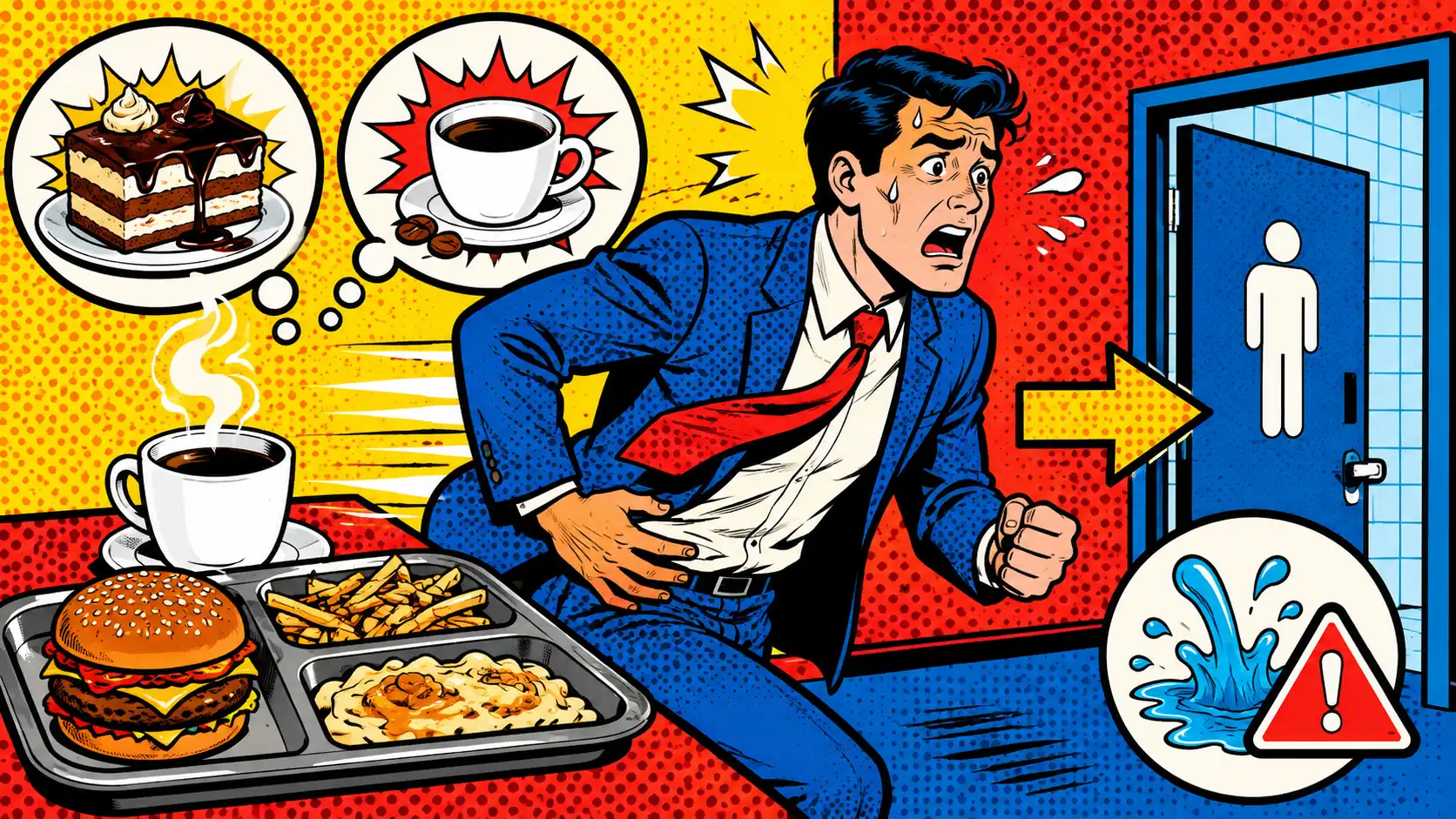
The same after-meal rush can come from very different setups:
NIDDK's IBS guidance supports individualized diet changes rather than one universal food rule for everyone with bowel symptoms 1. That matters here because urgency after meals is often a context problem, not just an ingredient problem.
The practical goal is not to prove that every after-meal urge is abnormal. The goal is to tell the difference between:
For many readers, the loudest after-meal urgency does not start with lunch. It starts with coffee, tea, or an energy drink meeting an empty stomach or a small breakfast.
NIDDK's diarrhea guidance lists caffeine among the items that can worsen diarrhea symptoms for some people 2. That does not mean everyone with urgency after meals must quit coffee forever. It means caffeine belongs on the first-pass audit when the pattern is fast, repeatable, and worst in the morning.
Use coffee, tea, and gut symptoms if the real question is beverage fit. The useful checks are:
If caffeine is the loudest lever, the next move is usually a cleaner drink test, not a harsher food list.
Some readers notice that urgency after meals is much worse after restaurant meals, fried foods, richer dinners, or high-fat "healthy" meals built around large amounts of oil, avocado, nuts, or sauces.
NIDDK's diarrhea guidance lists high-fat foods among items that can worsen diarrhea 3. That still does not tell you whether the pattern is reflux, fullness, a meal-format issue, or a diarrhea pattern needing wider review. It does tell you that rich meals deserve attention before you assume a single ingredient is the whole story.
If the broader question is meal format, use fat, sugar alcohols, and post-meal symptoms. If the rush is tied to burning, regurgitation, or lying down after dinner, route to reflux-like symptoms too. NIDDK notes that clinicians may recommend changing meal timing and avoiding foods and drinks that worsen GERD symptoms 4.
When the after-meal rush is strongly tied to rich meals and stays watery or hard to control, do not force that whole pattern into a simple IBS label by default.
Urgency after meals can also come from a label problem.
NIDDK specifically lists foods and drinks with sugar alcohols as items that may worsen diarrhea 5. Monash also identifies polyols such as sorbitol and mannitol as a meaningful IBS trigger pattern 6.
That makes these high-yield suspects when urgency clusters around:
If this looks familiar, go straight to hidden FODMAPs in products or back to the broader post-meal symptom sorter. The label may be louder than the meal itself.
This is the most important distinction in the article.
Food-trigger testing makes sense when the pattern is readable. It makes much less sense when the pattern is turning into persistent watery diarrhea, red flags, or symptoms that keep changing character.
NIDDK advises medical review for concerning diarrhea patterns and warns about signs such as dehydration, blood, fever, and prolonged or severe symptoms 7.
A wider lens is especially important when:
The point is not to scare you into assuming the worst. The point is to stop treating every urgent bathroom run as a simple food mistake. A recent systematic review describes bile acid malabsorption as an under-recognized cause of chronic diarrhea and notes that accurate recognition can change management 8.
If the bigger story is already IBS-D, go to IBS-D and low FODMAP. If the broader low-FODMAP trial never became clear enough to trust, route to when low FODMAP does not work.
Use a short audit instead of a panic-driven restriction spiral.
This is where meal timing and gut symptoms helps. If the rush mainly follows skipped meals, compressed eating windows, or late large dinners, the timing pattern may be more useful than another ingredient ban. If the rush follows coffee or tea first, use coffee, tea, and gut symptoms. If it follows rich meals or packaged foods, use the broader parent article instead of treating every plate as a separate mystery.
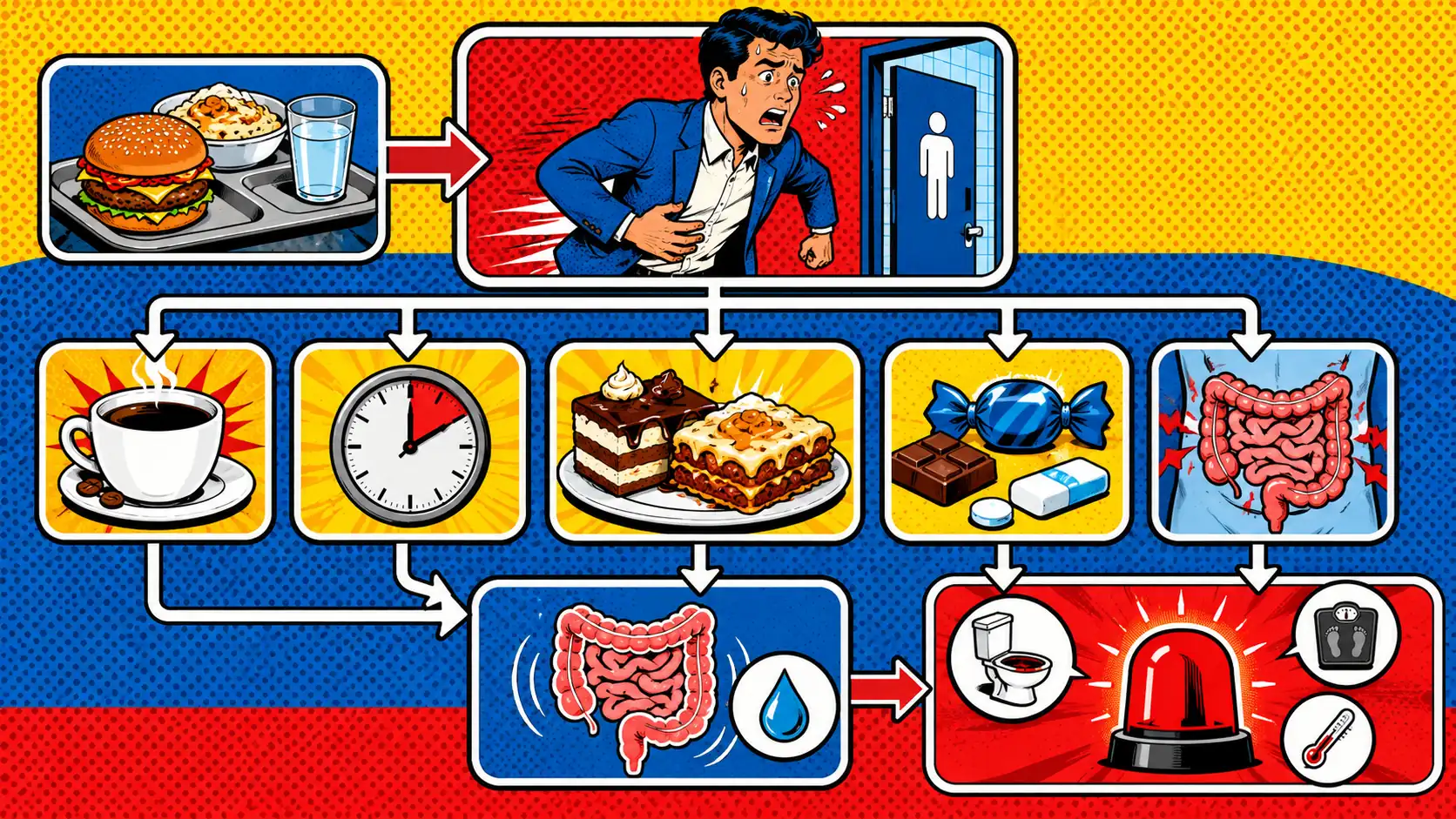
Download: Urgency After Meals Pattern Audit and Post-Meal Red-Flag Route Card
| If this is the main pattern | Best next read |
|---|---|
| Coffee, tea, or energy drinks start the rush | Coffee, tea, and gut symptoms |
| The issue is rich meals, sauces, bars, or sugar-free products | Fat, sugar alcohols, and post-meal symptoms |
| The issue is skipped meals, grazing, or late dinners | Meal timing and gut symptoms |
| The issue follows beer, wine, cocktails, or mixers | Beer, wine, cocktails, and gut symptoms |
| The issue is choosing a restaurant with bathroom access, timing, and simpler menu options | Restaurant choice gut symptom decision guide |
| Workouts, walks, or exercise timing change urgency | Movement, exercise, and gut symptoms |
| Fluids, caffeine, diarrhea, or dehydration are confusing | Hydration, electrolytes, and gut symptoms |
| Diarrhea is causing fluid-loss risk and ORS questions | Oral rehydration for diarrhea and IBS flares |
| The urgency is part of a noisy same-day flare | IBS flare plan |
| The urgency happens during Ramadan when fasting, fluids, caffeine, sleep, and iftar timing all changed | Ramadan fasting, meal timing, and IBS symptoms |
| The urgency mainly threatens work, school, or commuting | IBS at work, school, and commuting |
| Fear of not reaching a bathroom is becoming its own loop | Bathroom anxiety route map for IBS |
| Urgency fear, body scanning, and avoidance keep the loop going after medical and stool-pattern questions are addressed | CBT for IBS anxiety, urgency, and gut-brain skills |
| The urgency affects a teen's class, lunch, bus, or bathroom access | IBS in teens school bathroom plan |
| Gallbladder history or fatty-meal watery diarrhea changes the question | Gallbladder diarrhea vs IBS-D |
| The broader pattern is clearly IBS-D | IBS-D and low FODMAP |
| Urgency or watery diarrhea needs a clinician-guided medication conversation | IBS-D medications and diarrhea options |
| The pattern is chronically watery and seems narrower than routine IBS-D | Bile-acid diarrhea vs IBS-D |
| Packaged products keep surprising you | Hidden FODMAPs in products |
| Low FODMAP never made the whole pattern readable | When low FODMAP does not work |
Urgency after meals is not one food verdict.
It is usually a pattern made louder by setup: caffeine, meal timing, rich meals, polyols, packaged products, or an already active diarrhea pattern. The useful move is to test the setup cleanly, not to make the diet smaller by reflex.
This page can help you decide which post-meal setup to test first and when the pattern has moved beyond food troubleshooting. It cannot diagnose IBS-D, bile-acid diarrhea, infection, inflammatory disease, or another medical cause of diarrhea.
If the pattern turns watery, persistent, bloody, feverish, dehydrating, or just plain harder to explain, stop trying to out-restrict it and widen the lens.
Xam Riche is a gut health solopreneur and founder of YourFitNature, dedicated to helping people navigate digestive wellness through evidence-based information and personal experience. After years of struggling with IBS and bloating, Xam discovered the transformative power of the low FODMAP diet and now shares practical, science-backed guidance to help others find relief. While not a medical professional, Xam combines extensive research with lived experience to create accessible, empowering resources for the gut health community. Learn more about our mission
As an affiliate, we may earn from qualifying purchases.
Choose a focused guide for what you are noticing or deciding next.