 By • Published on May 7, 2026 • 10 min read • 3,334 views
This article is for informational and educational purposes only and does not constitute medical advice. Always consult with a qualified healthcare professional before using symptom information to make diagnosis or treatment decisions.
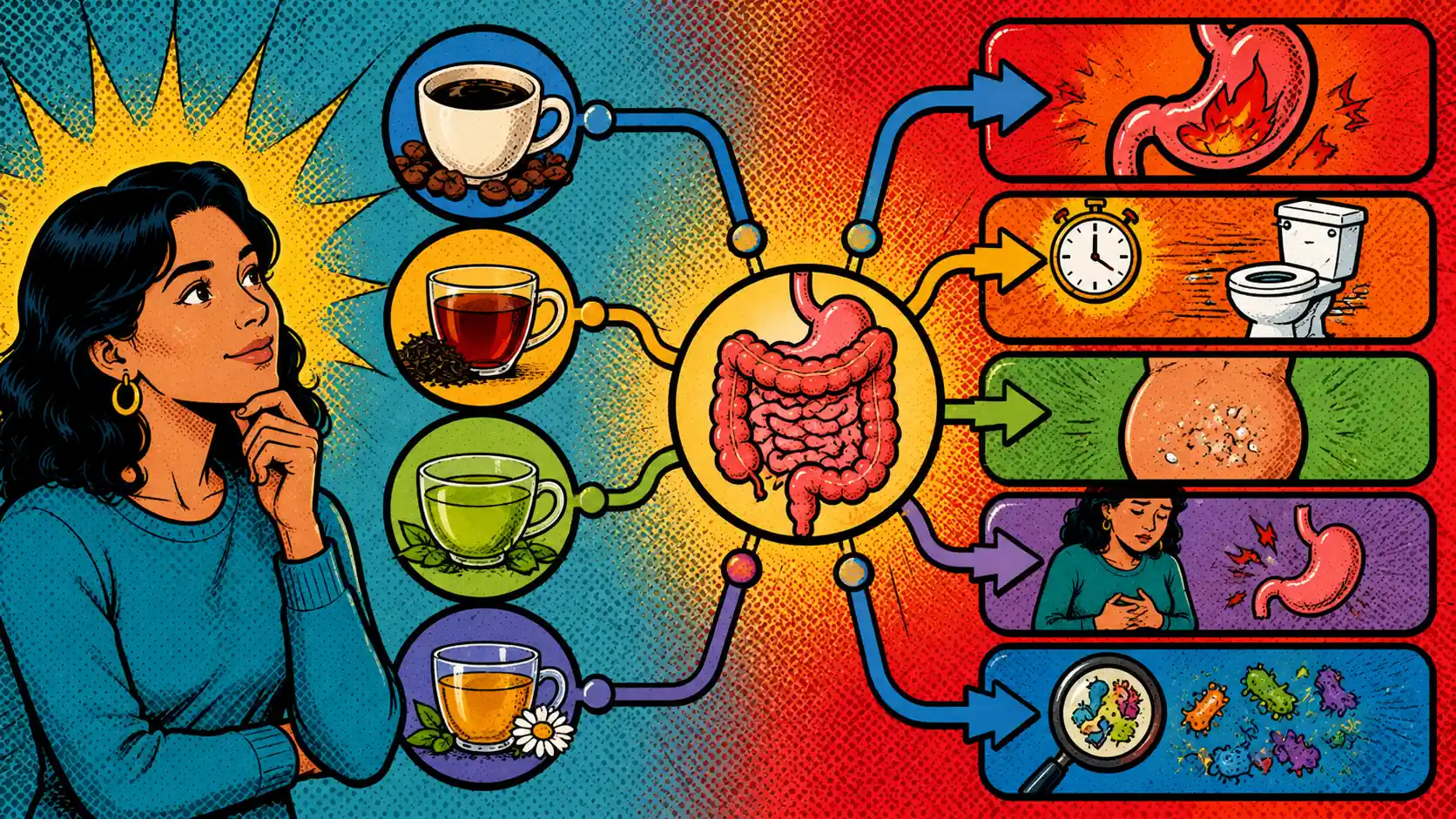
Coffee can sound like a microbiome-friendly habit. Green tea can sound calming and antioxidant-rich. Cinnamon drinks and yerba mate can show up in wellness feeds as if they are obviously good for the gut. Then your reflux, urgency, bloating, nausea, or upper-stomach discomfort tells a more complicated story.
The useful question is not whether coffee or tea is "healthy." It is whether the drink fits your symptom pattern today.
Coffee and tea can contain polyphenols and other compounds that may interact with gut microbes. They can also deliver caffeine, acidity, tannins, heat, sweeteners, milk, carbonation, or spices in ways that change reflux, bowel speed, bloating, and upper-GI comfort. A drink can be reasonable for one person and noisy for another.
This page is for readers who need a practical beverage route. If fermented or sparkling drinks are the issue, start with fermented drinks and gut symptoms. If the question is classic burning or sour reflux, use the reflux-like symptoms guide too.
Coffee and tea are not automatically good or bad for IBS, reflux, bloating, or the microbiome. They are pattern-dependent.
The same drink can involve several variables:
That is why broad advice usually fails. "Quit coffee" can be too blunt. "Drink green tea for gut health" can be too vague. The better move is to ask which symptom the drink changes.
If heartburn rises, think reflux. If urgency rises, think caffeine and bowel speed. If bloating rises, check add-ins, carbonation, dose, and the rest of the meal. If small amounts cause upper-stomach fullness or nausea, route toward functional dyspepsia rather than assuming the issue is just IBS.
Coffee and tea are not empty drinks. Coffee contains many bioactive compounds, and reviews describe links between coffee, gut microbiota, motility, secretion, and bowel function 1. Tea compounds, including polyphenols, have also been studied for interactions with the gut microbiome 2.
That is the real part of the claim. The overreach starts when "may interact with the microbiome" becomes "will improve my symptoms."
Microbiome studies can show associations, mechanisms, or changes in bacterial groups. They usually do not tell you whether your reflux, diarrhea, bloating, or upper-stomach discomfort will improve tomorrow.
If you want the broader food-compound science, use polyphenols and the gut microbiome or polyphenol foods for gut health. This page stays closer to the practical symptom question.
Some people feel better with coffee because it supports a predictable morning routine or bowel movement. That does not mean coffee is a treatment. It means the drink may be part of a pattern that currently works.
The same mechanism can be a problem for someone with urgency-heavy IBS-D. If caffeine speeds the morning too much, the useful route may be dose, timing, or decaf testing rather than a microbiome debate.
NIDDK lists coffee and other caffeine sources among items doctors may recommend avoiding when GERD symptoms are present 3. That does not mean every reflux reader must quit coffee forever. It means coffee and caffeine belong on the test list when the pattern is burning, regurgitation, sour taste, cough, or symptoms worse after lying down.
Test:
If reflux-like symptoms are the main issue, use the reflux-like symptoms page as the parent route.
Caffeine can be worth assessing in IBS, especially when diarrhea or urgency is part of the pattern. A diet-focused IBS review notes that caffeine intake should be assessed and restricted when it relates to symptoms 4. That makes coffee, strong tea, energy drinks, and yerba mate worth testing when urgency dominates.
If the loudest issue is fast transit, use IBS-D and low FODMAP or, when the main question is the urgent bathroom run after eating, use urgency after meals instead of treating coffee as the whole explanation.
Coffee or tea may get blamed when the real trigger is:
If the issue is broader than beverages, use why healthy foods still cause bloating or SIBO vs IBS vs food intolerance to keep the pattern readable.
Some readers do not get classic heartburn or diarrhea. They get nausea, heaviness, early fullness, or upper-stomach discomfort after coffee or tea. That can overlap with functional dyspepsia logic, especially when small meals already feel like too much.
Use functional dyspepsia when the pattern is upper-GI dominant.
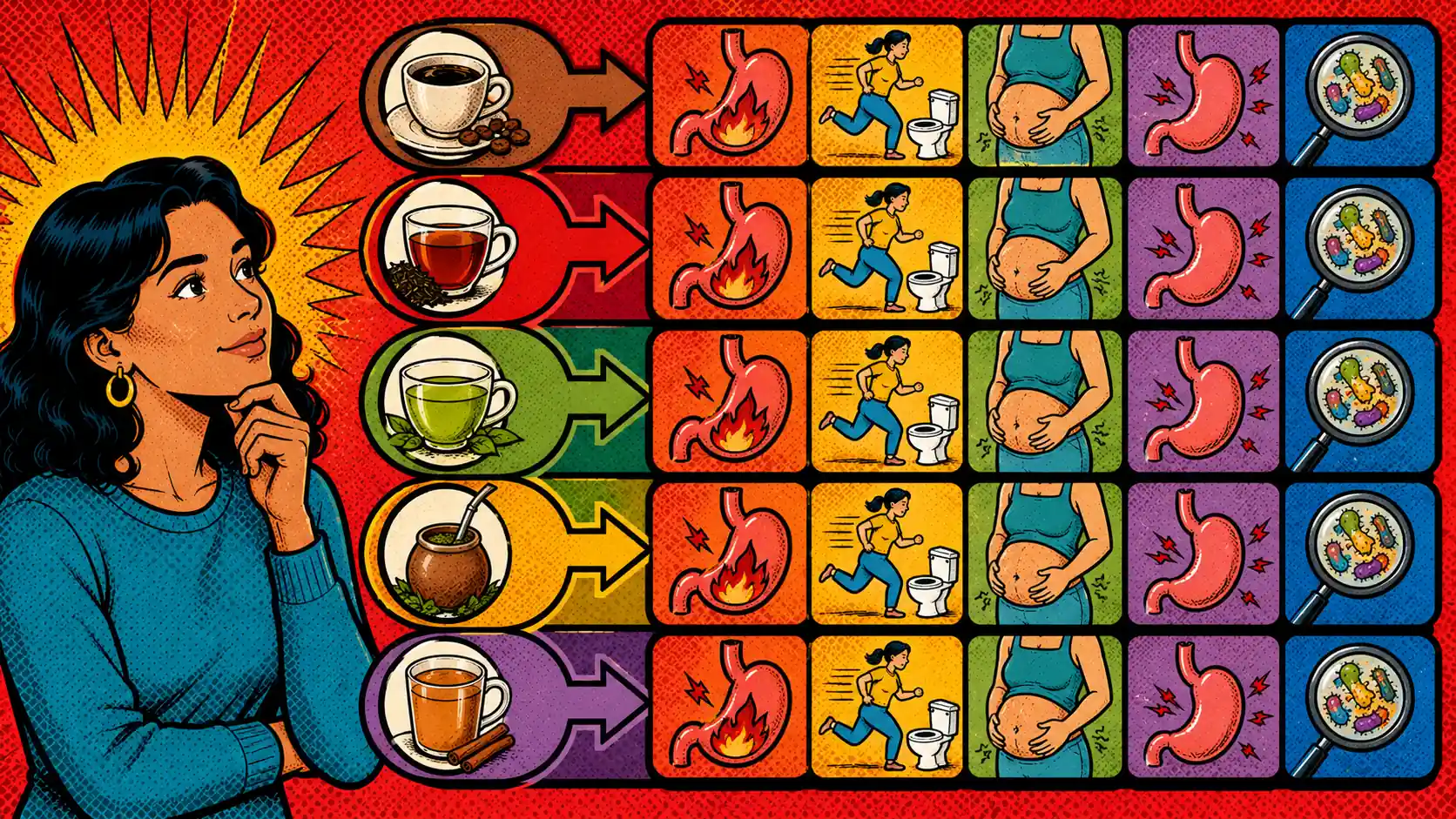
| Drink | Main symptom question | What to test |
|---|---|---|
| Coffee | reflux, urgency, abdominal discomfort | dose, timing, food pairing, decaf |
| Black tea | caffeine and tannin tolerance | strength, timing, milk or sweetener |
| Green tea | caffeine sensitivity, nausea on empty stomach | with food, smaller dose, brew strength |
| Yerba mate | stimulant load | total caffeine, anxiety, urgency, sleep |
| Cinnamon drinks | spice and claim-boundary issue | dose, sugar, reflux response |
FDA notes that for most adults, 400 mg of caffeine a day is not generally associated with dangerous effects, but sensitivity varies and some people need less 5. For gut symptoms, the personal threshold often matters more than the average limit.
Do not change coffee, breakfast, fiber, supplements, probiotics, and dinner at the same time. You will not know what helped or hurt.
Practical test:
Download: Beverage Symptom Test Tracker Use this tracker to test one beverage variable at a time.
The old internet pattern is easy to spot: coffee becomes an antioxidant hero, green tea becomes a metabolism trick, yerba mate becomes a clean-energy fix, and cinnamon becomes a cure-adjacent spice. That framing is not useful for gut symptoms.
For symptom-prone readers, the better question is:
| Claim | Better gut question |
|---|---|
| "Coffee supports the microbiome" | Does it worsen reflux, urgency, or pain for me? |
| "Green tea is antioxidant-rich" | Do I tolerate the caffeine and tannins? |
| "Yerba mate is natural energy" | Is the stimulant load too high for my gut and sleep? |
| "Cinnamon supports digestion" | Does spice, sugar, or dose worsen reflux or nausea? |
If the broader plant-food pattern is the issue, route into plant-based eating and gut symptoms or whole grains and gut tolerance instead of trying to solve the whole pattern with one drink.
| Situation | Best next read | Why |
|---|---|---|
| Kombucha or fermented drinks are the trigger | Fermented drinks and gut symptoms | It separates fermentation, carbonation, histamine-style clues, and probiotic claims |
| Heartburn dominates | Reflux-like symptoms | It keeps coffee and caffeine testing inside a reflux route |
| The main issue is the urgent rush after eating | Urgency after meals | It sorts coffee-triggered urgency from richer meal, IBS-D, and red-flag patterns |
| Caffeine decisions are tied to work, school, or commuting | IBS at work, school, and commuting | It turns beverage timing into a public-day plan |
| Caffeine timing changes with nights, rotating shifts, or early starts | Shift work, sleep, meal timing, and gut symptoms | It keeps caffeine inside the sleep-and-meal rhythm instead of treating it as an isolated drink problem |
| Small meals or upper-stomach discomfort dominate | Functional dyspepsia | It handles upper-GI fullness, nausea, and pain patterns |
| Healthy drinks and foods keep causing bloating | Why healthy foods still cause bloating | It expands beyond beverages without demonizing healthy foods |
| Plant-food pattern is the bigger issue | Plant-based eating and gut symptoms | It helps test broader food-pattern fit |
| Microbiome polyphenol science is the question | Polyphenols and the gut microbiome | It keeps microbiome claims evidence-bounded |
Download: Coffee and Tea Gut-Fit Decision Guide Use this one-page guide when you need to choose whether the next test is reflux, urgency, bloating, dyspepsia, or microbiome curiosity.
Do not keep experimenting with coffee or tea when symptoms no longer feel like a routine tolerance question.
Get medical evaluation for:
Coffee and tea can fit a gut-health pattern for some people. They can also worsen reflux, urgency, bloating, nausea, or upper-GI discomfort in others.
The practical move is not "coffee good" or "coffee bad." It is symptom fit.
Use the drink as a variable:
That is how coffee and tea become readable again.
If the bigger pattern is fluid, diarrhea, constipation, or dehydration context, use hydration, electrolytes, and gut symptoms. If caffeine is stacked with beer, wine, cocktails, or mixers, use beer, wine, cocktails, and gut symptoms.
Xam Riche is a gut health solopreneur and founder of YourFitNature, dedicated to helping people navigate digestive wellness through evidence-based information and personal experience. After years of struggling with IBS and bloating, Xam discovered the transformative power of the low FODMAP diet and now shares practical, science-backed guidance to help others find relief. While not a medical professional, Xam combines extensive research with lived experience to create accessible, empowering resources for the gut health community. Learn more about our mission
As an affiliate, we may earn from qualifying purchases.