 By • Published on April 8, 2026 • 10 min read • 4,487 views
This article is for informational and educational purposes only and does not constitute medical advice. Always consult with a qualified healthcare professional before using scientific content to make treatment decisions.
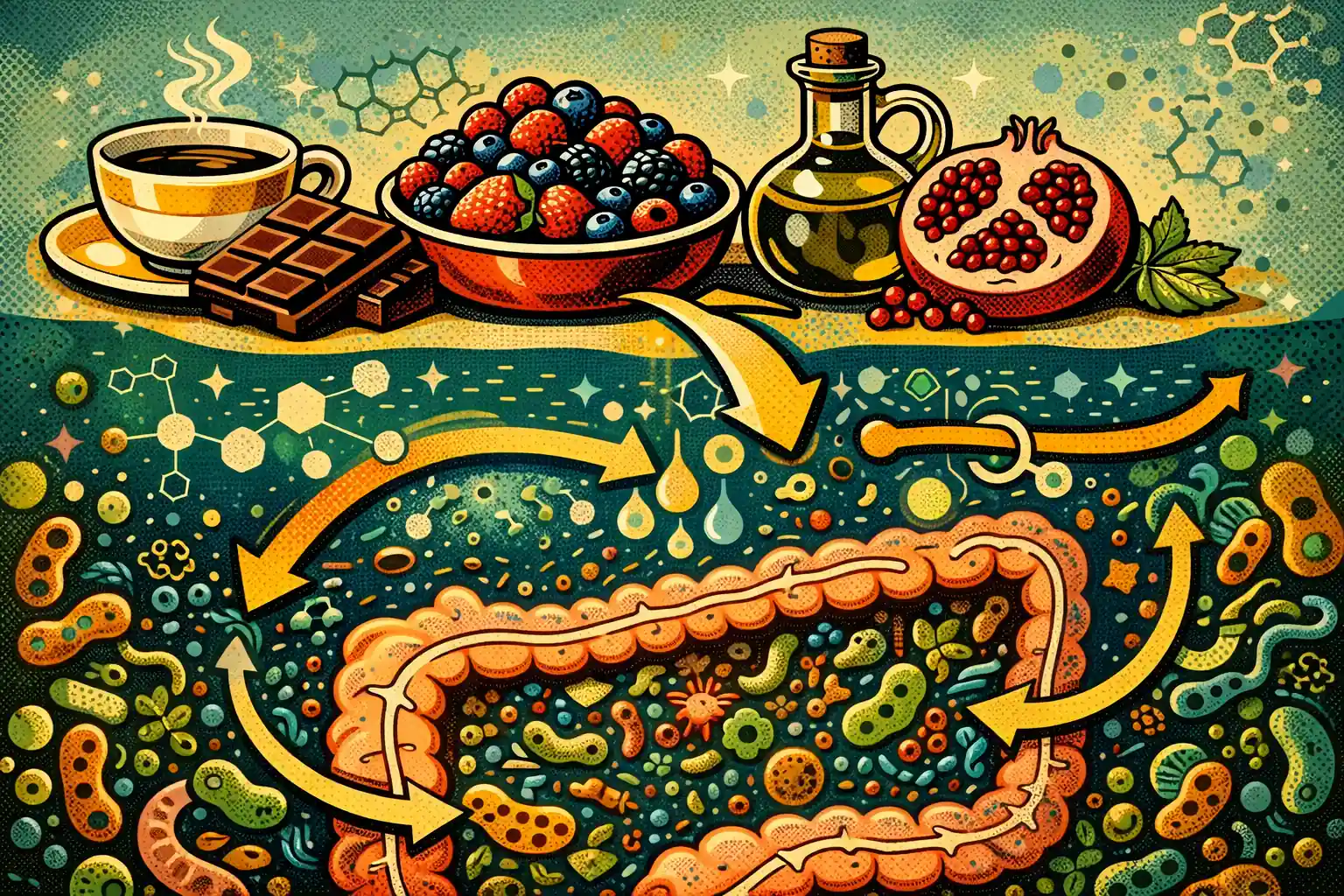
The interesting part of polyphenol science is not that berries or tea sound healthy. It is that many of their compounds reach the colon, meet resident microbes, and get turned into something new. That is where the microbiome story starts.
Short answer: polyphenols matter in microbiome science because many reach the colon, get transformed by gut microbes, and may shift microbial ecology. That is a useful mechanism. It is not automatic proof of broad clinical benefit.
This page is for you if you want the science layer behind polyphenol and microbiome claims before deciding how seriously to take the headlines.
Use a different page first if you want the food-first version or a broader systems-science entry point. Those fit polyphenol foods for gut health or gut-heart-axis better.
People hear that polyphenols are "good for the gut" all the time.
What usually goes missing is the mechanism.
Why do these compounds keep showing up in microbiome papers? Why does Akkermansia appear so often? And what exactly is meant by a term like duplibiotic?
This article is the science layer behind those claims. If you want the practical food version, use our companion guide to polyphenol foods for gut health. If you want the deeper mechanism, stay here.
This page is explaining a food-to-mechanism bridge:
This page is not mainly explaining:
If that sounds closer, route to polyphenol foods for gut health or prebiotics, probiotics, and synbiotics for constipation.
Many polyphenols are poorly absorbed in the upper digestive tract. That means a meaningful share reaches the colon, where resident microbes can transform them into smaller metabolites with different biological activity 1.
That point matters because it explains why polyphenols are different from simple nutrition talking points.
The microbiome does not just sit next to these compounds. It processes them.
Recent reviews describe this as a bidirectional relationship:
This is one reason microbiome researchers keep discussing polyphenol-rich dietary patterns in the same breath as microbial diversity, ecological resilience, and beneficial taxa.
A 2021 review proposed the term duplibiotic to describe polyphenols that seem to influence the gut microbiota through two overlapping routes:
That makes the term useful. It also makes it easy to misuse.
Here is the important part: duplibiotic is a proposed concept, not a consensus replacement for prebiotic terminology. The broader ISAPP definition of a prebiotic still requires selective utilization by host microorganisms plus a health benefit 4.
So the cleanest way to read the literature is this:
If you want the broader primer on what prebiotic fiber actually means before you carry that term into product labels or symptom decisions, use our guide to prebiotic fiber benefits and tolerance. For a patient-facing guide to how microbiome recovery questions show up after antibiotics, use antibiotic-induced gut dysbiosis.
For the dedicated explainer on acetate, propionate, and butyrate, use this short-chain fatty acids guide.
This is also why a strain-specific bacteria page such as our guide to beneficial bacteria should not be read as interchangeable with the polyphenol literature. The two topics overlap, but they are not the same layer of evidence.
One of the more useful concepts in this literature is PAZymes, or polyphenol-associated enzymes. Some microbes carry enzyme sets that help them transform polyphenols into smaller compounds and, in some cases, gain a local ecological advantage from doing so 5.
You do not need to memorize every enzyme family, but a few examples keep appearing:
These matter because they help explain why the microbiome response to polyphenols is not only about feeding bacteria in a vague sense. It is about what some bacteria can actually do with those compounds.
One recurring example is Lactiplantibacillus plantarum, which is often used as a model species for polyphenol transformation and metabolite production 6.
This is also where the metabolite story becomes more interesting. More recent reviews map pathways such as:
The practical lesson is not that every reader should chase those metabolites. It is that microbial metabolism is part of the value proposition in the first place.
If you spend any time in this literature, you keep running into Akkermansia muciniphila.
That is not random.
Reviews repeatedly highlight Akkermansia because it often responds positively in polyphenol-focused studies and may benefit from ecological conditions created by those compounds 8.
Possible reasons include:
This is one reason polyphenol science sometimes bleeds into broader systems topics such as the gut-heart axis and the gut-liver axis, and the gut-kidney axis. Researchers are not only asking whether one food helps one symptom. They are asking how microbial ecology, metabolites, barrier function, and whole-body signaling fit together.
Still, this is where readers need discipline. "Akkermansia appears in the literature" is not the same claim as "this food will raise Akkermansia in your body in a clinically meaningful way."
For a whole-body example of why microbial metabolites and immune signaling matter beyond digestion, see our explainer on the gut-lung axis.
The microbiome is not a single-organism story.
It is an ecosystem story.
That is why cross-feeding matters. One group of microbes may transform a polyphenol into a smaller compound that another group can use, which then changes the local ecology again 9.
This is also where SCFAs enter the conversation.
Polyphenol-fiber interactions, fermentation context, and microbial cooperation may help explain why polyphenol-rich dietary patterns sometimes line up with SCFA-related discussions in the literature 10.
The safest version of that claim is important:
This matters because microbiome content often collapses "possible ecological effect" into "guaranteed metabolic outcome." The literature does not support that jump cleanly.
This is the section most wellness content skips.
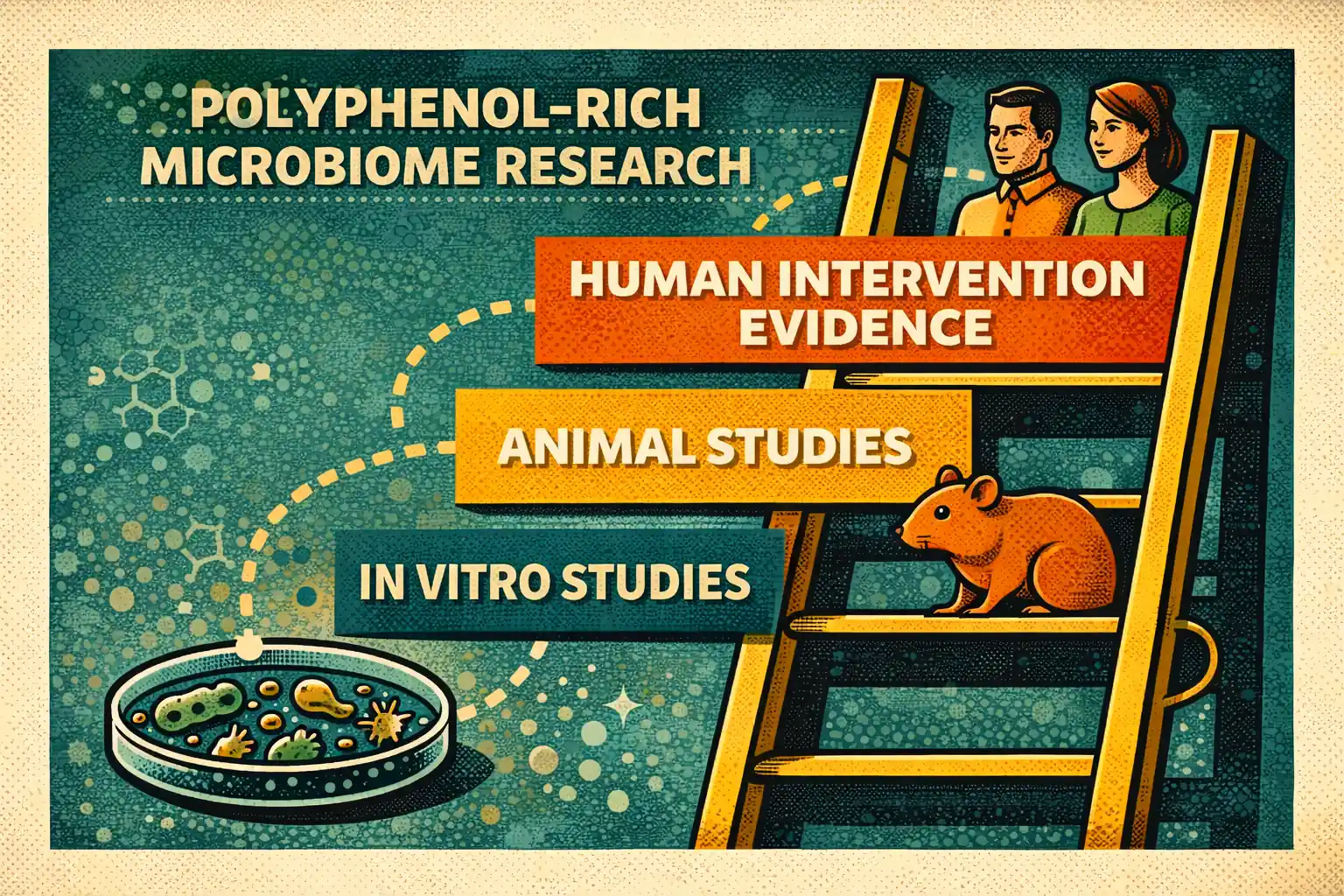
The mechanistic case for polyphenol-microbiome interaction is strong. The human intervention evidence is much more mixed.
| Evidence layer | What it does well | Main limit |
|---|---|---|
| In vitro models | show enzyme action and direct microbial interaction | no full host context |
| Animal studies | show ecological patterns and metabolite shifts | translation to humans is incomplete |
| Human studies | test real-world relevance | often smaller, mixed, and highly context-dependent |
One review even notes that long-term green tea supplementation did not change the human gut microbiota in one study, despite strong interest in tea polyphenols more broadly 11.
That does not weaken the science. It clarifies it.
Mechanism does not automatically equal clinical effect.
A good science article should still tell you what to do with the idea.
The most useful takeaways are:
If you want the companion bridge explaining why varied fiber patterns may also shape microbial diversity and resilience, use fiber diversity and microbiome resilience.
That is why practical diet guidance still belongs inside the basics. If your main problem is eating well with a sensitive gut, start with diet still matters most. If stress clearly shifts how your gut responds, remember that gut effects are not purely food-driven.
And if you want the least technical version of this whole topic, go straight to the companion guide on polyphenol foods for gut health.
[!TIP] Download: Polyphenol-Microbiome Evidence Ladder Use this one-page reference if you want a clean way to separate mechanism, animal data, and human evidence before you trust a big gut-health claim.
Bottom line:
That is why the right takeaway is not microbiome hype. It is better reading.
You should leave this topic less vulnerable to clickbait, not more vulnerable to it. If a product or headline jumps from one mechanism diagram to a sweeping health promise, the evidence ladder should slow you down. If you want the food-first version that is easier to use day to day, return to polyphenol foods for gut health.
For the intervention taxonomy layer, use this guide to probiotics, prebiotics, synbiotics, postbiotics, and SCFAs before treating a product label as a complete microbiome plan.
Xam Riche is a gut health solopreneur and founder of YourFitNature, dedicated to helping people navigate digestive wellness through evidence-based information and personal experience. After years of struggling with IBS and bloating, Xam discovered the transformative power of the low FODMAP diet and now shares practical, science-backed guidance to help others find relief. While not a medical professional, Xam combines extensive research with lived experience to create accessible, empowering resources for the gut health community. Learn more about our mission
As an affiliate, we may earn from qualifying purchases.