 By • Published on April 24, 2026 • 13 min read • 4,265 views
This article is for informational and educational purposes only and does not constitute medical advice. Always consult with a qualified healthcare professional before using microbiome, fiber, or supplement content to make treatment decisions after antibiotics.
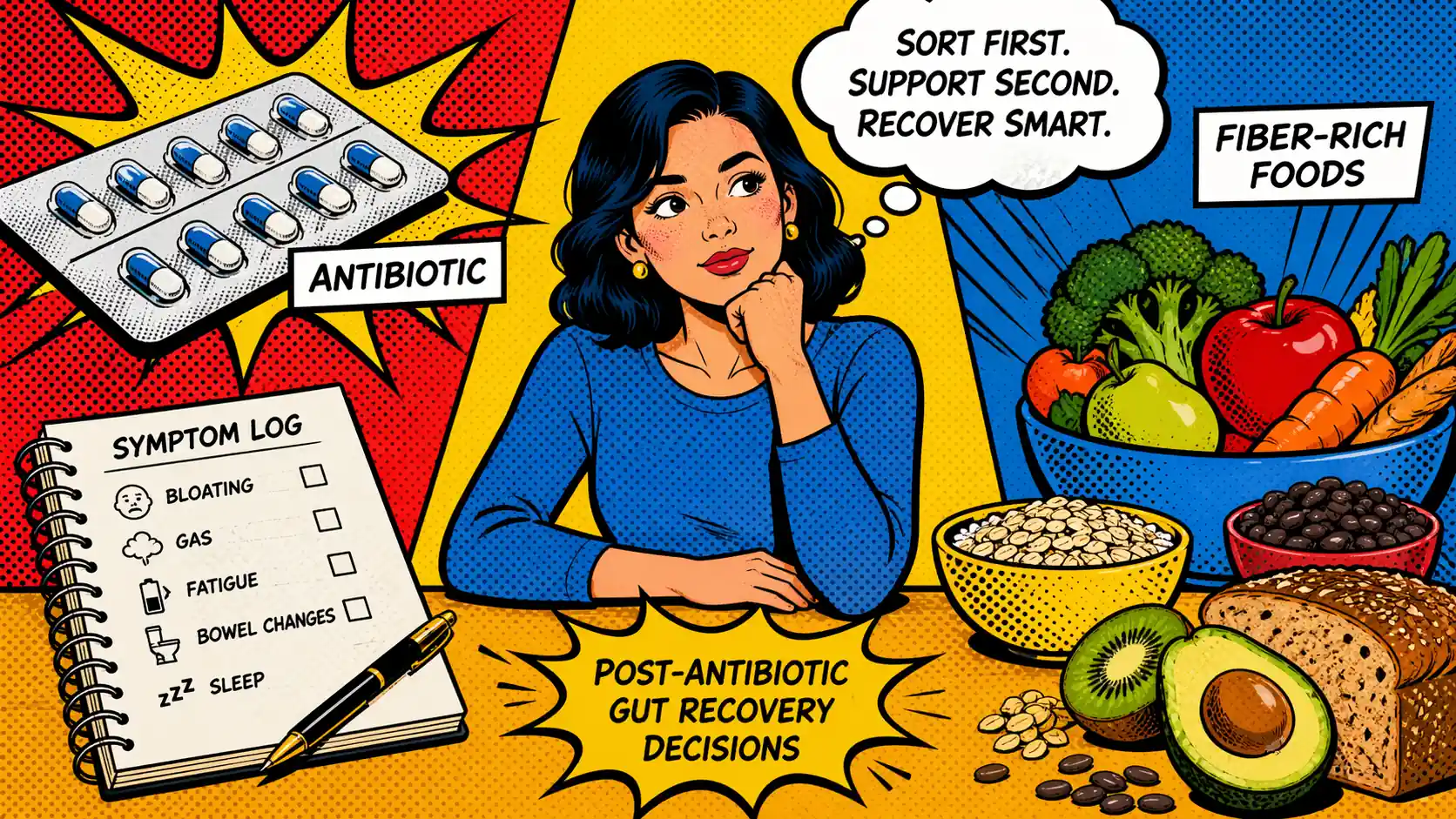
You finish the antibiotic course, but your gut does not feel finished with it. Now the internet starts offering a new stack of promises: prebiotics, synbiotics, postbiotics, fermented foods, butyrate, microbiome reset. Some of that logic is real. A lot of it is too fast. What you need first is not a louder product category. You need a better read on what changed, what recovery question you are actually trying to solve, and which next step fits your symptoms.
Short answer: antibiotic-induced gut dysbiosis usually means antibiotics have disrupted the composition or function of the gut microbiome. That can matter. It does not automatically mean everyone should add concentrated fiber, a prebiotic, or a probiotic the moment treatment ends.
This page is for you if your gut changed during or after antibiotics and you want to understand what that might mean before you start self-prescribing a microbiome recovery plan.
Use a different page first if your main question is a product-category comparison, fermentable-fiber tolerance, or symptom-first troubleshooting. For those paths, start with synbiotics, probiotics, and prebiotics, prebiotic fiber, or why healthy foods still bloat you.
Antibiotics remain essential medicines. The goal of this page is not to scare you away from them. The goal is to help you read the recovery conversation more carefully.
This page is explaining an antibiotic recovery bridge:
This page is not mainly explaining:
If your main question is whether a live microbial product fits a symptom pattern, use probiotics for IBS strains. If your main question is food or fiber tolerance, use prebiotic fiber. If the main issue is upper-GI fullness, nausea, or discomfort after small meals, route instead to functional dyspepsia.
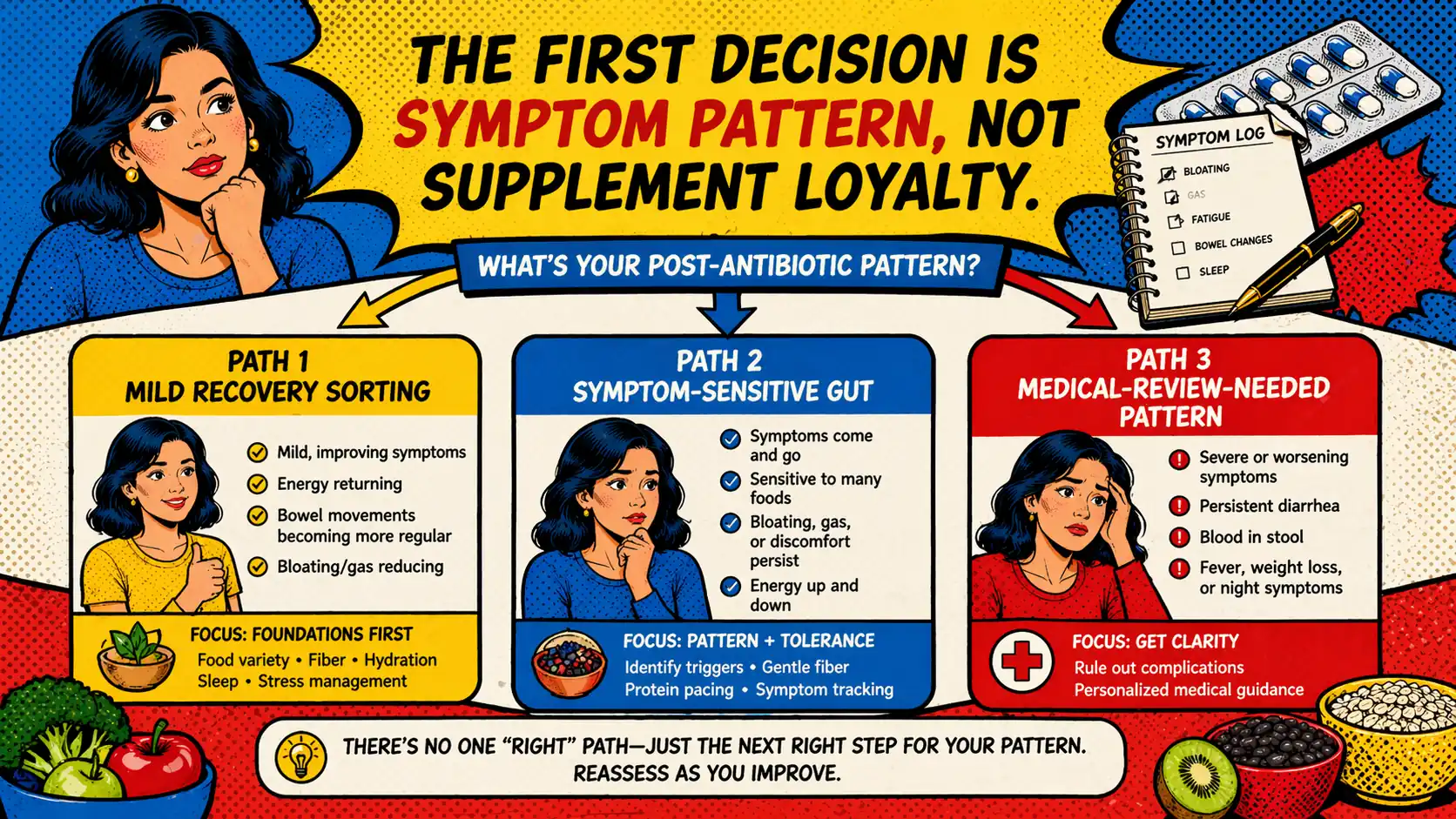
The term sounds dramatic, but the core idea is simple: antibiotics do not only affect the bacteria causing an infection. They can also alter the broader microbial community living in your digestive tract.
That is why people may notice changes such as:
Reviews focused on antibiotic exposure and the gut microbiome describe antibiotics as one of the clearest disruptors of microbiome structure and function in humans 1. Some healthy-adult studies also suggest that microbiome changes and resistance signals can persist beyond the antibiotic window, even if symptoms improve earlier 2.
That does not mean every digestive symptom after antibiotics is microbiome dysbiosis in a clinically useful sense. It means antibiotics are a plausible reason your gut may feel different during or after treatment.
NHS also keeps the basics grounded: diarrhea is a common antibiotic side effect, and in some situations antibiotic exposure can set the stage for C. diff infection, which is a much more important clinical problem than general microbiome dissatisfaction 3 4.
This is where the recovery conversation becomes useful and easy to overread at the same time.
The useful part is real: dietary context matters.
The risky part is the leap from "diet matters" to "therefore this product is the right move for me right now."
Prebiotics are not just "healthy fibers." ISAPP's consensus definition is narrower: a prebiotic is a substrate that is selectively utilized by host microorganisms conferring a health benefit 5.
That matters because recovery conversations often blur together:
Those are related topics. They are not the same intervention.
Fiber and prebiotics appear in the antibiotic-recovery conversation because the gut microbiome depends heavily on available substrates. If antibiotics disrupt microbial ecology, it is reasonable to ask whether substrate choice affects what comes next.
That logic is especially visible in animal and mechanistic work. The older draft drew on murine studies suggesting that dietary context can shape the gut environment during and after antibiotics, and that fiber-rich conditions may look more favorable than glucose-dominant ones in those models 6 7.
That is worth knowing. It is not the same thing as a universal human treatment recommendation.
The cleanest way to read this topic is to separate the claims into tiers.
This is the least controversial part. Human and review literature both support the basic idea that antibiotic exposure can reduce microbial diversity, alter community structure, and shift gut microbial function 8 9.
This is also a fair statement. Gut microbes respond to substrate availability, and dietary context can plausibly influence microbial recovery patterns after antibiotic pressure. Mechanistic and animal work strongly support that broader logic 10.
Human evidence points in the same direction, but it is still more nuanced than marketing language suggests. Controlled-feeding and cohort analyses indicate that fiber exposure can shape aspects of post-antibiotic microbiome and metabolite recovery, yet the pattern is not simple enough to justify one universal post-antibiotic fiber prescription 11 12.
This is where discipline matters.
The fact that fermentable substrates can be microbiome-relevant does not mean a concentrated prebiotic supplement is the right move for every post-antibiotic gut. A reactive gut can still feel worse with inulin, FOS, GOS, chicory-root fiber, or combo products, especially if bloating was already part of the story.
That is why Monash's FODMAP framework still matters here. A fermentable ingredient can be mechanistically interesting and still symptom-heavy in a sensitive gut 13.
This is the place for nuance, not ideology.
NCCIH notes that probiotics have shown promise for prevention of antibiotic-associated diarrhea, but it also frames the evidence as dependent on the specific preparation, population, and use case 14.
So the disciplined version is:
If you want the live-microbe decision tree, do not stretch this page too far. Use probiotics for IBS strains for a more specific product-evidence shelf.
This page is not anti-fiber.
There are situations where fiber or prebiotic support is a sensible next question, especially when:
Even then, the smartest frame is usually fit and tolerance, not "rebuild the microbiome fast."
If your post-antibiotic question is mostly about whether a fermentable fiber belongs in your plan, route next to prebiotic fiber. That page is better for:
If your question is broader category confusion, route instead to synbiotics, probiotics, and prebiotics before you assume a combo product is smarter than a simpler option.
This is the real safeguard the old WP article was missing.
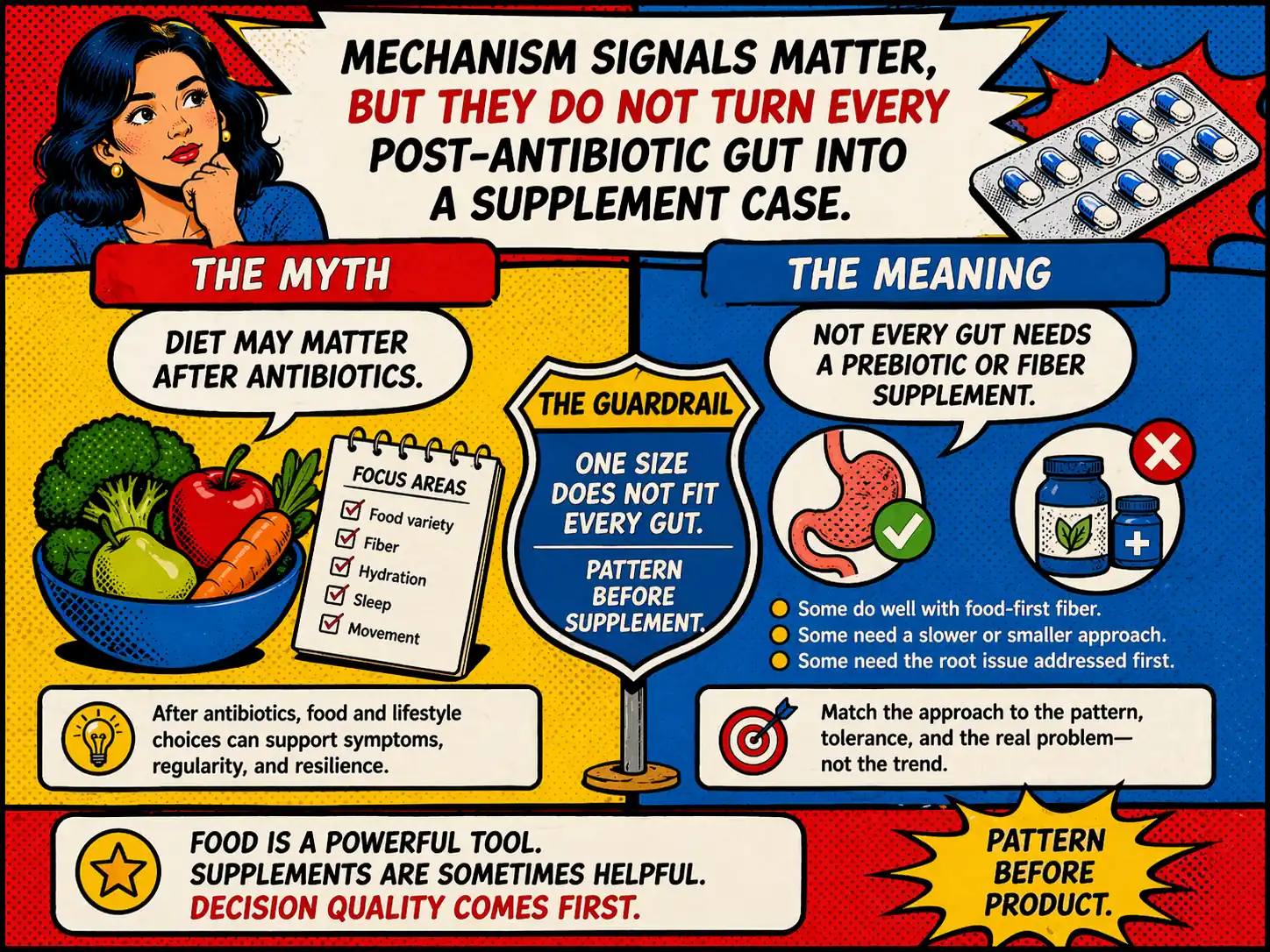
A post-antibiotic gut can be disrupted and still be symptom-sensitive.
That means all of these statements can be true at once:
That is why concentrated microbiome products so often create confusion. They sound like recovery tools while quietly adding ingredients that the gut does not currently tolerate well.
Common problem setups include:
If that sounds familiar, move sideways to why healthy foods still bloat you before you keep escalating the microbiome vocabulary. Sometimes the real issue is less about missing bacteria and more about a gut that cannot currently handle the ingredient load you are throwing at it.
This may be the most important section in the article.
Sometimes the wrong move is asking "which prebiotic?" when the real question is "does this need medical review?"
Antibiotic-linked diarrhea deserves more caution when it is:
NIDDK lists medicines such as antibiotics among common causes of acute diarrhea, but it also emphasizes that persistent symptoms and red flags need a broader clinical workup 15. NHS separately highlights C. diff as a meaningful antibiotic-linked cause of diarrhea, especially when antibiotics have changed the balance of bacteria in the bowel 16.
In practical terms, NIDDK says adults should contact a doctor right away for signs such as dehydration, black or bloody stools, severe pain, high fever, diarrhea lasting more than 2 days, or six or more loose stools per day. NHS separately flags diarrhea during or after antibiotics, bloody diarrhea, or diarrhea lasting more than 7 days as reasons to seek urgent help 17 18.
So if the main pattern is repeated watery diarrhea, fever, blood, or a person who feels increasingly unwell, the right next step is not a fiber experiment. It is clinical review.
The cleaner way to use this topic is to work in order.
Ask:
If symptoms are mild and stable, then ask:
That is where the taxonomy bridge helps. Use synbiotics, probiotics, and prebiotics if the labels are blurring together.
If fermentable fibers have repeatedly made you feel worse, treat that as real decision data. Mechanism does not erase symptom fit.
Do not keep interpreting everything through microbiome theory if the symptoms look more like ongoing diarrhea, infection, dehydration risk, or a broader digestive problem.
Antibiotic-induced gut dysbiosis is a useful concept when it makes the next question clearer.
It becomes less useful when it turns into a blank check for every product that mentions recovery, fiber, or microbiome reset.
The strongest takeaways are:
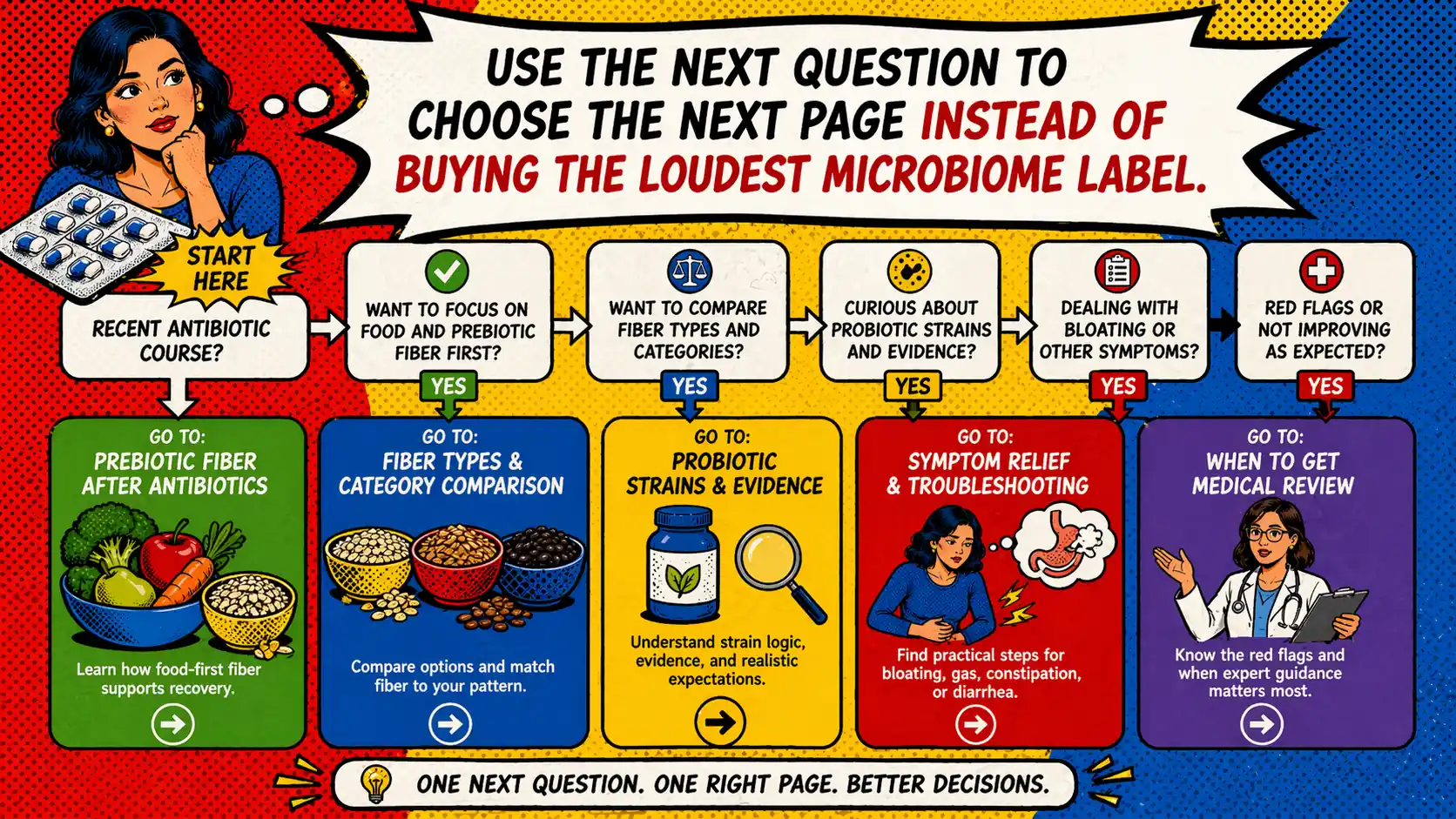
If you want the right next read, use the routing block below instead of guessing.
[!TIP] Download: Post-Antibiotic Gut Recovery Sorting Guide and Antibiotic Symptom and Product-Tolerance Tracker if you want a quick symptom-sort sheet before you choose a fiber, prebiotic, or probiotic next step.
Xam Riche is a gut health solopreneur and founder of YourFitNature, dedicated to helping people navigate digestive wellness through evidence-based information and personal experience. After years of struggling with IBS and bloating, Xam discovered the transformative power of the low FODMAP diet and now shares practical, science-backed guidance to help others find relief. While not a medical professional, Xam combines extensive research with lived experience to create accessible, empowering resources for the gut health community. Learn more about our mission
As an affiliate, we may earn from qualifying purchases.
Choose a focused guide for what you are noticing or deciding next.