 By • Published on May 8, 2026 • 6 min read • 4,148 views
This article is for informational and educational purposes only and does not constitute medical advice. Always consult with a qualified healthcare professional before using symptom information to make diagnosis or treatment decisions.
Post-antibiotic food rebuilding often starts with anxiety. You finish the antibiotic, your stools are different, bloating feels louder, appetite is off, and the internet starts offering repair protocols: probiotics, fermented foods, prebiotics, bone broth, fasting, detoxes, or a sudden high-fiber reset.
That is too much noise for a gut that may already be reactive. The safer first question is not "How do I restore my microbiome fast?" It is "Which symptom pattern am I in, and what food steps are reasonable while I watch for warning signs?"
Start with safety sorting, then rebuild conditions. The parent guide to antibiotic-induced gut dysbiosis explains what antibiotics can do to the gut microbiome and what not to overclaim. This page handles the next practical layer: hydration, simple meals, protein anchors, gradual fiber diversity, and cautious thinking about fermented foods or probiotics.
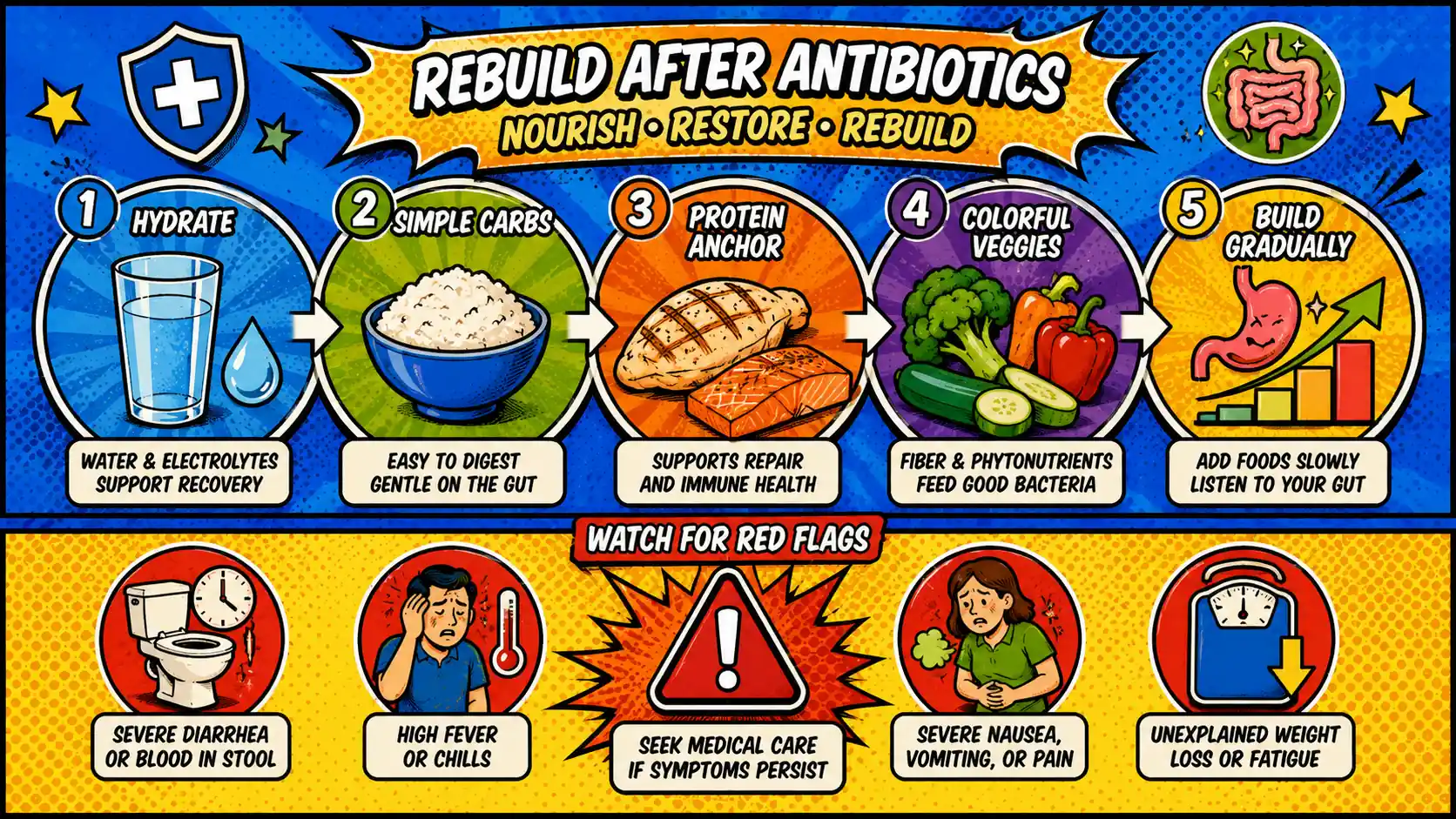
Antibiotics can cause side effects, including digestive symptoms. CDC notes that diarrhea can sometimes be a sign of C. diff, a serious infection that can occur after antibiotic use 1. CDC's C. diff guidance describes it as a germ that causes diarrhea and colitis, with risk linked to recent antibiotic exposure 2.
That does not mean every loose stool after antibiotics is C. diff. It does mean red flags come before meal plans. Seek medical review if diarrhea is severe, persistent, bloody, feverish, dehydrating, or paired with worsening pain or inability to keep fluids down.
If symptoms are mild and you can stay hydrated, begin with stability. Choose familiar starches, simple proteins, broth or fluids you tolerate, and produce portions that have not caused trouble before. NIDDK's diarrhea nutrition guidance emphasizes replacing fluids and electrolytes and seeking care for concerning patterns rather than trying to force a special food fix 3.
This phase is especially useful if appetite is low or stools are loose. Keep caffeine, alcohol, very fatty meals, sugar alcohols, and large added-fiber doses out of the first experiment unless they are already known to fit you. The point is not to eat perfectly. It is to avoid a pile-up of new variables.
Download: Post-Antibiotic Food Rebuild Tracker
Protein anchors help meals become meals again. Depending on your diet pattern, that might mean eggs, poultry, fish, tofu, tempeh, lactose-free dairy, soy milk, beans in tolerated portions, or another familiar protein.
Pair protein with starches that have been easy before: rice, potatoes, oats, sourdough, noodles, or other staples that fit your gut and diet pattern. Do not judge the whole recovery by one ambitious high-fiber bowl or one supplement trial.
If dairy, lactose-free milk, or plant milks are part of your protein and calcium plan, route to dairy, lactose, and plant milks before making broad swaps.
The microbiome conversation often jumps straight to prebiotics. Food diversity usually deserves to come first.
Use the logic from fiber diversity and microbiome resilience: small, repeatable variety beats a sudden fiber flood. Add one plant category at a time, such as a fruit, a cooked vegetable, oats, seeds, or a tolerated legume portion. Hold it steady for a few days before adding the next variable.
If you already came from a restricted diet, the same rebuilding principles in diet diversity after low FODMAP can help: return variety in lanes, not chaos.
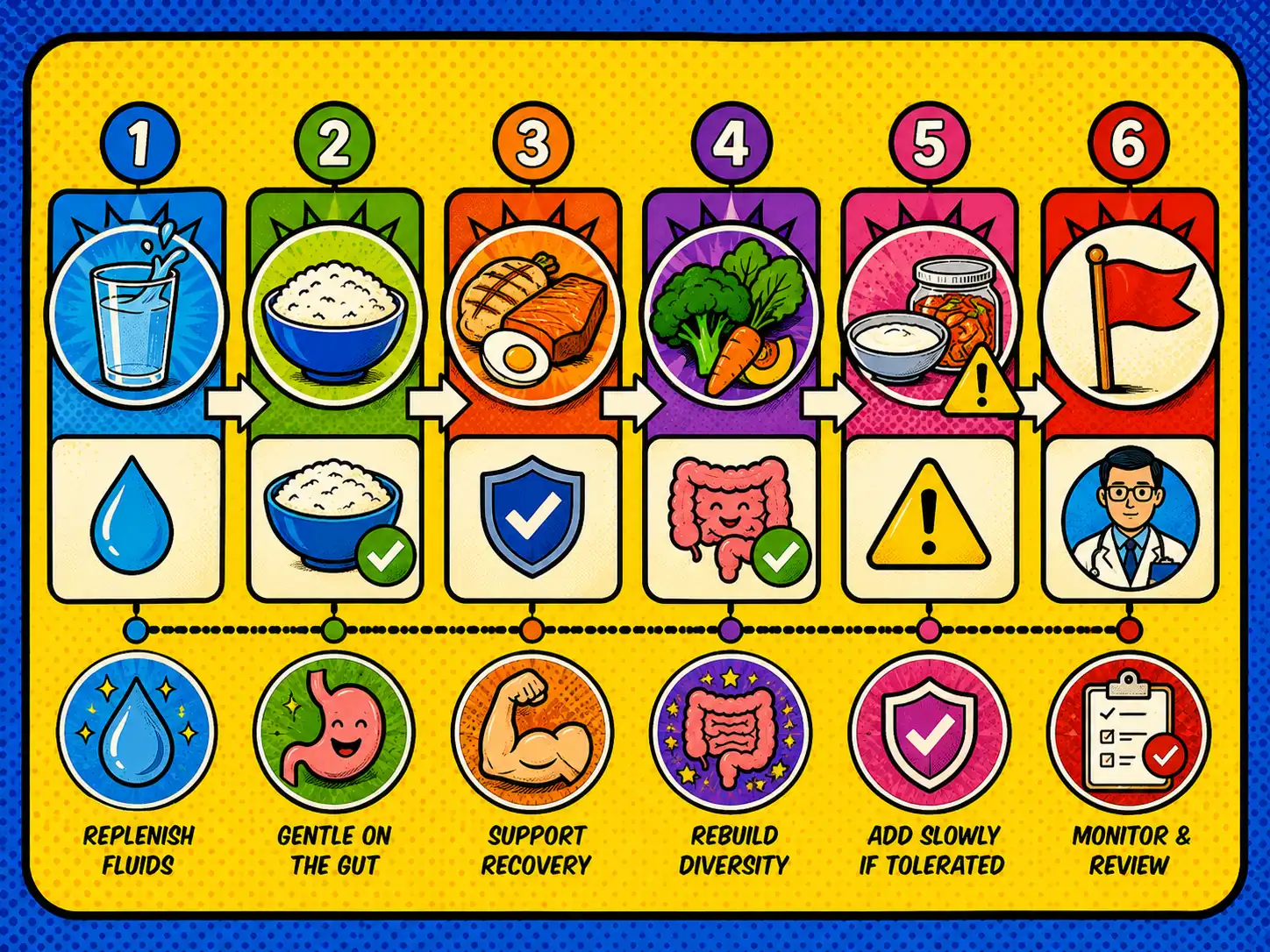
Fermented foods and probiotics are not the same thing, and neither is an automatic repair button. NCCIH notes that probiotics are live microorganisms and that their effects depend on factors such as the organism, dose, condition, and person 4. That is why strain, context, and risk matter.
If you want the category map, use prebiotics, probiotics, and synbiotics. If your question is IBS-specific, route to the probiotics for IBS strains guide.
For the first post-antibiotic week, be careful with concentrated prebiotic powders, large kombucha servings, aggressive fermented-food stacks, or multiple new products at once. If symptoms worsen, you will not know which variable did it. If you want a calmer food-first bridge before probiotics, use gentle variety before probiotics.
Use two weeks to rebuild conditions rather than chase a perfect protocol.
Download: Antibiotic Recovery Red-Flag Checklist
| If this is the main question | Best next read |
|---|---|
| You need the parent mechanism explainer | Antibiotic-induced gut dysbiosis |
| Fiber variety is the main rebuild question | Fiber diversity and microbiome resilience |
| You are also recovering from low-FODMAP restriction | Diet diversity after low FODMAP |
| You want food-first microbiome support before probiotics | Gentle variety before probiotics |
| Product categories are confusing | Prebiotics, probiotics, and synbiotics |
| You are comparing probiotic products for IBS | Probiotics for IBS strains guide |
The best post-antibiotic food plan is not the most aggressive microbiome plan. It is the one that keeps you safe, keeps meals readable, and rebuilds variety at a pace your gut can actually show you.
If symptoms are mild, start with hydration and simple meals. If they are worsening, severe, bloody, feverish, persistent, or dehydrating, stop self-testing and get medical guidance. If the first week settles, add diversity gradually and review the pattern before adding products.
That is not a dramatic recovery protocol. It is a safer one.
Xam Riche is a gut health solopreneur and founder of YourFitNature, dedicated to helping people navigate digestive wellness through evidence-based information and personal experience. After years of struggling with IBS and bloating, Xam discovered the transformative power of the low FODMAP diet and now shares practical, science-backed guidance to help others find relief. While not a medical professional, Xam combines extensive research with lived experience to create accessible, empowering resources for the gut health community. Learn more about our mission
As an affiliate, we may earn from qualifying purchases.