 By • Published on May 12, 2026 • 8 min read • 4,267 views
This article is for informational and educational purposes only and does not constitute medical advice. Always consult with a qualified healthcare professional before using microbiome or supplement content to make diagnosis or treatment decisions.
The pressure to "fix the microbiome" can arrive long before the gut is ready for another experiment.
You finish a round of low FODMAP. Or antibiotics. Or a stretch where bloating, fullness, or bowel unpredictability kept you stuck on a few safe meals. Then the internet says the answer is probiotics, prebiotics, kombucha, kefir, resistant starch, inulin, or a supplement stack that promises to repair everything at once.
That is often too loud for the moment you are in.
This page is for the stage before that. Gentle variety before probiotics means using a food-first bridge when you want microbiome support but your gut is still too reactive for confident supplement escalation.
If you already need the category boundary, start with probiotic vs prebiotic. If you are rebuilding after low FODMAP, keep diet diversity after low FODMAP nearby. If you are coming out of an antibiotic disruption, use post-antibiotic food rebuilding. This page sits between them: not "buy a probiotic now," and not "eat perfectly." Just a calmer way to support the gut first.
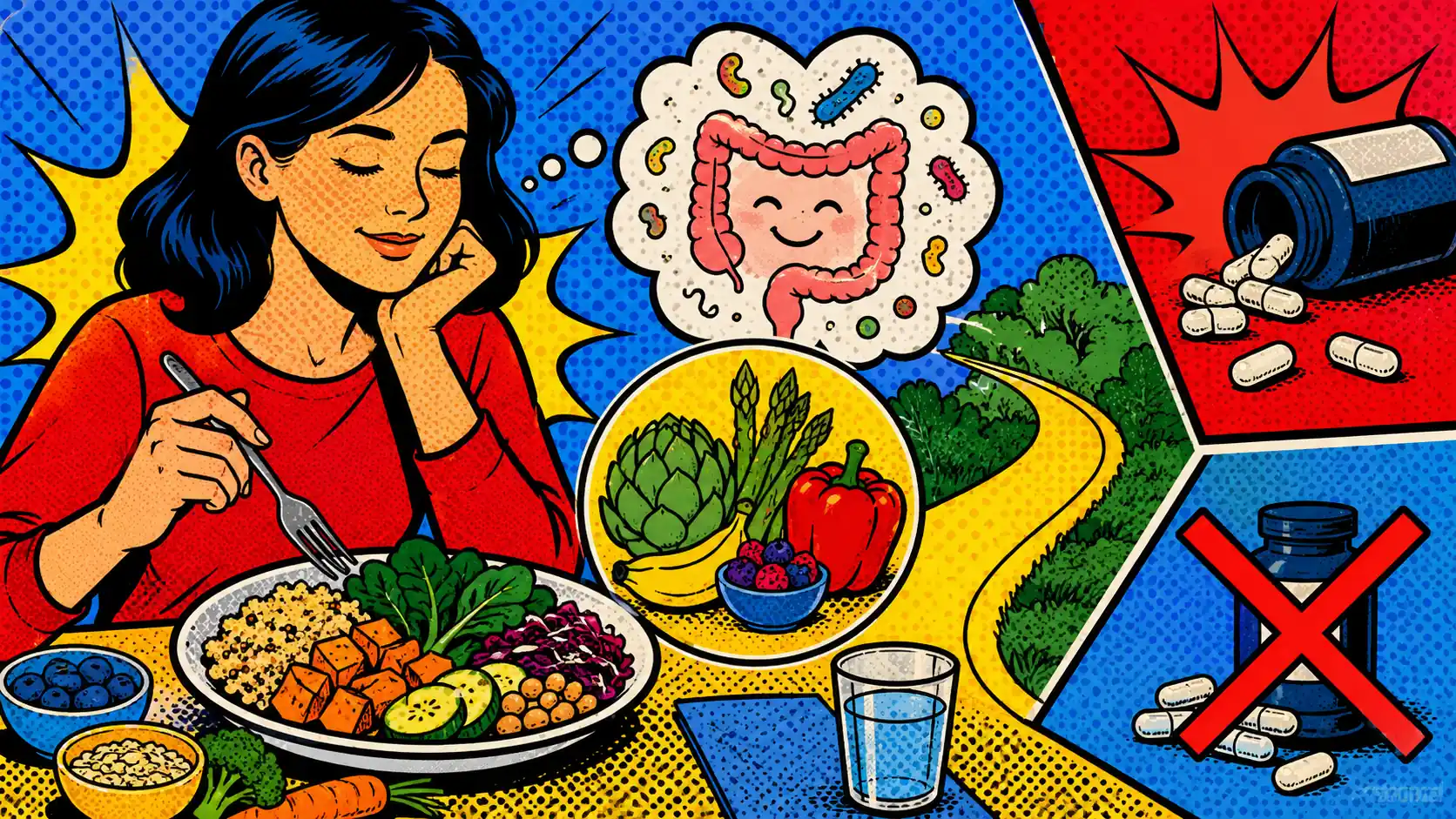
Probiotic interest makes sense. Many readers want something specific and actionable. The problem is that the word "probiotic" can start carrying more hope than the situation can support.
NCCIH notes that probiotic effects depend on the specific microorganism and the intended use 1. Monash makes the same practical point for IBS readers: product choice, symptom target, and the rest of the formula all matter, and probiotic trials are clearer when you use one product at a time 2.
That matters because many readers reach for probiotics while the bigger problem is still basic readability:
When that is the picture, food-first microbiome support is not a downgrade. It is often the cleaner starting point.
Gentle variety is not a random grab bag of "healthy foods." It is a structured increase in tolerated inputs.
That usually means:
If you already came through the low-FODMAP process, this is the same basic logic as diet diversity after low FODMAP: move from stable anchors toward a wider rotation without losing the signal. Monash's 3-step low-FODMAP guidance reinforces that the long-term goal is personalization, not permanent restriction 3.
If your current context is post-antibiotic recovery, the same principle still fits. Use post-antibiotic food rebuilding for the first safety and meal-anchor stage, then return here when you are ready to think about microbiome support more deliberately.
For a reactive gut, food-first microbiome support usually beats concentrated guesswork.
Monash's prebiotic fiber guidance is useful here because it keeps prebiotics grounded in food and fiber patterns rather than instant supplement logic 4. NIDDK's IBS guidance also supports gradual fiber increases instead of abrupt loading 5.
That gives you a simpler hierarchy:
In practice, a gentle lane might be:
The point is not to chase a perfect plant-diversity score. It is to widen the food pattern enough that your gut sees a broader, calmer routine.
Fermented foods often get treated as a softer version of probiotics. That is not always a safe assumption.
Monash notes that some fermented foods can fit low-FODMAP portions while also stating that we do not automatically know whether including them will deliver special health benefits 6. That is a useful reality check.
If you are curious about fermented foods, treat them like any other food test:
This is especially important if you are still asking why healthy foods still cause bloating. A microbiome-supportive idea in theory can still be too loud in practice.
A probiotic trial can make more sense later, not never.
The key is readiness:
Monash recommends trying one probiotic product at a time and stopping if there is no meaningful improvement after an appropriate trial window 7. Recent meta-analysis data in IBS also support the idea that benefits are not uniform enough to treat all probiotics as interchangeable 8.
That makes the real next question narrower than "Should I take probiotics?" Instead ask:
If you need that deeper branch, route to how probiotic selection is evolving or the strain-specific shelf from probiotic vs prebiotic.
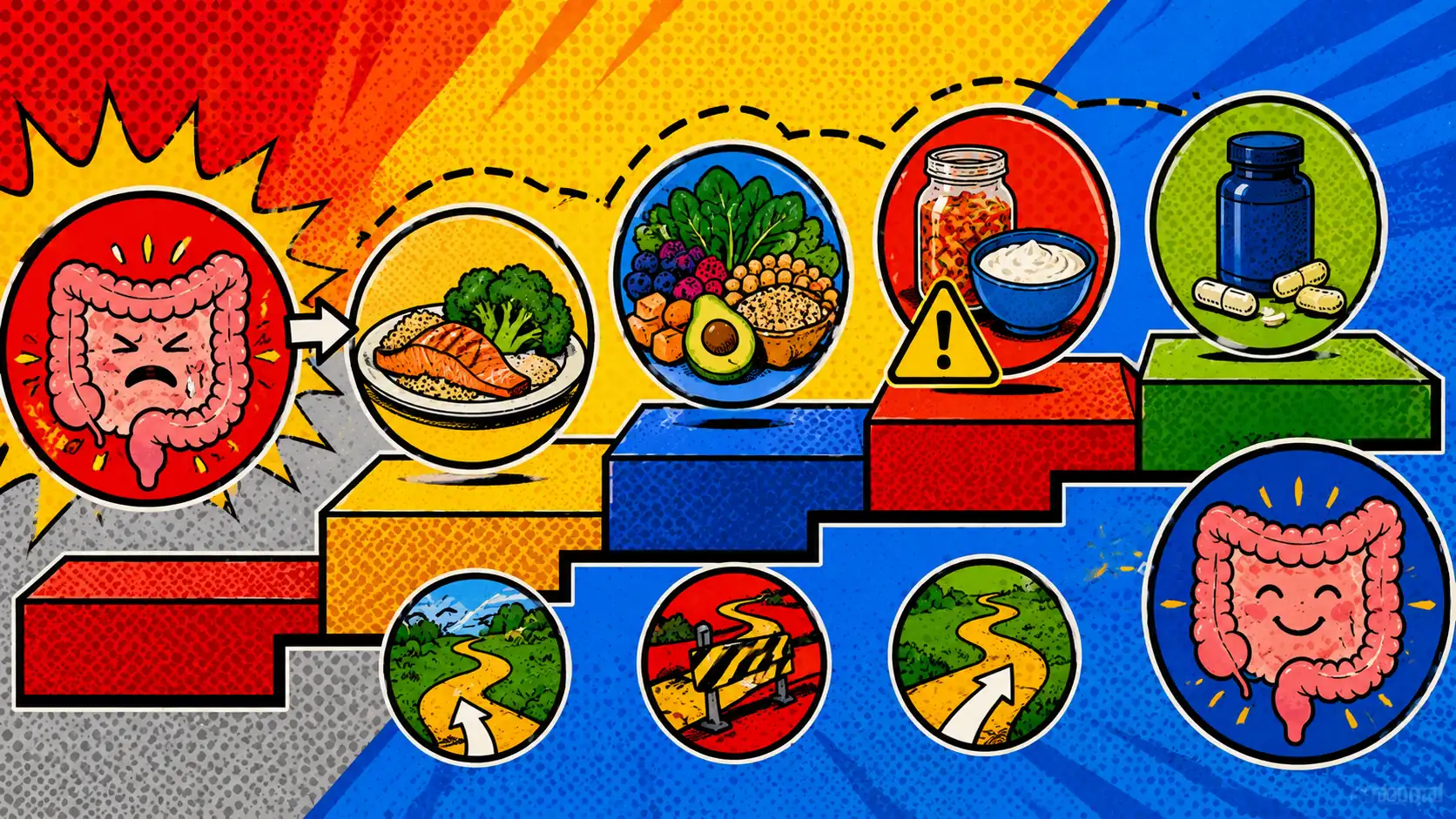
Download: Gentle Variety Before Probiotics Plan and Food-First Microbiome Support Checklist
Sometimes the right answer is not "more microbiome support." It is "less experimentation for a week."
If every probiotic idea, fiber idea, fermented-food idea, or "heal the gut" food still feels loud, return to stability:
That is not failure. It is how you protect decision quality.
If you need the bigger reason variety still matters, go to fiber diversity and microbiome resilience. If the gut is not calm enough for that conversation yet, stay with symptom-first routes until it is.
| If this is the main pattern | Best next read |
|---|---|
| You are rebuilding variety after low FODMAP | Diet diversity after low FODMAP |
| You are early in post-antibiotic rebuilding | Post-antibiotic food rebuilding |
| You need the category boundary first | Probiotic vs prebiotic |
| You want the bigger fiber-variety logic | Fiber diversity and microbiome resilience |
| Healthy foods still seem to backfire | Why healthy foods still cause bloating |
| You are ready for strain-specific probiotic thinking | How probiotic selection is evolving |
| You are ready to review one named product without skipping the evidence step | Align probiotic evidence review |
Microbiome support does not have to begin with a loud product decision.
If your gut is still reactive, food-first support can be the smarter first move: stable meals, gentle variety, gradual fiber pacing, and realistic readiness before probiotics. The goal is not to delay forever. The goal is to make the next step readable enough to trust.
Xam Riche is a gut health solopreneur and founder of YourFitNature, dedicated to helping people navigate digestive wellness through evidence-based information and personal experience. After years of struggling with IBS and bloating, Xam discovered the transformative power of the low FODMAP diet and now shares practical, science-backed guidance to help others find relief. While not a medical professional, Xam combines extensive research with lived experience to create accessible, empowering resources for the gut health community. Learn more about our mission
As an affiliate, we may earn from qualifying purchases.