 By • Published on April 28, 2026 • 12 min read • 1,137 views
This article is for informational and educational purposes only and does not constitute medical advice. Always consult with a registered dietitian, gastroenterologist, or other qualified healthcare professional before making major dietary changes, especially if IBS, bloating, constipation, or food intolerance symptoms are active.
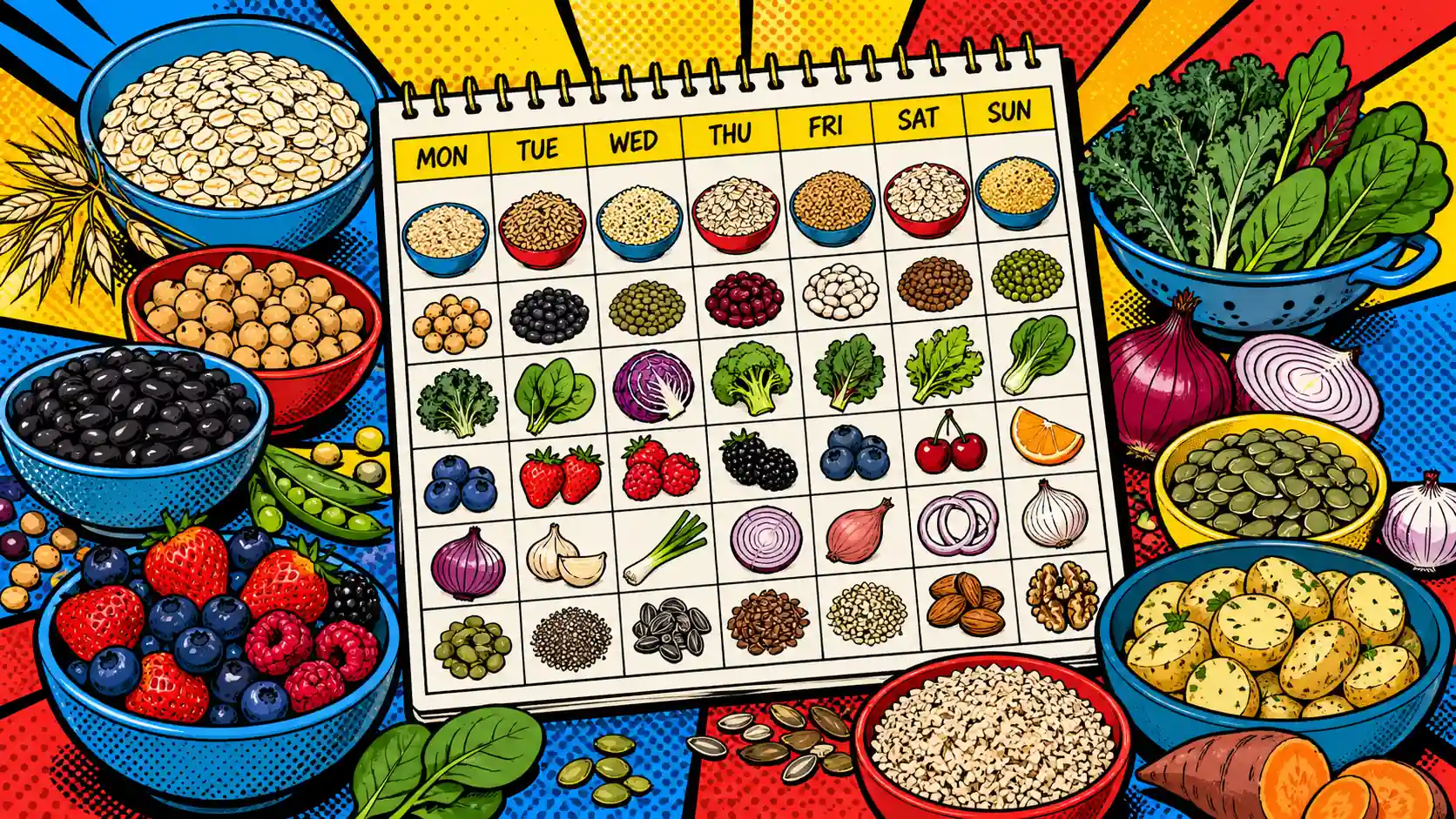
More fiber is one of the most repeated pieces of gut-health advice on the internet. Then the advice gets more specific. Suddenly you are hearing about prebiotics, resistant starch, beta-glucans, plant diversity, and microbiome resilience. At that point, a simple question turns into a confusing one: do you need more fiber, more kinds of fiber, or just fewer gut-health slogans?
Short answer: fiber variety matters because the gut microbiome does not treat every fiber the same way. Different fibers can support different microbial pathways, which helps explain why variety may matter for microbial diversity and resilience 1 2. But more variety is not a free pass to overwhelm a sensitive gut.
This page is for you if you already know fiber matters and now want to understand whether different kinds of fiber change the microbiome in different ways.
Use a different page first if your main question is which foods count as practical prebiotic sources, what prebiotic fiber means as a category, or what SCFAs are doing in the story. Those fit food-first prebiotic fiber sources, prebiotic fiber, or short-chain fatty acids better.
If you keep seeing claims that your gut needs more diversity, the first thing to know is that fiber is not one thing.
That sounds obvious, but most dietary advice still talks as if all fiber works through one simple mechanism. In reality, fiber differs in structure, viscosity, fermentability, and how much of it reaches the colon for microbes to use 3.
That is why this article exists. It is the bridge between the broad prebiotic concept, the practical food-source utility, and the downstream metabolite story. If you want to understand why a more varied fiber pattern may matter, stay here.
Fiber diversity does not mean obsessing over one internet challenge or one perfect weekly plant score.
It means your gut sees a wider range of plant substrates across time.
That can come from:
This is the cleanest practical distinction:
That distinction matters because repeating one cereal, one smoothie add-in, or one inulin-heavy bar does not create the same pattern as a week that includes oats, berries, lentils, seeds, vegetables, and a cooled-starch side dish 4 5.
If you still need the category boundary first, use prebiotic fiber. If you want the more practical food list after this article, use food-first prebiotic fiber sources.
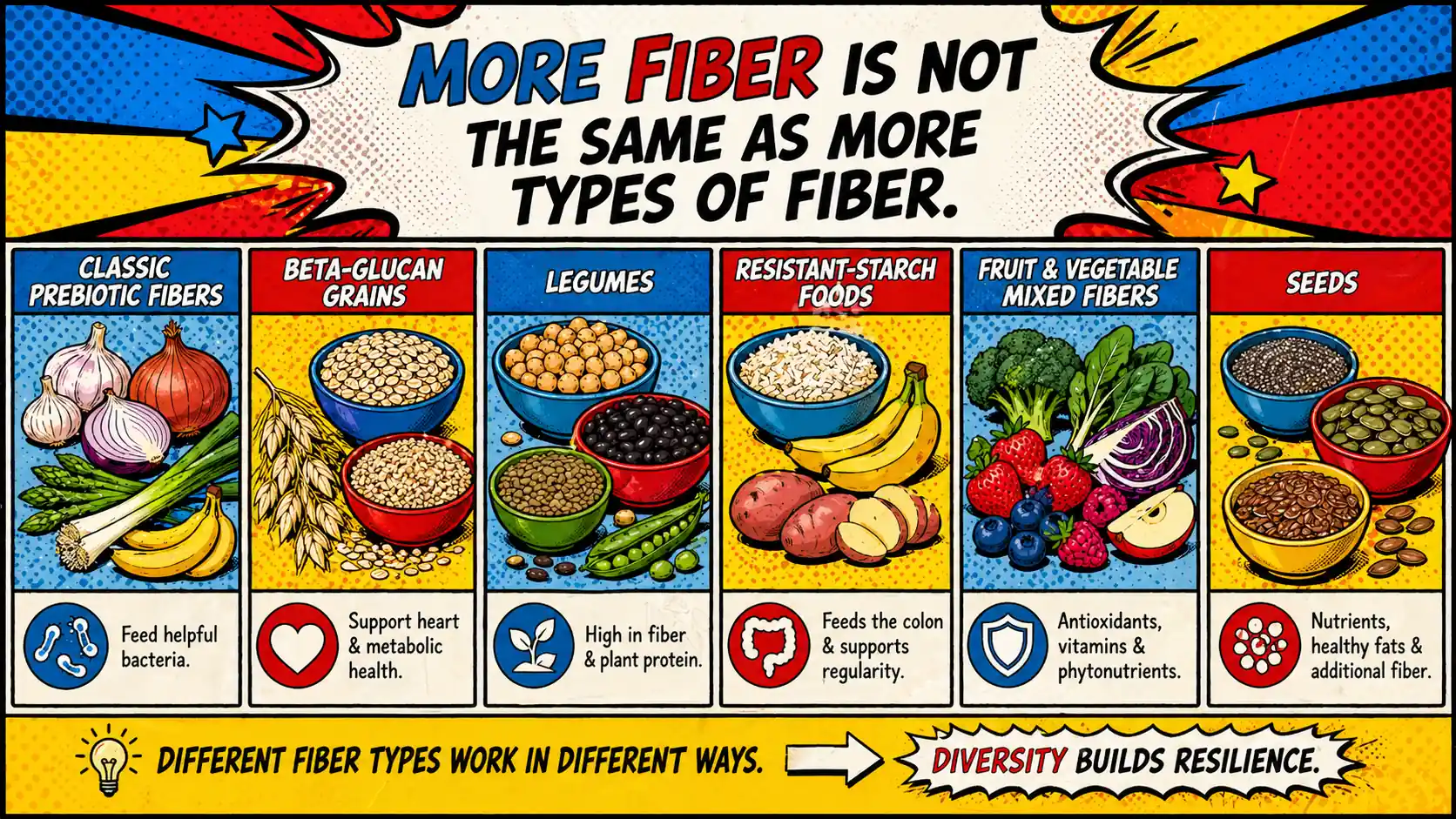
Different fibers create different microbial opportunities.
That does not mean each fiber maps neatly to one bacteria and one outcome. The gut ecosystem is more complicated than that. But the underlying principle is solid: fiber type helps shape which microbes respond, how quickly fermentation happens, and which downstream metabolites become more relevant 6 7.
This is where the conversation becomes more useful than a generic "eat more fiber" message.
If your next question is less about variety and more about how fermentation affects gas and bloating, move to that bridge next.
For example:
Cross-feeding matters because microbes do not work alone. One group may break down a substrate into compounds another group can use, which helps explain why mixed patterns may support broader ecological behavior than one isolated fiber source. Part of that support comes from controlled or experimental mixture work, so it should be treated as helpful mechanism evidence rather than as a guaranteed human outcome claim 8 9.
If you want the downstream metabolite layer after this section, move next to short-chain fatty acids. If you want another plant-compound bridge that overlaps with this logic, use polyphenols and the gut microbiome.
Microbiome resilience is one of those phrases that sounds impressive and vague at the same time.
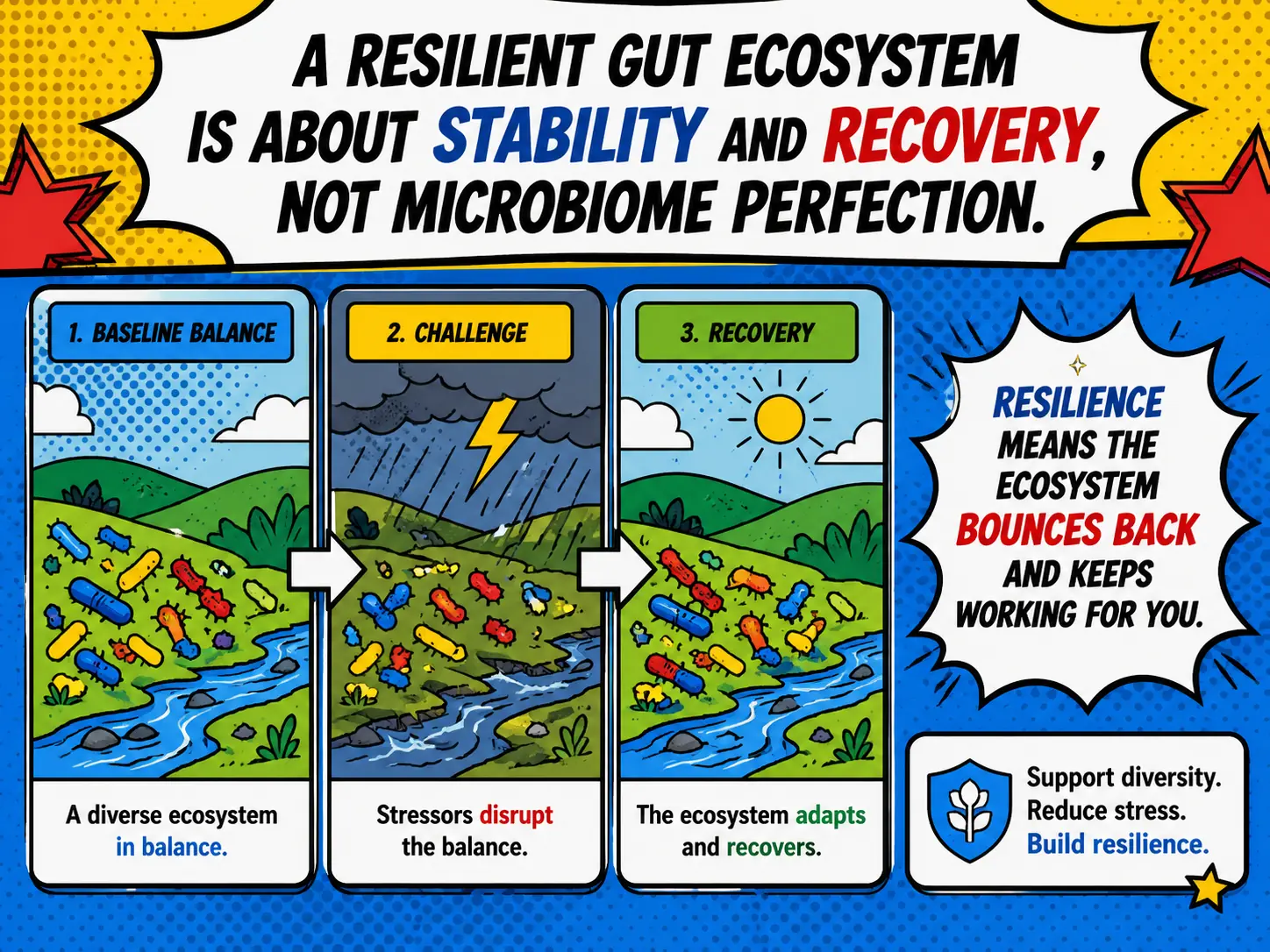
The most useful definition is simpler than the marketing version. In microbiome ecology, resilience usually refers to the gut ecosystem's ability to stay relatively stable or recover after disruption 10.
That disruption could be:
This matters because resilience is not the same thing as one impressive stool-test score or one claim that your microbiome is now "optimized."
It is better understood as a systems property.
A more varied fiber pattern may support resilience because more varied substrates can support a broader range of microbial functions or ecological roles 11 12. But that is still a more measured claim than saying variety guarantees perfect gut health.
The restraint matters here. A 2024 human study found that healthy adults still showed a resilient overall microbiota even when specific fibers changed some responses. In other words, useful fiber exposures do not always produce a dramatic visible reset in the whole ecosystem 13.
The strongest evidence does not support the loudest version of the fiber diversity pitch.
What it supports more clearly is this:
This is the strongest and cleanest claim in the whole topic 14 15.
That signal appears in both observational work and human intervention research, including the bread study that increased the diversity of dietary fibers and observed microbiota and metabolic changes 16 17.
This is the part readers most need to hear. In the Stanford diet intervention, a high-fiber diet increased microbiome-encoded carbohydrate-processing capacity without automatically raising diversity across the fiber arm 18.
That means functional changes may appear before dramatic diversity shifts. It also means a useful fiber intervention does not have to look dramatic to matter.
A broader cross-study analysis found that individuals explain a large amount of the variation in microbiome response, even when short-term fiber interventions show some consistent patterns overall 19.
This is why microbiome theory can be directionally useful without becoming a universal prescription.
If you want the broader food-pattern sibling after this section, use polyphenol foods for gut health. If you need the food-source child utility, use food-first prebiotic fiber sources.
Download: Fiber Diversity Decision Guide for a one-page routing tool if you are not sure whether to focus on variety, symptoms, constipation, or simpler food repeats first.
This is the most important practical caveat in the whole article:
A microbiome-supportive theory can still be a symptom-heavy experiment.
More variety often means more fermentable inputs. For some readers, especially those with IBS overlap, constipation plus bloating, or broader food sensitivity, that can mean:
NIDDK guidance for IBS notes that fiber can help some constipation-predominant patterns, but it also says fiber should be added slowly because too much at once can cause gas and trigger symptoms 20. Monash guidance on IBS and fiber also reinforces that fiber style and symptom response matter, not just the idea that fiber is good in general 21 22.
That is why this page should not become a command to chase maximum diversity.
For some readers, a better near-term goal is:
If the bigger issue sounds less like microbiome support and more like "healthy foods still make me miserable," go next to why you still feel bloated after eating 'healthy' foods. If the problem looks more like FODMAP load, use high-FODMAP foods to avoid for bloating or low-FODMAP foods to eat for bloating relief.
The most useful version of fiber diversity is not ambitious. It is structured.
Start with categories, not hacks.
If you are still making big jumps from one cereal, bar, powder, or late-day fiber dump, fix the fiber intake pattern mistakes first. Variety works better when the baseline pattern is readable.
If you are coming out of a low-FODMAP phase, diet diversity after low FODMAP gives the re-expansion route before you push fiber variety harder.
That may look like:
This is also where a food-first approach can be calmer than chasing one engineered product. That is not because whole food has been proven superior in every context. It is because normal foods often make timing, portion, and tolerance easier to interpret in real life.
If you want the narrower utility page for concrete source groups, use food-first prebiotic fiber sources. If your actual goal is bowel-pattern support, go next to prebiotics, probiotics, and synbiotics for constipation. If you want the broader intervention shelf, use synbiotics, probiotics, and prebiotics.
You can also use the printable Fiber Diversity Decision Guide and Fiber Variety Weekly Builder linked in the resource box to make this more concrete without turning it into another supplement spreadsheet.
Download: Fiber Variety Weekly Builder to spread new fiber categories across the week instead of stacking them into one louder day.
Fiber variety is not the right lever for every situation.
Step back from self-experimenting and get a wider evaluation if symptoms are persistent, severe, or accompanied by red flags such as weight loss, bleeding, vomiting, severe constipation, or difficulty passing stool or gas. Those patterns deserve broader review, not a more creative fiber plan.
Health note: This article is educational and should not replace medical assessment or individualized dietetic advice. If food reactions are getting broader, more intense, or more restrictive, pause the experimentation and get help sorting the pattern.
For a practical next step, use Fiber Without Bloating to turn the variety principle into a slower, one-variable trial instead of adding several fermentable foods at once.
Fiber diversity matters because fiber is a category, not one ingredient. Different fibers create different microbial opportunities, which helps explain why variety may support broader microbiome function and resilience over time.
The practical version is simpler than the hype:
If you want the next right step, use the route that matches your real question: the prebiotic fiber bridge, the food-first prebiotic fiber sources, the short-chain fatty acids guide, the practical comparator on types of fiber by symptom fit, the staged guide to post-antibiotic food rebuilding, or the symptom-first page on why healthy foods still bloat you.
Xam Riche is a gut health solopreneur and founder of YourFitNature, dedicated to helping people navigate digestive wellness through evidence-based information and personal experience. After years of struggling with IBS and bloating, Xam discovered the transformative power of the low FODMAP diet and now shares practical, science-backed guidance to help others find relief. While not a medical professional, Xam combines extensive research with lived experience to create accessible, empowering resources for the gut health community. Learn more about our mission
As an affiliate, we may earn from qualifying purchases.