 By • Published on April 26, 2026 • 10 min read • 4,370 views
This article is for informational and educational purposes only and does not constitute medical advice. Always consult with a registered dietitian, gastroenterologist, or other qualified healthcare professional before making major diet changes, especially if fiber, bloating, or IBS-style symptoms are already difficult to manage.
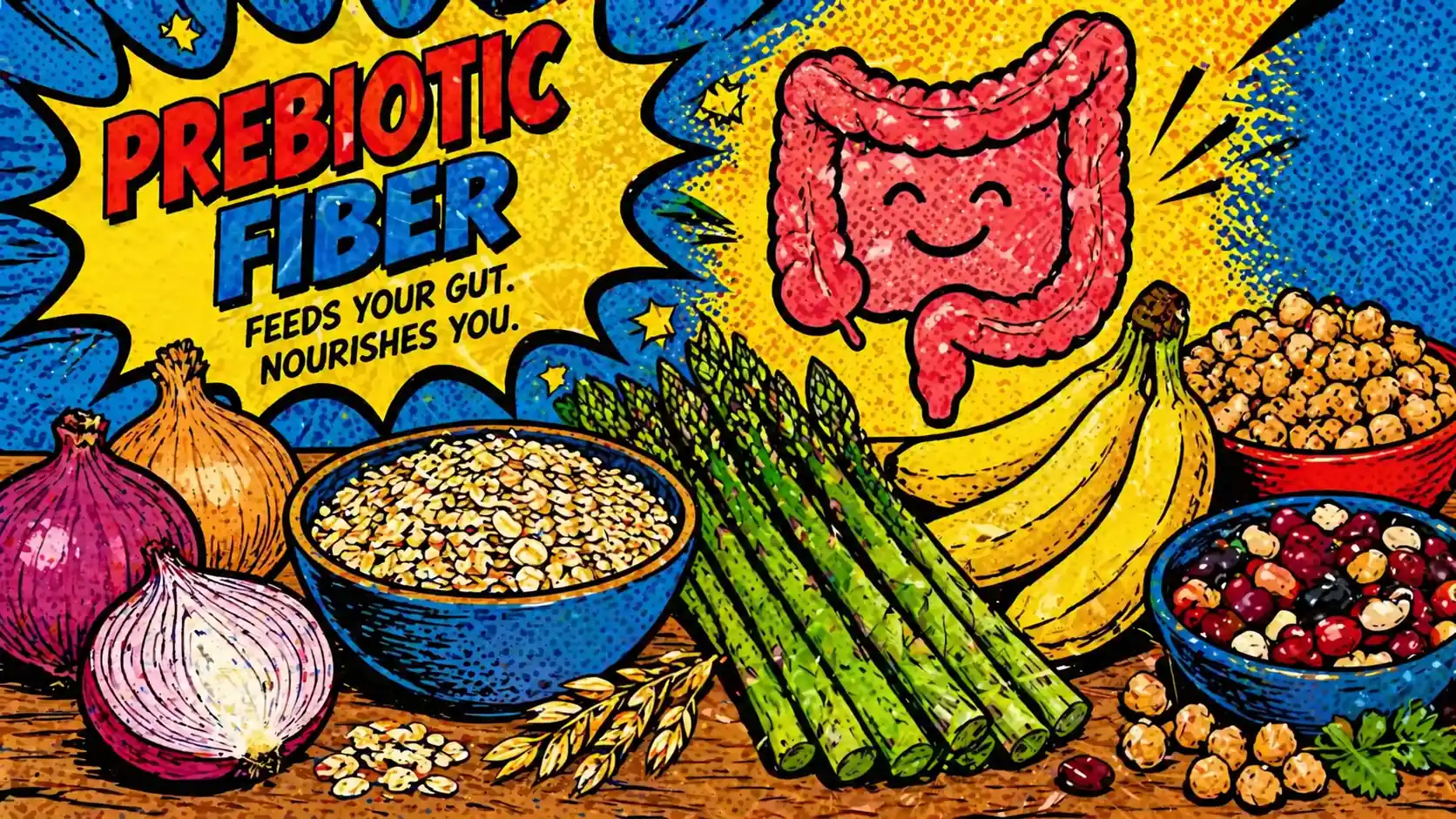
The most useful prebiotic decision is usually not which powder to buy. It is which real foods you can add, repeat, and tolerate without turning your gut into a fermentation experiment you regret by dinner.
Short answer: the best food-first prebiotic fiber sources are not the same as "every high-fiber food." The most useful starting points usually come from a mix of classic prebiotic-source foods and broader fermentable-fiber foods, but tolerance matters as much as theory 1 2.
This page is for you if you are past the broad definition stage and now want a calmer, more practical shortlist of source groups to test first.
Use a different page first if you still need the category definition, benefit hierarchy, or supplement caution layer. Start with prebiotic fiber for the parent bridge or probiotic vs prebiotic for the simplest category split. Use why you still feel bloated after eating 'healthy' foods if the real problem is food sensitivity rather than microbiome curiosity.
This article is the food-first utility below health-benefits-prebiotic-fiber. If you want the mechanism layer on why these fibers ferment differently and why that changes the gas tradeoff, use that bridge next. Its job is narrower: help you sort the source groups that come up most often in prebiotic conversations, spot which ones are more aggressive, and choose a better first test.
You do not need the full definition again here. The practical boundary is just this: prebiotics are a narrower category than fiber overall, so not every fiber-rich food deserves the same claim 3 4.
For this utility, the practical distinction is:
That distinction is more useful than pretending every plant food belongs in one perfect bucket.
These eight options are the ones most worth knowing if you want a practical starting list rather than a supplement-heavy shopping cart.
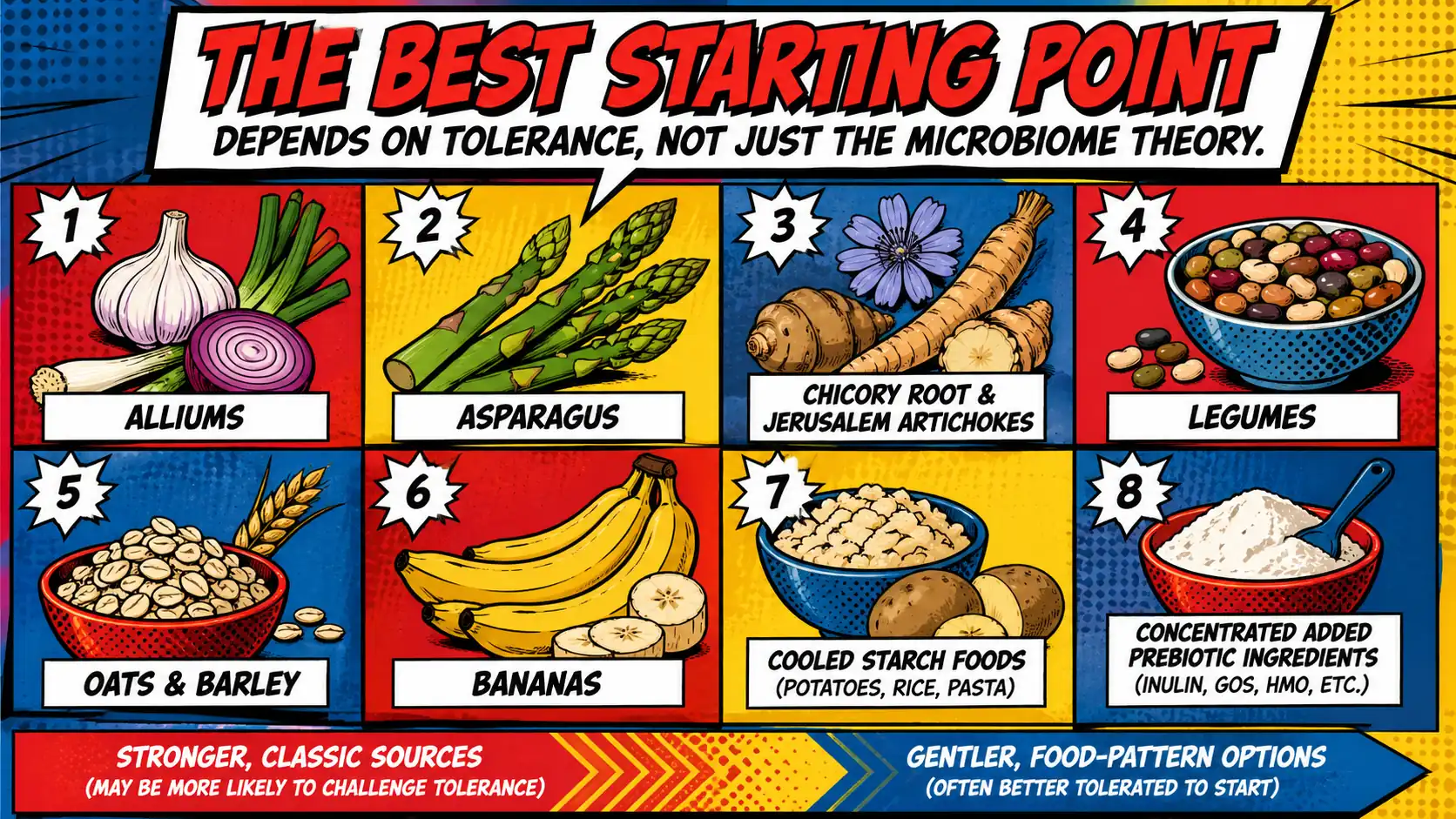
| Food or source group | Why it comes up | Tolerance note | Easy first move |
|---|---|---|---|
| Onions | rich in fructans and part of the classic prebiotic-source conversation | can trigger bloating in FODMAP-sensitive readers | start with small cooked portions if tolerated |
| Garlic | another concentrated fructan source | often harder than readers expect | use small amounts in cooked meals before increasing |
| Leeks | same wider fructan conversation as onions and garlic | white bulb portion can be tougher for some readers | test small meal-sized amounts |
| Asparagus | commonly cited in prebiotic food lists | can be helpful but still fermentable | pair a modest portion with a familiar meal |
| Chicory root and Jerusalem artichokes | classic inulin-rich foods | often too aggressive for sensitive guts | treat as advanced, not beginner, foods |
| Lentils, chickpeas, and other legumes | add fiber, GOS, and food-first microbiome support | can backfire if portion is too big or meal context is rough | start with a small serving and track response |
| Oats and barley | bring beta-glucan and broader fermentable-fiber support | usually gentler than some fructan-heavy foods, but still vary by person | build them into breakfast first |
| Slightly green bananas and cooled starch foods | resistant starch enters the prebiotic conversation here | dose and preparation matter | use small, normal-food portions instead of gut-hack doses |
If you want the most recognizable prebiotic-food tier, start with the source groups most consistently tied to fructan- and inulin-focused prebiotic literature:
These groups appear repeatedly because they are some of the clearest food anchors for inulin and related fructans in the prebiotic literature 5 6 7.
The important real-world caveat is that some of the same foods also overlap with the FODMAP conversation. That is why a food can be theoretically useful for the microbiome and still be the wrong move for a bloating-prone reader.
This is where the food-pattern explanation needs the most care.
The most practical food-first plan usually is not built around chicory root or giant piles of inulin-heavy products. It is often built around more normal source groups that support a better fiber pattern:
These groups may not all deserve the exact same headline claim, but they often make more sense as broader fermentable-fiber or microbiome-supportive foods than as identical "true prebiotic foods" 8 9.
If your real question is broader food-based microbiome support, the most useful sibling route is polyphenol foods for gut health.
This is the part readers usually need most.
Foods or products rich in fructans, GOS, or concentrated prebiotic add-ins can make a sensitive gut feel worse, not better. Monash University's low-FODMAP materials are relevant here because fructans and GOS are well-known trigger categories for some IBS-prone readers 10 11.
The usual trouble spots are these source groups:
That does not mean these groups are bad. It means the wrong dose, wrong portion, or wrong gut context can turn a reasonable microbiome idea into a loud symptom day.
If that pattern sounds familiar, your better next page may be high-FODMAP foods to avoid for bloating, low-FODMAP foods to eat for bloating relief, or why you still feel bloated after eating 'healthy' foods rather than another prebiotic article.
The safest general move is boring on purpose:
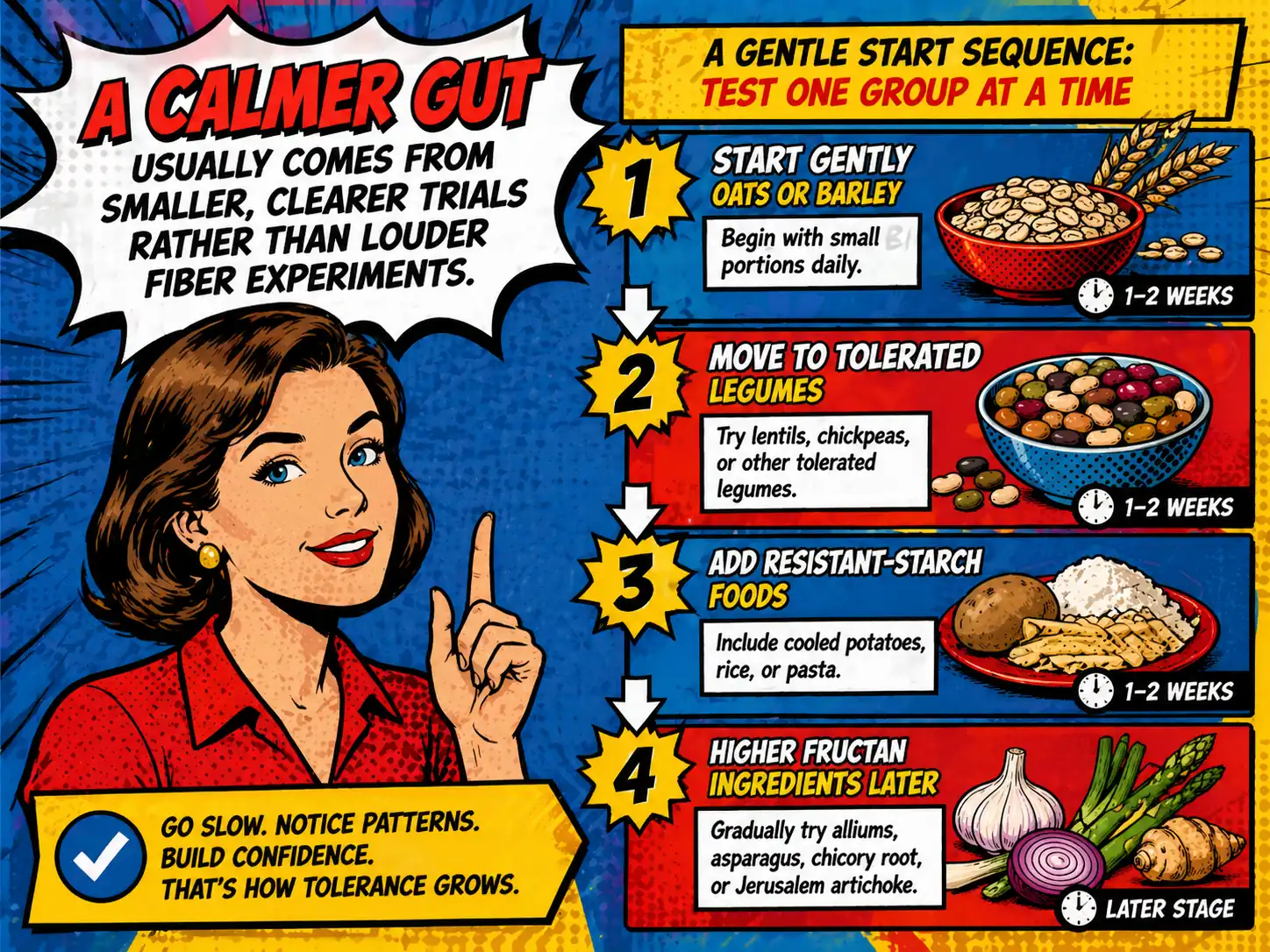
NIDDK gives the same broad practical advice for fiber: increase it gradually so your body has time to adjust 12.
That guidance matters even more when you already know your gut reacts strongly to fermentable foods.
If your pattern keeps turning into sudden jumps, one-source habits, or supplement-first experiments, use the guide to fiber intake mistakes before adding another prebiotic source group.
[!TIP] Download: Prebiotic Fiber Source Groups Checklist if you want a one-page way to compare the eight source groups before adding more fiber at random.
If you want a cleaner food-first test, this order is usually more sensible than starting with the most aggressive groups:
That sequence will not fit every person, but it is often more practical than starting with chicory-root fiber because a label promised a microbiome upgrade. If your real goal is bowel-pattern support rather than source-group testing, go next to prebiotics, probiotics, and synbiotics for constipation.
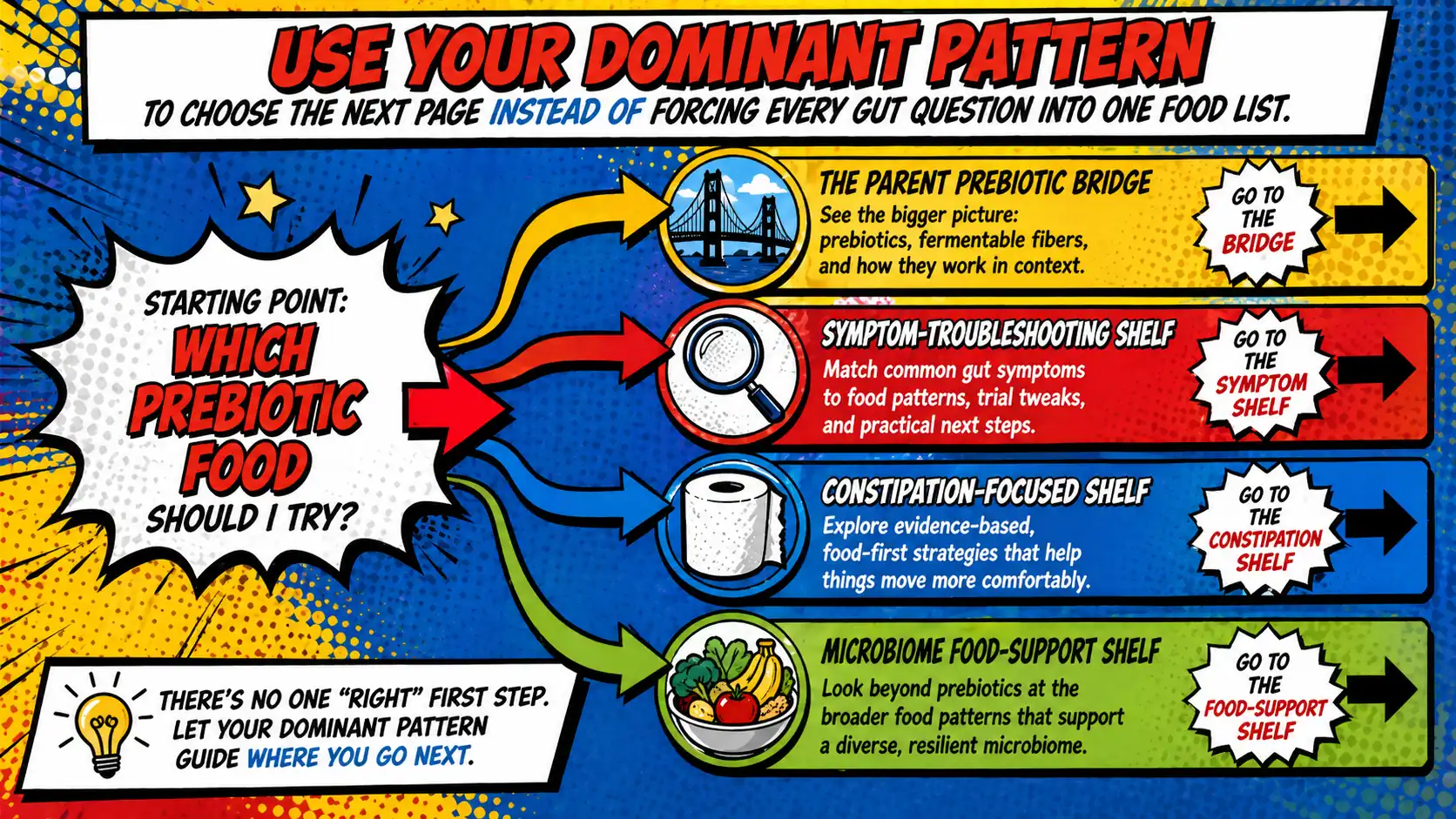
This utility page works best when the question is:
"Which food-source groups or ingredients count as prebiotic sources, and where should I start?"
It is not enough when the real question is:
Those questions belong to other shelves:
[!TIP] Download: Prebiotic Food Tolerance Tracker to test one source group at a time instead of guessing from several food changes at once.
The best food-first prebiotic fiber sources are the source groups you can actually use without overwhelming your gut.
Here is the practical summary:
Xam Riche is a gut health solopreneur and founder of YourFitNature, dedicated to helping people navigate digestive wellness through evidence-based information and personal experience. After years of struggling with IBS and bloating, Xam discovered the transformative power of the low FODMAP diet and now shares practical, science-backed guidance to help others find relief. While not a medical professional, Xam combines extensive research with lived experience to create accessible, empowering resources for the gut health community. Learn more about our mission
As an affiliate, we may earn from qualifying purchases.