 By • Published on May 5, 2026 • 10 min read • 3,935 views
This article is for informational and educational purposes only and does not constitute medical advice. Always consult with a registered dietitian, gastroenterologist, or other qualified healthcare professional before making major fiber changes, especially if IBS, constipation, diabetes, eating disorder history, or persistent bloating symptoms are active.
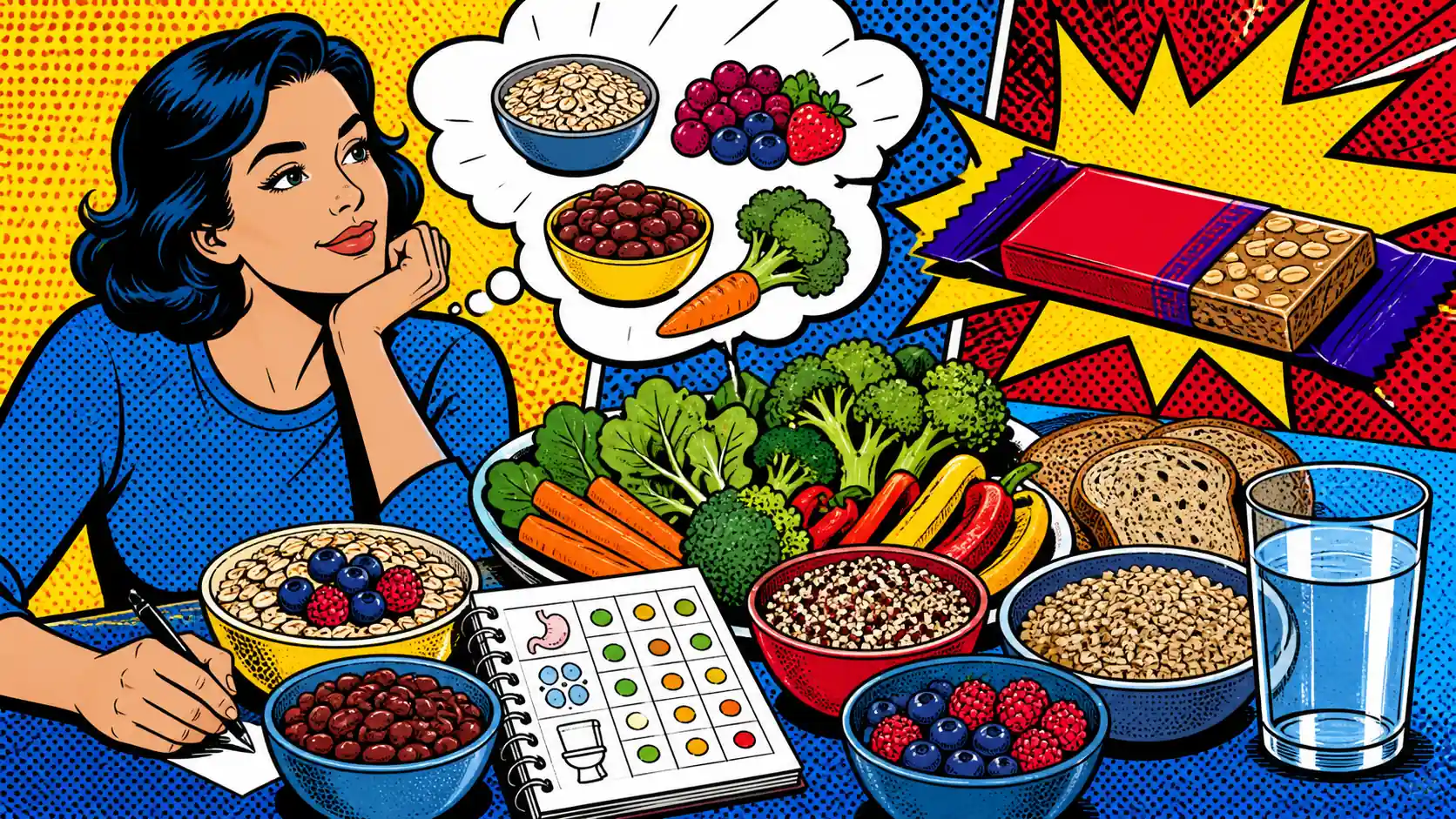
Fiber advice sounds simple until you try to live inside it. You add a high-fiber bar, switch cereal, build a huge salad, try beans twice in one week, and maybe add a prebiotic powder because the label sounds scientific. Then your gut gets louder. At that point, it is easy to conclude that fiber was the problem. Often, the real problem was the pattern.
Short answer: fiber belongs in the metabolic-health and gut-health conversation, but the intake pattern matters. The biggest fiber intake mistake is treating fiber as one number instead of a gradual, varied, meal-based, tolerance-aware pattern. A gram target can help. It is not the whole plan.
This page is for you if you know fiber is supposed to be helpful but your attempts keep turning into bloating, constipation confusion, product switching, or a diet that depends on one cereal, bar, or powder.
Use a different page first if your main question is what prebiotic fiber means, which foods count as food-first prebiotic fiber sources, or which types of fiber fit bloating, constipation, and IBS-style symptoms. This article is the behavior-pattern spoke underneath those pages.
Fiber targets are useful. They are just incomplete.
CDC summarizes the 2020-2025 Dietary Guidelines as recommending about 22-34 grams of fiber per day for adults, depending on age and sex 1. DietaryGuidelines.gov also lists food sources such as whole grains, legumes, fruits, vegetables, nuts, and seeds 2.
That gives you a direction. It does not tell you:
This is why "eat more fiber" can be true and still be bad tactical advice for the next seven days.
The better question is:
What pattern would help me increase fiber without making the experiment unreadable?
The most common pattern mistake is a sudden jump from low fiber to ambitious fiber.
That is especially relevant for younger adults because low baseline intake can be common. In one 2025 study of 813 Austrian higher-education students, mean daily fiber intake was 15.72 grams, and 93.1% of participants were below 25 grams per day 3.
That study does not prove every young adult eats that way. It does show why a large jump can happen so easily. If your usual pattern is toast, coffee, takeout, a protein-heavy dinner, and occasional fruit, a sudden high-fiber reset is not a small change.
NIDDK makes the practical caution clear for IBS-style patterns: fiber may help constipation for some people, but too much at once can cause gas and trigger symptoms 4.
That does not mean you failed.
It means your experiment was too loud.
Try this instead:
Maximum fiber by Friday is usually a bad experiment.
Download: Fiber Pattern Mistake Checklist if you want a quick audit before making the next change.
Fiber belongs in the metabolic-health conversation. The mistake is turning that truth into product overconfidence.
Reviews of dietary fiber discuss mechanisms that may matter for metabolic health, including viscosity, nutrient absorption, intestinal transit, microbial fermentation, short-chain fatty acids, and gut-hormone pathways 5. That is real physiology, not wellness theater.
But form matters.
A systematic review of isolated and synthetic dietary fibers notes that broad observational evidence supports higher dietary fiber intake, while human intervention studies using isolated or synthetic fibers have shown inconsistent results 6.
That is the part supplement-first advice often skips.
A fiber powder, bar, or fortified cereal may have a place. It is just not the same thing as a durable food pattern built from legumes, oats, vegetables, fruit, nuts, seeds, and whole grains.
If your product includes inulin, chicory root fiber, FOS, GOS, or a prebiotic blend, use the parent guide to prebiotic fiber and tolerance limits. If you want food examples before buying anything else, use food-first prebiotic fiber sources.
A diet can gain fiber grams without gaining much pattern quality.
That happens when most of the increase comes from:
This may still raise the number. But it does not automatically create a varied fiber pattern.
That distinction matters because fiber is not one thing. Different plant foods bring different structures, fermentation patterns, and food matrices. If you want the ecosystem-level explanation, use fiber diversity and microbiome resilience.
The practical correction is simple:
Instead of asking, "How do I hit the number with the least effort?"
Ask, "Can I spread the number across a few categories I actually tolerate?"
That might look like:
You do not need every category at once. You need enough variety that fiber does not depend on one fragile habit.
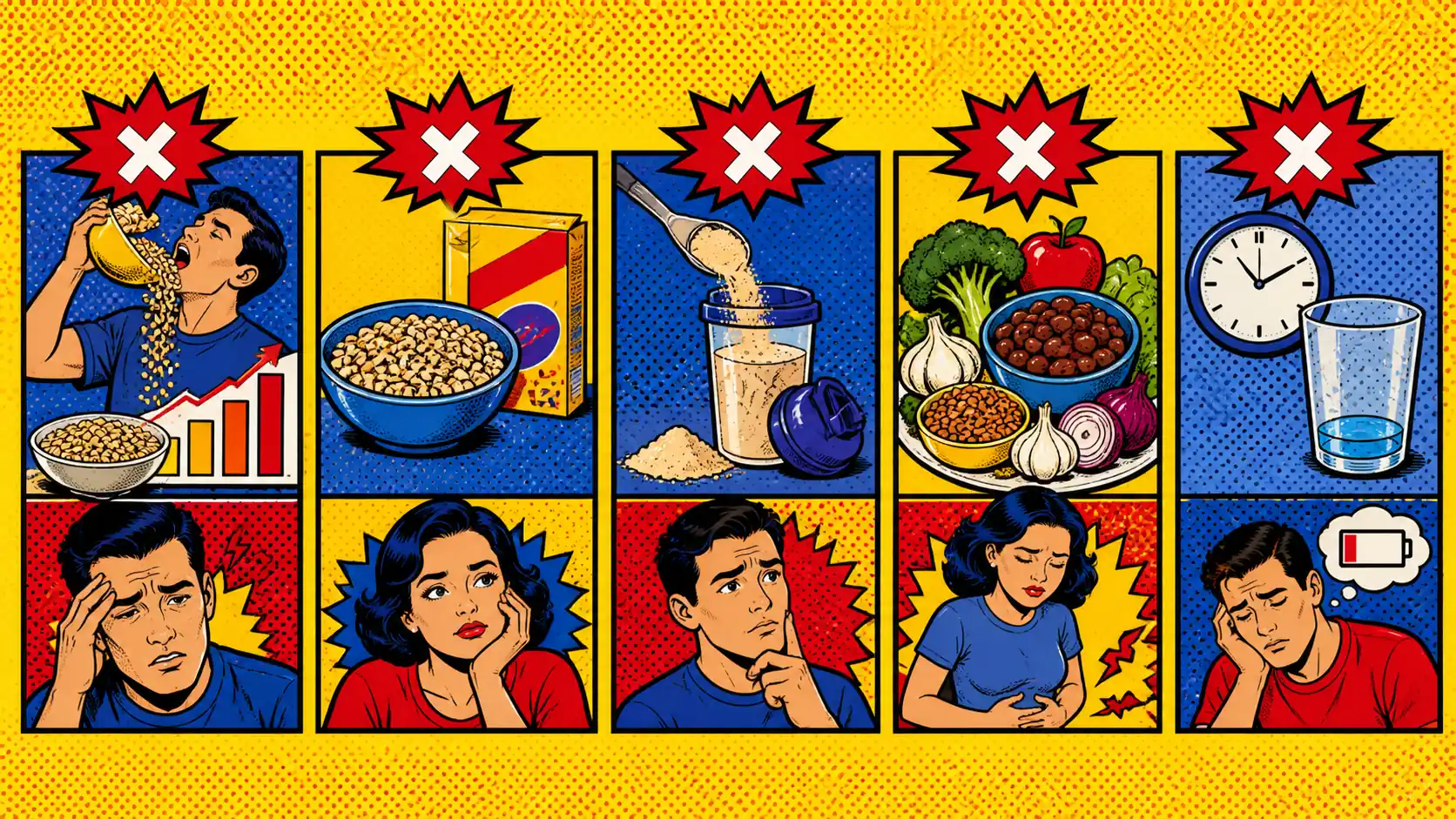
This is the mistake that makes people distrust healthy foods.
The week looks like this:
Each item might be defensible on its own. Together, they can create a fermentation pileup that is impossible to interpret.
If gas, fullness, or visible distension rises after that kind of week, the lesson is not "fiber is bad." The lesson is that you changed too many fermentable inputs at once.
For the mechanism layer, use fiber fermentation, gas, and bloating. For the symptom-first comparator, use types of fiber by symptom fit.
The calmer rule:
One new fermentable lever at a time.
That could mean one smaller serving of beans, one oat-based breakfast, one fruit change, or one label change. Not all four.
Fiber does not work in isolation.
NIDDK constipation guidance emphasizes fiber along with enough fluid and gradual change 7. CDC also suggests spreading fiber intake throughout meals and snacks rather than treating it as one daily dump 8.
This matters because the same total fiber can feel different depending on meal rhythm.
Compare these two patterns:
| Pattern | Why it is harder to read |
|---|---|
| Low-fiber all day, then a huge high-fiber dinner | One meal carries the whole experiment |
| Coffee, protein bar, giant salad, prebiotic snack | Multiple triggers stack before you can identify one |
| High-fiber push without fluids | Constipation may not improve and bloating may rise |
| New fiber plus new sweetener plus new protein powder | The symptom signal gets muddy |
A better pattern spreads small, normal-food fiber exposures across meals. It also keeps stool pattern in view. A constipation-dominant pattern, a diarrhea pattern, and an IBS-style bloating pattern may need different fiber routes.
If whole grains and plant foods keep feeling rough, use whole-grains and plant-food gut tolerance. If the bigger question is why healthy foods keep bloating you, use why you still feel bloated after eating healthy foods.
The fix is not complicated. It is just less dramatic.
| If the mistake is... | Try this instead |
|---|---|
| Very low baseline, sudden jump | Add one small fiber source and repeat before escalating |
| Supplement-first habit | Compare food-first sources and read ingredient labels |
| One repeated source | Rotate a few tolerated categories across the week |
| Fermentable stacking | Change one new fermentable input at a time |
| No fluids or rhythm | Pair fiber changes with fluids, regular meals, and stool tracking |
| Bloating-prone gut | Use symptom-fit guidance before increasing dose |
Here is the simplest route:
Download: Gentle Fiber Ramp Planner if you want a two-week structure for changing one lever at a time.

Fiber experimentation has limits.
Step back and get medical advice if symptoms are severe, persistent, worsening, or paired with red flags such as bleeding, black stools, vomiting, unexplained weight loss, severe constipation, severe pain, or inability to pass stool or gas.
Also step back if your diet is becoming narrower because every new food feels unsafe. That pattern deserves individualized help, not another louder experiment.
Health note: This article is educational and should not replace medical assessment or individualized dietetic advice. If fiber changes are worsening symptoms or making eating feel restrictive, pause and get support.
If your next step is to rebuild fiber gradually instead of auditing past mistakes, use Fiber Without Bloating to test one dose, timing, and fiber type at a time.
If you have corrected the timing and dose pattern and now need to compare two common soluble-fiber formats, use Metamucil vs Benefiber for IBS-C before buying or switching products.
The practical win is not maximum fiber by Friday.
It is a pattern you can repeat, tolerate, and interpret.
Start with these rules:
If you need the next right page, choose by the real problem: prebiotic fiber for category confusion, food-first prebiotic fiber sources for examples, fiber diversity for variety logic, fiber fermentation for gas and bloating, or types of fiber by symptom fit for a more specific fiber choice. If the noisy variable is a shake, bar, or powder with added fibers or sweeteners, use protein powder and IBS before blaming the whole diet.
Xam Riche is a gut health solopreneur and founder of YourFitNature, dedicated to helping people navigate digestive wellness through evidence-based information and personal experience. After years of struggling with IBS and bloating, Xam discovered the transformative power of the low FODMAP diet and now shares practical, science-backed guidance to help others find relief. While not a medical professional, Xam combines extensive research with lived experience to create accessible, empowering resources for the gut health community. Learn more about our mission
As an affiliate, we may earn from qualifying purchases.