 By • Published on May 23, 2026 • 6 min read • 4,498 views
This article is for informational and educational purposes only and does not constitute medical advice. Use individualized guidance from a qualified healthcare professional for persistent, severe, new, or concerning symptoms.

"Eat more fiber" sounds simple until you are the person who gets bloated after trying.
For IBS, constipation, post-flare recovery, or low plant-food tolerance, fiber can be useful, but the dose, type, timing, hydration, and speed of change matter. A sudden jump from low fiber to large salads, beans, bran cereal, and fiber bars can create gas, fullness, urgency, or constipation before your gut has time to adapt.
This guide is a step-up plan. It is not a command to eat the same "high fiber" list as everyone else.
If you need a deeper comparison of fiber types, start with types of fiber by symptom fit. If you already tried fiber and felt worse, use fiber intake pattern mistakes. This page gives you a practical route for increasing fiber without making bloating the cost of every healthy choice.
IBS care is usually shaped by the most bothersome symptoms, including pain, bloating, constipation, diarrhea, or mixed bowel patterns 1. That is why the right fiber plan starts with your pattern, not a generic target.
Before adding fiber, decide what job you want it to do.
| Reader job | Better starting route | Read next |
|---|---|---|
| Constipation and hard stools | Gentle soluble fiber, breakfast routine, fluids, and steady timing. | Constipation-first breakfast strategy |
| Choosing between two common fiber powders for IBS-C | Compare the ingredient evidence, exact label, and practical mixing constraints. | Metamucil vs Benefiber for an IBS-C fiber trial |
| Bloating with "healthy" foods | Smaller portions, slower increases, lower-fermentation choices first. | Why healthy foods still bloat you |
| Plant variety after restriction | One new plant at a time, with a tolerance note instead of a pass/fail label. | Diet diversity after low FODMAP |
| Post-diarrhea recovery | Rebuild meals before pushing fiber dose. | What to eat after a diarrhea flare |
| Confusion about fiber types | Match soluble, insoluble, and fermentable fiber to symptoms. | Types of fiber by symptom fit |
Fiber is not one thing. Reviews of fiber in functional gastrointestinal disorders emphasize that fiber type and fermentability matter, because fermentation can produce gas and symptoms in susceptible people 2.
Change one variable at a time for about a week.
That variable can be:
Do not add a new breakfast, a bean lunch, a fiber bar, chia pudding, and a supplement in the same week. If bloating happens, you will not know what to adjust.
For three to seven days, write down:
This is not a diet diary forever. It is a short baseline so your next change has context.
Choose one:
Keep the rest of the day stable. If constipation is the main pattern, pair the change with breakfast timing and fluids. If bloating is the main pattern, use a smaller portion than you think you "should" need.
If week 2 was tolerable, add a second plant or a slightly larger portion. If week 2 was not tolerable, do not quit fiber as a category. Change the route:
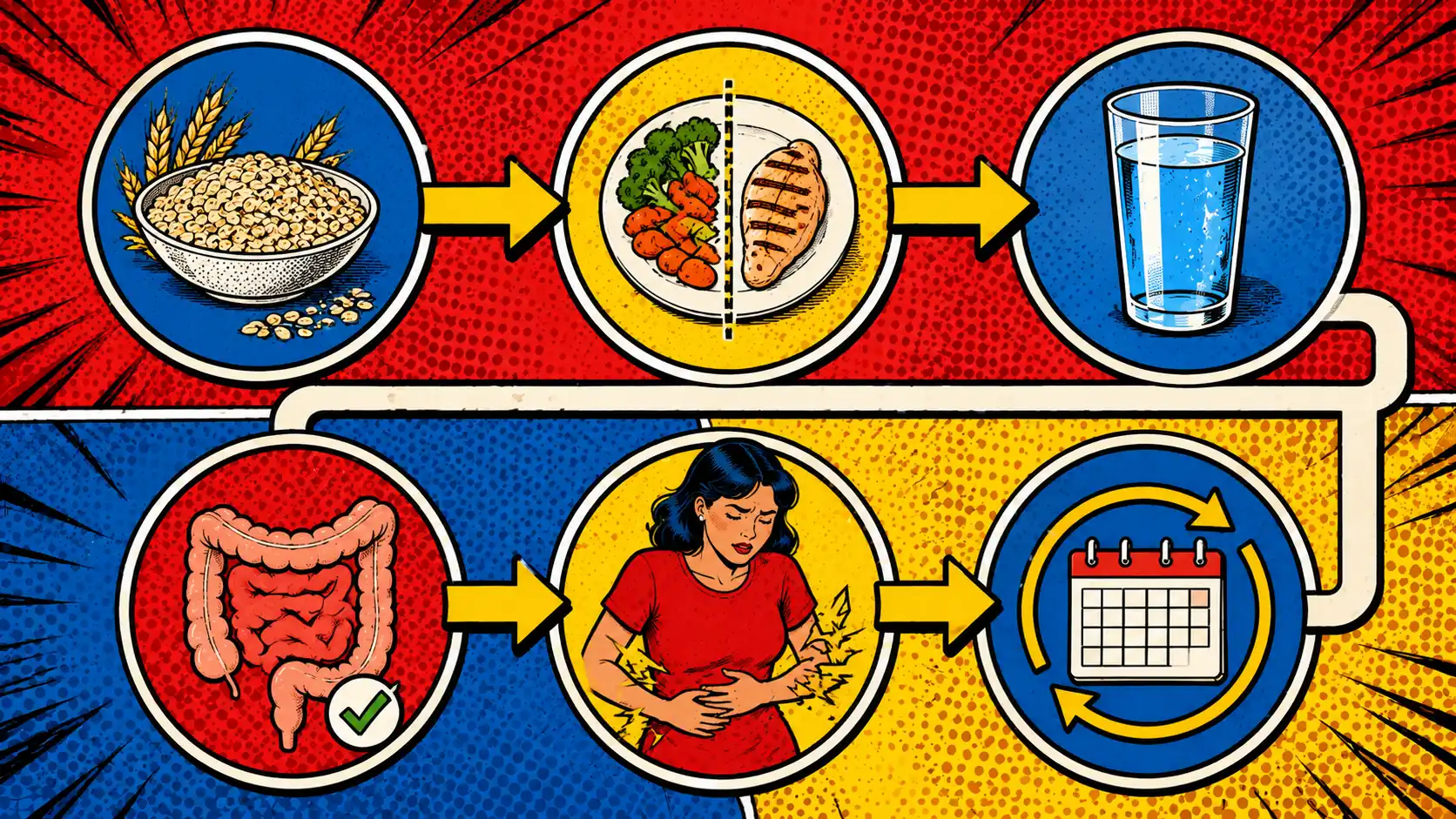
At the end of the fourth week, choose one:
Abdominal bloating and distension often overlap with functional gastrointestinal disorders, and management usually needs individualized attention to bowel habits, diet, visceral sensitivity, pelvic floor patterns, and other contributors 3. A step-up plan helps you see which part is actually changing.
Fiber is not always the first move.
Pause or get help when:
Use doctor visit prep for IBS next steps if the pattern needs a clinician conversation.
| If your main issue is... | Read next |
|---|---|
| Understanding soluble vs insoluble fiber | Types of fiber by symptom fit |
| You tried too much too fast | Fiber intake pattern mistakes |
| Constipation at breakfast | Constipation-first breakfast strategy |
| Rebuilding plant tolerance | Whole grains and plant-food tolerance |
| Fiber step-up also needs blood-sugar, carbohydrate, appetite, or medication boundaries | Low-FODMAP with diabetes, blood sugar, and gut symptoms |
| Wheat dextrin already fits and you need to inspect a powder format | Current Benefiber powder details |
| Bloating with constipation | Constipation and bloating connection |
Download: Fiber Step-Up Tracker to test one fiber change at a time and avoid confusing a dose problem with a food problem.
Fiber without bloating is usually less about finding the perfect food and more about changing the speed, type, dose, and context.
Start with your symptom pattern. Add one fiber change at a time. Track timing, stool pattern, hydration, and bloating response for a short period. If a food causes symptoms, adjust the route before labeling all fiber as unsafe.
The goal is not to force a high-fiber identity. The goal is a wider, more tolerable eating pattern that supports bowel rhythm, plant variety, and confidence.
Xam Riche is a gut health solopreneur and founder of YourFitNature, dedicated to helping people navigate digestive wellness through evidence-based information and personal experience. After years of struggling with IBS and bloating, Xam discovered the transformative power of the low FODMAP diet and now shares practical, science-backed guidance to help others find relief. While not a medical professional, Xam combines extensive research with lived experience to create accessible, empowering resources for the gut health community. Learn more about our mission
As an affiliate, we may earn from qualifying purchases.