 By • Published on May 23, 2026 • 6 min read • 2,103 views
This article is for informational and educational purposes only and does not constitute medical advice. Use individualized guidance from a qualified healthcare professional for persistent, severe, new, or concerning symptoms.
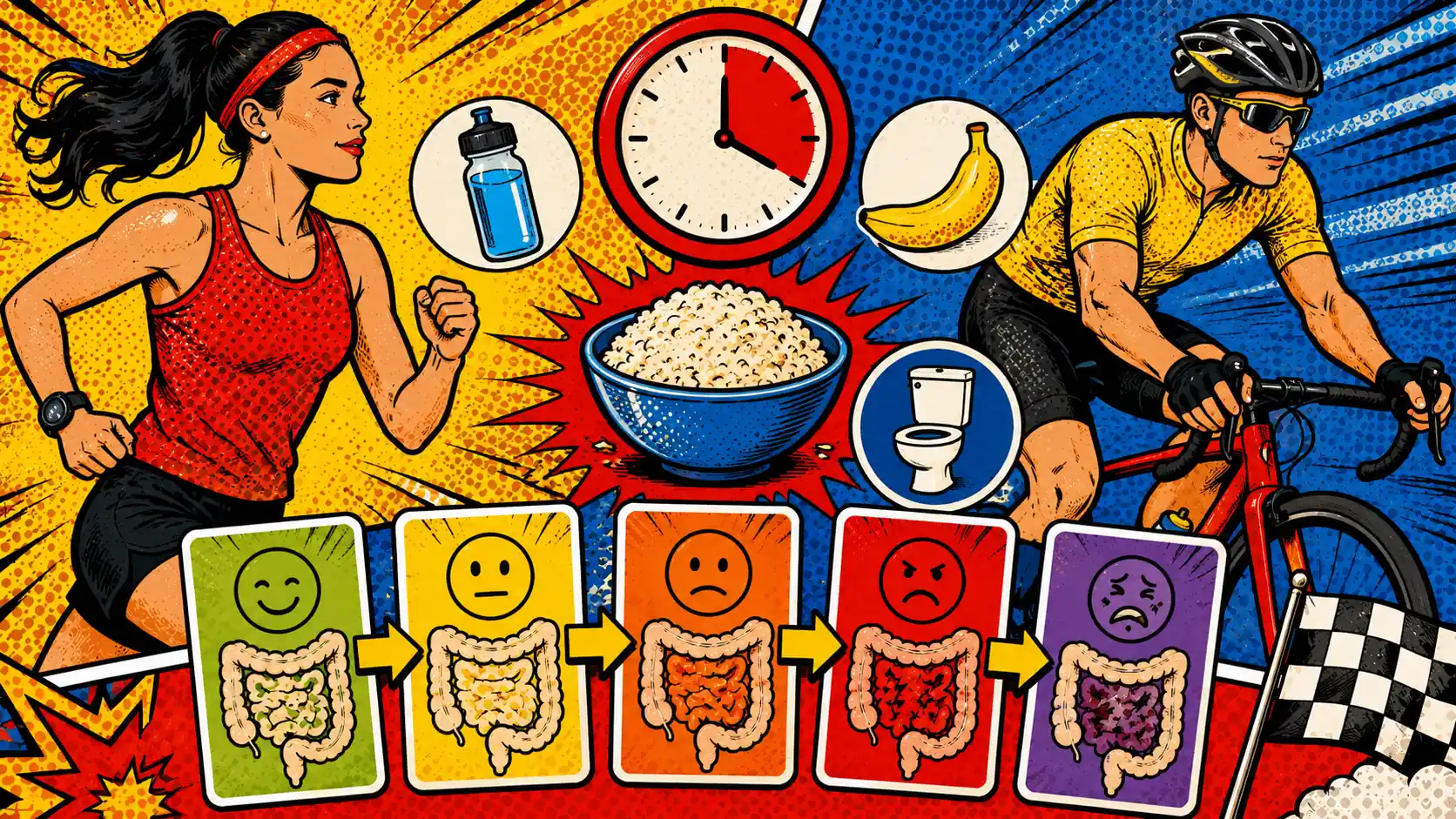
IBS for athletes is not just IBS with sneakers on.
Training changes meal timing, fluid needs, stress load, sleep, caffeine use, heat exposure, supplement choices, race nerves, and bathroom logistics. A symptom that looks like a food trigger on a rest day may be a fueling, hydration, intensity, or timing problem on a training day.
This guide helps you sort the pattern before you cut more foods.
If you need the general movement overview, start with movement, exercise, and gut symptoms. If hydration is the loudest issue, use hydration, electrolytes, and gut symptoms. This page is for athletes and active readers who need to connect gut symptoms to training load, fueling, hydration, urgency, reflux, constipation, and recovery.
Functional gastrointestinal symptoms can be chronic and fluctuating, and their biology can involve motility, sensitivity, immune signaling, gut-brain pathways, diet, and stress rather than one single cause 1. Training adds another layer to that pattern.
Use timing before theories.
| Symptom timing | Likely first question | Route |
|---|---|---|
| Before training | Was the meal too large, too close, too fatty, too high-fiber, or too caffeinated for this session? | Meal timing gut symptoms |
| During training | Is intensity, heat, dehydration, concentrated fuel, or urgency fear part of the pattern? | Urgency after meals |
| After training | Did you under-fuel, overdo caffeine, skip fluids, or delay recovery food? | Hydration and electrolytes |
| Rest days | Does the pattern persist without training load? | Doctor visit prep |
| Late evening sessions | Is reflux or late eating more important than FODMAPs? | What are acid reflux symptoms |
IBS pathophysiology is not only "sensitive gut plus stress." Reviews describe multiple possible contributors, including gut-brain signaling, barrier function, immune activation, motility, microbiota patterns, and visceral sensitivity 2. For athletes, the useful question is which contributor becomes louder under load.
Hydration is not just about thirst.
Low fluid intake, high sweat losses, heat, caffeine, alcohol from the night before, and low sodium intake can change stool consistency, constipation risk, dizziness, and recovery. Overcorrecting with large volumes right before training can also create sloshing, nausea, urgency, or reflux.
Build a hydration note into your training log:
Then use hydration, electrolytes, and gut symptoms for the deeper route.
Athletes often change too many fuel variables together:
If symptoms appear, do not rebuild the whole diet first. Pick one lever.
For example:
If protein powder, magnesium, iron, or other supplements are in the picture, use protein powder and IBS, iron, calcium, magnesium, and gut symptoms, or supplement stack audit for IBS.
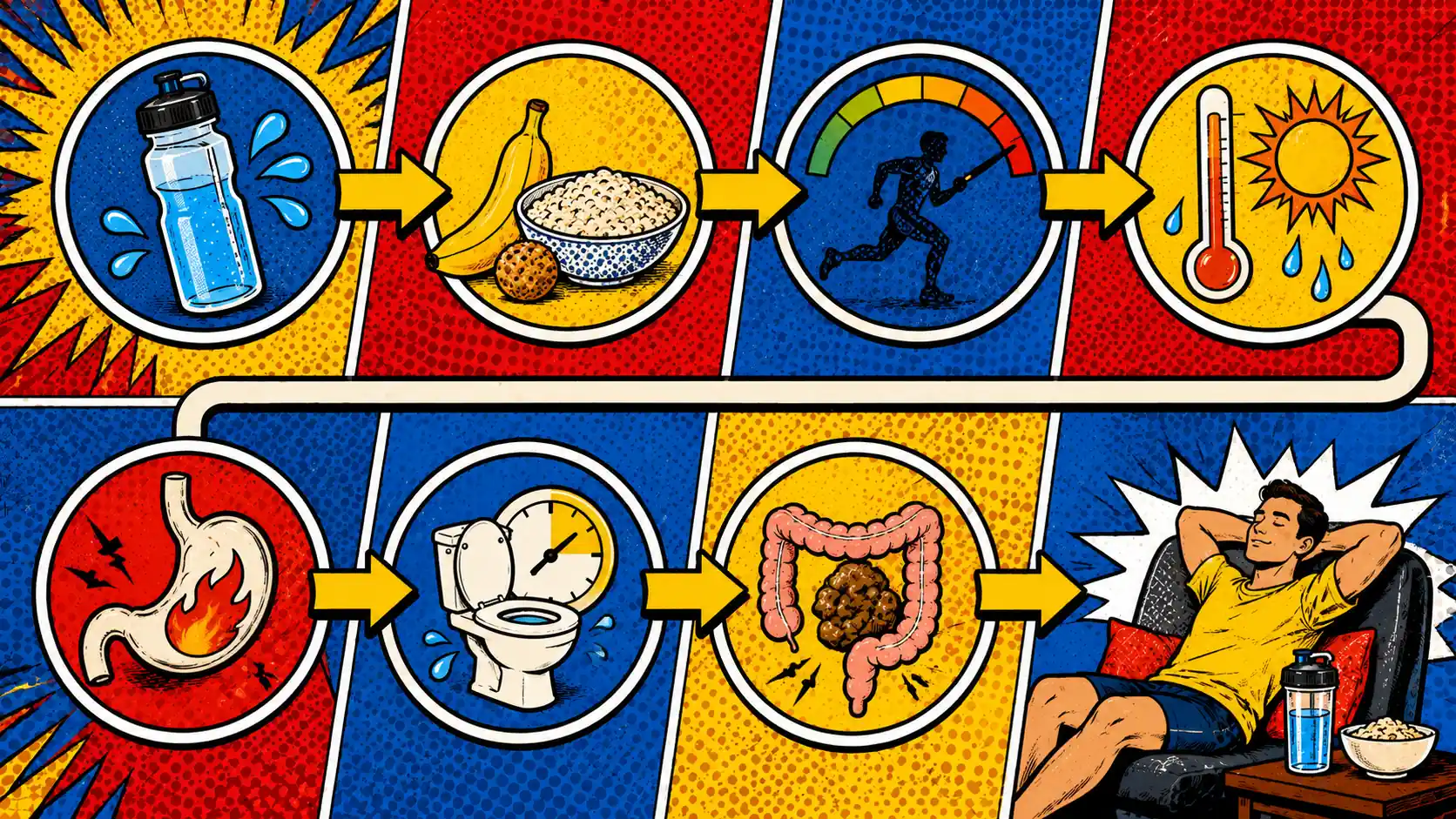
If urgency clusters around hard sessions, long runs, caffeine, pre-workout food, or race anxiety, build the plan around timing and bathroom access first. Use urgency after meals if symptoms are meal-linked.
If symptoms are burning, regurgitation, throat irritation, or worse after late meals, bending, or high intensity, reflux may be louder than IBS. Use what are acid reflux symptoms before making the whole plan low FODMAP.
If constipation is the main pattern, look at fluid, timing, fiber type, recovery meals, travel, and rest days. Bloating and distension often need individualized management because they can overlap with bowel habits, visceral sensitivity, diet, and other functional GI patterns 3. Use constipation and bloating connection or fiber without bloating.
Race nerves and symptom fear can make the route more complicated. Integrated IBS care may include nutrition strategies and gut-brain behavioral approaches when GI symptoms and psychological distress overlap 4. That is a reason to add support, not a reason to dismiss symptoms.
Do not explain every symptom as training load.
Get medical review for blood in stool, unexplained weight loss, fever, anemia, persistent vomiting, dehydration, nighttime diarrhea, fainting, chest pain, new severe symptoms, or a major change from your baseline. Athletes can still have non-IBS conditions.
| If your main issue is... | Read next |
|---|---|
| General exercise and gut symptoms | Movement, exercise, and gut symptoms |
| Fluids, sodium, and stool pattern | Hydration, electrolytes, and gut symptoms |
| Pre-workout meals | Meal timing gut symptoms |
| Narrow post-exercise timing pattern | Workout timing and post-exercise gut symptoms |
| Urgency during or after meals | Urgency after meals |
| Reflux during training | What are acid reflux symptoms |
| Diarrhea and dehydration after a flare | Oral rehydration for diarrhea and IBS flares |
Download: Athlete Gut Symptom Training Log to match symptoms to intensity, fuel, fluids, heat, timing, and recovery.
For athletes, IBS symptoms need a training-context map.
Before you cut more foods, check timing, intensity, heat, hydration, electrolytes, caffeine, fuel concentration, supplement changes, bathroom logistics, reflux patterns, and recovery. The best next step is usually the smallest variable you can test clearly.
Your gut does not need a perfect training life. It needs fewer mixed signals and a plan that separates food triggers from training-load problems.
Xam Riche is a gut health solopreneur and founder of YourFitNature, dedicated to helping people navigate digestive wellness through evidence-based information and personal experience. After years of struggling with IBS and bloating, Xam discovered the transformative power of the low FODMAP diet and now shares practical, science-backed guidance to help others find relief. While not a medical professional, Xam combines extensive research with lived experience to create accessible, empowering resources for the gut health community. Learn more about our mission
As an affiliate, we may earn from qualifying purchases.