 By • Published on May 12, 2026 • 9 min read • 3,196 views
This article is for informational and educational purposes only and does not constitute medical advice. Always consult with a qualified healthcare professional before using symptom information to make diagnosis or treatment decisions.
If protein powder keeps making symptoms harder to read, the problem may be smaller than "my whole diet is wrong" and more specific than "protein powder is bad for IBS."
That distinction matters.
Many readers do fine with eggs, yogurt, tofu, tempeh, chicken, or a plain meal, then run into trouble when the same protein target gets pushed into a scoop, sweetener system, added fiber blend, flavored milk base, or giant smoothie. The result is confusing because the package still looks tidy. It says protein. It may even say low sugar, clean ingredients, or gut friendly. But the symptom signal feels noisier than it did with normal food.
This page is built for that exact problem: protein powder and IBS as a product-trigger question, not a general anti-supplement argument.
If your main issue is broader protein adequacy, use nutrient gaps on a restrictive gut diet. If the bigger issue is vegetarian meal building, go to the low-FODMAP vegetarian protein guide. If labels keep surprising you across sauces, supplements, and powders, start with hidden FODMAPs in products. This article sits in the middle: the scoop itself might be the variable, so how do you sort it?

Protein powder sounds like one food. It is not.
One product may be mostly whey isolate. Another may use whey concentrate. A third may lead with pea protein but add inulin, gums, flavor systems, polyols, or a serving size that makes the whole shake harder to interpret. The problem is often not the word "protein." The problem is the rest of the formula and the way the powder gets used.
Monash says it cannot give a clear answer on the FODMAP content of protein powders without testing each individual product because formulas vary too much 1. That single point is enough to change how you troubleshoot. It means you should stop asking "Are protein powders low FODMAP?" as if the whole aisle has one answer.
It also means your symptom result may reflect more than the base protein:
If you are already doing low FODMAP, remember that the diet is supposed to move through restriction, reintroduction, and personalization rather than stay stuck in permanent fear of every new product 2. A bad powder trial is data. It is not proof that your only safe future is a smaller and smaller menu.
The label matters more than the front-of-pack promise.
Monash specifically highlights three high-yield issues in protein powders: lactose in whey concentrate products, polyols, and prebiotic ingredients such as inulin, chicory root, and Jerusalem artichoke 3. That gives you a simpler sorting frame than trying to memorize every possible brand.
Use this first-pass table:
| Powder feature | Why it matters |
|---|---|
| Whey concentrate | Can matter more if lactose is one of your clearer triggers. |
| Whey isolate | May be easier for some readers than concentrate, but still not automatically problem-free. |
| Pea, soy, rice, or blended plant proteins | The base alone does not tell you the full FODMAP picture when the formula is complex. |
| Inulin, chicory root, Jerusalem artichoke, FOS | Added prebiotic fibers can create extra symptom noise. |
| Sorbitol, mannitol, or other polyols | Sweeteners can overlap with familiar low-FODMAP trigger patterns. |
| Large scoop size | The dose itself can make a cleaner formula feel worse. |
| Long smoothie ingredient list | Fruit, milk choice, sweeteners, coffee, and extra fibers can blur the result. |
This is why a powder can feel worse than the same nutrition target from food. The scoop is often carrying multiple digestive variables at once.
If your real suspicion is dairy or lactose rather than powders in general, take the more direct route to dairy, lactose, and plant milks. If the broader pattern is that many packaged items keep surprising you, zoom out to hidden FODMAPs in products instead of making this a powder-only mystery.
This is not a moral argument for "real food." It is a clarity argument.
Monash's general advice is to use food options first for protein unless a health professional specifically wants a protein supplement 4. That advice works well for IBS troubleshooting because simple foods often give you a cleaner control pattern than powders do.
Depending on your diet pattern, a food-first control might look like:
Monash FAQ guidance also notes that foods such as meat, chicken, fish, and eggs are generally low in FODMAPs because they contain little or no carbohydrate, while preparation ingredients can still matter 5. That makes them useful control points when you are trying to isolate whether the powder formula is actually the problem.
If you need more protein options rather than more product-debugging, the low-FODMAP vegetarian protein guide and nutrient gaps on a restrictive gut diet are the better next steps.
The biggest mistake is not always the powder. It is the testing format.
If you want a usable answer, run a simpler comparison:
That matters because many powders are tested inside the least readable possible meal: banana, oats, almond butter, chia, spinach, cold brew, sweetener, and a double scoop all blended together. If that flares, you did not really test the powder. You tested a whole system.
The more useful questions are:
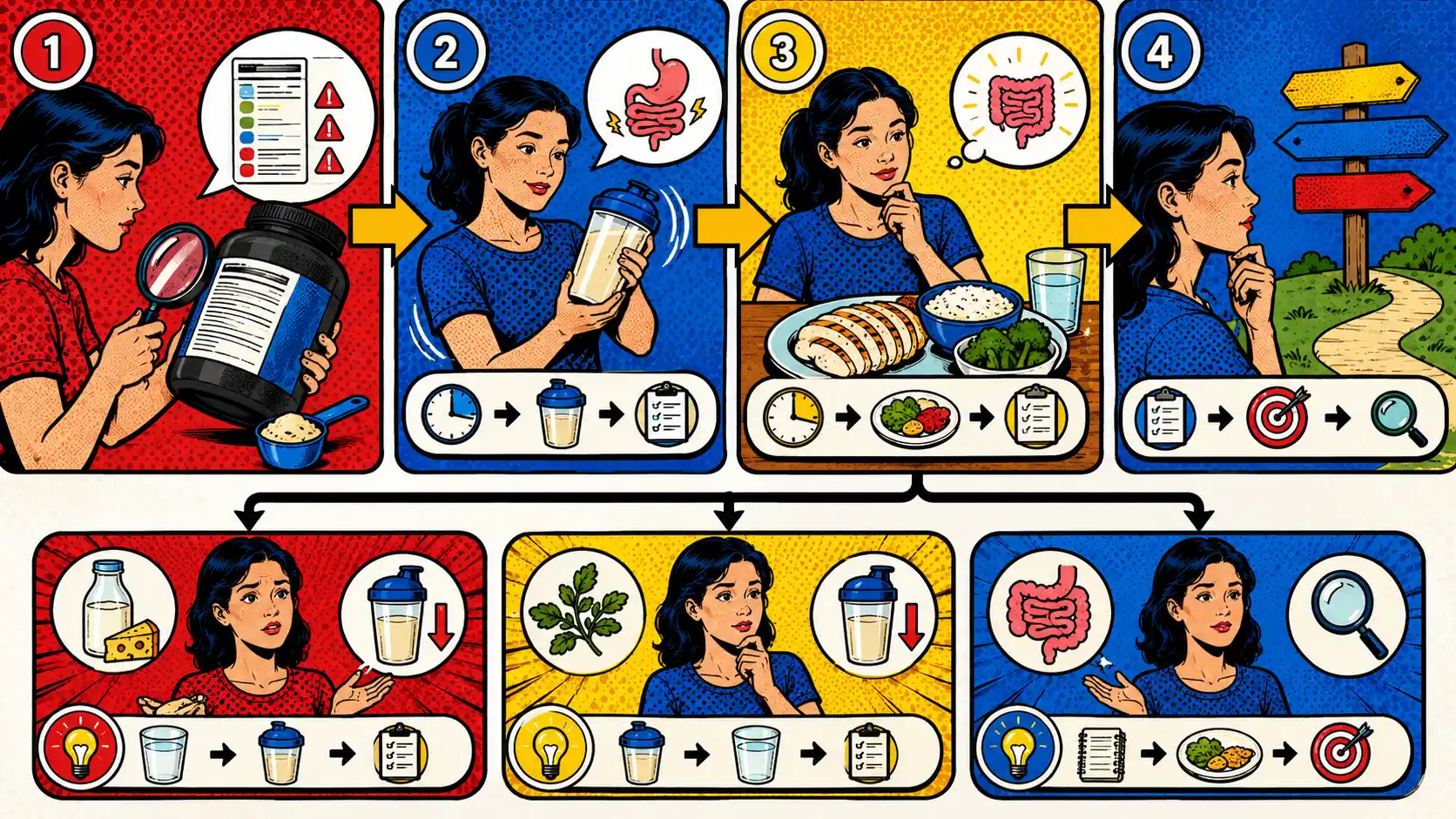
Download: Protein Powder Label Red-Flag Checklist and Food-First Protein Swap Card
Sometimes the scoop is real. Sometimes it is just the most obvious thing in the glass.
If the whole low-FODMAP trial never created a calmer baseline, the powder may be one variable inside a bigger troubleshooting problem. NIDDK notes that low FODMAP is an individualized IBS strategy, which means persistent symptoms still need broader interpretation rather than endless product swapping 6.
The powder is less likely to be the main story when:
In those cases, route wider:
| If this is the main question | Best next read |
|---|---|
| Many packaged foods keep backfiring, not just powders | Hidden FODMAPs in products |
| You need vegetarian protein anchors more than supplement debugging | Low-FODMAP vegetarian protein guide |
| You are worried about overall protein or nutrient adequacy | Nutrient gaps on a restrictive gut diet |
| Whey and milk tolerance are the biggest clues | Dairy, lactose, and plant milks |
| The whole low-FODMAP process still feels unclear | Low FODMAP not working |
| Protein powder is only one item in a growing product mix | Supplement stack audit for IBS |
For IBS readers, the better question is often, "What gives me the clearest, most repeatable protein support with the least symptom noise?"
Sometimes that answer will still be a powder. Sometimes it will be whey isolate instead of concentrate, a simpler plant formula, or a smaller scoop. Sometimes it will be a plain meal that tells you more than the shake ever did.
If you want a cleaner answer, simplify the test, read the label before trusting the marketing, and compare the scoop against a food-first control meal. That is usually enough to tell whether the product deserves more attention or less.
Xam Riche is a gut health solopreneur and founder of YourFitNature, dedicated to helping people navigate digestive wellness through evidence-based information and personal experience. After years of struggling with IBS and bloating, Xam discovered the transformative power of the low FODMAP diet and now shares practical, science-backed guidance to help others find relief. While not a medical professional, Xam combines extensive research with lived experience to create accessible, empowering resources for the gut health community. Learn more about our mission
As an affiliate, we may earn from qualifying purchases.