 By • Published on April 24, 2026 • 8 min read • 3,270 views
This article is for informational and educational purposes only and does not constitute medical advice. Always consult with a qualified healthcare professional before using microbiome or supplement content to make treatment decisions.
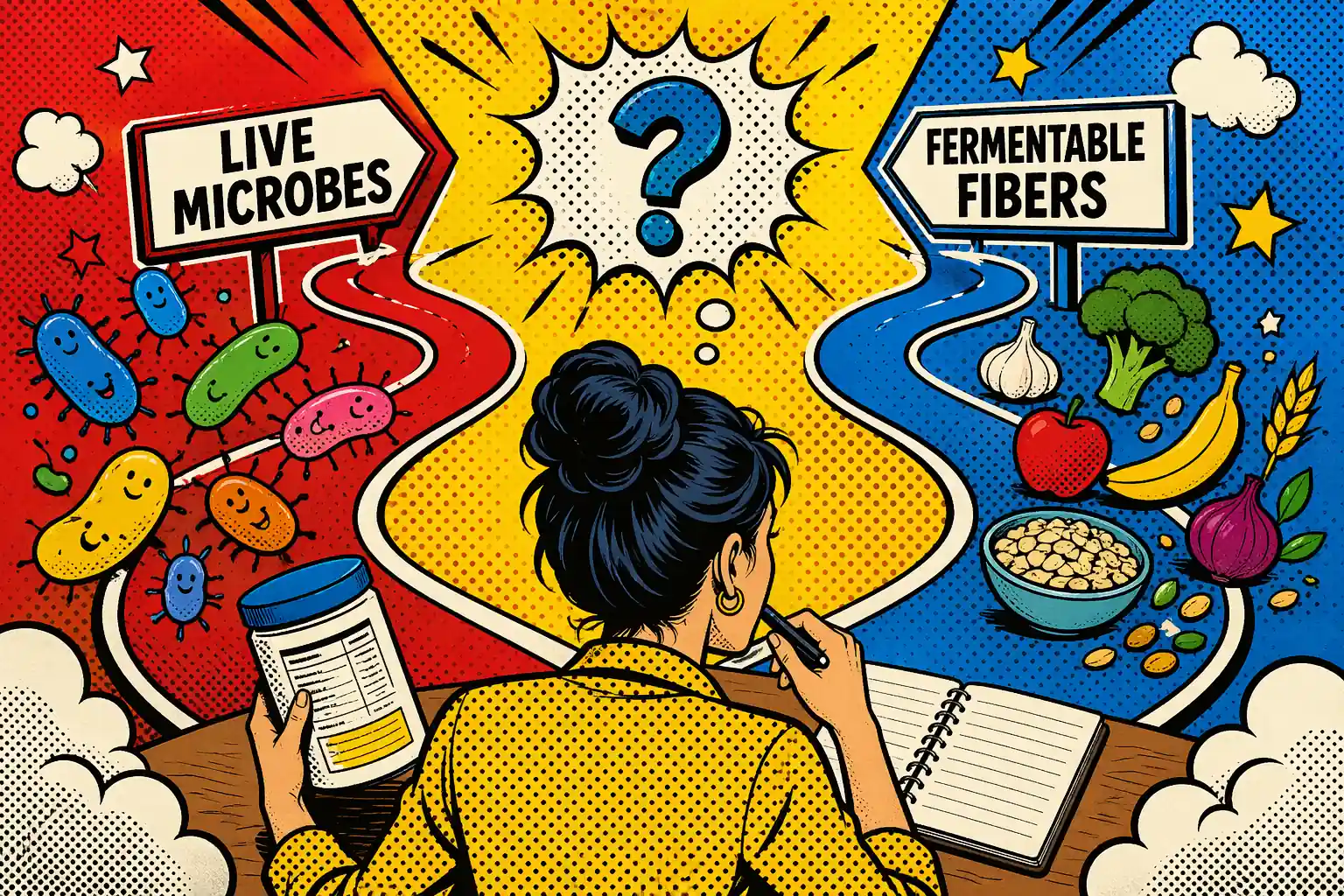
Probiotic and prebiotic are two of the most overused words in gut-health marketing. That is why the comparison sounds simpler than it feels. One bottle promises live cultures. Another promises to feed your good bacteria. A third quietly combines both and hopes you stop asking harder questions.
Short answer: probiotics are live microbes. Prebiotics are substrates that selected microbes can use. They are related, but they are not interchangeable.
This page is for you if your main question is simple: should I be looking at a probiotic or a prebiotic first?
Use a different page first if your question is already broader or more specific. If you are comparing synbiotics, postbiotics, and SCFAs too, go to synbiotics, probiotics, and prebiotics. If you need strain-level probiotic evidence, use probiotics for IBS strains. If you need ingredient-level prebiotic help, use prebiotic fiber. If you are not ready for either category yet and need a calmer food-first starting point, use gentle variety before probiotics.
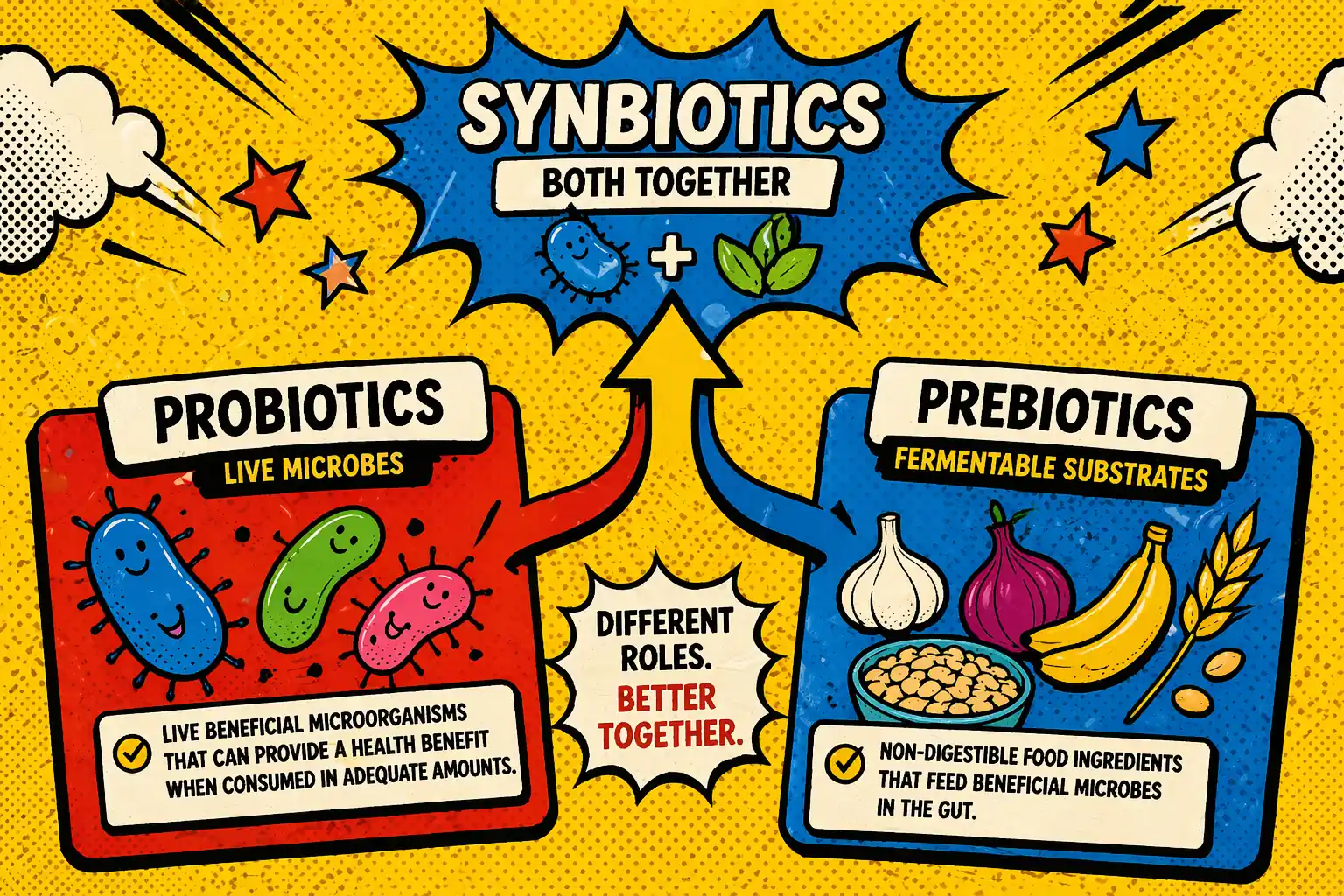
The cleanest comparison is this:
That means:
This sounds obvious, but labels blur it constantly. Products often borrow the good reputation of one category while actually selling the other.
The main point of a probiotic is not just that bacteria are present. The important question is whether a specific strain has evidence for a relevant benefit.
That is why probiotics are usually the better category to examine when your question sounds like:
Guideline-level and consumer-facing sources both keep the same caution: probiotic evidence is product-specific, strain-specific, and use-case-specific 3 4.
So a probiotic is not automatically "better." It is simply the category that fits when the decision depends on the live microbe itself.
If your question is already symptom-specific, this page is only the sorter. The next shelf is probiotics for IBS strains.
Prebiotics are not just "healthy fiber." The term is narrower than that.
A prebiotic is a substrate that selected microbes can use in a way that may confer a health benefit 5. Common examples include inulin, FOS, GOS, and some resistant starches.
That makes prebiotics the better category to examine when your question sounds like:
This is also where many readers get into trouble. A prebiotic ingredient can be mechanistically interesting and still be the exact reason a sensitive gut feels louder. Monash's low FODMAP materials are relevant here because fructans and GOS sit inside the same wider symptom-management conversation for IBS-prone readers 6.
If the substrate decision is the real issue, use prebiotic fiber instead of staying in a too-simple comparison. And if what you really need is a practical list of which foods count most clearly, go next to food-first prebiotic sources.
The better question is not:
"Which one is best?"
The better question is:
"What problem am I actually trying to solve?"
Use a probiotic-first lens when:
Use a prebiotic-first lens when:
That is why this comparator should stay simple. It is not supposed to own every microbiome term. It is supposed to stop readers from treating probiotics and prebiotics as if they are the same thing.
Sometimes "probiotic vs prebiotic" is not the real question at all.
Sometimes the label or the article you just read is also blending in:
When that happens, this page stops being enough.
The right move is to go up one shelf to synbiotics, probiotics, and prebiotics, which is the broader intervention map. That page separates the whole biotics cluster instead of forcing every term into a two-way comparison.
If the term "postbiotic" is actually what caught your attention, route across to benefits of postbiotics. If the metabolite story is the real hook, route across to short-chain fatty acids and gut microbiota.
This is where the comparison becomes practical.
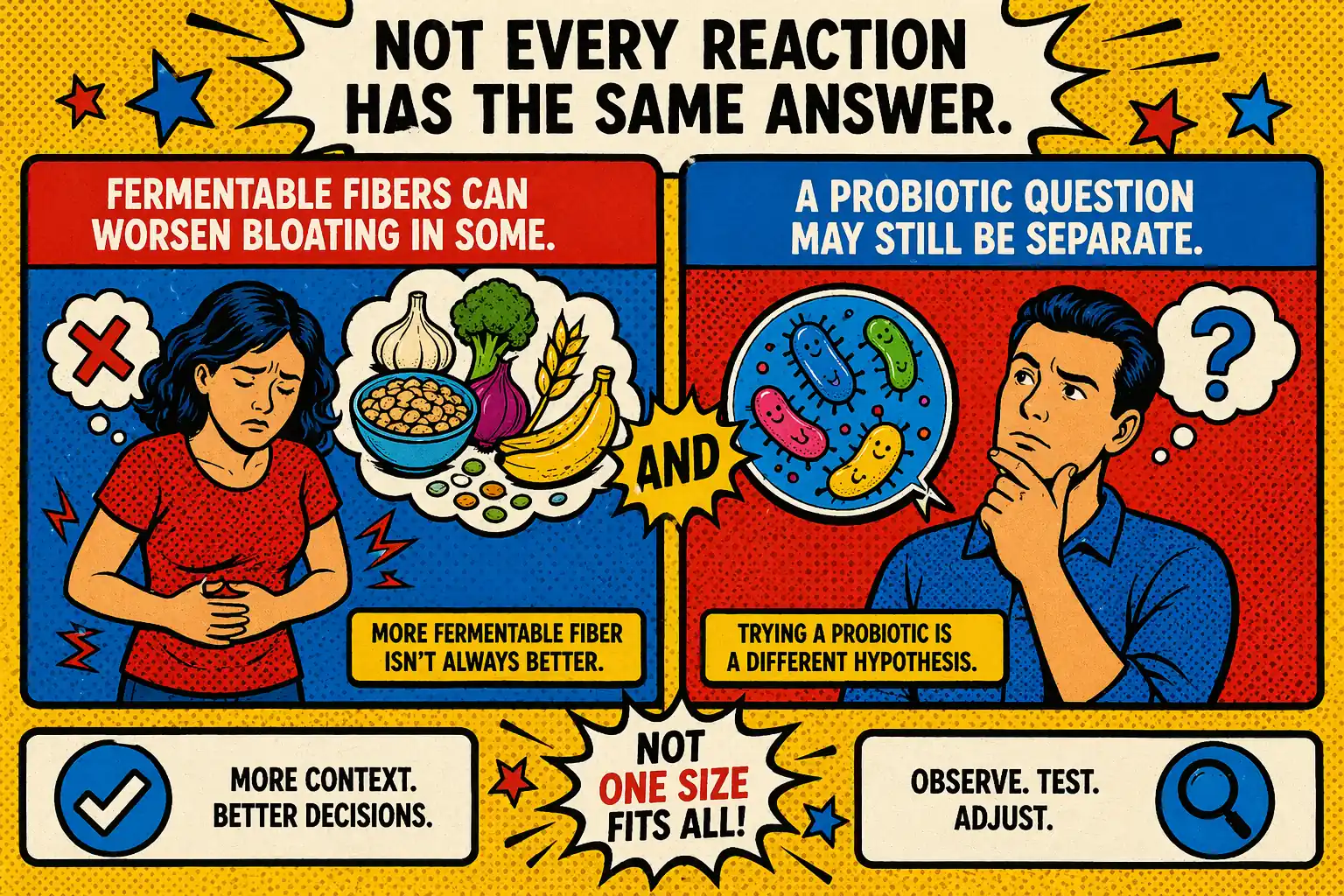
All of these can be true at once:
That is why some readers think they "cannot tolerate probiotics" when the actual issue is the inulin, FOS, or chicory-root fiber hidden in the formula.
If that sounds familiar, move next to why healthy foods still bloat you for a symptom-first explanation, then use prebiotic fiber to read the ingredient side more carefully.
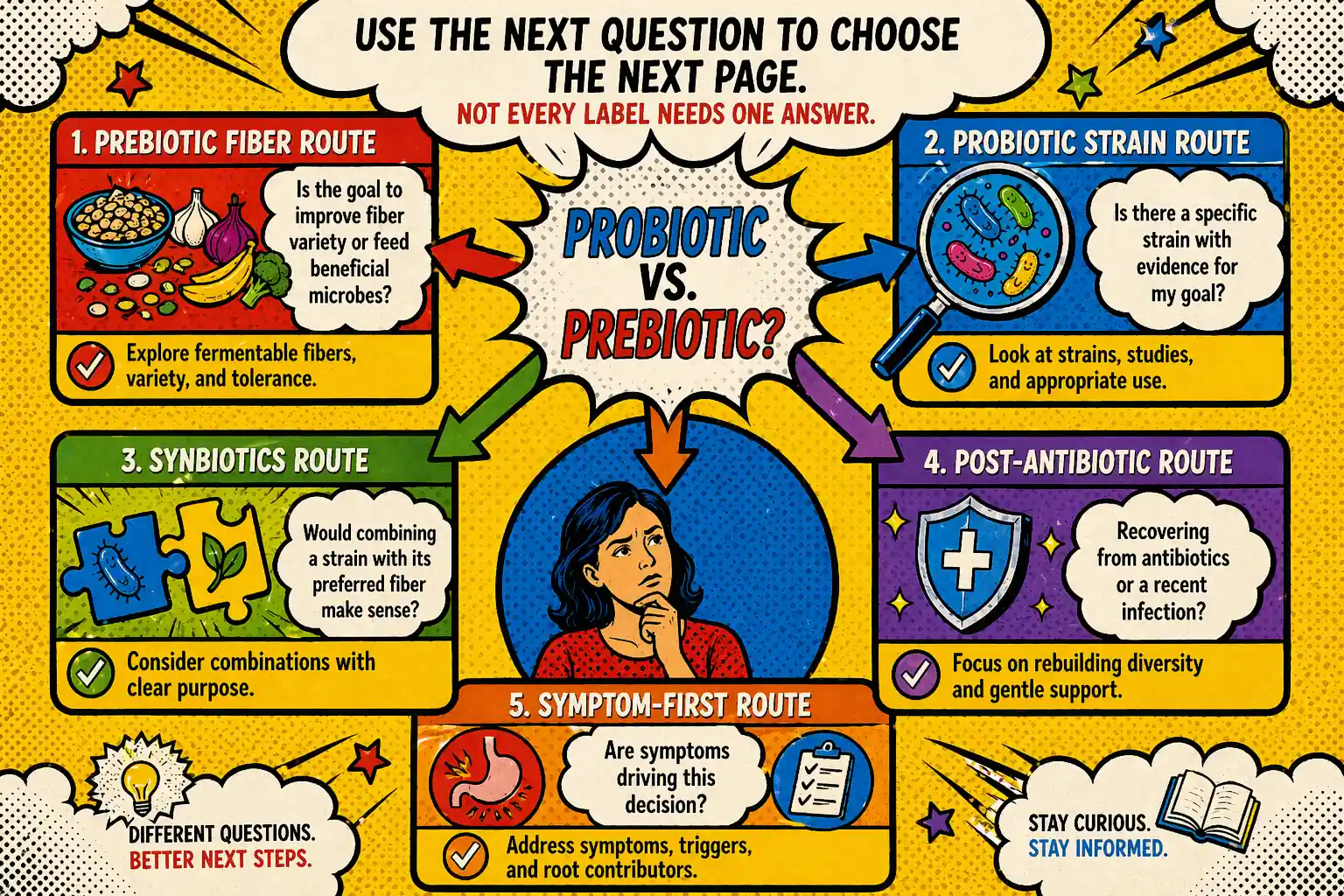
If your main question is:
That routing logic is the real value of this page.
[!TIP] Download: Probiotic vs Prebiotic Comparison Checklist and Probiotic vs Prebiotic Next-Step Guide if you want the simple side-by-side and routing map in printable form before you buy another gut-health product.
Probiotic versus prebiotic is not a war between two gut-health teams.
It is a category distinction:
Use this page as the simple comparator bridge. Then move to the more specific page that matches the real decision.
Xam Riche is a gut health solopreneur and founder of YourFitNature, dedicated to helping people navigate digestive wellness through evidence-based information and personal experience. After years of struggling with IBS and bloating, Xam discovered the transformative power of the low FODMAP diet and now shares practical, science-backed guidance to help others find relief. While not a medical professional, Xam combines extensive research with lived experience to create accessible, empowering resources for the gut health community. Learn more about our mission
As an affiliate, we may earn from qualifying purchases.